Finding the perfect short haircut for older women with thin hair has been my passion for years, especially after seeing how the right style can completely transform not just appearance, but confidence too.
I’ve worked with countless clients who come to my chair feeling frustrated with thinning hair, and I get it—I really do. Having thin hair doesn’t necessarily mean you have less hair; sometimes it’s simply that your individual strands are fine in texture. Fortunately, a shorter cut is actually one of the best solutions, as it helps eliminate the weight that pulls down those limp strands. In fact, with the right cut, short hair can look wonderfully modern and youthful.
Short haircuts for women over 60 in 2025 are more chic and age-inclusive than ever before. As a stylist, I’ve seen firsthand how styles like layered pixie cuts and textured bobs can work wonders for fine hair, adding volume and creating the appearance of thickness. Meanwhile, options like the Shaggy Bob and Angled Bob have become top choices specifically for addressing fine or thinning hair concerns.
In this article, I’ll share my favorite low-maintenance short haircuts that will help you embrace your natural texture while adding the volume and movement that thin hair craves. Whether you’re looking for something bold or subtle, I promise there’s a style here that will make you feel like the best version of yourself.
Layered Pixie Cut
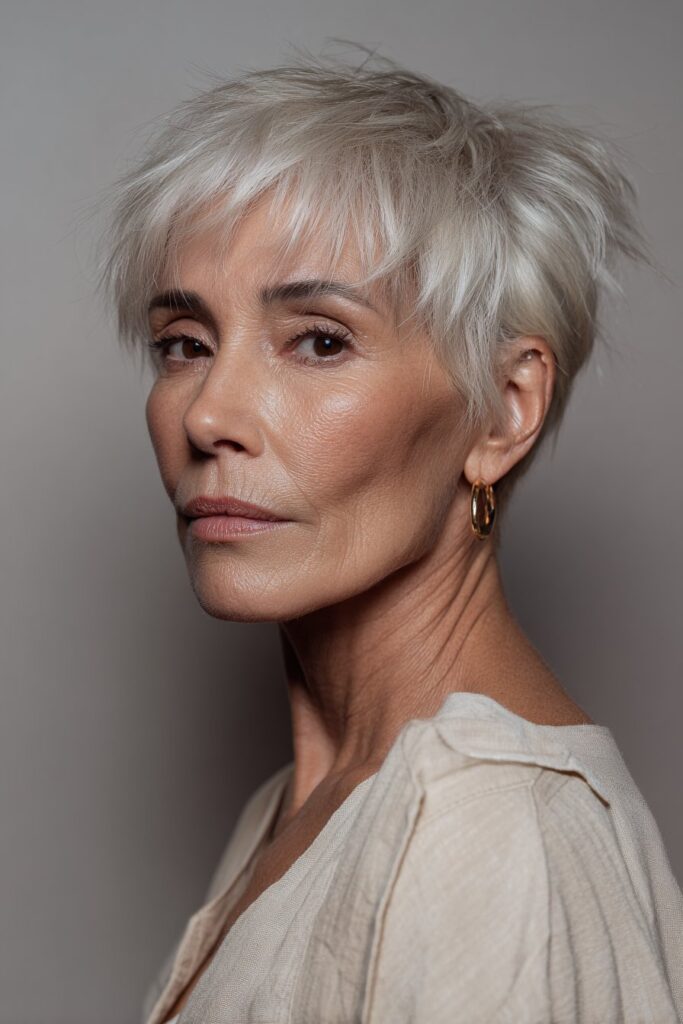
The layered pixie cut has become my go-to recommendation when clients with thinning hair sit in my chair looking for a change. Throughout my career, I’ve seen this versatile style work magic for women who thought their fine hair limited their options.
Style Overview
A layered pixie cut features varying lengths with shorter sides and back, plus longer layers on top. The beauty lies in its customization—I can tailor it specifically to frame your face and highlight your best features. The strategic arrangement of shorter, multi-layered segments creates depth that’s particularly flattering for women over 60.
The cut typically incorporates feathered texture that softens fine hair, making it complementary for nearly every face shape. For those with angular features like square or heart-shaped faces, I recommend a pixie with a rounded shape to soften the jawline. If you have an oval face, a slightly longer pixie adds width to balance your face’s length. Additionally, for round faces, ear-length pixies with angled layers help contour and counteract fullness.
Why It Works for Thin Hair
The reason this style performs so wonderfully for thin hair is simple—the layers create “mega movement and texture” that instantly give thinning hair tons of volume.
I’ve noticed three major benefits for my clients with fine hair:
- The shortened length removes weight that typically pulls down fine strands
- Layering techniques maximize volume, making thin hair appear thicker
- The cropped style draws attention upward, highlighting eyes and cheekbones while counteracting age-related droopiness
Furthermore, pixie cuts can be constructed to conceal sparse spots. For instance, adding bangs helps camouflage a receding hairline. Moreover, since fine hair works to your advantage with pixies, it’s easier to create that “slim, head-hugging shape the pixie cut needs” compared to thicker hair types.
Styling Tips
From my experience, styling a layered pixie on thin hair requires the right technique and products. Start by applying a lightweight mousse to damp hair—this builds mass without weighing it down.
When blow-drying, I tell my clients to use a flat or paddle brush and brush hair in multiple directions—forward, backward, upward, outward—while lifting at the roots. This technique creates lasting volume that defies gravity.
For daily maintenance, I recommend using texturizing products specifically designed for fine hair. A texture powder or spray wax adds definition without heaviness. Personally, I prefer clay-based products over gels or creams for thin hair since they provide hold without flattening.
Though pixie cuts require regular trims to maintain their shape, they compensate with incredibly easy daily styling. This time-saving benefit makes them particularly attractive for older women seeking both style and simplicity.
Classic Bob with Side Part
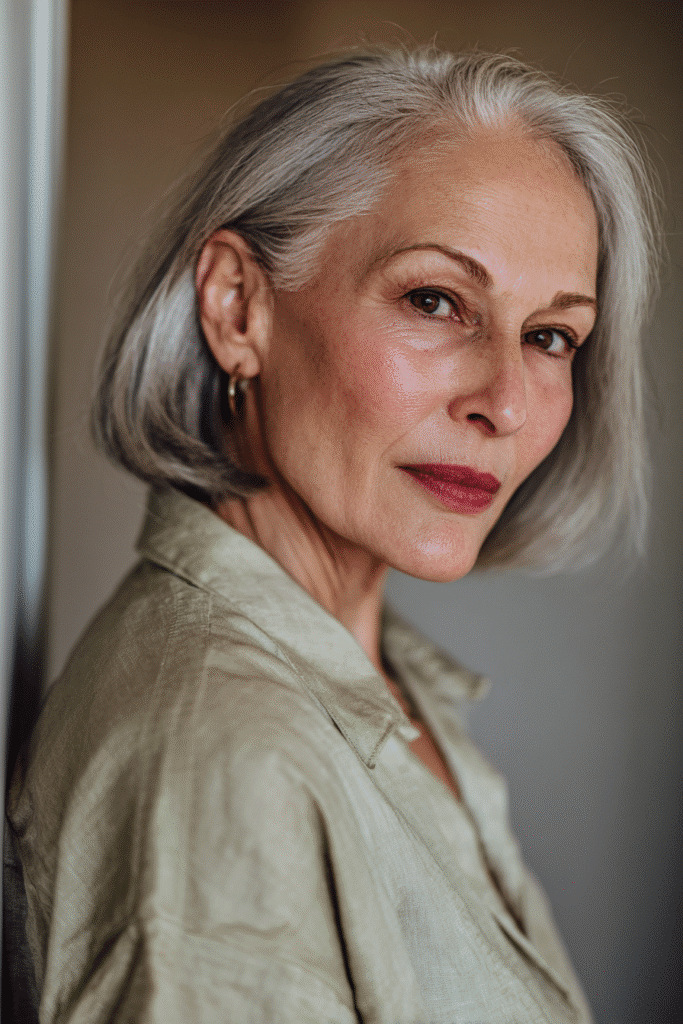
The classic bob with side part has stood the test of time in my salon, and for good reason. Throughout my career, I’ve seen how this elegant style creates instant polish while solving many common concerns for my older clients with thinning hair.
Style Overview
A classic bob with side part typically falls between jaw and neck length with a clean, precise perimeter. Unlike center-parted styles, the side part creates asymmetry that adds visual interest and natural lift at the roots. In my experience, this cut works beautifully across different face shapes, although I often recommend it particularly for oval or heart-shaped faces.
For clients with round faces, I suggest a slightly longer bob that grazes the neck to create a lengthening effect. The side part is also remarkably versatile—I’ve found that most face shapes look more flattering with it than with center partings.
The hallmark of this style is its precision lines that frame the jawline. Many hairstylists, myself included, consider it “a great low-maintenance style that accentuates and elongates the jawbone and neck”. The classic bob can be worn sleek and polished or with soft texture, depending on your preference.
Why It Works for Thin Hair
After decades of working with thinning hair, I can confidently say the bob is officially the best style for thin hair. Here’s why I recommend it so frequently:
First, the shorter length prevents fine hair from getting weighed down, which is typically what happens with longer styles. Consequently, the bob creates a neat silhouette by redistributing the weight closer to the tips.
Second, this cut makes the bottom look visually fuller and thicker—a major win for my clients with thinning concerns. The clean, blunt edges of a classic bob instantly make fine hair appear thicker and more substantial.
Finally, the side part is particularly beneficial because it takes more hair from one side, making that side heavier and thicker, which adds shape and balance. I’ve found this technique helps conceal areas where the scalp might be more visible due to thinning.
Styling Tips
For my clients who choose the classic bob with side part, I always share these essential styling techniques:
To maintain this look, regular trims are necessary—typically every six to eight weeks. However, if you prefer less maintenance, I recommend asking for some subtle texturing that allows for a more forgiving grow-out.
For daily styling, I suggest starting with a volumizing shampoo followed by a lightweight leave-in conditioner. Then, apply a small amount of volumizing mousse or spray to damp hair, concentrating on the roots.
When blow-drying, use a round brush to create lift and shape. As I tell my clients, “When it comes to a side parting, you don’t want your hair to sit flat”. For a sleek finish, I recommend finishing with a 1.5-inch flat iron and a drop of shine serum.
Remember that styling products are especially important for bobs on fine hair—you’ll likely use more products than you did with longer hair, nevertheless, the results are worth it.
Shaggy Crop with Bangs
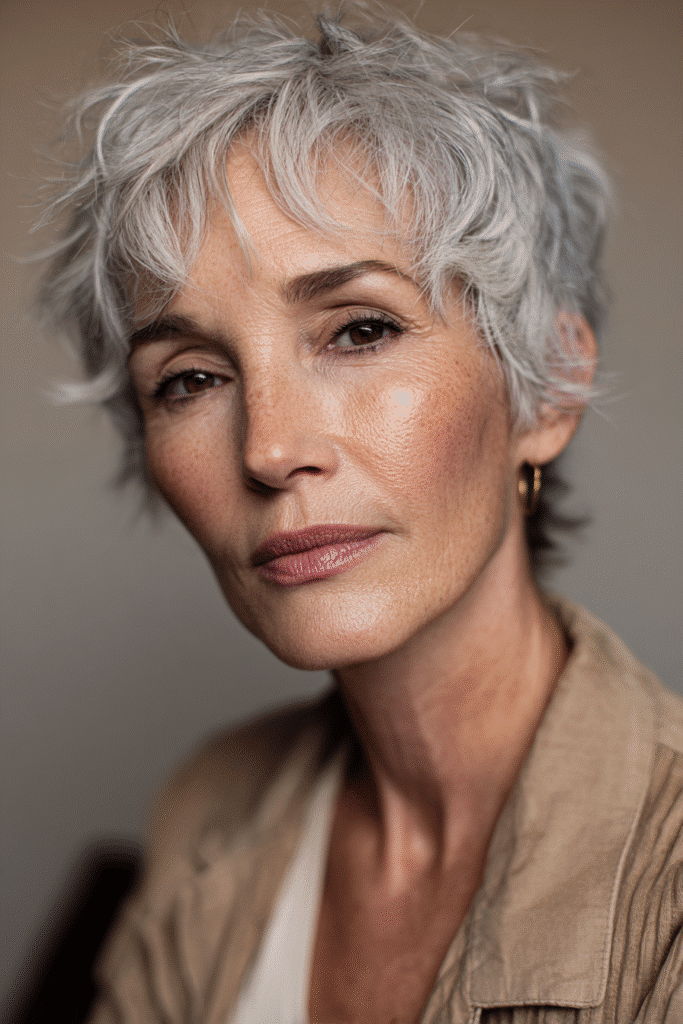
I’ve always been drawn to the versatility of the shaggy crop with bangs—it’s like a breath of fresh air for my clients with thinning hair who want something effortlessly stylish. This cut has become increasingly popular among my older clients who desire both volume and a youthful edge.
Style Overview
The shaggy crop is essentially a modern, shorter version of the classic shag haircut, featuring choppy layers and textured ends that create movement and dimension. What makes this style truly special is how it combines those feathery, razored layers with strategically placed bangs that frame the face beautifully.
In my salon, I typically customize this cut to hit around neck length, with the layers throughout creating that distinctive “shaggy” look. The bangs can vary—from wispy fringe that grazes the eyebrows to longer side-swept bangs or even trendy curtain bangs that part in the middle.
I find this style works wonderfully on most face shapes. For my clients with round faces, I often recommend longer, side-swept bangs that visually elongate the face. Alternatively, for those with square or angular features, softer, wispier bangs help balance stronger jawlines.
Why It Works for Thin Hair
Throughout my career, I’ve seen firsthand how the shaggy crop transforms thin hair. The magic lies in those skillfully cut layers that ease styling, accentuate texture, and most importantly, boost volume.
For my clients with fine hair, this cut offers several distinct advantages:
- The choppy, textured layers create the illusion of thickness and fullness
- Feathered bangs frame the face while making the rest of the style look fuller
- The layers provide movement and dimension without sacrificing volume
One of my longtime clients, a woman in her 60s with naturally fine hair, was amazed at how this cut made her hair look twice as thick. The combination of shaggy layers with wispy bangs completely revitalized her look—taking years off her appearance without trying too hard.
Styling Tips
Maintaining this style is refreshingly simple, making it perfect for women seeking a low-maintenance option. Trims are typically needed every 3-4 months to preserve the shape, much less frequent than pixies or bobs.
For daily styling, I recommend using lightweight products that won’t weigh down fine hair. A texturizing spray or mousse applied to damp hair creates body without heaviness. For added volume, I tell my clients to try this technique: blow dry your hair while tipping your head upside down, then use your fingers to direct the hair in different directions.
One of my favorite finishing touches is using a curling iron on random sections for soft, tousled waves. These spirals take thin hair from flat to fabulous and enhance the cut’s natural texture.
Remember—the beauty of this style is in its perfectly imperfect finish. As I always tell my clients, “Embrace the mess!”—this cut looks even better when it’s a little undone.
Tapered Cut with Volume
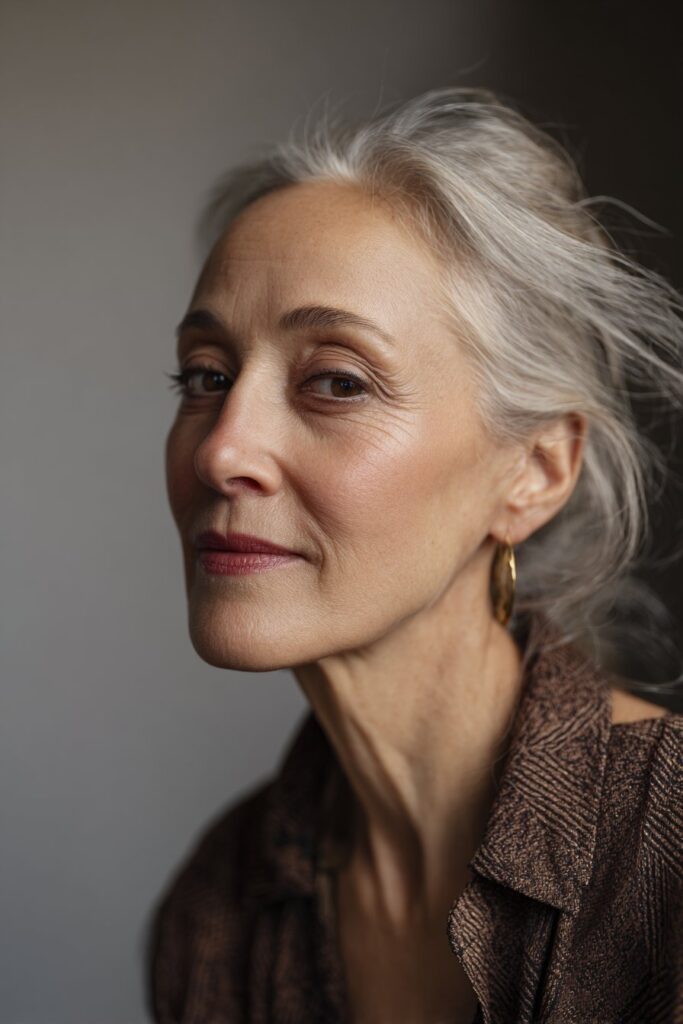
The tapered cut with volume has transformed countless clients in my salon, breathing new life into thinning hair with its modern yet sophisticated silhouette. Throughout my career, I’ve witnessed how this style instantly elevates confidence, primarily for my older clients seeking both style and substance.
Style Overview
A tapered cut with volume features closely cropped sides and back that gradually transition to longer layers on top. This deliberate structure creates a sculpted appearance that’s both elegant and contemporary. The beauty of this style lies in its careful proportions—shorter around the sides and back, yet with enough length on top to create substantial volume and movement.
The cut works wonderfully for various face shapes, though I find it particularly flattering for oval and heart-shaped faces. For my clients with round faces, I often recommend keeping slightly more length on top to create vertical balance. What makes this cut truly versatile is how it can appear either polished or edgy depending on styling.
Why It Works for Thin Hair
After years of working with older women dealing with thinning concerns, I can confidently say the tapered cut is remarkable for creating the illusion of thickness. First and foremost, the strategic design makes thinning hair look instantly fuller and gives an edgy, modern appearance with plenty of attitude.
The cut works through clever optical illusion—by concentrating volume on top while keeping the sides sleek, it draws the eye upward and creates the appearance of density where you need it most.
I recently worked with a client named Margaret who had struggled with increasingly thin hair. After switching to a tapered cut, she was amazed at how much fuller her hair appeared, even without styling products. Indeed, the carefully graduated layers create a lifted, sculpted silhouette that slims the face and highlights your features.
Styling Tips
For my clients who choose this style, I recommend these practical techniques for maximum volume:
To achieve everyday volume, start with a lightweight volumizing mousse or foam applied to damp hair—this adds body without making fine hair feel crunchy or weighed down.
The blow-drying technique makes all the difference. Try drying your hair upside down or use a round brush at the roots for extra lift—this simple change creates dramatic volume. Another game-changer is applying dry shampoo at the roots, even on clean hair, which adds texture and grip.
For daily maintenance, I tell my clients to avoid heavy oils, serums, and creams as they quickly flatten thin hair. Instead, opt for texturizing products specifically designed for fine hair. Generally, quality styling products and regular trims every 6-8 weeks will maintain the shape and volume of your tapered cut.
Textured Faux Hawk
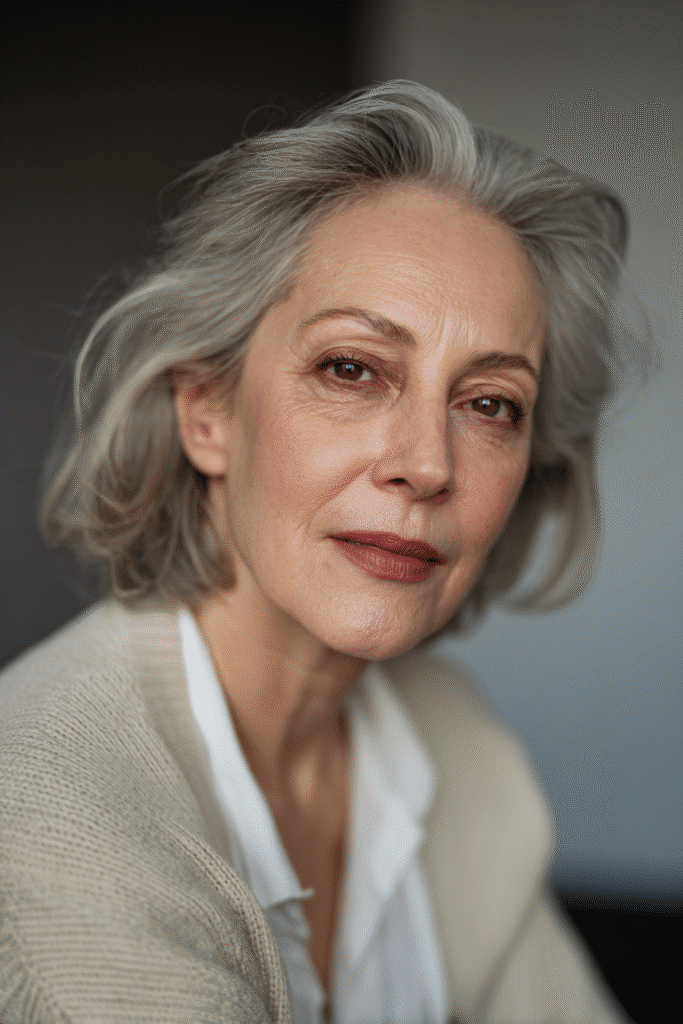
For older women seeking a short haircut with unexpected edge, I’ve found the textured faux hawk creates stunning results. Throughout my years behind the chair, this style has given my thin-haired clients confidence they never thought possible.
Style Overview
A textured faux hawk features longer hair through the center with shorter sides, creating a bold yet sophisticated look. Yet don’t let the name intimidate you—unlike a traditional mohawk with completely shaved sides, the faux hawk maintains hair on the sides while creating that distinctive center ridge.
What truly defines this style is its versatility. The textured version delivers explosive height with messy, tousled layers through the center, balanced by cleaner, tapered sides that enhance contrast. As one of my favorite styles to create, I love how it can be styled down for a more conservative appearance when needed.
Just last month, I transformed a reluctant client named Marjorie who worried the style would be “too young.” After seeing how the textured layers framed her face, she couldn’t believe how modern yet age-appropriate she looked.
Why It Works for Thin Hair
For women with thinning hair, the faux hawk is remarkably effective. The texturizing technique creates space and lift at the roots, giving the illusion of fuller, thicker hair without requiring extensions or heavy products.
The style strategically draws attention toward the center and away from thinning areas at the temples or hairline. Even my clients with the finest hair achieve impressive volume because the cut fundamentally removes bulk while softening the shape, making hair feel more breathable and less dense.
Styling Tips
Creating this look at home is surprisingly manageable. Start by applying volumizing mousse or dry shampoo directly to the roots—this provides the foundation for lasting height.
First, blow-dry your top section upward using a round brush for maximum lift. Once dry, I recommend applying a matte dry texturizing paste to add definition without heaviness. For those with particularly fine strands, my professional trick is spraying hair generously with volumizing mist before blow-drying the top into the faux hawk shape.
As your style grows out, a light mist of hairspray maintains the shape throughout the day. The beauty of this cut is that it works with your natural texture rather than fighting it.
Curly Pixie for Natural Texture
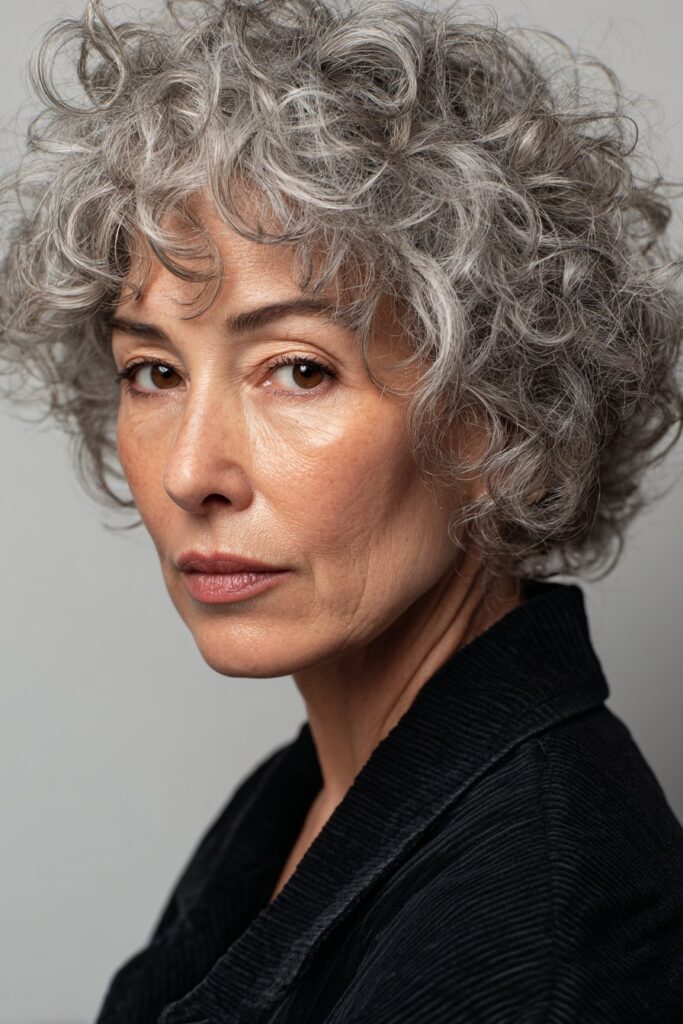
Throughout my career, I’ve witnessed many women embrace their natural hair texture after years of fighting it—and nothing showcases this better than a curly pixie cut. This style has become a favorite among my older clients seeking both volume and personality in their short haircuts.
Style Overview
The curly pixie cut features shorter sides with longer, texturized layers on top that allow natural curls to create beautiful dimension. Unlike sleeker pixie variations, this style deliberately works with your natural curl pattern rather than against it. As one stylist aptly puts it, “DON’T FIGHT YOUR CURLS! Knowing how to work with them is key.”
What makes this cut truly special is its versatility. For those with slightly wavy hair, small spirals, or even wild coily textures, the curly pixie can be customized to enhance your specific pattern. Typically, I recommend keeping the top slightly longer to showcase curl definition while tapering the sides for a clean silhouette.
Why It Works for Thin Hair
Naturally, curly pixie cuts are perfect for older women with thin hair for several reasons:
- Curls instantly create the appearance of volume and texture even in thinning hair
- The shorter length prevents fine strands from being weighed down
- Texturized layers maximize movement, making hair look fuller
- This style embraces natural texture, eliminating the need for damaging heat styling
One of my clients, a woman in her mid-60s with fine, naturally wavy hair, transformed from feeling self-conscious about her thinning strands to absolutely loving her curly pixie. “It feels like I have twice as much hair,” she told me after her first styling.
Styling Tips
Ultimately, product selection becomes the cornerstone of a successful curly pixie. “Product IS EVERYTHING when it comes to pixie cuts!” Hair products have advanced remarkably in recent years, with many options specifically designed for enhancing curls without weighing them down.
For daily styling, I advise my clients to apply a lightweight mousse to damp hair to enhance natural curl pattern. Ordinarily, scrunching the product through your curls with your fingers works best, followed by either air-drying or using a diffuser attachment on low heat.
Remember that curly pixies require moisture balance—not too much, not too little. Too much product can weigh down fine hair, while too little might leave curls undefined. As such, I recommend experimenting with different product amounts until you find your perfect balance.
Asymmetrical Bob
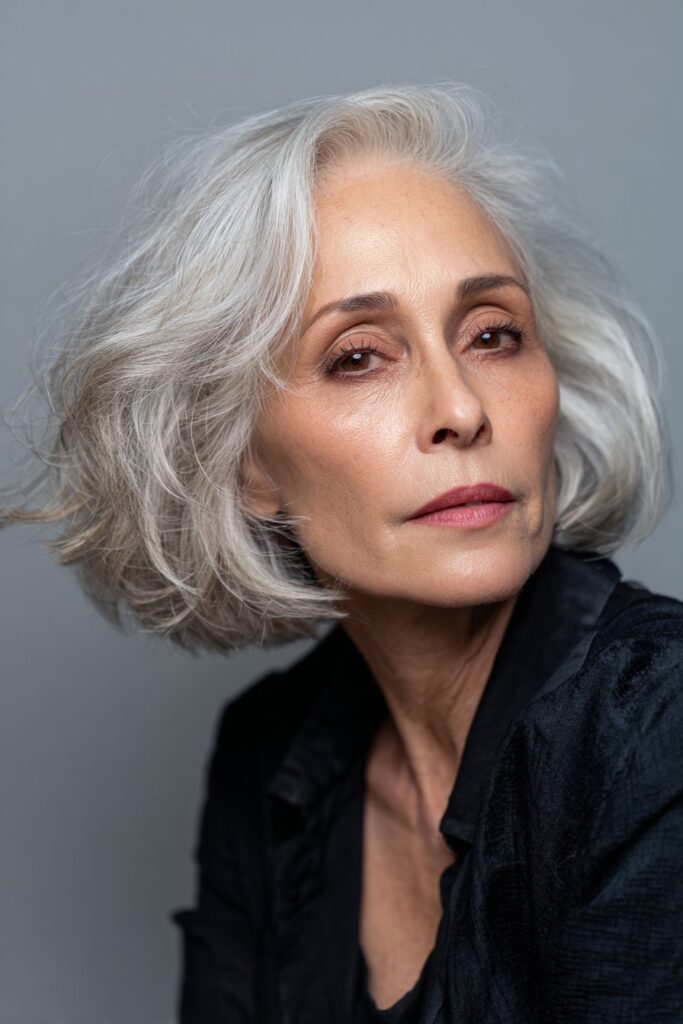
As a stylist specializing in mature hair, I’ve seen countless women light up after trying an asymmetrical bob—it’s the secret weapon for adding edge and volume to thin hair. This cut creates immediate visual interest that takes years off my clients’ appearances.
Style Overview
The asymmetrical bob features one side longer than the other, creating a striking diagonal line that frames the face beautifully. Unlike traditional bobs, this cut plays with balance intentionally, ranging from subtle length differences to bold, dramatic contrasts between sides.
The beauty of this style lies in its versatility—you can opt for an A-line variation (shorter in back, longer in front), a graduated version with stacked layers, or a sleek, straight-edge cut that emphasizes the asymmetry. During consultations, I often show my clients photos of both subtle and dramatic versions, helping them determine which level of asymmetry matches their comfort level.
Why It Works for Thin Hair
Throughout my years at the salon, I’ve recommended asymmetrical bobs to clients with thinning hair for several key reasons:
- It automatically draws eyes to the longer, fuller side of the head, shifting attention away from thinner areas
- The bold asymmetry corrects face shape, smoothing harsh angles and lines that become more pronounced with age
- This cut creates the illusion of movement and volume, even with naturally fine strands
Just recently, I worked with a client in her 70s who was hesitant about trying something “too edgy.” After seeing how the diagonal lines of her new asymmetrical bob added fullness to her previously limp hair, she couldn’t stop smiling.
Styling Tips
For daily maintenance, I advise my clients to embrace this cut’s natural movement. Apply a volumizing spray at the roots and blow-dry with a round brush to lift fine, limp strands.
Ordinarily, sea salt spray works wonders for achieving beachy texture that enhances the cut’s dimension. For those preferring sleekness, a flat iron helps achieve a sharp finish that emphasizes the asymmetry.
Maintaining this style requires trimming every 5-6 weeks to preserve its distinctive shape. Yet it’s worth noting that depending on the degree of asymmetry, grow-out phase may require extra attention. Above all else, remember that this cut allows for incredible versatility—style it sleek for formal occasions or tousled for a more casual, carefree look.
Feathered Short Cut
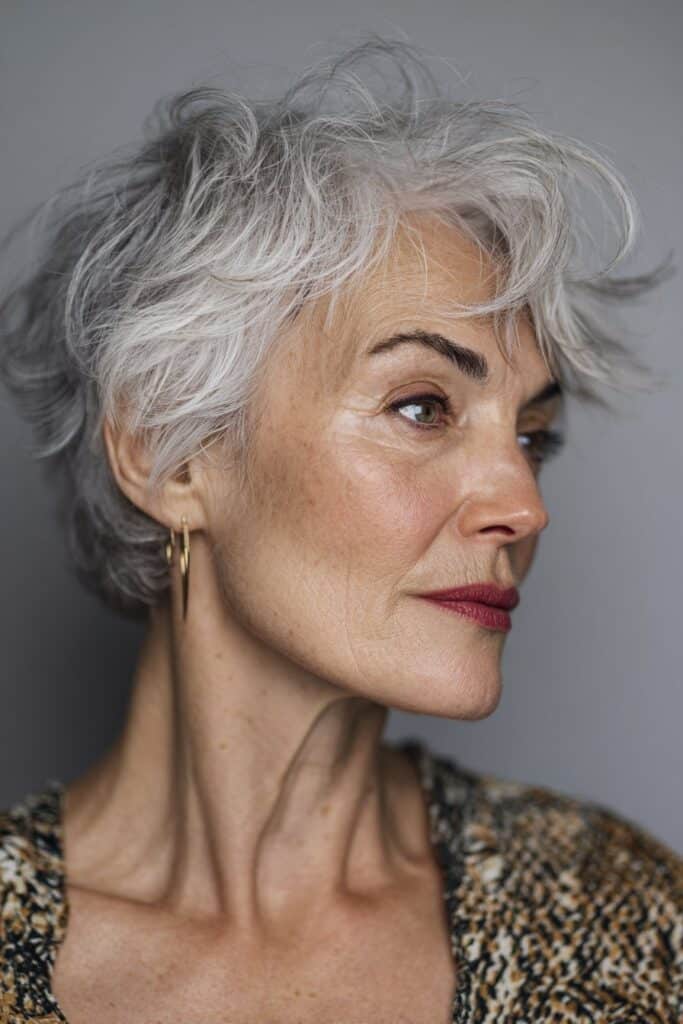
The feathered short cut has become my favorite recommendation for clients who want a soft, lightweight style that adds immediate volume. In my salon, I’ve noticed how this classic technique from the ’70s has made a remarkable comeback, bringing fresh life to thinning hair.
Style Overview
A feathered short cut features strategically layered hair that creates a delicate, wispy texture reminiscent of feathers. The cutting technique involves positioning scissors at a 90-degree angle to the hair’s ends, resulting in those signature soft, airy layers. This timeless style works beautifully for women with round faces, as the feathered texture frames facial features while opening them up.
Why It Works for Thin Hair
Undoubtedly, feathering is perfect for older women with thinning hair. Firstly, the layers add volume and movement, making hair appear more dynamic and full. Secondly, feathered cuts can be customized to frame the face, enhancing your best features. For my clients with fine hair, this technique creates the illusion of thickness without sacrificing style.
Styling Tips
To maintain your feathered cut, start with a heat protectant on freshly washed hair. Subsequently, rough dry to about 80% if you have fine hair. Apply a texturizing spray like Matrix Miss Mess for tousled volume. For that signature ’70s look, use a curling iron to flip the ends away from your face. Finish with a flexible-hold hairspray that won’t create stiffness.
Mini Mullet Revival
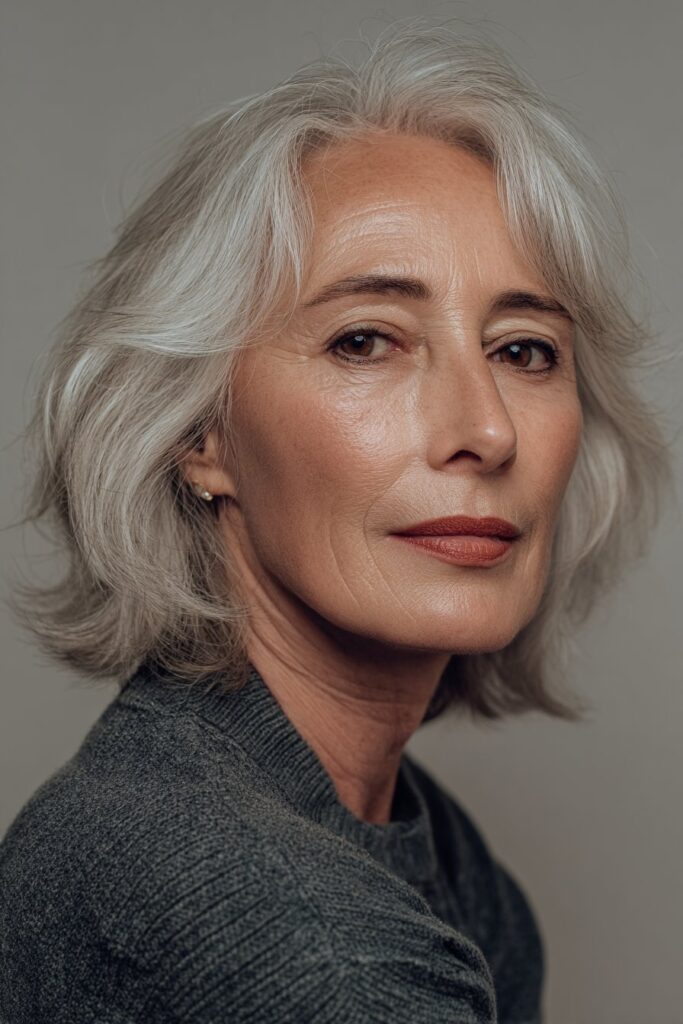
Believe it or not, the mullet is making a stylish comeback in 2025! After seeing numerous clients initially hesitate about this once-divisive style, I’ve witnessed firsthand how the mini mullet revival creates remarkable results for older women with thinning hair.
Style Overview
The modern mini mullet is worlds apart from its bold ’80s predecessor. This updated version features softer angles and graduated layers that create a beautiful cross between a shag and a mullet. What makes it special is its versatility—working beautifully on all hair types and lengths, from short and spiky to long and wavy.
The shaggy layered nature creates a lovely frame around your face while maintaining enough length around the ears and back. Ordinarily, the top remains the shortest point, combed forward for a modern look that instantly makes hair appear thicker.
Why It Works for Thin Hair
Frankly, this style is perfect for thin hair because its layered, textured nature adds the volume and movement that fine locks typically lack. As such, the soft mullet uses natural hair movement, making styling effortless.
I recently transformed a client’s limp, fine hair with a mini mullet. Afterward, she couldn’t believe how much thicker her hair looked—the short-up-top, long-in-the-back style created visual dimension that made her thin hair appear substantially fuller.
Styling Tips
To maintain this look, I recommend priming with a volumizing product, focusing on the top and front sections. Naturally, texture is key—a dry texturizing spray helps create that tousled, effortless finish.
For daily styling, use a lightweight pomade on just the ends to create definition without heaviness. Overall, the beauty of this cut is its low-maintenance nature—you’ll spend less time styling while still looking fashionably current.
Soft Curls with Layers
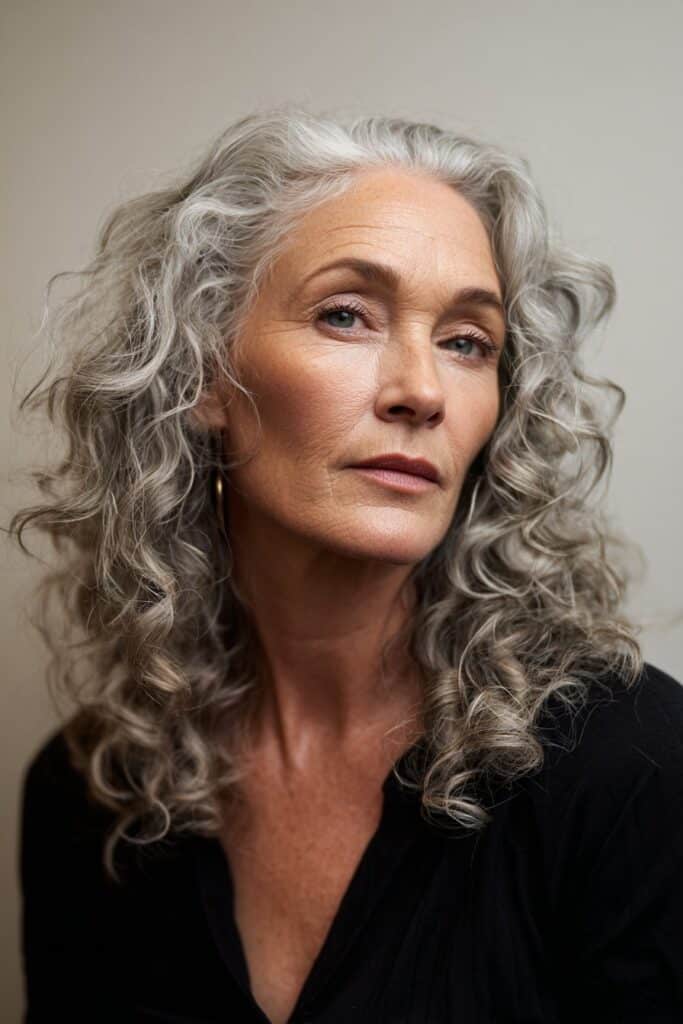
Ever since I started working with older clients who have thin hair, I’ve found that soft curls with layers create remarkable transformations. This style has become my secret weapon for clients seeking both elegance and volume without excessive maintenance.
Style Overview
A soft curls layered style typically features a medium-length cut with subtle layers that enhance natural movement. The beauty of this approach is how layers distribute the hair’s weight evenly, allowing curls to stand out without appearing heavy. Most often, I recommend a layered lob (long bob) that offers versatility while complementing natural curl patterns. Even with fine or wavy hair, this cut creates a structured yet soft silhouette that frames the face beautifully.
Why It Works for Thin Hair
Curls are truly magical for adding volume to even the finest strands. Hence, this style works wonderfully because:
- The layers reduce bulk while enhancing overall volume
- Curls create immediate fullness and bounce
- The shape prevents fine hair from appearing flat at the roots
- Layering distributes weight evenly, preventing stretched-out curls
Styling Tips
To maintain this look at home, prep with heat protectant and finish with a lightweight texture spray. According to my experience, diffusing on low heat maintains both volume and shape. For daily care, use sulfate-free shampoo followed by curl cream on damp hair, then scrunch gently. The key is finding products that respect both your curls and deliver volume without heaviness.
Undercut Pixie
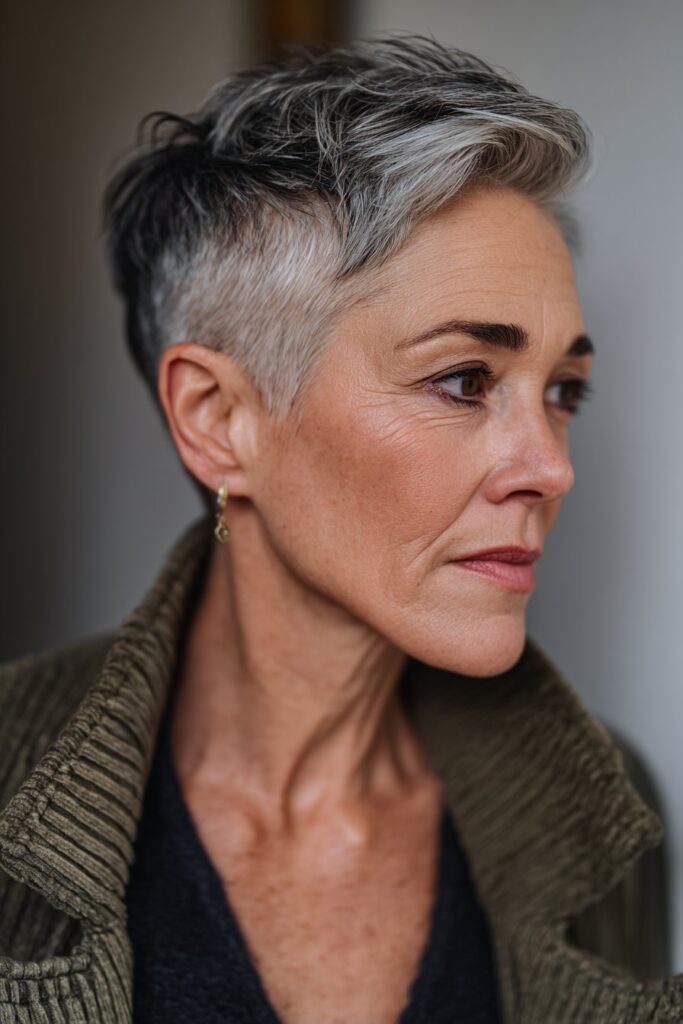
The undercut pixie remains one of my boldest recommendations for older women seeking both volume and a modern edge. I’ve watched countless clients transform from hesitant to confident once they see how this dramatic style enhances their fine hair.
Style Overview
An undercut pixie combines the softness of a traditional pixie with an edgier touch—the sides or back (sometimes both) are shaved or clipped very short while the top remains longer and textured. This striking contrast creates a modern, wearable look that works beautifully on almost any face shape. Even my clients with round faces achieve great results when we style the top with extra volume to elongate their features.
Why It Works for Thin Hair
Primarily, this cut excels for fine hair because the undercut provides immediate structure. Once, a client with extremely fine hair came to me frustrated after trying numerous styles—the undercut pixie gave her hair such incredible lift that she called it “life-changing.”
The technique works through clever design—reducing bulk in thicker hair while creating the illusion of density where needed most. The contrast between shorter sides and textured top draws attention upward, effectively highlighting cheekbones and eyes. Plus, for women with hot flashes, the shortened sides offer welcome relief without sacrificing style.
Styling Tips
For daily styling, lightweight products are essential:
- Apply volumizing mousse to damp roots before blow-drying for maximum lift
- Use texturizing spray or pomade for definition without heaviness
- Focus on creating texture through the longer top sections while keeping the undercut clean
This style needs regular maintenance every 4-6 weeks to maintain those sharp lines. Yet the everyday styling time? Mere minutes—simply mess it up with your fingers and go.
Smooth Crop with Side Fringe
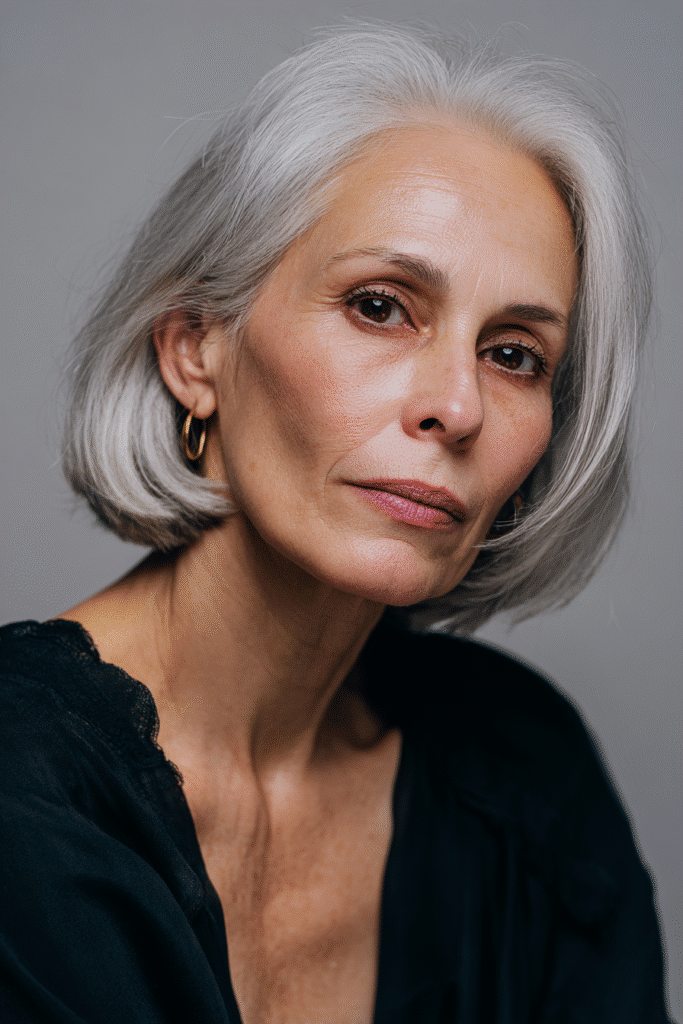
The smooth crop with side fringe has become my signature style recommendation for countless older women in my salon. After decades in the industry, I’ve yet to find a more versatile option that flatters almost everyone who sits in my chair.
Style Overview
This elegant cut features clean lines with a sleek, polished finish, complemented by a soft side-swept fringe that gracefully frames the face. What makes this style truly special is how the side part creates allure while helping your eyes pop. In my experience, this cut works magnificently for most face shapes, offering that rare combination of sophistication and softness.
Why It Works for Thin Hair
The beauty of this style for thinning hair lies in its strategic design. Primarily, a side part instantly adds youthful swing, bounce, and body to tresses while flattering facial features. Furthermore, it cleverly conceals thinning areas—if your hair is looking thinner on one side, the side-swept fringe works magic by hiding what lies beneath.
Styling Tips
Regarding maintenance, schedule trims every 3-4 weeks to maintain that perfect fringe. To keep this style looking fresh, I recommend using dry shampoo even on clean hair as thin fringes frequently go oily by midday. Moreover, be gentle with heat—keep tools below 180-190°C to protect delicate strands. My favorite professional tip: ask your stylist to enhance your side-swept style with layers cut at different angles, adding depth, thickness, and movement that thin hair craves.
Conclusion
Throughout my years as a stylist, I’ve witnessed firsthand how the right haircut transforms not just appearance, but confidence too. These twelve short hairstyles represent my absolute favorites for older women dealing with thinning hair concerns. Each cut offers unique advantages while sharing one critical benefit – they all create the illusion of fuller, more voluminous hair.
Many clients initially hesitate about going shorter, worried it might age them further. Surprisingly, the opposite proves true! Short cuts like the layered pixie and textured faux hawk actually draw attention upward to your eyes and cheekbones, creating a more youthful appearance.
Remember when my client Margaret came in feeling defeated about her increasingly thin strands? After her tapered cut, she literally couldn’t stop touching her hair, amazed at how much thicker it felt. These transformations fuel my passion for hairstyling every single day.
The versatility among these styles means you’ll definitely find something perfect for your personal taste. Whether you prefer the classic elegance of a bob with side part or crave something edgier like an undercut pixie, these options work beautifully for diverse face shapes, hair textures, and lifestyles.
Additionally, most of these styles require minimal daily maintenance – another major win! Though regular trims remain important for maintaining shape, your morning routine becomes significantly easier with these well-designed cuts.
Above all, I encourage you to bring references to your stylist but stay open to their expert advice. They’ll help customize any of these styles to complement your specific facial features, hair texture, and lifestyle needs.
After decades behind the chair, I can confidently say that thinning hair never limits your style options – it simply guides you toward choices that enhance your natural beauty. The perfect haircut awaits, ready to boost both your volume and confidence!
Key Takeaways
These expert-recommended short haircuts prove that thinning hair doesn’t limit your style options—it simply guides you toward cuts that enhance volume and confidence.
• Shorter lengths create instant volume by removing weight that pulls down fine strands, making hair appear thicker and more substantial • Layered cuts are game-changers for thin hair, creating movement, texture, and the illusion of fullness through strategic cutting techniques • Side parts add immediate lift and help conceal thinning areas while creating asymmetry that flatters most face shapes • Regular maintenance is essential with trims every 4-8 weeks to preserve shape, but daily styling becomes surprisingly low-maintenance • Product selection matters more than ever—lightweight mousses and texturizing sprays add body without weighing down fine hair
The key to success lies in working with your natural texture rather than against it. Whether you choose a classic bob or bold undercut pixie, these styles transform thinning hair from a concern into a confident style statement.

Elsa Claire is the founder and editor of ElsaClaire.com, where she writes about hairstyles, hair care, and the everyday routines that help real people feel good about their hair.