Wrestling hairstyles can make or break your performance on the mat. I’ve learned this lesson the hard way when my hair came loose during a crucial match, completely throwing off my concentration.
When you’re grappling with an opponent, the last thing you need is hair falling in your face or getting pulled. I’ve found that braids are absolutely essential for any serious wrestler. Actually, two Dutch braids have always been my go-to favorite because they keep everything secure during intense competitions. For many female wrestlers, the struggle to find hairstyles that are both functional and comfortable is real.
The standard wrestling hairstyle tends to be very short for safety reasons, but if you’re like me and prefer to keep your length, there are plenty of practical options. From simple ponytails to cornrow braids that keep every single strand out of your face, the right hairstyle can help you focus entirely on your technique instead of constantly adjusting your hair.
In this article, I’m sharing my top 12 wrestling hairstyles for girls that are not only easy to create but will stay put throughout your entire match. Because when it comes to wrestling hairstyles, functionality trumps fashion every time!
Two Dutch Braids
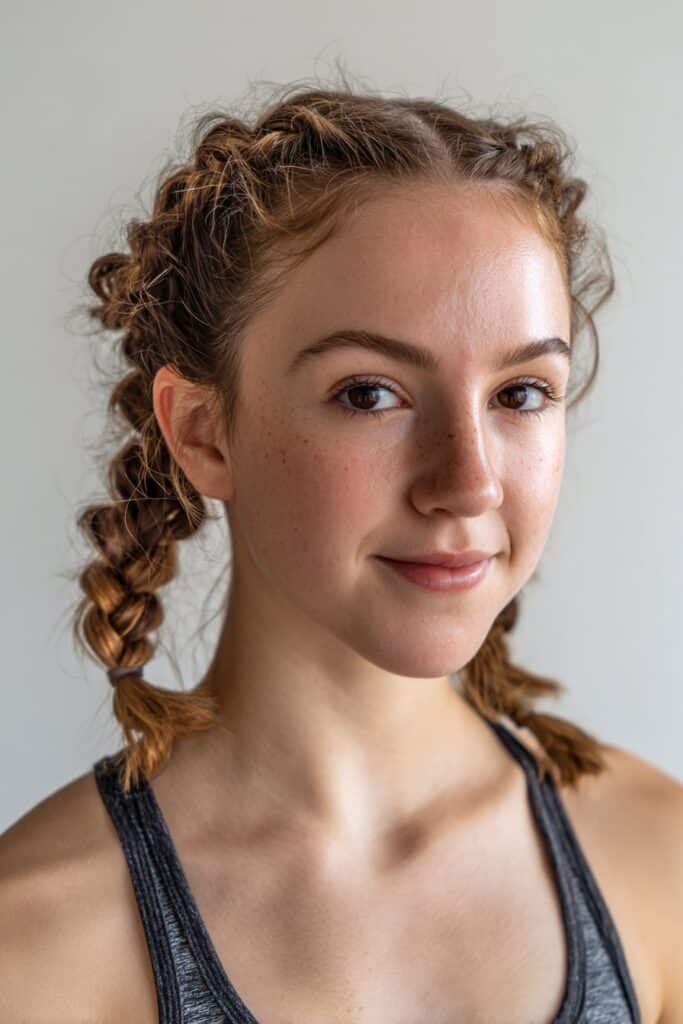
Dutch braids have saved me countless times on the wrestling mat. As a wrestling hair specialist, I’ve found that these braids stand up remarkably well during intense matches while keeping hair secure and out of your face throughout competition.
Two Dutch Braids benefits
Dutch braids are absolute lifesavers for wrestlers with longer hair. From my experience working with competitive athletes, they’re consistently rated as a top choice for several compelling reasons. First and foremost, they hold everything firmly in place without the need for bobby pins or additional accessories. This means no worrying about hair accessories coming loose or causing discomfort during a match.
Additionally, these braids provide excellent coverage, keeping most hair away from your face and preventing distractions when you need to focus most. Unlike buns that can feel bulky under headgear, Dutch braids lie flat against your head, making them compatible with required wrestling equipment.
Furthermore, these braids offer versatility – they can be worn in various styles while maintaining the same secure benefits. This adaptability makes them suitable for different hair types and lengths.
Two Dutch Braids styling tips
Creating perfect Dutch braids for wrestling takes practice, though once mastered, the process typically takes just 5-8 minutes to complete. Here’s my fool-proof method:
- Start with the right tools: a rattail comb for clean parting, hair bands, and optionally, a water spray bottle, gel, and hairspray for extra hold
- Part your hair down the center all the way to the nape, creating two equal sections
- Clip one section away while working on the other
- For maximum wrestling performance, I recommend braiding while your hair is still slightly damp
- Apply a leave-in conditioner or hair oil before braiding to protect your hair from damage
The key difference between Dutch and French braids is that Dutch braids cross sections under rather than over, creating that raised, 3D effect that stays secure during active movement.
Two Dutch Braids for wrestling
On the wrestling mat, these braids have earned their reputation as a go-to style. Many female wrestlers, myself included, prefer using two Dutch braids in combination with a cap – especially caps with chin straps. This combination provides ultimate security even during the most aggressive matches.
What makes Dutch braids particularly effective for wrestling is how they distribute tension evenly across your scalp, preventing discomfort during long tournaments. However, be mindful that extremely tight braids can feel uncomfortable – if your scalp becomes itchy or feels like it’s being pulled, the braids might be too tight.
For wrestlers with silkier hair that tends to slip, I suggest applying a strong-hold hair gel before braiding. Many professional fighters use Got2B Glued Invincible Styling Gel to keep everything locked down. After competition, thoroughly condition your hair to prevent knotting and damage.
Half Braids with Ponytail
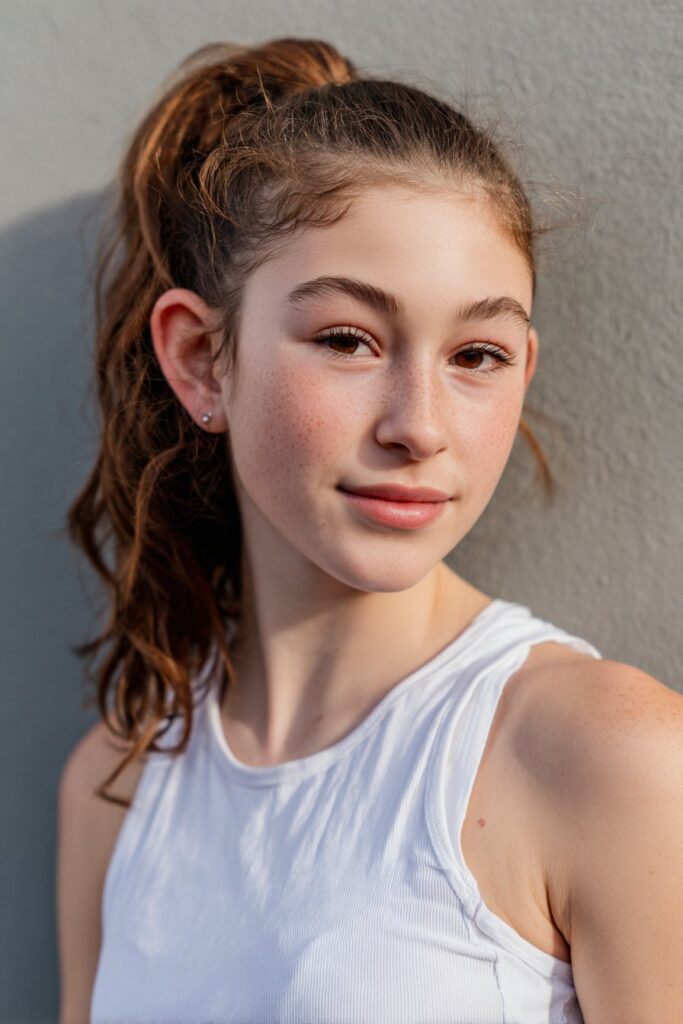
The half braids with ponytail style has become my secret weapon for wrestling competitions where I need both security and simplicity. This hybrid technique combines the best of both worlds—the security of braids with the ease of a ponytail.
Half Braids with Ponytail pros
Throughout my years as a wrestling hairstylist, I’ve noticed that half braids with ponytail offer exceptional benefits. First off, this style provides superior hold since the braided portions are secured tightly to the scalp. Unlike full braids that require more time, or simple ponytails that can loosen, this combination offers a practical middle ground.
One major advantage I’ve found is how it prevents hair from getting caught underneath you. By positioning the ponytail on the side rather than straight back, you avoid that uncomfortable trapped feeling when grappling on the ground. Moreover, this positioning dramatically reduces the chances of having your hair painfully pulled out during intense matches—something many of my clients have experienced firsthand.
The half-braided style also distributes tension more evenly across your scalp, making it significantly more comfortable for all-day tournaments. Consequently, you’ll spend less time readjusting and more time focusing on your technique.
Half Braids with Ponytail styling tips
Creating this versatile style takes practice, although once mastered, it’s remarkably quick:
- Section off the front portion of your hair (approximately the top half)
- Create two or more braids with these sections, keeping them tight against your scalp
- Secure each braid with a small elastic
- Gather all remaining hair plus the ends of your braids into a side ponytail
- Secure with a strong elastic
- For extra security, quickly braid the ponytail itself and add a second band
For wrestlers with particularly slippery hair, applying hairspray before styling can provide additional grip. Additionally, adding a second hair tie at the base of each braid where it begins to separate from your head ensures maximum security.
Half Braids with Ponytail for long hair
Wrestlers with longer hair face additional challenges, namely managing the ponytail portion. In my experience working with long-haired athletes, I always recommend braiding the ponytail itself after securing it. This creates a more compact style that’s less likely to whip around or get grabbed.
For extremely long hair, a tiered ponytail works wonders. This technique involves creating sequential ponytails down the length of your hair, tucking the ends of each section into the one below it. Naturally, this creates a secure column of hair that stays put even during aggressive matches.
For silky hair that typically slips out of styles, I’ve found that applying a leave-in conditioner before braiding helps create necessary texture without damaging your hair. Ultimately, the goal is finding the balance between security and comfort—something this versatile style delivers perfectly.
Cornrow Braids
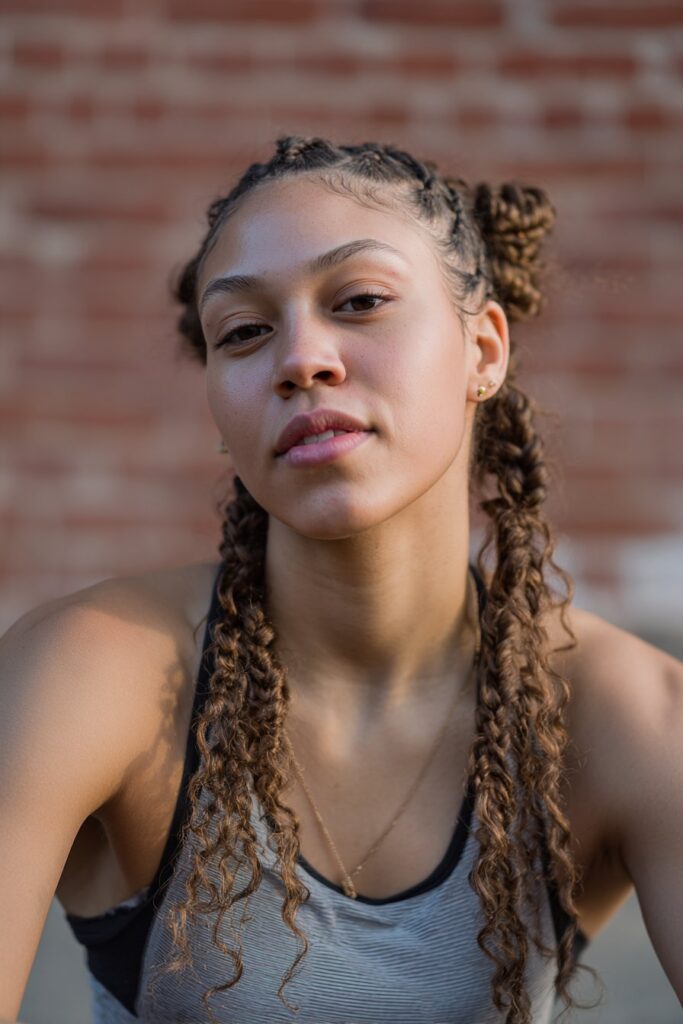
Cornrow braids have been my most reliable hairstyle recommendation for serious wrestlers facing lengthy competitions. As someone who has styled countless athletes’ hair, I’ve seen firsthand how these tight, scalp-hugging braids can make all the difference between distraction and focus during crucial matches.
Cornrow Braids durability
Cornrows truly excel in the durability department. Indeed, they’re one of the most long-lasting wrestling hairstyles available, often holding up through multiple training sessions without needing touch-ups. From my experience styling hair for wrestlers, cornrows remain intact even through the most intense grappling sessions and sweaty workouts.
One wrestler I worked with had previously struggled with her hair constantly coming loose during matches. After switching to cornrows, she was amazed that the style stayed perfectly in place through an entire tournament. Cornrows are exceptionally sweat-proof, maintaining their shape and clean appearance despite hours in the gym. This sweat resistance makes them ideal for wrestlers who can’t afford hair distractions.
Cornrow Braids styling process
Creating effective cornrows for wrestling requires proper preparation. First, I always recommend starting with clean, well-conditioned hair. For maximum grip and longevity, apply a leave-in conditioner or light hair oil before braiding to protect your hair from damage.
The actual braiding technique involves:
- Sectioning hair into straight or curved rows with a rat-tail comb
- Dividing each small section into three equal strands
- Creating a close-to-scalp braid by adding hair as you go
- Maintaining even tension throughout (without pulling too tightly)
Tension is crucial—if your scalp becomes very itchy or feels like it’s being pulled, your braids are likely too tight. For optimal wrestling performance, I recommend using plenty of gel to keep everything firmly in place.
Cornrow Braids for competition
During competition, cornrows offer unmatched benefits. The tight weaving ensures each braid lies flush against the scalp, minimizing any possibility of becoming unraveled at crucial moments. This secure fit is essential when every second of focus matters.
Furthermore, cornrows dramatically reduce the risk of hair pulling during matches. Unlike looser styles, they provide no easy grips for opponents or accidental tugs during grappling exchanges.
For wrestlers concerned about equipment compatibility, cornrows work excellently under protective gear. Their low profile fits comfortably under headgear without creating uncomfortable pressure points. Plus, the tight, flat style against your scalp improves cooling during intense matches by allowing better air circulation than heavier loose styles.
Despite their advantages, be prepared for some maintenance. After competitions, I always advise thoroughly conditioning your hair to prevent breakage and minimize damage from the tight styling.
Rubber Band Sections

For shorter-haired wrestlers, rubber band sections have become one of my favorite styling recommendations. As a hairstylist who regularly works with athletes, I’ve found this technique offers a practical solution when braiding isn’t feasible due to length limitations.
Rubber Band Sections for short hair
Shorter hair presents unique challenges on the wrestling mat. Throughout my career, I’ve noticed that many athletes with chin-length or shorter cuts struggle to keep hair secured during intense matches. Rubber band sectioning solves this dilemma beautifully.
The technique works wonderfully for hair that’s too short for full braids yet long enough to be distracting. I’ve recommended this approach to countless clients with pixie cuts or bobs who previously thought their only option was constantly brushing hair from their eyes during competition.
One of my clients, a state champion wrestler with a stylish bob, tried this method after struggling with pins (which should never be worn during practice or competition due to safety concerns). She was thrilled to discover how effectively the rubber band sections kept every strand secure.
Rubber Band Sections styling tips
Creating this style is straightforward even for beginners:
- Start with slightly damp hair for better grip
- Use a fine-tooth comb to create clean sections across your head
- Gather each small section into what some of my clients playfully call “sprouts”
- Secure each section with small, snag-free rubber bands
- For maximum security, make modified pigtails with the top portion of your hair
For wrestlers with particularly slippery hair, I recommend those spiral hair ties (sometimes called invisibobbles). These grip hair without causing the painful pulling that traditional elastics sometimes create.
The versatility of this style allows for numerous variations. Some wrestlers prefer creating two small pigtail buns at the top of the head, which keeps hair contained while fitting comfortably under headgear.
Rubber Band Sections maintenance
Maintenance is where this style truly shines compared to more elaborate options. Given that rubber band sections can be quickly adjusted between matches, they’re ideal for tournament days when you may not have time for complete restyling.
To preserve this style throughout competition, I advise my clients to carry extra rubber bands in their gear bag. Occasionally, an intense match might cause one section to loosen, so having replacements handy ensures you stay focused on wrestling, not your hair.
After competition, remove bands carefully by cutting them with small scissors rather than pulling them out, which can damage hair. Afterward, apply a deep conditioning treatment to counteract any tension stress on your strands.
The simplicity of rubber band sections makes them perfect for wrestlers who need a no-fuss, dependable hairstyle that delivers maximum security with minimal styling time.
Half-Head Braids
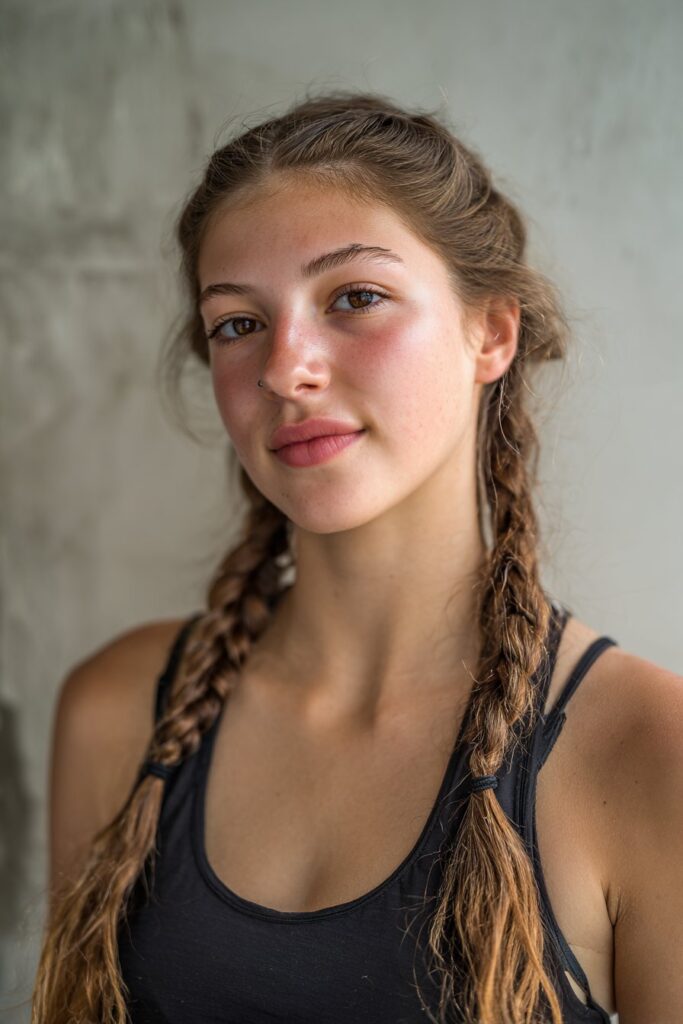
Half-head braids became my go-to suggestion after discovering how many wrestlers struggle with hair management during competitions. Throughout my years styling hair for athletes, I’ve learned that sometimes partial solutions work better than full ones.
Half-Head Braids for control
Half-head braids offer exceptional control for wrestlers facing intense matches. The beauty of this style lies in its strategic approach—braiding only the top portion of your hair that would otherwise fall forward during movement. As one of my clients noted after winning her regional championship, “Having my face completely clear made all the difference in my peripheral vision.”
Beyond visibility, these partial braids eliminate a common wrestling problem: hair getting trapped underneath you. Whenever I prepare wrestlers for competitions, I remind them that half-head braids allow for quick movement without the painful experience of having hair ripped out from under you during ground work.
Half-Head Braids styling ideas
Creating effective half-head braids requires less time yet delivers maximum benefit. First, section off just the top half of your hair—everything that might potentially fall forward during a match. Then, depending on your preference, create:
- Two parallel braids running from your forehead back
- Multiple smaller braids for more secure control
- A single central braid with side sections tucked behind ears
For wrestlers who compete regularly, I recommend braiding while hair is slightly damp, then applying a strong-hold gel to keep everything locked in place. Plus, unlike full braiding styles that can cause tension headaches, half-head braids distribute pressure more comfortably.
Half-Head Braids for short hair
What makes half-head braids truly versatile is their effectiveness for shorter hair lengths. This hairstyle is an excellent solution for wrestlers with chin-length or shorter cuts, as it only requires securing the top portion. Even with limited length, these partial braids hold everything in place without requiring any bobby pins or additional hair accessories.
Throughout my career styling wrestlers’ hair, I’ve observed that half-head braids work wonderfully for those transitioning from longer styles to shorter ones. The partial braiding technique accommodates growing-out phases comfortably yet securely.
Essentially, half-head braids provide exactly what wrestlers need most: reliable hair control without the full commitment of complete braiding. They’re fast, effective, and suitable for various hair types and lengths—making them a practical solution for wrestlers who need their hair managed without extensive styling time.
French Braids
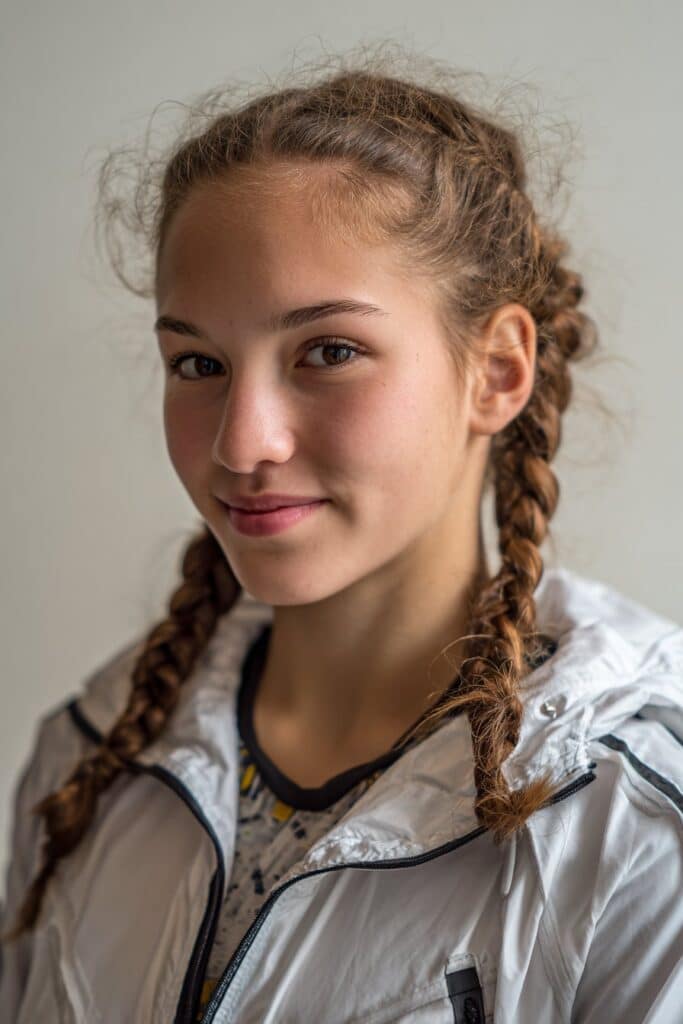
When I’m working with wrestling athletes who need dependable hair control, French braids consistently rank among my top recommendations. As someone who’s styled countless wrestlers’ hair, I’ve seen firsthand how this classic technique provides both security and comfort throughout intense competitions.
French Braids for wrestling
French braids excel at keeping hair securely in place during wrestling matches. Throughout my career, I’ve recommended these braids specifically for wrestlers with longer hair that needs maximum control. One young athlete I worked with had previously struggled with layered hair constantly falling in her face during matches. After switching to French braids, she immediately noticed improved performance simply because she wasn’t constantly distracted.
What makes French braids particularly suited for wrestling is their compatibility with headgear. The flat, close-to-head style fits comfortably underneath without creating pressure points or discomfort. Plus, many wrestlers appreciate how French braids distribute tension evenly across the scalp, preventing the headaches that sometimes accompany tighter styles.
French Braids styling tips
Creating effective French braids for wrestling requires attention to detail:
- Start with slightly damp hair for better grip and control
- Use a leave-in conditioner to protect hair from tension damage
- Section hair clearly before beginning to ensure evenness
- Begin braiding at the crown, adding small sections as you move downward
- Keep tension consistent without pulling too tightly
- Secure ends with small, snag-free elastics
For wrestlers with layered hair, French braids often work better than Dutch braids because they incorporate shorter pieces more effectively. I always tell my clients that practice makes perfect – the technique might seem challenging at first, yet becomes second nature with repetition.
French Braids hold and comfort
Regarding comfort, French braids truly shine. Many athletes tell me they forget they’re even wearing a braid once competition begins. Unlike styles that create uncomfortable pressure points, properly executed French braids distribute tension evenly across the scalp.
For all-day tournaments, French braids maintain their integrity even through multiple matches. Several of my clients who compete in day-long events choose French braids specifically because they don’t require mid-day adjustments or repairs. Furthermore, this style transitions easily from competition to post-event activities without looking overly athletic or severe.
In my experience, French braids work exceptionally well for athletes with fine or silky hair that typically slips out of other styles. The continuous adding of hair creates natural tension that holds securely without requiring excessive products or tools.
Low Braided Bun
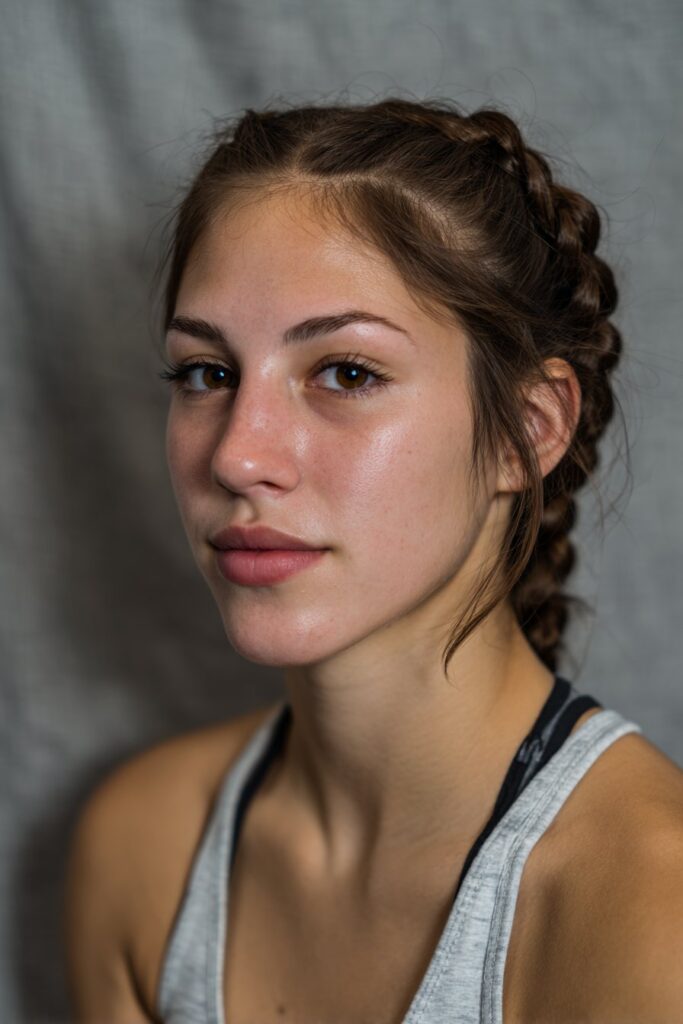
After years of styling hair for wrestling competitions, I’ve found that the low braided bun offers exceptional security with an elegant touch. This versatile style works wonderfully for tournaments where both function and form matter.
Low Braided Bun for secure hold
The low braided bun excels at keeping hair firmly in place throughout intense matches. As a hairstylist who regularly works with athletes, I’ve observed how this sturdy style holds up remarkably well during the toughest workouts. What makes it particularly effective is how it combines two powerful elements: the security of braiding with the containment of a bun.
For wrestlers seeking maximum hold, I recommend creating this style with two elastics – one to form the ponytail base and a second to secure the braided portion. This double-securing technique prevents the common problem of hair gradually loosening during matches.
Furthermore, positioning the bun low rather than high creates a more balanced weight distribution that stays put even during aggressive movements on the mat.
Low Braided Bun styling steps
Creating an effective low braided bun takes just a few minutes from start to finish, making it perfect for pre-competition preparation. Here’s my foolproof method:
- Begin by gathering all your hair into a low ponytail positioned slightly to the side rather than directly at the back
- Secure with a strong elastic
- Braid the ponytail completely
- Add a second elastic at the end of the braid
- Twist the braid around its base to form a bun
- Secure with additional elastics or hairpins as needed
For extra competition-day security, I recommend applying a light texturizing spray beforehand, which gives slippery hair more grip without feeling sticky or stiff.
Low Braided Bun for silky hair
Regarding silky hair, I must share a crucial insight – standard buns typically aren’t recommended as they simply won’t stay in place during active movement. The slick texture causes them to slip out, creating frustrating distractions during crucial moments.
Fortunately, the braided component of this style solves this common problem. By braiding first, you create texture and friction that helps hold everything together. For extremely silky-haired wrestlers, I suggest adding a small amount of mousse or light gel before styling to provide additional grip.
Additionally, incorporating a small amount of unscented texturing spray can transform how this style performs on naturally slippery hair without compromising comfort or adding noticeable product weight.
Double Bubble Braids

Bubble braids have recently caught my eye as a game-changing hairstyle for wrestlers seeking both security and style. Throughout my styling career, I’ve watched this unique technique gain popularity among athletes who need their hair to stay put no matter what.
Double Bubble Braids look
Double bubble braids create a distinctive sectioned appearance that’s both functional and fashionable. The style features two parallel ponytails with “bubbles” created by pulling sections of hair outward between elastic bands. As a stylist working with competitive athletes, I’ve noticed these braids offer that rare combination of eye-catching design without sacrificing practicality. Clients often tell me they appreciate how the style stands out in team photos yet remains completely functional during competition.
Double Bubble Braids for thick hair
Thick-haired wrestlers frequently struggle with conventional styles that become too bulky or heavy. Fortunately, double bubble braids work exceptionally well for thicker hair types. The style naturally distributes weight evenly, preventing that uncomfortable pulling sensation many athletes experience. For my clients with particularly voluminous hair, I recommend creating larger, softball-sized bubbles that showcase their thickness while maintaining control.
Double Bubble Braids maintenance
Undeniably, one of the biggest advantages of double bubble braids is their durability under intense conditions. For wrestling success, I advise sectioning hair carefully and securing each bubble with clear elastic bands. In fact, my clients report these braids stay intact throughout entire tournaments without requiring mid-event adjustment. The style remains remarkably sweat-resistant, making it perfect for wrestlers focused on their performance rather than their hair.
Zigzag Braids

Zigzag braids caught my attention as a distinctive option for wrestlers seeking both functionality and a unique look. These braids feature an eye-catching pattern that’s initially intimidating but surprisingly simple to create.
Zigzag Braids uniqueness
What sets zigzag braids apart is their distinctive pattern that creates a secure grip against the scalp. Throughout my career styling hair for competitions, I’ve noticed these braids offer excellent hold without the common problem of hair slipping loose. The zigzag partings create natural tension points that lock hair in place even during intense matches.
Plus, this style works equally well on natural or relaxed hair textures. For athletes wanting a style that stands out from standard braids yet maintains complete functionality, zigzag braids provide that perfect balance.
Zigzag Braids styling tips
Creating effective zigzag braids requires:
- Start with clean, slightly damp hair
- Use a rattail comb to create zigzag parts across your scalp
- Secure each section firmly as you braid
- Apply light gel for extra hold
Typically, these braids can be configured into various patterns – from four zigzag braids to eight, or even with criss-cross variations.
Zigzag Braids for girls
Female wrestlers frequently choose zigzag braids because they combine practicality with personal expression. Many of my younger clients prefer pairing zigzag parts with pigtails for tournaments. The zigzag pattern naturally secures shorter layers that might escape standard braids, making them ideal for active girls on the wrestling team.
Braided Crown
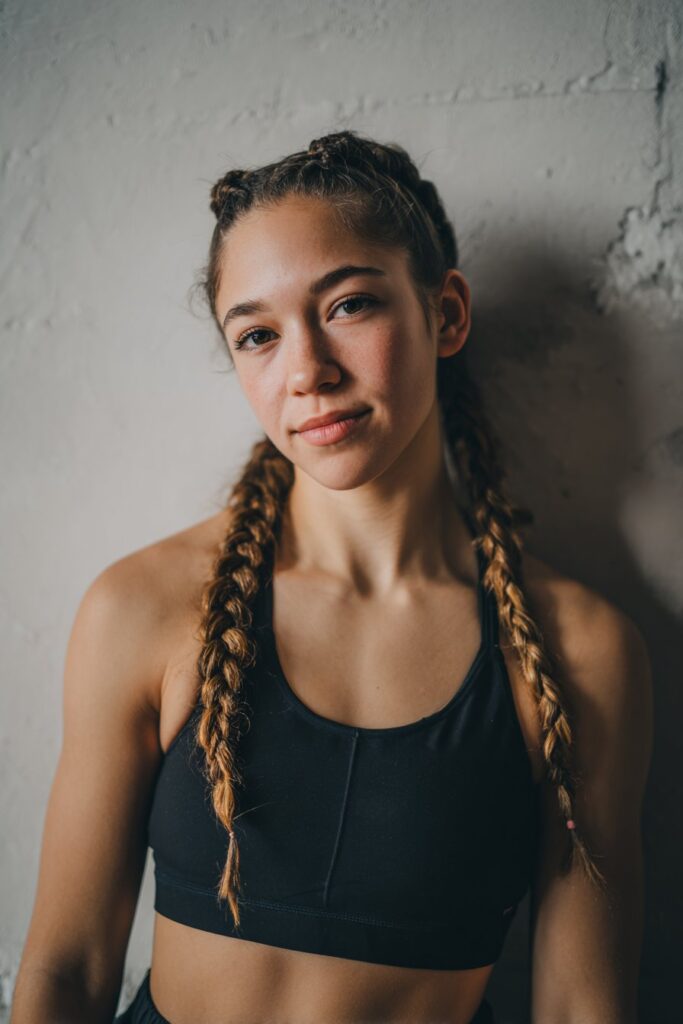
The braided crown stands as my top recommendation for wrestlers wanting both elegance and functionality in their competition hairstyle. Throughout my years styling hair for athletes, I’ve witnessed how this regal style combines security with sophistication.
Braided Crown for elegance
Braided crowns create a royal, charismatic appearance that truly makes a statement. As a stylist who works with competitive athletes, I love how this style crowns wrestlers with confidence even before they step onto the mat. The crown can be customized in several variations—dutch crown braids, double fishtail crowns, or milk maid braids—depending on your preference and hair length.
Braided Crown for wrestling
Beyond esthetics, this style excels at keeping every strand securely anchored during intense matches. Many fighters report entering “battle mode” once their crown braid is complete. One wrestler I styled mentioned feeling psychologically transformed—ready to compete with complete focus once her braided crown was set. Furthermore, this style stays intact through sweat and impact better than most alternatives.
Braided Crown styling tips
For optimal wrestling performance, I recommend:
- Applying a leave-in conditioner while hair is damp
- Using a strong-hold gel like Got2B Glued Invincible Styling Gel for maximum security
- Being cautious with tension—properly done braids shouldn’t feel like “getting a face-lift”
- Creating a flatter braid pattern that adds minimal bulk under headgear
Unlike bulky buns that shift during movement, crown braids distribute weight evenly around the head, maintaining balance throughout your match.
Side Braids with Low Ponytail
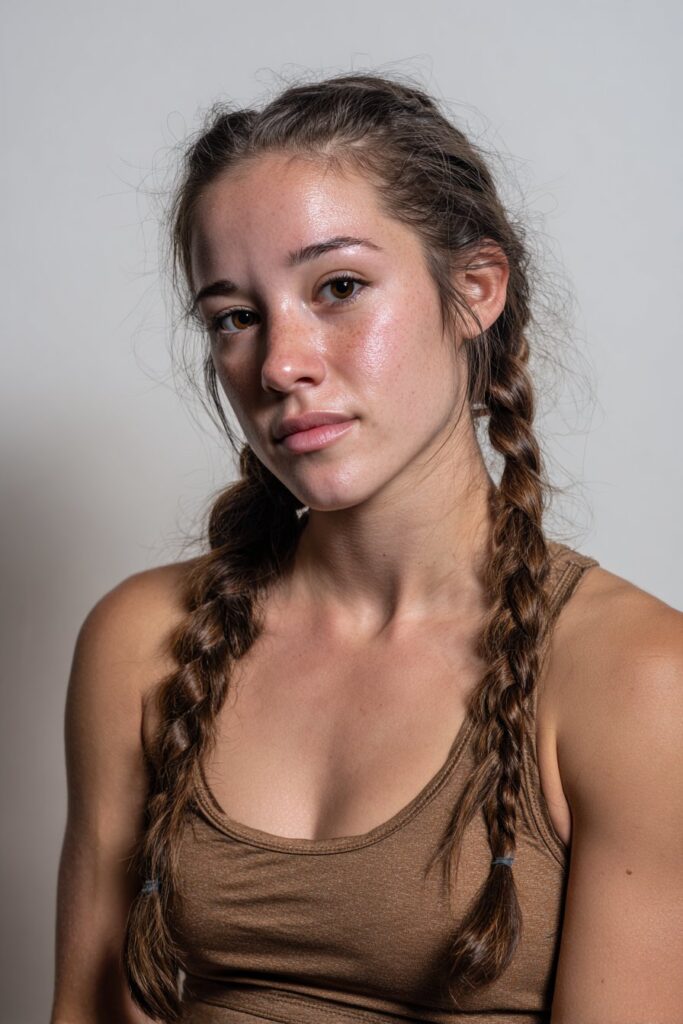
Side braids paired with a low ponytail became a game changer in my styling arsenal following a breakthrough moment with a wrestling champion client. She needed a style that wouldn’t budge throughout multiple matches yet felt comfortable under headgear.
Side Braids with Low Ponytail benefits
This hybrid style offers several advantages for competitive wrestlers. First off, it dramatically reduces the risk of being blinded by hair during intense movements. Additionally, the side positioning prevents your ponytail from getting painfully trapped underneath you during ground work.
Throughout my styling career, I’ve noticed this combination creates less tension on your scalp compared to high ponytails that fight against gravity. For this reason, many of my clients report fewer headaches even after all-day tournaments.
Side Braids with Low Ponytail for long hair
Wrestlers with lengthy locks face unique challenges that this style addresses beautifully. The side braids control front sections completely while the low ponytail keeps everything else secure.
Importantly, I recommend braiding the ponytail itself after securing it for extremely long hair. This creates a more compact style that won’t whip around during matches.
Side Braids with Low Ponytail styling
Creating this look takes approximately 5-7 minutes and requires:
- Comb/brush
- Elastic bands
- Water spray bottle
- Optional: hairspray and hair accessories
Begin by sectioning side portions, creating laced braids along each side, then gather everything into a low side ponytail positioned away from where your head typically contacts the mat.
Tight Boxer Braids

Boxer braids have earned their status as my top recommendation for serious wrestlers looking for maximum control. The first time I created these for a state champion wrestler, she told me they were a “game changer” for her performance. These tight, scalp-hugging braids offer unmatched security throughout intense competitions.
Tight Boxer Braids for control
The primary advantage of boxer braids lies in their exceptional control capabilities. Fundamentally, these are Dutch braids worn extremely tight against the scalp, creating a secure style that prevents hair from becoming a distraction. Whenever I create this style for competitors, they appreciate how these braids eliminate the possibility of hair falling into their eyes or becoming a handhold for opponents. One remarkable benefit is how they distribute tension evenly, minimizing discomfort even during all-day tournaments.
Tight Boxer Braids styling tips
Creating effective boxer braids requires:
- Start with clean, slightly damp hair for maximum grip
- Apply leave-in conditioner to protect from tension damage
- Part hair precisely down the center from forehead to nape
- Braid tightly but carefully—if your scalp becomes very itchy, the braids are too tight
Remember to cross sections under rather than over to create that distinctive raised pattern that characterizes true boxer braids.
Tight Boxer Braids for competition
Throughout competition seasons, I’ve observed how boxer braids consistently outperform other styles in durability and security. Their tight weaving ensures they lie flush against the scalp, dramatically reducing any possibility of becoming unraveled during crucial moments. Additionally, these braids offer excellent sweat resistance, maintaining their neat appearance despite intense physical activity.
Conclusion
Finding the perfect wrestling hairstyle truly makes all the difference between distraction and focus during those crucial match moments. Throughout my years styling hair for wrestlers, I’ve seen firsthand how the right technique can boost confidence and performance simultaneously. Each hairstyle featured in this article offers unique benefits while serving the same essential purpose—keeping hair secure and out of your face when every second counts.
Dutch braids remain my personal favorite recommendation due to their exceptional security and comfort under headgear. Nevertheless, the beauty of having multiple options means you can choose styles that best match your hair length, texture, and personal preference. Cornrows offer unmatched durability for lengthy tournaments, while bubble braids bring both function and flair to the mat.
Certainly, mastering these techniques takes practice. I still remember working with a young wrestler before her first state championship—her hands trembling as she attempted to braid her own hair. After showing her the side braids with low ponytail technique, her confidence transformed completely. She later told me that knowing her hair would stay put allowed her to focus entirely on her technique rather than constantly adjusting fallen strands.
Remember that wrestling hairstyles serve a practical purpose first and foremost. Though looking good might boost your confidence, functionality trumps fashion every time on the mat. Additionally, always protect your hair by using leave-in conditioner before tight styles and thoroughly conditioning afterward to prevent damage from tension.
Whether you choose the elegant security of a braided crown or the practical simplicity of rubber band sections, the key lies in finding what works reliably for your specific needs. After all, your perfect wrestling hairstyle should become so comfortable that you completely forget about your hair during competition—leaving you free to focus exclusively on victory.
Finally, I encourage you to experiment with these styles during practice before trying them in competition. This way, you’ll discover which ones stay secure through your most intense movements and feel most comfortable under your headgear. Because ultimately, the best wrestling hairstyle isn’t necessarily the most complex one—it’s the one that allows you to perform at your absolute best without a single hair-related distraction.
Key Takeaways
Wrestling hairstyles are crucial for performance success, keeping hair secure and eliminating distractions during intense matches and competitions.
• Dutch braids offer maximum security – They lie flat against the scalp, work well under headgear, and hold firmly without bobby pins throughout entire tournaments.
• Braided styles prevent hair pulling – Cornrows, boxer braids, and French braids eliminate loose strands that opponents can grab or that get trapped during ground work.
• Short hair needs strategic sectioning – Rubber band sections and half-head braids effectively control shorter lengths that can’t be fully braided but still cause distractions.
• Preparation is key for durability – Apply leave-in conditioner before styling and use strong-hold gel to ensure hairstyles withstand sweat and aggressive movement.
• Practice styles before competition – Master your chosen technique during training sessions to ensure comfort under headgear and reliability during crucial matches.
The right wrestling hairstyle transforms from a potential distraction into a competitive advantage, allowing athletes to focus entirely on technique and performance rather than constantly adjusting loose hair.


Elsa Claire is the founder and editor of ElsaClaire.com, where she writes about hairstyles, hair care, and the everyday routines that help real people feel good about their hair.