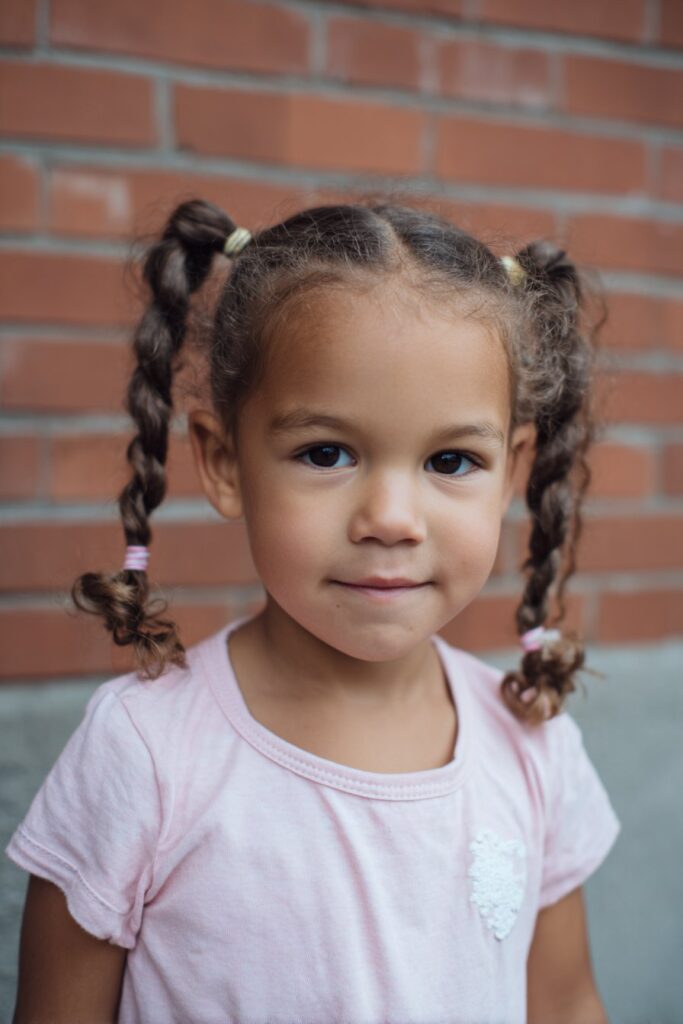
Toddler braids have finally become my go-to hairstyle now that I’ve mastered the art of French braiding! After countless mornings of frustration with my little one’s hair falling out within an hour, I’m thrilled to share these styles that actually stay put all day.
I know the struggle firsthand—toddlers don’t exactly sit still, and their fine hair can be particularly challenging to work with. Whether you’re looking for easy toddler braids for busy mornings, cute toddler braids with beads for special occasions, or simple toddler braids without beads for everyday wear, I’ve got you covered. Dutch boxer braids have become my personal favorite for beginners since they’re surprisingly easy to learn and work wonderfully even with fine hair that typically slips out of styles. My daughter’s hair is similar to Mollie’s—fine and tricky to keep in place—but these techniques have been game-changers for us.
From adorable braided buns with beads and clucker-balls to basic French braids that stay secure all day, these styles are perfect for active toddlers who finally have enough hair to braid. I’ve tested each one through playground adventures, nap times, and everything in between, so you can trust they’ll withstand your little one’s busy day!
Side-Parted French Braids
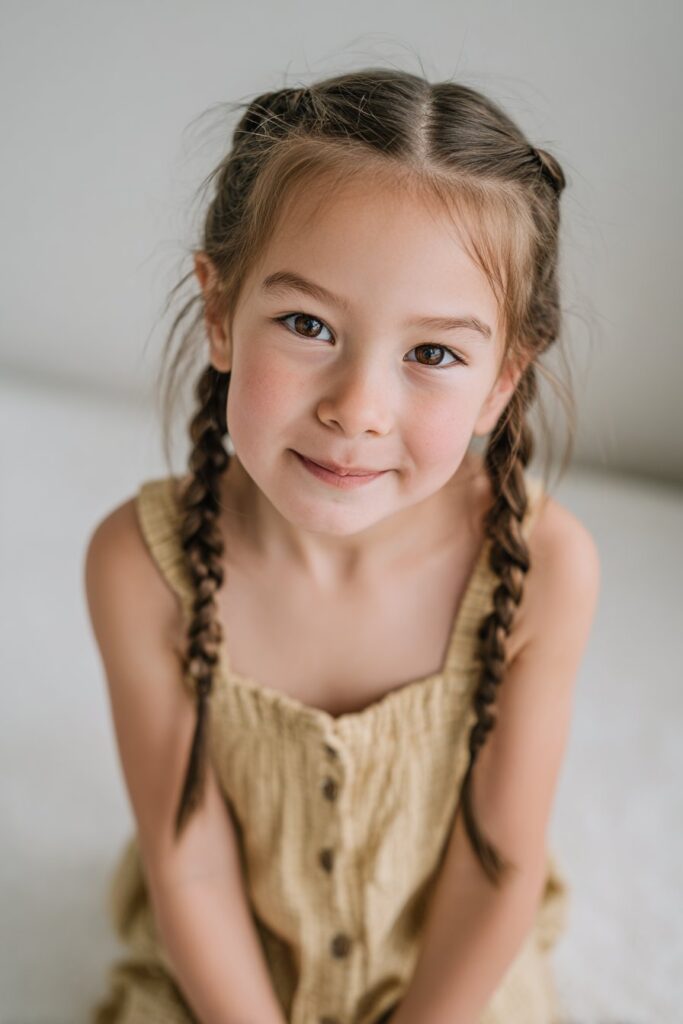
Side-parted French braids became my salvation when my daughter started preschool. While traditional ponytails would loosen during playtime, these braids kept her hair secure from morning drop-off through afternoon pickup.
Side-Parted French Braids overview
French braids with a side part offer both function and style for toddlers. Unlike standard center-parted braids, this variation adds visual interest while keeping hair neatly contained. The technique involves creating a clean side part, then French braiding downward along each side of the head.
I’ve found making a side part first, then dividing the hair from ear to ear creates the perfect foundation. For my daughter’s fine hair, I secure small ponytails up front with rubber bands before beginning the French braiding technique. This approach prevents those tiny front hairs from escaping throughout the day.
Furthermore, the side part naturally frames little faces and works beautifully for growing out bangs or awkward layers around the face.
Why Side-Parted French Braids work for toddlers
The main reason I recommend side-parted French braids is their staying power. They keep hair neat and tangle-free all day long, even through the most active playtime adventures. Additionally, French braids protect toddlers’ delicate hair from breakage and damage that can happen with other styles.
Beyond practicality, these braids eliminate morning struggles with hair care. Once braided, they typically last 1-2 days, cutting down on daily grooming time. This means less stress during busy mornings and more time for breakfast and preparation.
Another advantage is versatility – they work for various hair lengths and textures. Even my daughter’s fine hair stays secure in this style, especially when I start with those small ponytails up front.
Tips for keeping Side-Parted French Braids neat
After much trial and error, I’ve discovered several tricks for lasting French braids:
- Dampen hair first: Braiding slightly damp hair creates tighter braids that stay put longer
- Start with clean, moisturized hair before braiding to prevent dryness
- Secure with quality elastics to prevent breakage at the ends
- Avoid braiding too tightly which can cause discomfort or scalp irritation
For those wispy flyaways, a light spritz of child-friendly hairspray works wonders. Although, if you prefer avoiding products, try braiding when hair is slightly dirty, as natural oils help strands stick together better.
Moreover, incorporating small ponytails at the hairline before French braiding helps “all those little hairs stay put” without awkward neck angles for your toddler. This technique has been my secret weapon for school picture days!
Boxer-Style Dutch Braids
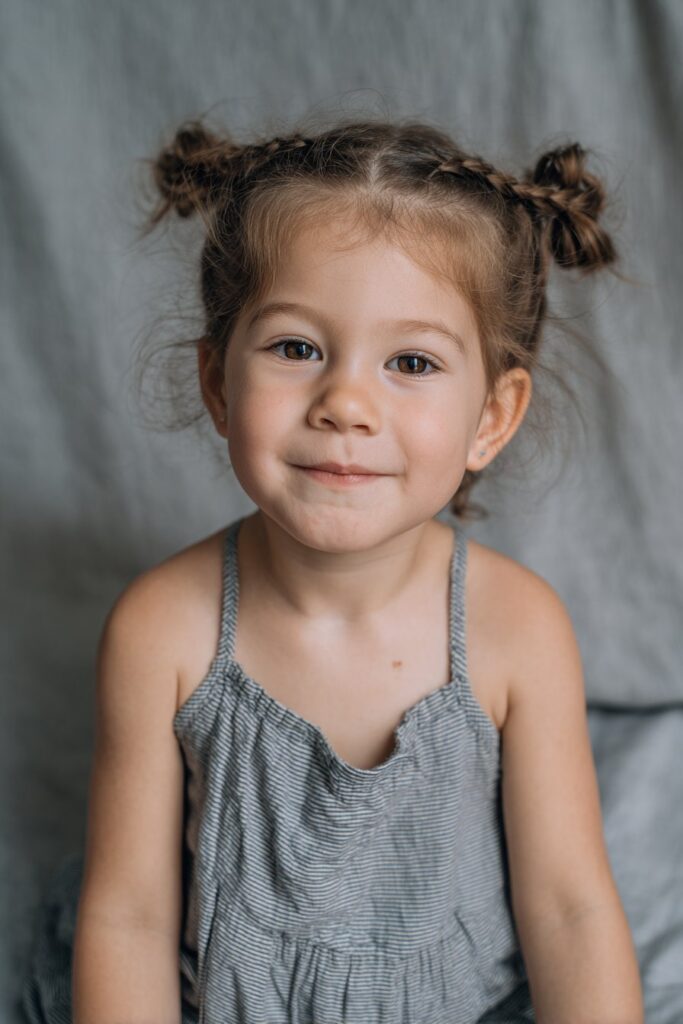
After discovering boxer-style Dutch braids, my morning hair routine with my daughter completely changed. These braids have been a total game-changer for parents of active toddlers everywhere!
Boxer-Style Dutch Braids explained
Boxer-style Dutch braids (often called “boxer braids”) feature two Dutch braids running parallel from the front to the back of the head. I love recommending this style because it keeps hair securely off the face – perfect for busy toddlers who don’t have time to stop for hair fixes throughout the day.
The structure is straightforward yet effective. Unlike other braiding styles, these braids create a raised, three-dimensional look that sits on top of the hair rather than blending in. Consequently, they not only look adorable but also provide excellent staying power through naps, playground adventures, and even swimming lessons.
I’ve found that Dutch braids are some of the simplest braids for beginners to learn. Despite their impressive appearance, the technique is quite approachable once you understand the basic concept.
How Dutch braids differ from French braids
The main difference between Dutch and French braids lies in the crossing technique. With French braids, you cross the outer strands over the middle section. Conversely, with Dutch braids, you pull the outer strands under the middle section. This reversed motion creates that distinctive raised appearance that sits on top of the head rather than lying flat against it.
Given that Dutch braids cross under instead of over, they provide more volume and a three-dimensional look. This makes them particularly eye-catching on toddlers with thinner hair, as the style creates the illusion of thickness.
According to my experience and styling practices, French braids tend to have a more classic, polished look suitable for formal occasions. Meanwhile, Dutch braids often appear more trendy and casual, making them ideal for everyday wear, sports activities, and playdates.
Boxer-Style Dutch Braids for fine toddler hair
My daughter has fine hair just like many toddlers, which initially made braiding challenging. Thankfully, I discovered that boxer-style Dutch braids actually work wonderfully for fine hair.
The secret? Creating two braids instead of one helps those fine hairs stay securely in place. I’ve also learned that keeping the first few crossovers extra tight prevents those wispy baby hairs from escaping throughout the day.
For added fullness in fine hair, try this technique: After finishing the braid, gently pull out the “stitches” just slightly. Hold the end with one hand while carefully tugging the edges of each section with the other. This creates a fuller, more voluminous look without undoing your hard work.
Even better, these boxer braids are excellent for practical purposes – they’re perfect for summer activities and sports. They keep hair neat, prevent tangles, and work well for both everyday wear and special occasions.
Zig-Zag Braided Pigtails
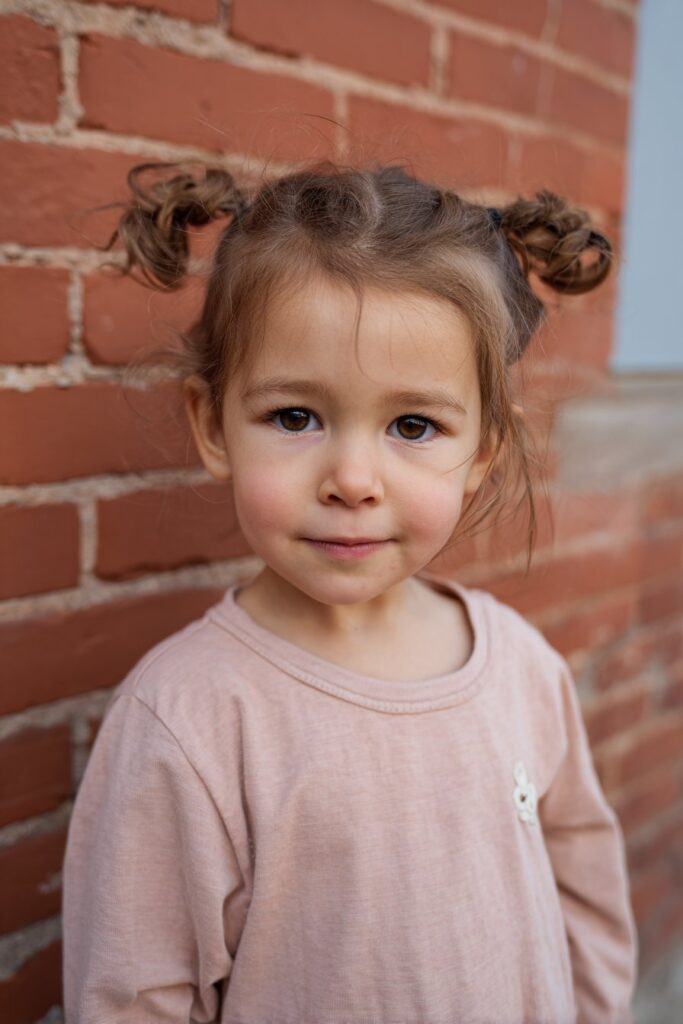
The first time I created zig-zag braided pigtails for my daughter, she couldn’t stop smiling at her reflection. This playful style quickly became our go-to for days when we needed something that would last through playground adventures yet still look adorable.
Zig-Zag Braided Pigtails style
Zig-zag braided pigtails offer a unique twist on traditional pigtail braids by incorporating a fun, lightning-bolt-shaped part line. This creative hairstyle features two pigtails separated by a zig-zag part running from the forehead to the crown. What makes this style stand out is how the unconventional parting creates visual interest even from a distance.
In essence, this protective style combines functionality with creativity. The distinct zig-zag pattern elevates simple pigtail braids into something special, making them perfect for everyday wear or special occasions. Even better, they work beautifully for all hair types and lengths. I’ve created this style on both my daughter’s fine hair and on clients with thicker textures—the results are equally charming.
Why toddlers love Zig-Zag Braided Pigtails
I’ve noticed toddlers absolutely adore this hairstyle for several reasons. First and foremost, they can actually see the fun pattern when looking in the mirror, unlike some braids that are only visible from behind. That visual element is tremendously exciting for little ones who are developing their sense of style and self-expression.
Additionally, the style offers both fun and function—it keeps hair securely away from their faces during active play. As any parent knows, nothing frustrates a toddler more than constantly pushing hair out of their eyes!
Furthermore, this protective style helps safeguard their delicate hair from breakage and damage that can occur with loose styles. For parents, the true appeal lies in its staying power—these braids genuinely remain intact throughout the day, surviving everything from naptime to playground adventures.
How to part and secure Zig-Zag Braided Pigtails
Creating this eye-catching style requires a few specific tools:
- A rat tail comb (crucial for creating precise zig-zag lines)
- Detangler spray
- Decorative elastics or regular elastics with bows
To achieve this look, I start by thoroughly brushing the hair back to remove any existing part lines. Using the rat tail comb, I smooth the hair even further before drawing a zig-zag line from forehead to crown. Being exceptionally gentle is essential, as many toddlers are tender-headed.
Once I’ve created the zig-zag part, I divide the hair into two distinct sections and smooth each with the comb. Starting with one side, I carefully gather the hair while keeping everything smooth to avoid lumps. After securing both sides with elastics, I add decorative elements like bows for extra flair.
For longevity, I’ve found that starting with slightly dirty hair works wonders—the natural oils help strands stay together better. Alternatively, a tiny bit of child-friendly styling product on clean hair achieves similar results.
Braided Crown with Beads
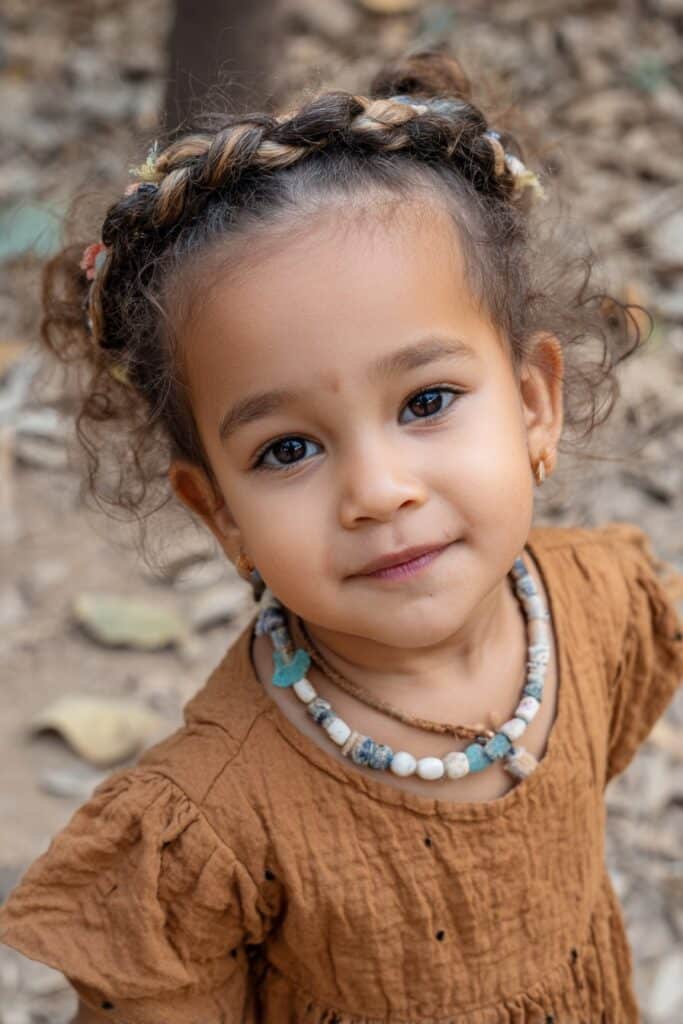
One rainy afternoon when my toddler was restless indoors, I created our first braided crown with colorful beads, and it quickly became our favorite special occasion style. This elegant yet playful hairstyle has saved me countless times for birthday parties and family gatherings.
Braided Crown with Beads look
The braided crown with beads creates a halo-like effect around your little one’s head that looks impressive yet remains surprisingly practical. This style involves sectioning the hair into three parts and creating two braids in each section, then positioning them around the head like a crown. The finished look resembles a delicate tiara made of their own hair!
What truly transforms this style is adding beads to the braids. Whenever I add colorful beads to my daughter’s crown braids, the hairstyle instantly becomes more festive and eye-catching. The beads create a wonderful pop of color that makes this style stand out from ordinary braids.
Creating easy toddler hairstyles like this offers a delightful opportunity to bond with your little one while sparking creativity. I’ve found that my daughter enjoys this special time together, especially when she gets to choose her bead colors.
Best beads for toddler braids
Through much trial and error, I’ve discovered that jumbo beads are perfect for toddler braids. They not only add fun accents to simple braids but are also easier to thread onto little ones’ fine hair. Plus, they’re less likely to become choking hazards compared to smaller beads.
Various bead types work wonderfully for toddler braids:
- Solid colored beads for everyday wear
- Metallic and glitter beads for special occasions
- Clear beads for a subtle shimmer
- Glow-in-the-dark beads (my daughter’s absolute favorite!)
The best part? These beads are reasonably priced, typically ranging from $1.99 for regular-sized beads to $4.99 for specialty options. I generally stock up on a few different colors so we always have options for matching outfits.
How to secure Braided Crown with Beads
To achieve this style successfully, I section my daughter’s hair into three parts and create two braids in each section. I secure the ends with colorful rubber bands that complement the beads we’ve chosen.
After braiding, I carefully thread the beads onto each braid. For my daughter’s fine hair, I’ve found that using a bobby pin to guide the hair through larger beads works perfectly. Once all beads are in place, I arrange the braids in a crown formation around her head, securing with additional pins as needed.
The true beauty of this style is how well it holds up during playtime. These hairstyles are both cute and practical, remaining intact even through active play sessions. I always involve my daughter in the process, letting her select bead colors or decide where each bead should go. This involvement makes her more excited about hair grooming and helps develop her sense of self-expression.
Double Braided Buns
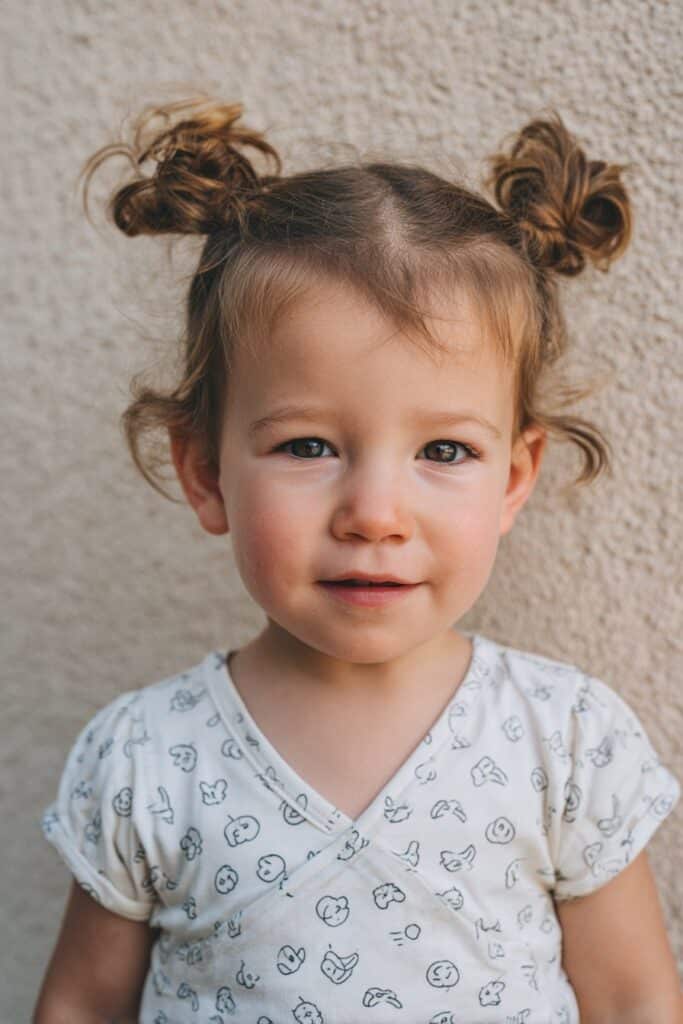
My daughter begged for a “princess bun” one morning, which led me to create double braided buns that quickly became our favorite style for active days and special occasions alike.
Double Braided Buns style
Double braided buns combine the security of braids with the neatness of buns in one adorable package. This style features two braided sections that are wrapped into circular buns, creating a symmetrical look that frames your toddler’s face beautifully. Some parents call these “unicorn buns” because of their playful, whimsical appearance.
What I love most about this style is how it appears complex yet remains surprisingly simple to create. First, I part my daughter’s hair down the middle and secure two low ponytails. Then I braid each ponytail and secure the ends with elastics that match her hair color. Finally, I loop each braid upward toward the base, creating an oval shape, and secure with another elastic.
The finished style looks polished and put-together while still being age-appropriate for toddlers. For special occasions, you can add colorful elastics or tiny clips for extra flair.
Keeping Double Braided Buns in place
The true magic of double braided buns is their remarkable staying power. For toddlers with fine hair or layers (like my daughter), this style fights fly-aways by keeping everything tight and in place.
My secret for maximum security: I use elastics along the top and middle sections, which helps control loose ends and fly-aways—particularly crucial for wiggly toddlers. Additionally, on the second ponytail, I use two elastics—one to create the ponytail and another to secure the bun. This trick keeps the braid sitting on top rather than getting lost underneath and adds significant security.
For extra hold, a small amount of child-friendly hairspray works wonders. Alternatively, using professional-grade bobby pins sprayed with hairspray before anchoring them provides exceptional staying power.
When to use Double Braided Buns
Double braided buns truly shine during active situations. I rely on this style whenever my daughter is playing outside or swimming because it stays in place remarkably well. It’s also perfect for sports, dance classes, or any activity where hair in the face would be problematic.
Primarily, this style works wonderfully for toddlers who can’t sit still for long hairstyling sessions. The elastics do most of the securing work, meaning less time with a squirming child in your lap!
Furthermore, these braided buns work effectively with multiple hair lengths and textures. Even on days when my daughter’s hair seems impossible to manage, double braided buns save the morning by transforming unruly locks into a neat, adorable style that lasts all day.
Mini Side Braids with Clips
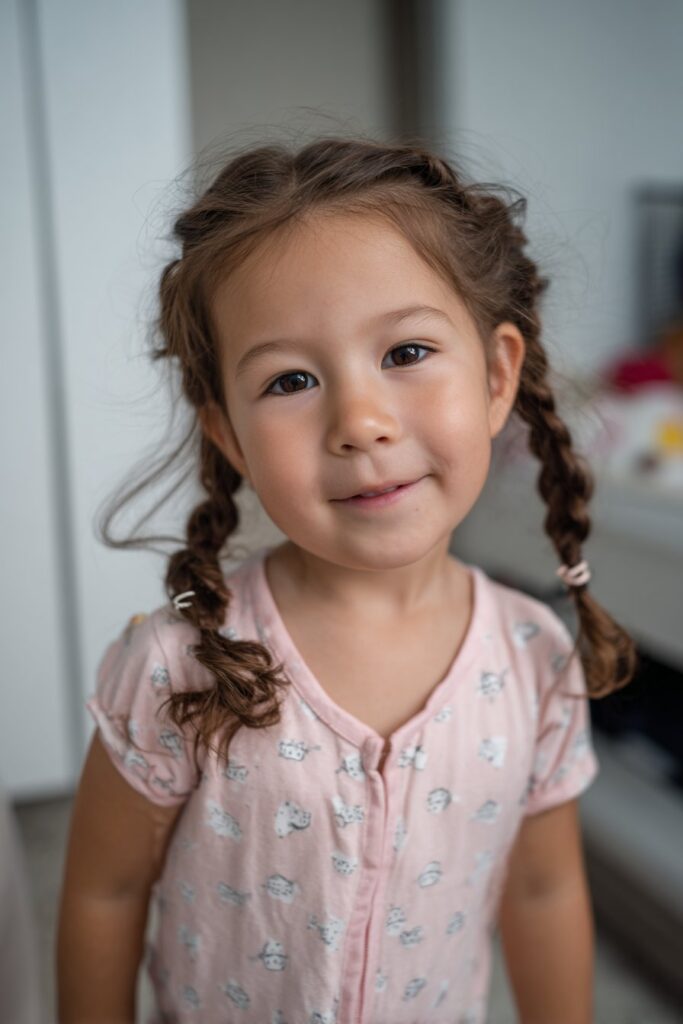
My three-year-old’s request for “tiny braids like mommy’s” sparked our journey into the world of mini side braids with clips. These small, decorative braids have subsequently become our favorite quick-fix style for busy weekday mornings.
Mini Side Braids with Clips style
Mini side braids with clips are exactly what they sound like—small braids created along the sides of your toddler’s head, secured with decorative clips. Some toddlers know precisely what they want, as evidenced by one little girl who requested “4 braids with 4 butterfly clips into a ponytail”. This style works brilliantly for managing growing bangs or framing the face while keeping most hair loose.
Typically, I create two small braids on each side of my daughter’s part, braiding from the temples toward the back. The rest of her hair stays loose or can be gathered into a ponytail. What makes this style stand out is how the clips add both function and flair—they hold those pesky baby hairs in place while adding a touch of personality.
Best clips for toddler braids
For toddlers’ fine hair, tiny claw clips have proven themselves invaluable. These smaller versions of adult clips provide strong hold without slipping, even in the finest strands. They’re predominantly designed for securing small sections like bangs, flyaways, or adding fun accents to braids and twists.
Butterfly clamps are frankly amazing for toddler braids. These inexpensive clips (usually under $5 for a set) are carefully wrapped with grosgrain ribbon to prevent damage to fine hair. One mom discovered these were “great at holding back sections you don’t want to mess with”.
In fact, many accessories can elevate simple hairstyles:
- Character-themed clips featuring mermaids, rainbows, or ice cream cones
- Colorful acrylic clips in fun patterns
- Simple barrettes in colors that match outfits
How to make Mini Side Braids last all day
To ensure mini side braids stay put through playground adventures and nap time, preparation is key. Usually, I start with well-brushed hair—if we’re just out of the shower, perfect, but a spray bottle works too as “the wetter the hair, the easier it is to do”.
For extra security, I’ve learned to use a brush with a pointy end for precise sectioning. This technique helps create clean parts, making the braids look neater and last longer. Obviously, having your toddler sit still is crucial—I typically “let her watch a show or YouTube while I do her hair, making sure the phone or TV is at eye level… so she sits still”.
The final secret? Quality clips matter! Cheap clips often break or pop open midday, whereas well-made ones keep those braids secured until bedtime.
Half-Up Braided Ponytail
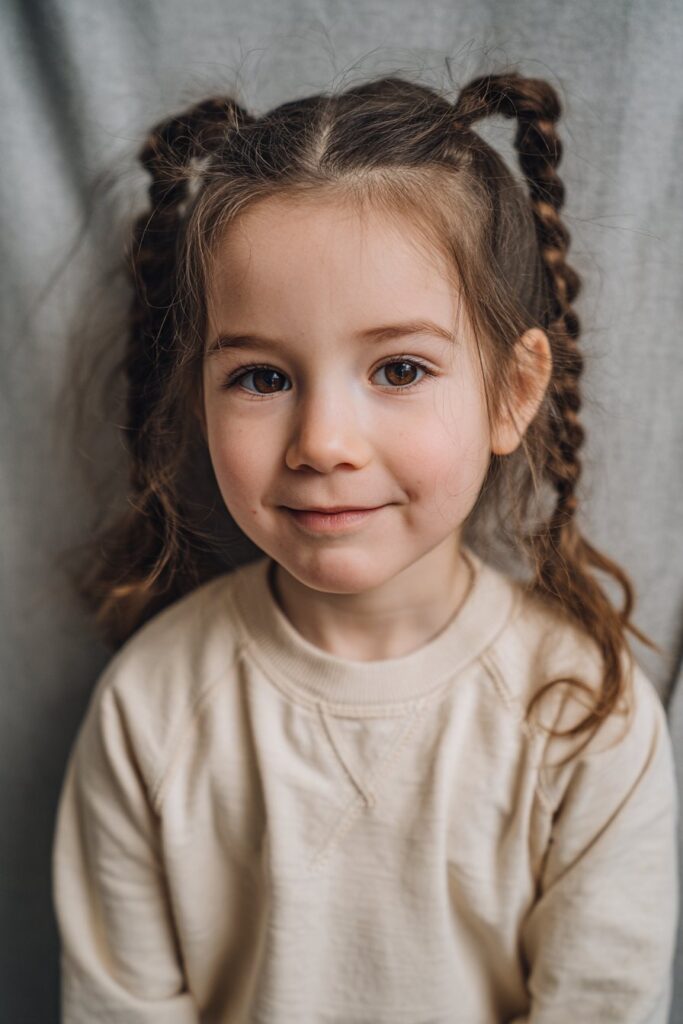
Looking for a quick fix for those busy mornings? The half-up braided ponytail became my secret weapon after discovering how remarkably well it stayed in throughout my daughter’s tumultuous preschool days.
Half-Up Braided Ponytail explained
This versatile hairstyle combines the best of both worlds—it keeps hair partially up while letting the rest flow freely. Essentially, you create three mini braids at the crown and gather them into a half-up ponytail while leaving the remainder of the hair down. This style works brilliantly for toddlers who dislike having all their hair pulled back but need something to keep strands out of their faces.
The look is both practical and adorable—perfect for everyday wear yet fancy enough for special occasions. Primarily, I love how it creates volume and texture even in the finest toddler hair. You can customize it with colorful bands or cute clips to match any outfit.
Why it’s great for active toddlers
The half-up braided ponytail is ideal for energetic little ones specifically because it stays secure through all their adventures. It’s perfect for toddlers with fine hair or those growing out awkward bang lengths. Even after playground sessions or naptime, this style holds up remarkably well.
Occasionally, I’ve found this style works better than full updos for sensitive toddlers who don’t like the feeling of tight hairstyles. The half-up approach offers a comfortable compromise—secure enough to keep hair contained yet loose enough to feel natural.
How to secure Half-Up Braided Ponytail
To create this look effectively, start with clean, brushed hair. Section off small strands from each side of your toddler’s head and create simple three-strand braids. Secure each tiny braid with clear elastics or colorful bands.
After creating three mini braids (one on each side and optionally one in the middle), gather them together at the crown of the head. Secure with a hair tie that matches your child’s hair color for a seamless look, or use decorative bands for added flair.
For extra staying power, try these tricks:
- Add a tiny drop of child-friendly styling cream before braiding
- Use small sectioning clips to hold strands while you work
- Slightly tighten each section as you braid for more security
Twist Braids with Color Bands
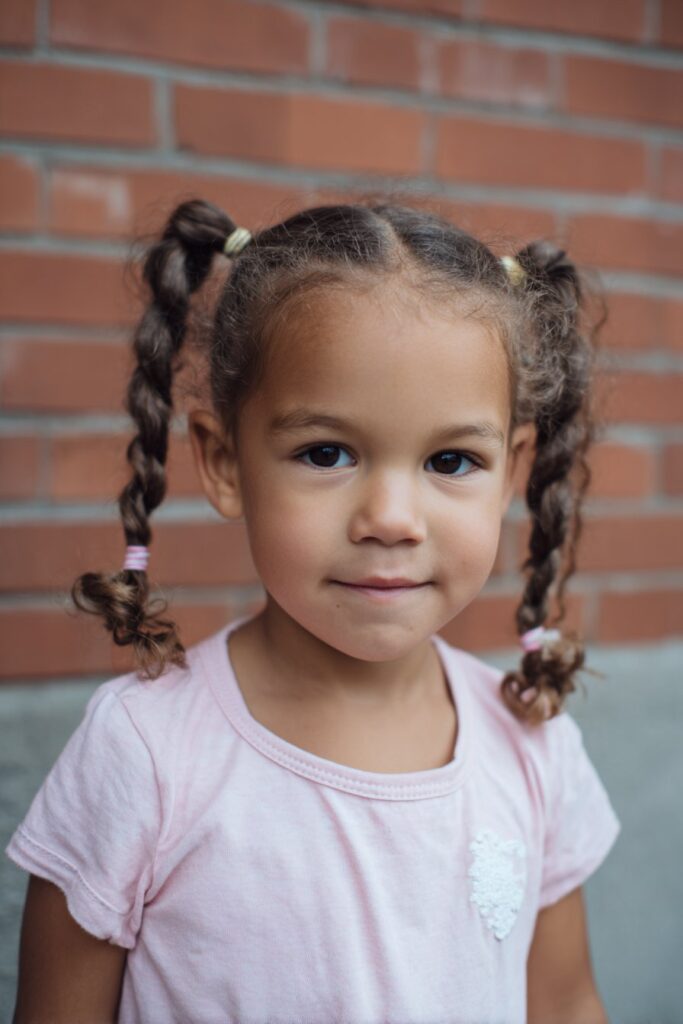
After trying numerous styles on my little girl’s fine hair, I discovered twist braids with color bands—a true game-changer for busy mornings! Unlike traditional styles, these colorful braids captivate toddlers’ attention while staying secure all day.
Twist Braids with Color Bands style
Twist braids offer simplicity that other styles lack. Requiring no complex braiding techniques, you simply divide sections and twist the hair. What makes this style shine is adding vibrant color bands throughout. For my daughter’s hair, I take top sections and twist them, crossing sections to opposite sides before anchoring with elastic bands. The result? An adorable style that looks intricate yet takes minimal time to create.
Using color bands for fun and function
Color bands serve double duty—securing twists while adding personality. My daughter loves selecting her rainbow bands each morning, making hairstyling a collaborative experience that develops her self-expression. For extra flair, try these options:
- Matching bands to outfits
- Rainbow patterns for special days
- Character-themed bands for birthdays
Beyond esthetics, these bands prevent unraveling throughout active play. They’re perfect for creating patterns that stay put during school activities, hence their popularity among parents of energetic toddlers.
How to keep Twist Braids from unraveling
Palm rolling saved my twist braids from constant retwisting! This technique involves taking each twist between your palms and rolling/rubbing in one direction. Additionally, I’ve learned that proper product application markedly improves longevity—I apply leave-in conditioner first, followed by a bit of grease to seal moisture. For stubborn sections with looser curl patterns, twirling the ends typically keeps twists intact for 3-4 days.
Simple Three-Strand Braids
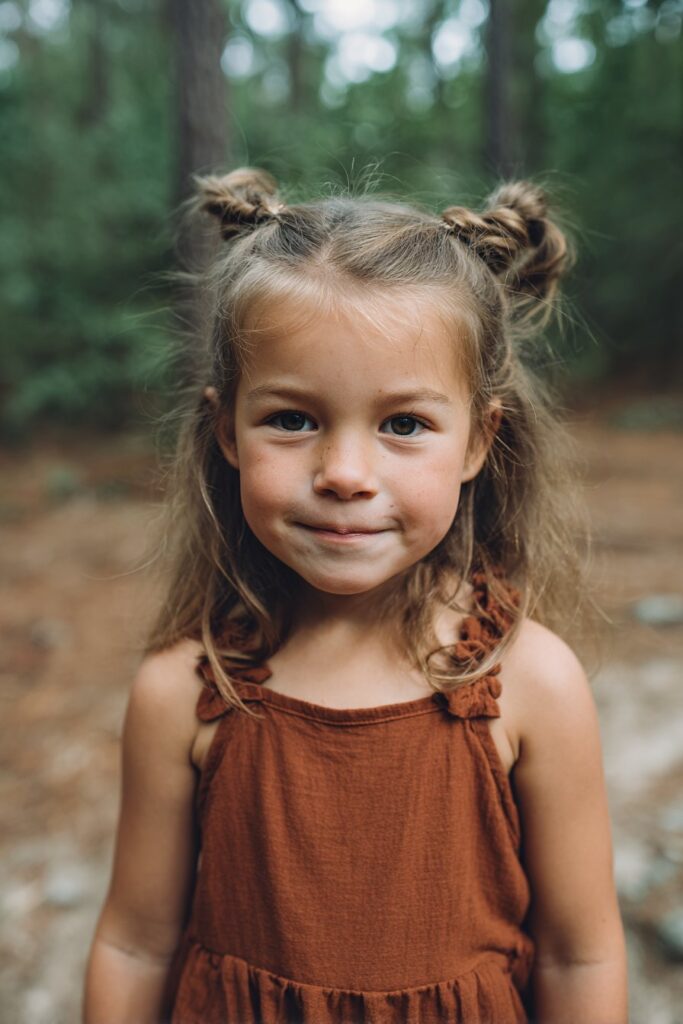
Sometimes the simplest hairstyles are the most effective, which is why classic three-strand braids remain my reliable standby for my little one’s hair. These traditional braids add instant charm to any look without requiring elaborate techniques or tools.
Simple Three-Strand Braids for beginners
Classic three-strand braids are undoubtedly the most approachable braiding style for parents just starting their hair journey. Unlike complex French or Dutch braids, these require only basic crossing motions that most of us learned as children. I began practicing on my daughter’s stuffed animals before attempting them on her wiggly head!
The technique couldn’t be simpler—divide the hair into three equal sections and cross the outside sections over the middle, alternating sides as you work downward. For toddlers with shorter hair, securing small sections with colorful elastics creates an adorable effect even if the braids themselves are tiny.
Why they’re perfect for busy mornings
On hectic weekday mornings, three-strand braids have saved my sanity repeatedly. They’re remarkably quick yet provide that stylish touch that elevates even the simplest outfit. Whenever we’re racing against the clock, I can complete two simple braids in under five minutes—far faster than attempting more elaborate styles.
Certainly, these braids offer practical benefits beyond speed. Throughout elementary school, my mother braided my hair specifically to reduce tangles. That wisdom holds true today with my daughter’s fine hair.
How to make Simple Braids stay put
To ensure all-day staying power, I’ve discovered several tricks:
First, keeping initial crossovers extra tight prevents those baby hairs from escaping. Additionally, braiding slightly damp hair creates a more secure style that resists unraveling during active play.
For children with particularly fine hair, creating two braids instead of one dramatically improves longevity. This approach distributes tension more evenly while controlling those flyaway strands that typically escape single braids.
Braided Bangs into Ponytail
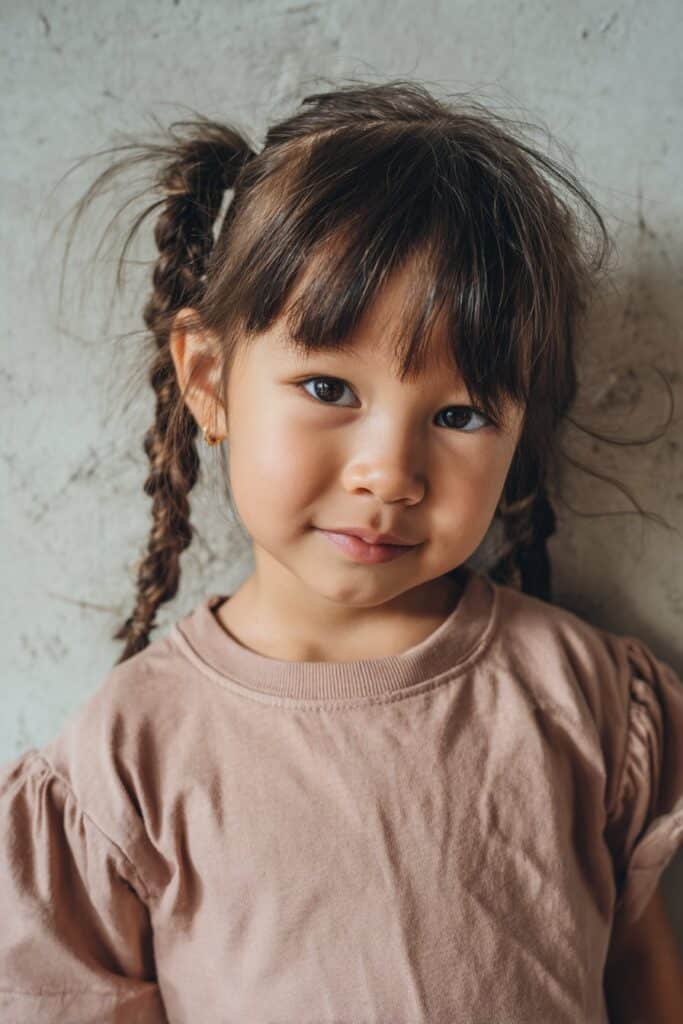
Growing out my daughter’s bangs felt like an endless battle until I discovered the braided bangs into ponytail style. This simple yet effective technique has saved countless morning struggles for us both.
Braided Bangs into Ponytail style
This sleek hairstyle combines functionality with style by incorporating bangs into braids that flow seamlessly into a ponytail. The look features twin French braids at the top of the head that join into a ponytail, creating a polished finish perfect for school or special occasions. The beauty of this style lies in how it manages those awkward-length bangs while maintaining an adorable overall look.
Managing growing bangs with braids
The “growing out bangs” phase challenges even the most patient parents. Traditional clips often get yanked out, headbands slip off, yet braided bangs stay put throughout active play. I typically French braid my daughter’s front sections, which effectively captures those shorter bang pieces that normally escape other styles. Some dedicated parents even leave these braids in for a full week with maintenance washing, though we personally redo them every few days.
How to blend Braided Bangs into a ponytail
For best results, start with detangled, slightly damp hair. Create a side part (this adds cute sass to the style), then section off the bangs area. Begin French braiding from the hairline, incorporating shorter bangs into the braid as you move toward the crown. Create similar braids on both sides, then gather everything—including the braids—into a ponytail. This approach takes just a few minutes yet lasts all day through playground adventures and naptime alike.
Heart-Shaped Braids
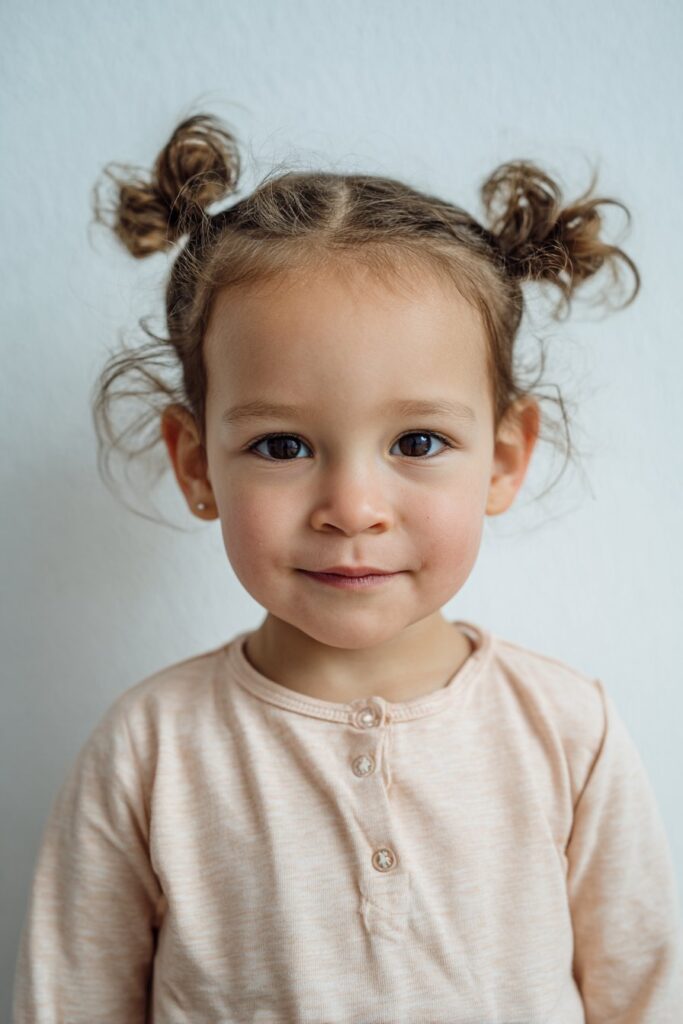
For my daughter’s first school Valentine’s party, I wanted to create something truly special—that’s when heart-shaped braids saved the day! This adorable style quickly became our go-to for celebrations and photos.
Heart-Shaped Braids for special occasions
Heart braids are perfect for Valentine’s Day celebrations, birthdays, or anytime you want to add extra cuteness to your little one’s look. The gorgeous heart-shaped braids became wildly popular recently, primarily because they’re both eye-catching and achievable for parents. Even toddlers who typically resist hairstyling seem enchanted by these sweet designs.
How to part for Heart-Shaped Braids
Creating the perfect heart requires careful parting:
- Section hair into three parts, starting at the bottom
- Draw two curved lines at the top of your heart shape
- Part a straight line down the middle to divide the heart in half
Pro tip: Use clear elastics as you braid upward—they make the style much easier to achieve. For symmetrical results, I always section with clips first, then braid each side upward following the curved outline.
Tips for making Heart Braids last
Owing to their unique structure, heart braids need extra security. I’ve found that braiding slightly damp hair provides better grip. Furthermore, adding tiny elastics along the way prevents sections from unraveling. For special events, a light spritz of child-friendly hairspray helps tame flyaways without stiffness.
Low Braided Pigtails with Beads
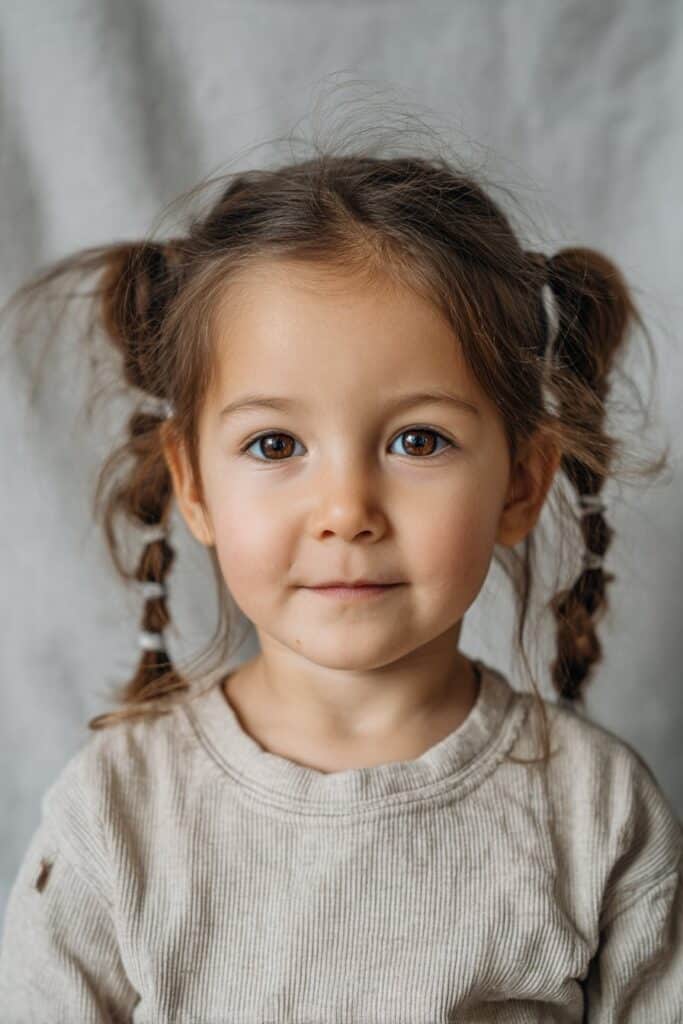
After years of styling children’s hair, I discovered that low braided pigtails with beads remain the most requested style among parents for good reason.
Low Braided Pigtails with Beads style
Low braided pigtails positioned at the nape of the neck create a timeless look that never goes out of fashion. What makes this style extraordinary is how the beads transform simple braids into something special. My clients’ little ones adore this style primarily because the beads make delightful rattling sounds whenever they shake their heads. These pigtails work wonderfully for everyday wear yet can be dressed up for special occasions by changing the bead colors.
Best beads for toddler hair
For toddlers’ delicate strands, I recommend:
- Silicone beads ($10-16) that are soft, lightweight, and non-toxic
- Wooden beads in natural colors ($7-8 for 60 pieces)
- Acrylic beads with fun patterns ($4-5) for special occasions
The best beads have holes approximately 5mm wide to accommodate the braided hair comfortably. Simultaneously, safety remains paramount—always choose beads large enough to prevent choking hazards.
How to secure Low Braided Pigtails
First, I position pigtails low at the nape for maximum comfort during naptime. Secondly, I create tight initial crossovers at the scalp, then maintain consistent tension throughout. Lastly, I secure ends with quality elastics that complement the bead colors. This approach ensures these adorable toddler braids with beads remain intact through playground adventures and beyond.
Conclusion
Braiding my little one’s hair has truly become a special part of our morning routine, rather than the frustrating struggle it once was. These twelve braided hairstyles have saved countless mornings in our household, especially on those busy days when every minute counts. My daughter now eagerly asks for her “special braids,” pointing to pictures of styles she loves, making our hair time a cherished bonding experience.
Each style offers something unique—boxer braids stay put during gymnastics class, heart-shaped braids add whimsy to special occasions, while simple three-strand braids provide reliability on our busiest mornings. Through trial and error, I’ve learned that slightly damp hair, quality hair accessories, and starting with extra-tight sections near the scalp make all the difference in creating styles that last all day.
Parents with fine-haired toddlers certainly understand the particular challenges we face! My daughter’s silky strands would slip out of ponytails within hours before I discovered these techniques. Now, her hair remains neat from breakfast through bedtime, regardless of playground adventures, naptime, or swimming lessons.
Additionally, these styles grow with your child. Many parents find that these same basic techniques work wonderfully as their toddlers become preschoolers and beyond. You might start with simple side braids, then gradually advance to more intricate styles as both your skills and your child’s patience improve.
Lastly, remember that practice makes perfect. My first attempts at French braids looked nothing like they do today! Take pictures of your successes, learn from styles that didn’t quite hold up, and most importantly, make the experience enjoyable for both of you. Though mastering toddler braids takes time, the pride on your little one’s face when they admire their “big kid” hairstyle makes every minute worthwhile.
Which style will you try first? Trust me, once you discover the perfect braided style for your toddler, those morning hair battles will become a thing of the past!
Key Takeaways
Master these proven toddler braiding techniques to transform chaotic morning hair routines into enjoyable bonding moments that last all day.
• Start with slightly damp hair and tight initial crossovers – This creates the foundation for all-day hold, preventing fine toddler hair from slipping out of styles during active play.
• Dutch boxer braids are perfect for beginners – They’re surprisingly easy to learn, work well on fine hair, and provide excellent staying power through playground adventures and nap time.
• Use quality accessories strategically – Jumbo beads, silicone clips, and professional elastics not only add fun visual appeal but also provide crucial security for maintaining neat styles.
• Choose styles based on your child’s activity level – Active toddlers need secure styles like braided buns or boxer braids, while gentler children can wear looser options like half-up ponytails.
• Make it collaborative and fun – Let toddlers choose bead colors or clip styles to develop their self-expression while reducing resistance to hair grooming sessions.
The key to successful toddler braiding lies in preparation, patience, and picking age-appropriate styles that balance cuteness with practicality. These techniques will help you create adorable hairstyles that survive everything from breakfast spills to playground adventures.

Elsa Claire is the founder and editor of ElsaClaire.com, where she writes about hairstyles, hair care, and the everyday routines that help real people feel good about their hair.