Styling snowboarding hairstyles for long hair can feel like an impossible mission – trust me, I’ve spent years on the slopes figuring this out. There’s nothing more frustrating than wrestling with helmet hair while trying to look put-together for après-ski.
Through my snowboarding adventures, I’ve learned that low styles like braids, buns, and ponytails work wonderfully when you’re hitting the powder. While I always want to look chic on the mountain, practicality has to come first when you’re flying down the slopes. After all, your hair deserves its moment, even when you’re surrounded by mountains and carving through snow. But as anyone who’s gone skiing or snowboarding knows, looking cute when it’s 15 degrees outside while dressed in layers of gear presents a real challenge.
I’ve compiled these 15 quick and effective hairstyles that solve both problems – they’ll stay securely in place under your helmet during an exhilarating run and still look fabulous when you’re relaxing afterward. From personal experience, I strongly recommend staying away from high or loose styles that can uncomfortably squish under your helmet or fly into your face at the worst possible moment. These snowboarding-friendly options will keep you looking good and feeling confident, no matter how many runs you tackle.
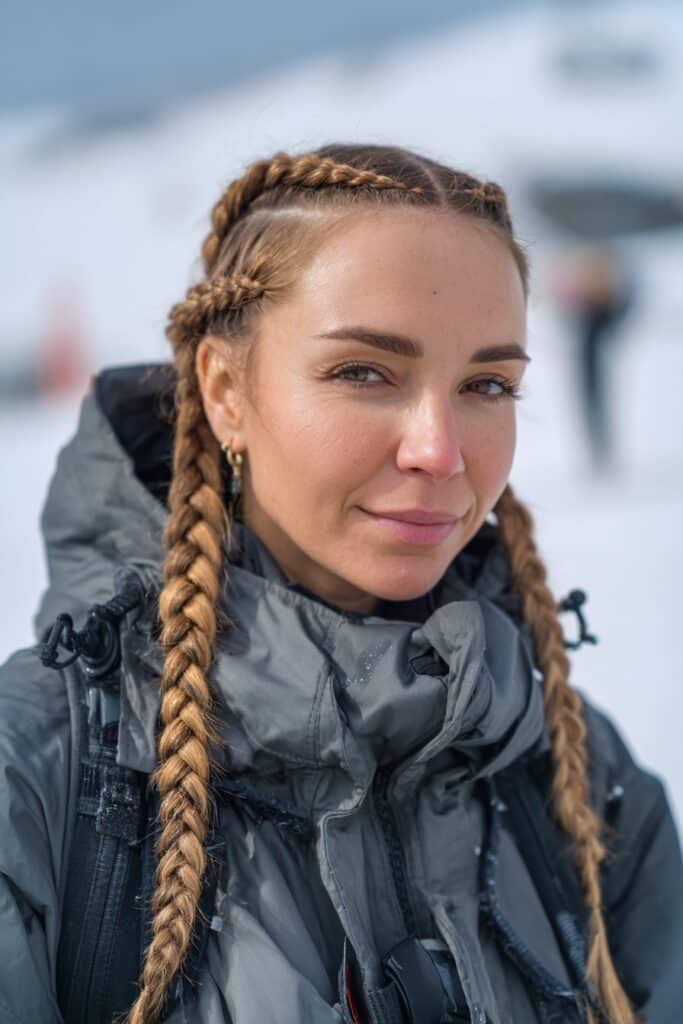
Boxer Braids
What it is
Boxer braids have become my number one hair solution for snowboarding adventures. Unlike the hairstyles I struggled with initially, these braids never let me down on the mountain. Essentially, boxer braids are two tight Dutch braids that run from your hairline to the nape of your neck. They’re called “boxer braids” because female boxers popularized them for their secure, out-of-the-way style during fights. The key difference between these and regular French braids is that you cross the outside strands under the middle strand rather than over it, creating that distinctive raised look that sits close to your scalp.
Why it works
I discovered that boxer braids create a remarkably flat profile that provides almost the same comfort as wearing your hair loose when using a helmet. Furthermore, this style excels at keeping everything secure through jumps, falls, and windy conditions. As someone who’s tried countless hairstyles on the slopes, I can confirm these braids are particularly excellent for snowboarding because they:
- Prevent tangling from helmets, goggles, and moisture
- Stay put through wind, sweat, and multiple days without restyling
- Keep your neck and ears noticeably warmer than shorter styles
- Leave you without the usual frizzy, tangled mess at day’s end
How to style it
To create perfect boxer braids for your next snowboarding session, start by applying a bit of texture mousse to damp hair. Next, part your hair down the middle and clip one section away to prevent it from interfering. Divide your free section into three equal strands and begin braiding by crossing the outside strands under the middle strand. After completing a few crosses, start incorporating hair from the outside and continue adding hair into the braid until you reach the nape of your neck. Secure with an elastic and repeat on the other side, finishing with a light spritz of hairspray to lock everything in place.
I’ve learned some helpful tricks over the years – hold your hands close to your head while braiding to keep the hair nice and tight. Additionally, look down when you reach your neck to help catch those little hairs along the neckline. For multi-day snowboarding trips, I recommend sleeping with a silk or satin scarf wrapped around your braids to preserve the style and reduce friction.
Low Bubble Braids
What it is
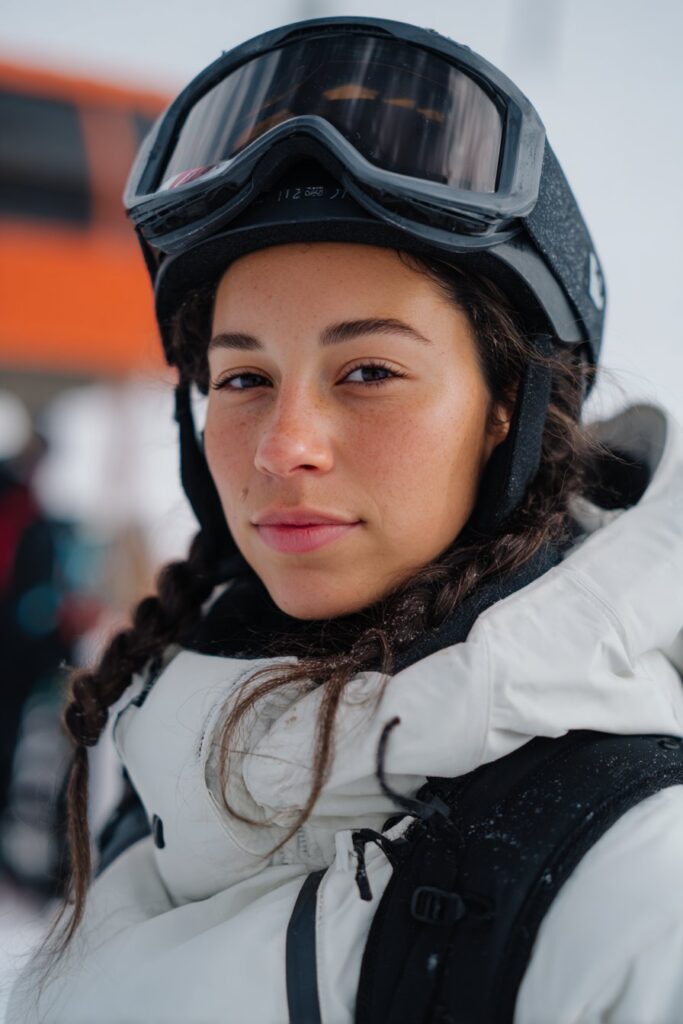
On a freezing mountain morning last season, I discovered bubble braids – a game-changer for my snowboarding hair routine. These eye-catching styles mimic the look of braids without actually requiring any braiding skills. Instead of weaving hair, you simply create a ponytail and place elastic bands at intervals down its length, then gently pull each section outward to create rounded “bubbles”. This trendy, modern alternative to regular ponytails adds visual interest while maintaining practicality – perfect for those mornings when you’re rushing to hit the first chair.
Why it works
Bubble braids excel as snowboarding hairstyles for several compelling reasons. First, they sit low on the head, making them completely helmet-friendly. Moreover, the segmented nature prevents long hair from tangling during intense riding sessions – something I’ve personally appreciated after hours of carving through powder.
The style provides excellent control without causing breakage – a crucial factor when your hair is subjected to winter elements all day. Interestingly, the bubbles themselves create small air pockets that help insulate your neck against cold winds while riding. Consequently, you won’t end up with those frustrating tangles that typically require extensive post-ride detangling sessions.
How to style it
Creating perfect bubble braids for a day on the slopes is surprisingly simple:
- Start by gathering your hair into a low or mid-level ponytail and secure with a soft elastic
- Move a few inches down the ponytail and add another elastic
- Gently pull the section between the elastics outward to create your first ‘bubble’ effect
- Continue adding elastics and creating bubbles down the length of your ponytail
For snowboarding specifically, I recommend keeping the bubbles slightly smaller and tighter than you might for everyday wear. This prevents them from getting squished awkwardly under your helmet or balaclava. As an added bonus, this style works wonderfully for multi-day trips since it holds up well overnight. In fact, bubble braids have quickly become one of my favorite slope-ready styles that turn heads while keeping hair perfectly secured.
Dutch Braids
What it is
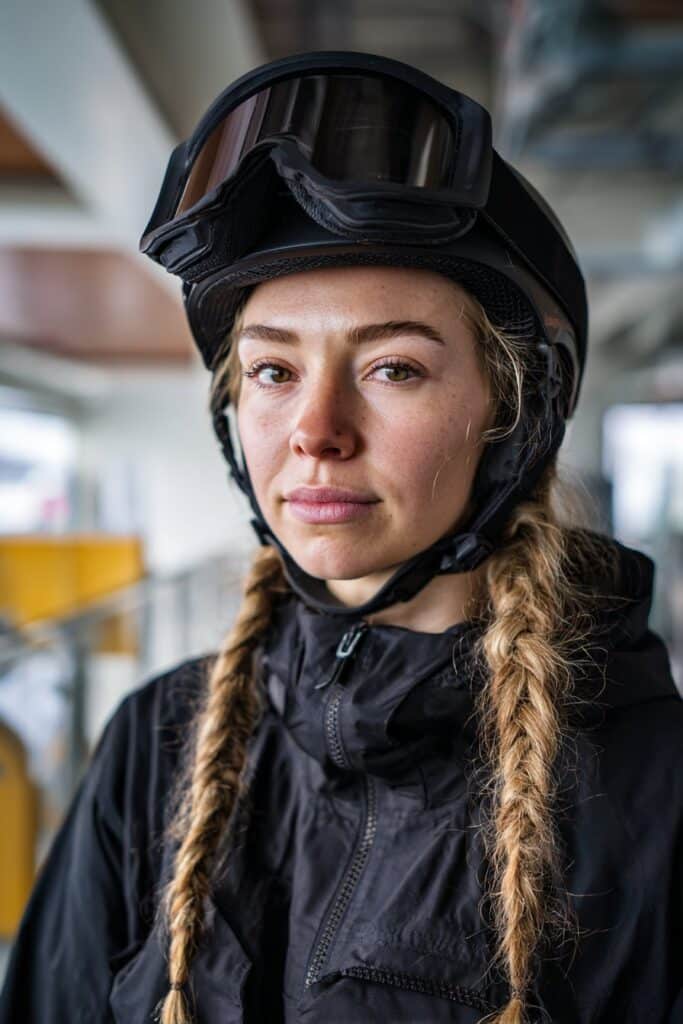
My first winter season on the slopes taught me that Dutch braids are worth their weight in gold for snowboarders. Throughout my career as a stylist, I’ve recommended these versatile braids to countless mountain enthusiasts. Dutch braids are essentially inside-out French braids where you cross the strands under the middle section instead of over it. This technique creates those gorgeous raised braids sitting close to your scalp with a distinctive 3D appearance. Although frequently confused with boxer braids, traditional Dutch braids offer more styling flexibility – you can wear them as a crown, single braid, or double braids running down your head.
Why it works
Dutch braids have earned their place as one of the most reliable snowboarding hairstyles primarily because they’re exceptionally long-lasting. Even during my most intense powder days, these firm braids withstand everything the mountain throws at them. As I discovered early in my styling career, Dutch braids excel at completely eliminating the annoyance of frizzy hair after hours on the slopes.
The tight weave prevents those frustrating tangles that typically form from friction with your gear. Plus, they work beautifully regardless of whether your hair is straight or curly. For clients with thick or curly textures, I’ve noticed Dutch braids gently stretch the strands while protecting curl patterns – a major win for winter activities.
Interestingly enough, Dutch braids actually look better after wearing a helmet all day – they develop a naturally lived-in texture that’s perfect for après-ski celebrations. This “improved with wear” quality makes them ideal for multi-day snowboarding trips.
How to style it
Creating perfect Dutch braids begins with dividing your hair into two equal sections from the center. Next, split each section into three equal strands. Begin braiding by crossing the outside strands underneath the middle strand (this underneath motion is what creates the raised effect). As you progress, gradually incorporate additional hair from each side. Continue this pattern until reaching your nape, finally securing each braid with a durable elastic.
I typically recommend gently tugging sections of the braid to loosen slightly for comfort. From personal experience, applying a small amount of lightweight texturizing spray beforehand enhances grip without causing stiffness. For a modern twist that still performs perfectly on the mountain, try slightly uneven partings instead of perfectly symmetrical sections.
Low Ponytail with Side Braid
Low Ponytail with Side Braid
What it is
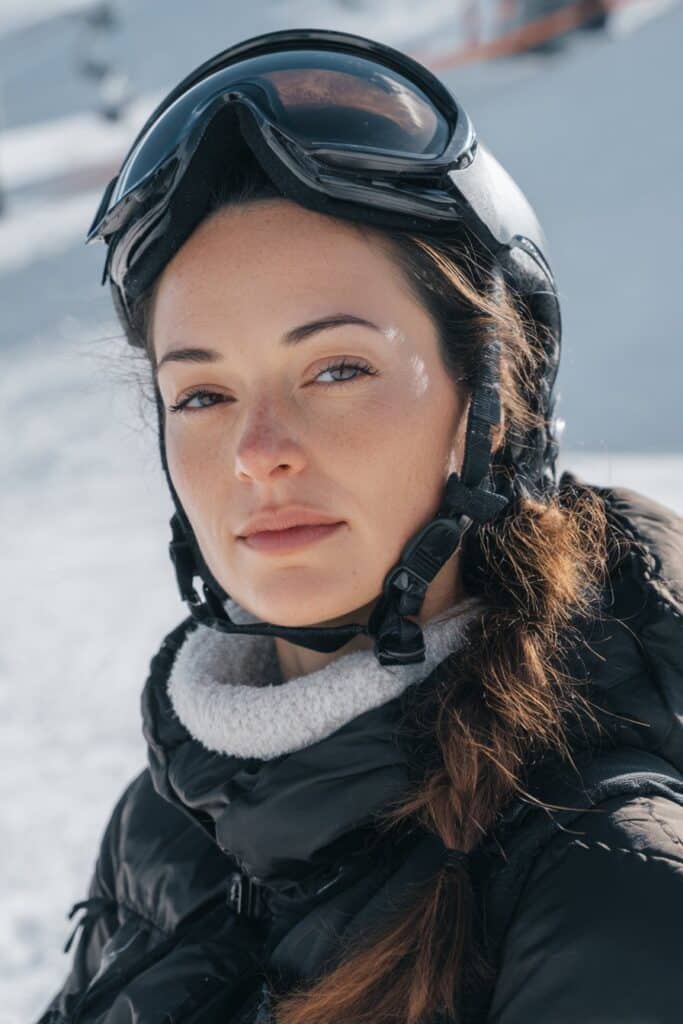
For years, I’ve considered the low ponytail with side braid my secret weapon on the slopes. This elegant yet functional style features a braid that starts at your temple and curves gracefully around the side of your head before joining with the rest of your hair in a low ponytail. The decorative side element adds visual interest yet serves the practical purpose of securing those pesky front sections that always seem to escape during intense riding sessions. Especially on windy days, I’ve found this combination provides the perfect balance between style and function – reminiscent of looks from adventure movies that manage to be both practical and surprisingly beautiful.
Why it works
The low ponytail with side braid has become one of my favorite snowboarding hairstyles primarily because it sits perfectly under your helmet without creating uncomfortable pressure points. Throughout countless powder days, I’ve discovered this style offers multiple advantages:
- Prevents tangling from wind and constant movement
- Keeps hair securely away from your face throughout your runs
- Tucks easily into scarves or neck gaiters for additional warmth
- Transitions effortlessly from slopes to après-ski gatherings
As a result of its versatility, this style works wonderfully for both beginners and experienced riders alike. Even more importantly, it protects your hair from the harsh winter conditions that typically lead to breakage and frizz.
How to style it
Creating this snowboarding-ready hairstyle requires just a few simple steps:
First, thoroughly comb your hair to remove any tangles. Next, start a French braid from the front side of your head, continuing along the side while adding hair to each section as you braid toward your neck. Direct the braid slightly toward the opposite side as you reach your neckline. Following that, secure the braid temporarily with a small hair tie.
Hereafter, gather all remaining hair into a low ponytail positioned on the opposite side of your head. Finally, incorporate your braid into the ponytail and secure everything together. For a polished finish, try wrapping a small section of hair around the hair tie to hide it.
From my experience, applying a lightweight styling cream beforehand significantly improves grip without creating stiffness. This style works best for medium to long hair, yet those with shorter locks can achieve it using extra bobby pins for security.
Sleek Low Bun
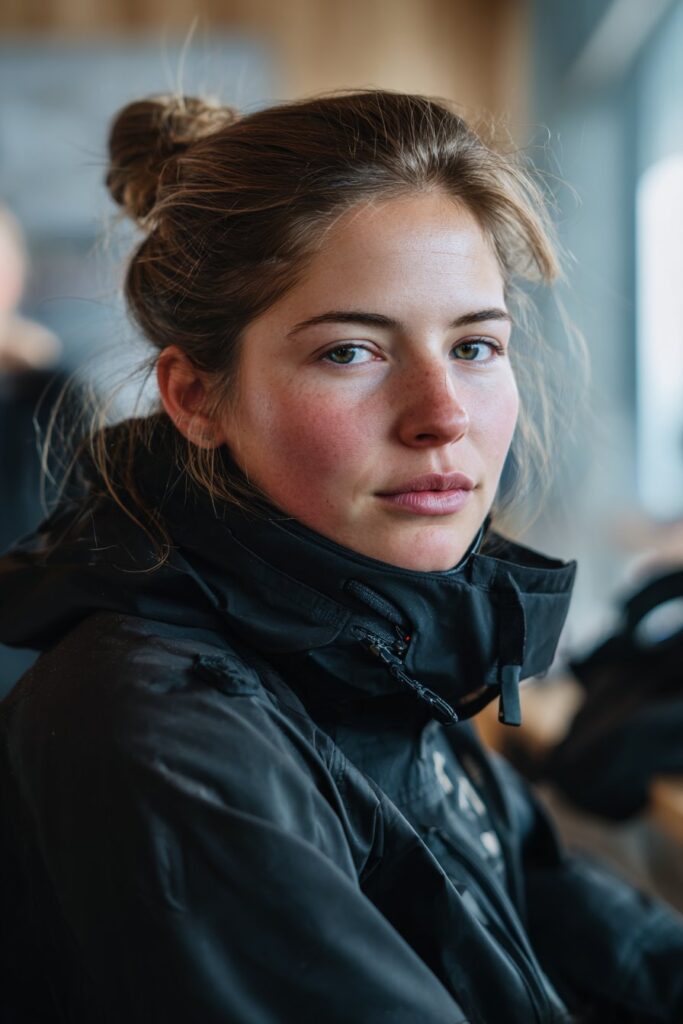
What it is
The sleek low bun stands out as my most sophisticated yet practical hairstyle choice for snowboarding days. This timeless style is exactly what it sounds like—a smooth, polished bun positioned at the nape of your neck. Unlike messier variations, this style focuses on keeping everything sleek and contained, with minimal flyaways. Throughout my years teaching snowboarding clinics, I’ve perfected this look that transitions effortlessly from intense riding sessions to fireside après-ski gatherings. Indeed, what makes it special is how it maintains its elegance despite the brutal mountain conditions.
Why it works
Practically speaking, the sleek low bun excels as a snowboarding hairstyle primarily because it sits perfectly under helmets without creating that uncomfortable bulky bump. Speaking from experience, nothing ruins a perfect powder day faster than a helmet that doesn’t fit properly due to poorly positioned hair.
This style offers several key advantages:
- Keeps all strands completely contained throughout your snowboarding session
- Transitions seamlessly from helmet-on to helmet-off situations
- Works exceptionally well for curly hair types seeking a sleek look
- Provides that rare combination of being both practical and fashionable
Notably, the sleek low bun has impressive staying power against wind, sweat, and movement. For multi-day trips to remote mountains, this style can easily last 2-3 days with just minor touch-ups, making it ideal for those weekend getaways.
How to style it
Creating this snowboarding-friendly look requires minimal effort:
First, gather your hair into a low ponytail positioned at the nape of your neck. Subsequently, apply a lightweight styling cream or serum to smooth any flyaways. Hereafter, twist the ponytail into a loose bun formation and secure with bobby pins or a scrunchie for all-day hold. Finally, finish with a touch more styling cream if needed.
The secret to making this style last through multiple runs lies in the preparation. Usually, I apply a small amount of silicone-free leave-in conditioner before styling. This keeps my hair moisturized against harsh winter conditions without creating buildup. Unlike some braided styles that require complete redoing, the sleek low bun can be quickly refreshed right in the lodge between sessions, maximizing your time on the mountain.
Half-Up Twisted Crown
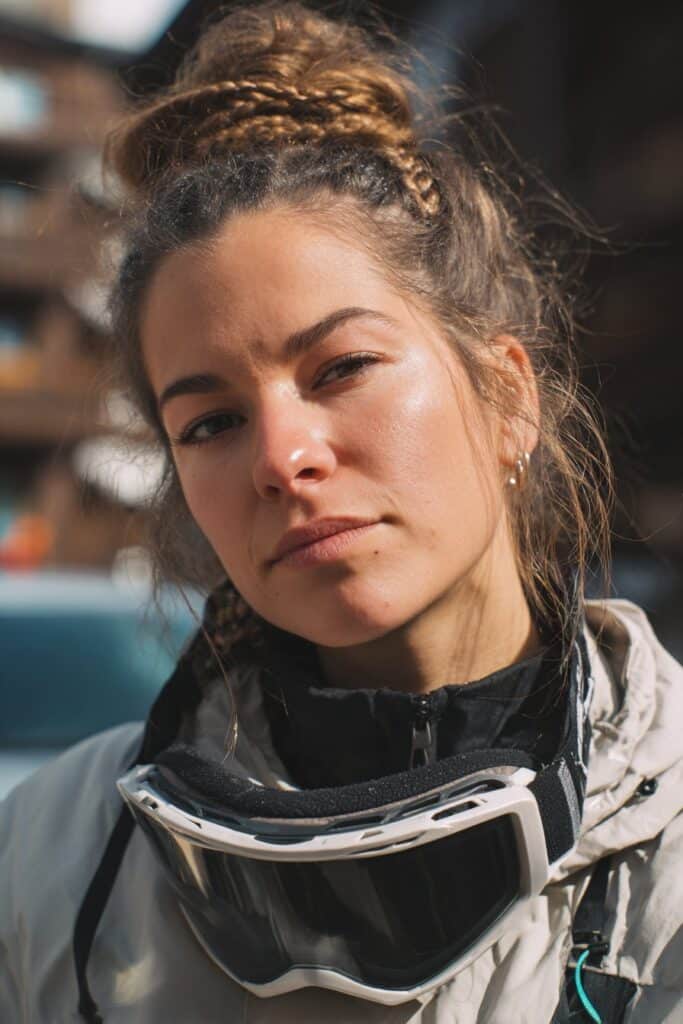
What it is
Whenever I want a feminine yet mountain-ready style, the half-up twisted crown becomes my go-to choice. This romantic hairstyle features twisted sections from each side of your head that meet in the back, creating a beautiful halo effect while leaving the rest of your hair flowing freely. The magic lies in its versatility – it keeps hair away from your face without committing to a full updo. As someone who frequently transitions from intense snowboarding to après-ski gatherings, I appreciate how this elegant look takes just 5-10 minutes to create.
Why it works
The half-up twisted crown excels on the mountain primarily because it distributes hair evenly under helmets without creating uncomfortable pressure points. Throughout my years of snowboarding, I’ve found this style particularly beneficial when my hair is at that awkward growing-out stage.
What truly makes this style perfect for winter sports is how it balances practicality with beauty. As well as keeping front sections firmly secured, the twisted crown allows the rest of your hair to move naturally. Hence, you won’t deal with that stiff, unnatural feeling some updos create.
How to style it
Creating this snowboarder-friendly look requires just a few quality bobby pins and two clear elastic bands. First, take a triangle section near your part and divide it into two sections. Next, add new hair to each section as you twist them together, with the front piece crossing over the back. Once you reach the back of your head, stop adding hair and simply twist to the ends.
Prior to connecting both sides, repeat the process on the opposite side. Hereafter, create a gap in one twist and pull the other through. Secure with bobby pins and remove the elastics.
For those with fine hair like mine, I recommend curling beforehand or sleeping in a loose braid the night before hitting the slopes – this adds volume and staying power that lasts all day.
Braided Low Bun
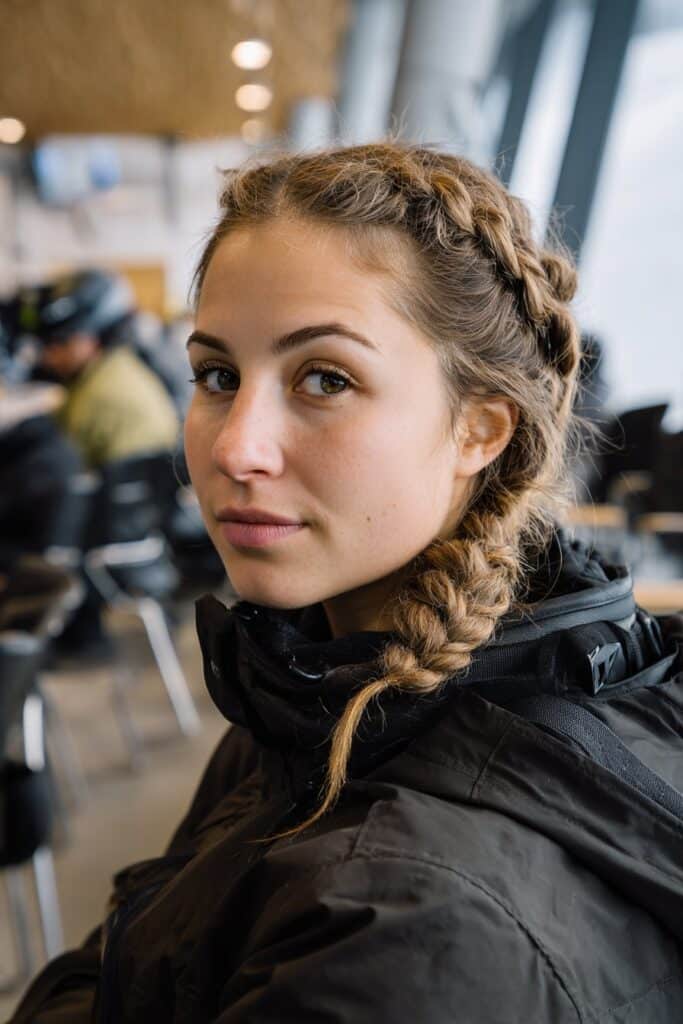
What it is
Discovering the braided low bun happened almost by accident during a three-day mountain trip when I needed a style that could last multiple sessions. This sophisticated yet practical hairstyle combines the security of braids with the elegance of a low bun. Uniquely, it sits at the nape of your neck while incorporating braided elements for added hold and visual interest. The braided low bun creates an elegant touch to your winter adventure while keeping every strand firmly in place. Plus, unlike some basic updos, this style features intricate braided sections that wrap and twist into a secure bun formation.
Why it works
The braided low bun truly shines as a snowboarding hairstyle for several compelling reasons. First, the low position allows your helmet to fit comfortably without creating pressure points. Typically, this style prevents that frustrating tangled mess that often happens by the end of a riding day.
This hairstyle offers exceptional benefits:
- Maintains elegance while providing remarkable comfort throughout your session
- Withstands active movements even during intense riding
- Transitions perfectly from slopes to après-ski gatherings
- Keeps hair contained under balaclavas or neck gaiters
How to style it
Creating this snowboarding-friendly braided bun requires just a few minutes. Start by brushing your hair thoroughly and dividing it into two equal sections. Next, braid each section individually and secure temporarily with elastic bands. Thereafter, pull gently on each braid to create fuller, more textured braids.
The magic happens when you cross-fold the two braids and tie them into a knot, pulling one braid across the other. Pin each braid just before the elastic to secure the structure. Finally, remove the elastic bands and tuck the loose ends into the secured parts, adding extra pins if needed. For slopes with harsh conditions, consider a lightweight styling cream for extra hold without stiffness.
Headband Braids
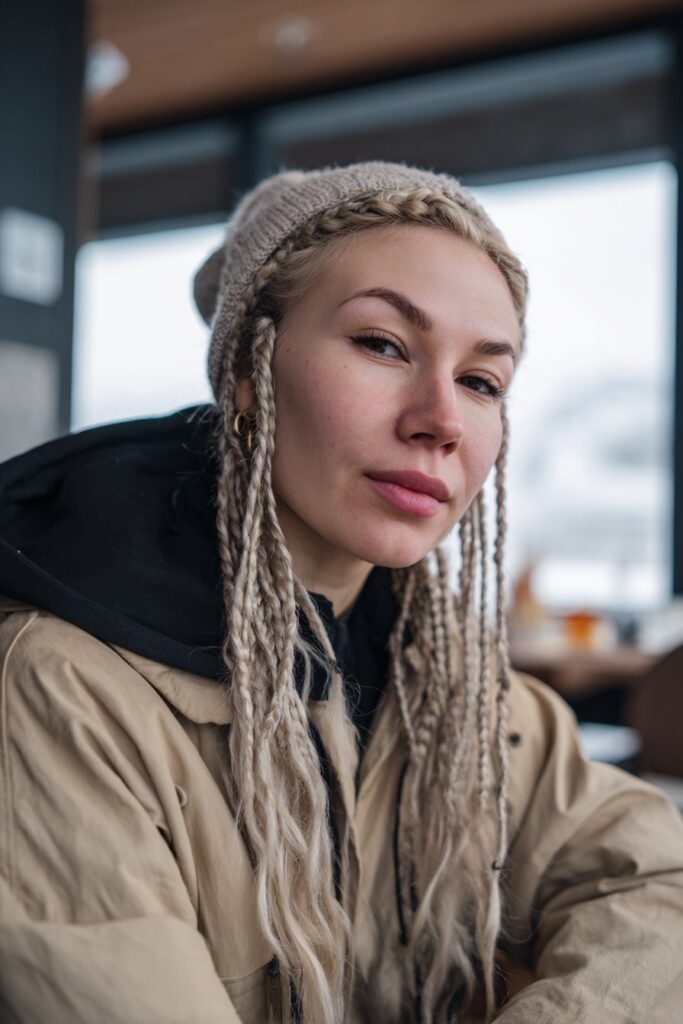
What it is
Headband braids quickly became my favorite protective style once I discovered their magic for winter sports. This beautiful woven pattern frames your face, starting behind one ear and continuing around your head. Unlike other styles I’ve tried, headband braids can be worn fully collected, half collected, or loose – yet I typically recommend the fully collected version for snowboarding as it prevents damage from harsh weather conditions. Usually completed in just 5 minutes, this quick style perfectly complements early morning slope sessions.
Why it works
Headband braids work magnificently for all facial shapes and hair types—curly, wavy, straight, or layered hair. Certainly their greatest advantage is keeping hair completely out of your face while simultaneously absorbing sweat. For curling or cross-country skiing enthusiasts likewise, this style prevents that dreaded frizz and tangling that typically plague snowboarders throughout long days.
How to style it
To create perfect headband braids:
- Choose which area you want your braid to start from
- Separate that section into three parts
- Begin braiding toward the back of your ear, staying close to the scalp
- Braid backward, continually adding new hair sections
- Complete with a small hairband and secure with pins
Starting with second-day hair provides much better grip. I often use a pomade for added control alongside scrunchies or ribbon hair ties to prevent breakage.
Messy High Bun
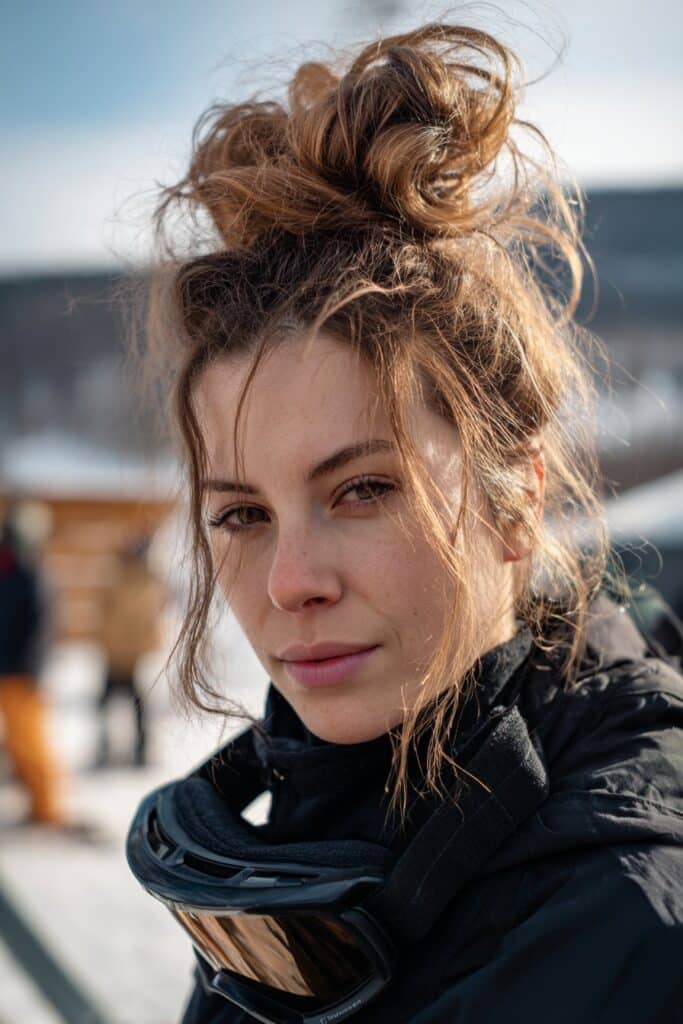
What it is
The messy high bun has saved me countless times on the mountain when every minute counts. Throughout my career as a professional stylist, I’ve relied on this style during my own snowboarding adventures. It’s a slightly disheveled bun positioned at the nape of your neck that keeps hair contained without adding uncomfortable bulk under your helmet. Unlike more structured styles, this one embraces a bit of controlled chaos that, ironically, helps it stay secure throughout your snowboarding session.
Why it works
The messy high bun offers outstanding versatility on the slopes. First off, it sits perfectly under helmets without creating pressure points. Secondly, this style transitions beautifully when you remove your helmet for breaks or après-ski gatherings. Additionally, it works wonderfully for both clean and dirty hair, making it ideal for multi-day snowboarding trips. Commonly, I’ve found it paired with a warm, woolen headband for extra warmth and style points.
How to style it
Creating the perfect messy high bun takes minimal effort:
- Gather your hair into a high ponytail positioned at the nape of your neck
- Twist the ponytail into a loose bun formation
- Secure with bobby pins or a scrunchie for reliable hold
- Apply a lightweight styling cream to prevent flyaways
- Pull a few strategic strands loose around your face for that effortlessly chic look
For all-day hold that truly withstands jumps and falls, try securing your bun asymmetrically instead of perfectly centered.
French Braid Pigtails
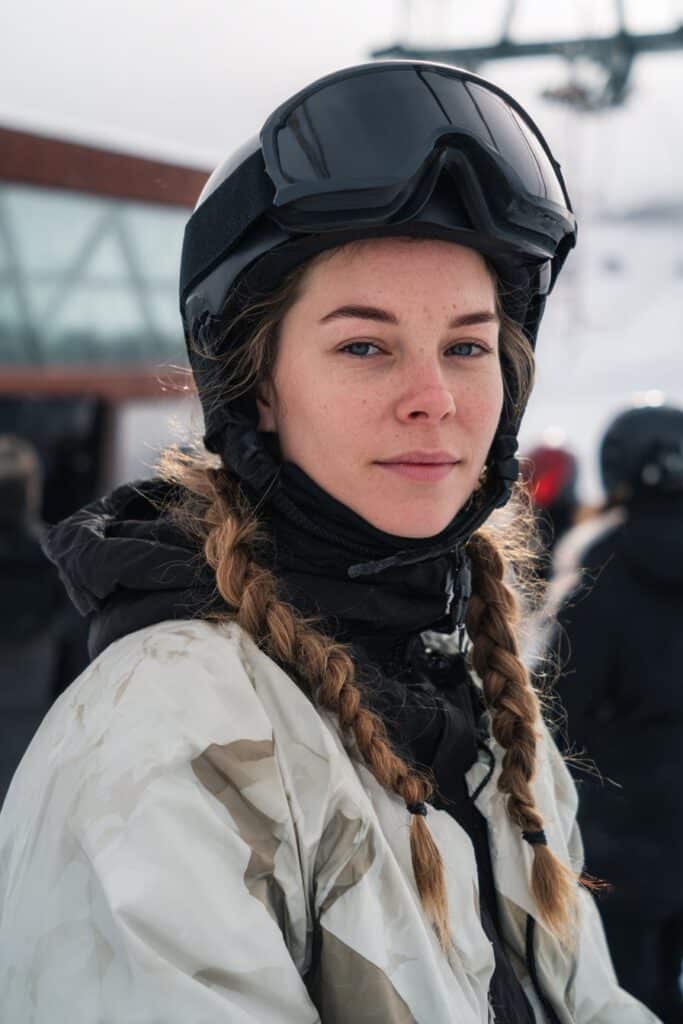
What it is
French braid pigtails bring classic charm to snowy adventures! Throughout my career as a stylist, I’ve seen these timeless braids remain popular for good reason. Typically, they consist of two even braids starting at the crown of your head and extending downward after parting your hair down the middle. Unlike regular braids, French braids cleverly incorporate additional hair as you move down the scalp, securing every strand in place with no loose sections.
Why it works
From personal experience, French braid pigtails excel on the slopes mainly because they evenly distribute hair weight, minimizing the annoying tangling and friction that ruins post-ride vibes. Normally, these braids fit under helmets perfectly without creating uncomfortable pressure points. Even better, they protect your hair from mountain elements – keeping it well-attached throughout jumps and tricks. One particular advantage I’ve found with French braid pigtails is their effectiveness with layered hair. Hereafter, you’ll notice the braided structure prevents that frustrating frizz that typically appears after hours zigzagging through powder.
How to style it
To create these snowboarding-ready pigtails:
- Part your hair down the middle of your entire head
- Secure one side temporarily with a hair tie
- On the free side, take a small section at the crown and divide into three equal parts
- Begin your braid by crossing strands while adding small chunks of hair from both sides as you progress downward
- Once reaching your nape, continue with a regular braid and secure with an elastic
- Repeat on the other side
With this in mind, remember that French braiding improves with practice. For a personalized touch, adjust your section sizes – larger chunks create looser, chunkier braids perfect for a relaxed mountain vibe.
Top Knot Bun
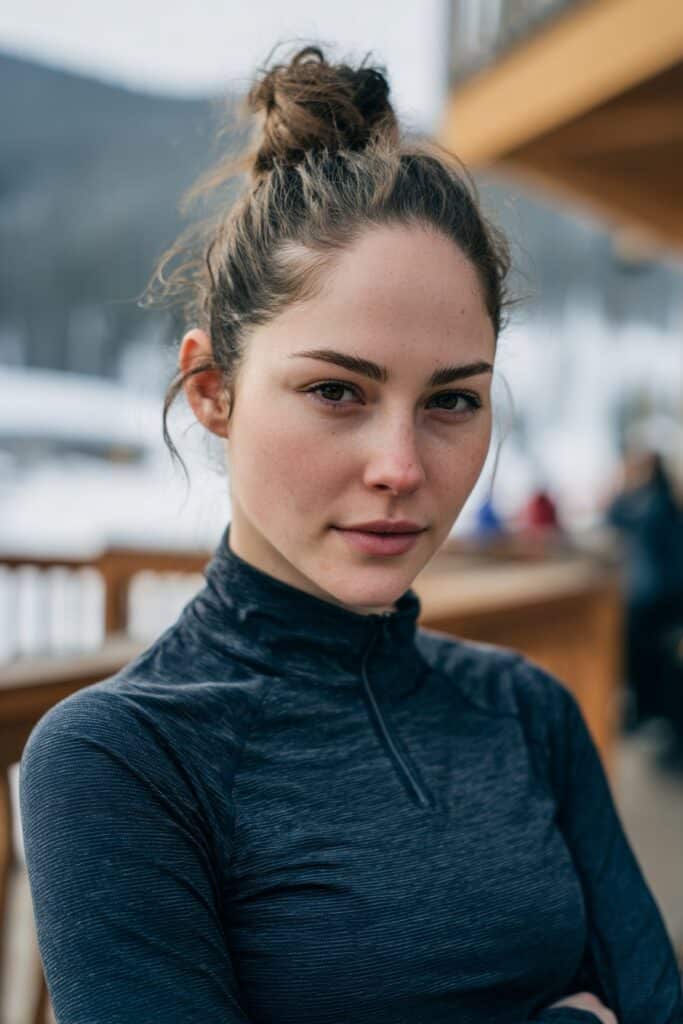
What it is
That stretchy silk press was nearing its end as I prepared for my third day on the slopes—until I remembered my faithful top knot bun! This versatile style literally kept me in a chokehold for years. Basically, it involves gathering your hair into a knot secured at the crown of your head. The top knot creates a well-groomed look that works beautifully on medium to long hair lengths, positioned higher or lower according to your preference.
Why it works
Throughout countless powder days, I’ve found the top knot bun excels at one crucial thing—keeping hair completely out of your face. This visibility becomes essential when navigating challenging runs. The style typically provides a practical solution for intense riding sessions, while conveniently stretching an old silk press a few extra days! Commonly, it transitions seamlessly between sports, work, and everyday wear.
How to style it
For a perfect snowboarding top knot:
- Brush your hair thoroughly until tangle-free
- Create a sharp side part for a sleek appearance
- Secure hair into a ponytail at your crown
- Twist the ponytail around its base
- Anchor with bobby pins and hairspray
My personal secret? Use a claw clip underneath instead of a bump-it for natural volume and superior stability through jumps and turns!
Fishtail Braid Ponytail
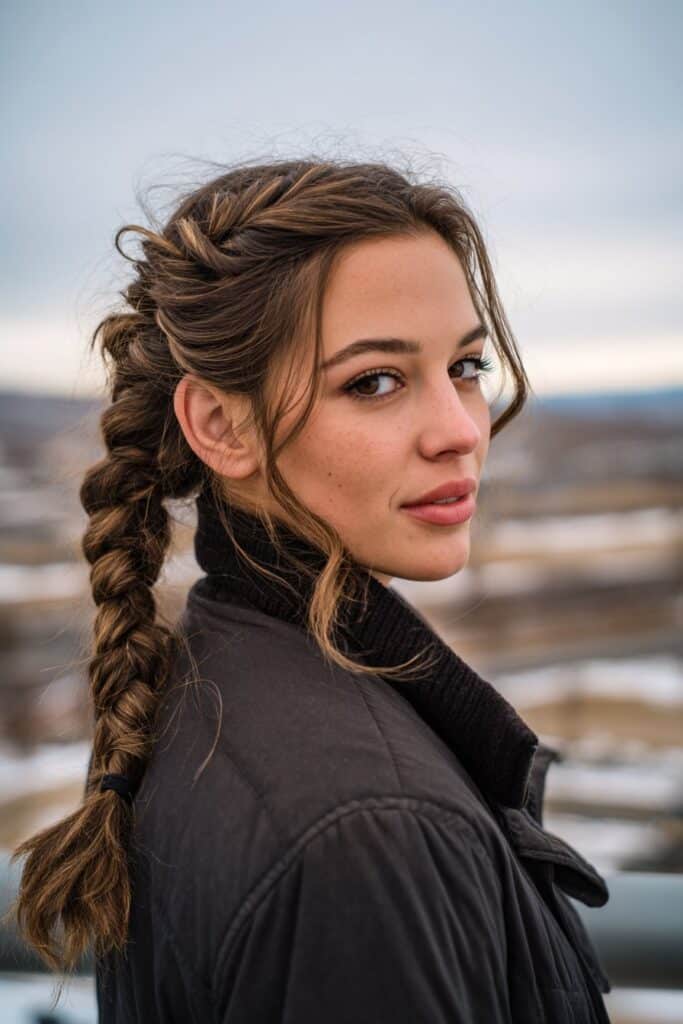
What it is
The fishtail braid ponytail has become my signature look for serious snowboarding days – offering a perfect mix of intricate style and no-nonsense function that turns heads at the lodge yet stays put through jumps and tricks. Ordinarily, this distinctive style combines a ponytail that transitions into a fishtail braid. Unlike traditional three-strand braids, fishtail braids use just two sections, with small pieces crossed from the outer edges to create that recognizable herringbone pattern that mimics a fish’s skeleton – hence the name.
Why it works
First off, this style keeps hair completely contained yet offers more visual interest than a standard ponytail. The intricate weaving pattern prevents tangles even during high-speed runs or tumbles in powder. Consistently, the tight braid structure minimizes friction between your hair and neck gaiter, subsequently reducing that annoying static electricity buildup common with looser styles. Notwithstanding its elaborate appearance, it provides remarkable hold throughout active sports.
How to style it
- Begin by gathering your hair into a secure ponytail at your desired height
- Split the ponytail into two equal sections
- Take a small strand from the outer edge of one section
- Cross this strand over and add it to the inner edge of the opposite section
- Repeat on the other side, continuing this pattern down the length
Whenever I create a fishtail braid for snowboarding, I apply a lightweight texturizing spray beforehand – it gives enough grip without stiffness. For extra security throughout multiple runs, gently tug each crossed section tight as you go, then slightly loosen afterward for that effortlessly chic appearance every snowboarder secretly wants!
Double Dutch Buns
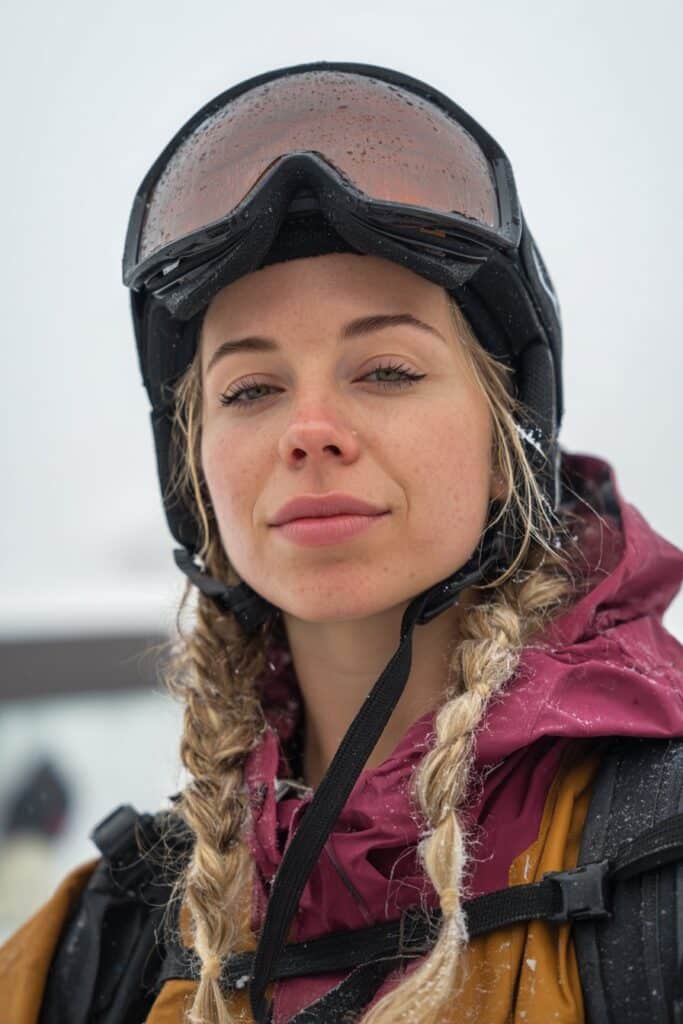
What it is
Double Dutch Buns saved my hair during a week-long snowboarding retreat last winter. These playful yet practical styles combine Dutch braiding techniques with two perfectly positioned buns on either side of your head. Unlike regular space buns, Double Dutch Buns incorporate the under-crossing Dutch braid method first, creating a secure foundation before wrapping the ends into buns. This unique combination offers both the security of braids with the contained style of buns – undoubtedly one of the most versatile options for winter sports enthusiasts.
Why it works
Double Dutch Buns distribute hair weight evenly across your head, eliminating one-sided pressure under helmets. Plus, the braided foundation prevents slippage even through high-impact landings, meaning no touch-ups between runs. The Dutch technique expertly captures those problematic shorter layers that typically escape during activities. For those of us with layered haircuts, this style is a genuine game-changer as it works beautifully even with varying hair lengths. Typically, the style remains secure throughout multiple runs, jumps, and après-ski activities without coming undone.
How to style it
To create perfect Double Dutch Buns:
- Part hair evenly down the center
- Create a Dutch braid on each side, starting from the front
- Braid until you reach the ends
- Wrap each braid into a bun
- Secure with bobby pins in an X formation
My personal tip: Position your buns slightly lower than your ears for optimal helmet comfort. As a result, they won’t create pressure points during long sessions on the slopes.
Twisted Low Braid
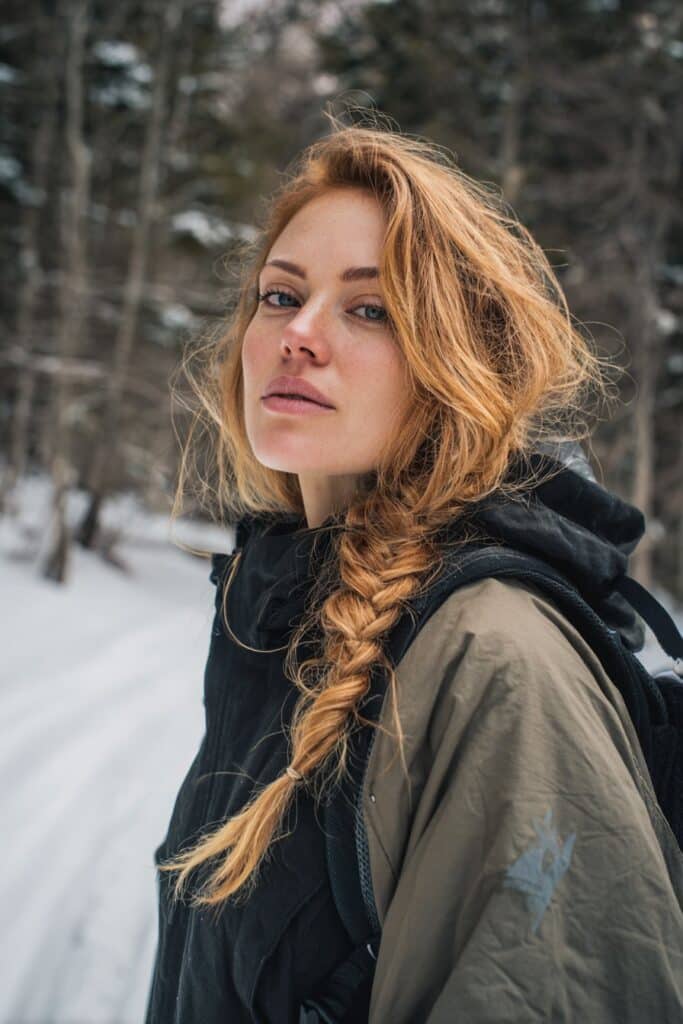
What it is
Riding through a blizzard last winter convinced me that the twisted low braid deserves more recognition among snowboarders. This style elevates the classic ponytail by incorporating twisted rope-like sections that add both texture and security. Essentially, it features sections of hair twisted together before gathering into a low ponytail positioned at the nape of your neck, creating a sophisticated yet practical look for mountain adventures.
Why it works
Throughout my years carving through powder, I’ve found the twisted low braid excels primarily because the twisting technique locks hair in place, preventing the gradual loosening that happens with regular ponytails. The natural friction created by twisted sections holds everything secure during jumps and sharp turns. Frankly, the low position works perfectly with helmets without creating uncomfortable pressure points. Plus, its structured design prevents tangling from wind and constant movement.
How to style it
To create this slope-ready style:
- Brush thoroughly to remove tangles
- Divide the top section of hair into two equal parts
- Twist both sections away from your face
- Continue adding hair to each twisted section as you move downward
- Secure everything together in a low ponytail
Starting with slightly dirty hair provides better grip for this style. I often spray a bit of dry shampoo beforehand for all-day hold.
Headband With Braided Ponytail
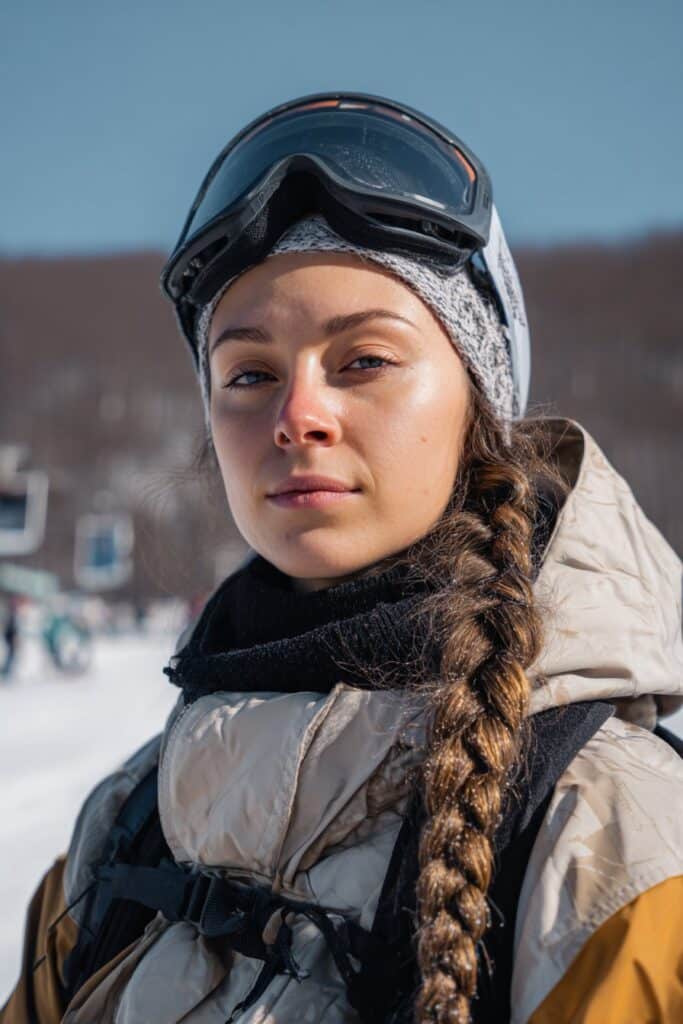
What it is
For those with troublesome layers that never stay put, the headband with braided ponytail completely transformed my winter sports experience. This clever combination features a French braid running along your hairline like a natural headband, paired with a simple low ponytail. Primarily, it creates a secure framework around your face while keeping your hair neatly contained at the nape of your neck. The braid typically begins near your temple and travels across your hairline, creating both a practical and stylish frame for your face.
Why it works
Forthwith, this style excels at taming those shorter pieces that typically escape during high-speed runs. Equally important, it sits perfectly flat underneath helmets without creating uncomfortable pressure points. The headband portion effectively holds back flyaways while fitting snugly under your helmet. Generally, this versatile style works beautifully regardless of your hair texture – straight, wavy, or curly. The low ponytail portion ensures your neck stays warm yet prevents that dreaded tangled mess by day’s end.
How to style it
Creating this slope-ready look requires minimal time:
- Start with a small section of hair near your temple
- Create a French braid along your hairline moving toward the opposite ear
- Secure the end with a small elastic and tuck behind your ear
- Gather remaining hair into a low ponytail
- Secure any loose sections with bobby pins
My professional tip: Adding a sweat-wicking headband over the braid provides extra security through jumps and tricks – plus it transitions perfectly to après-ski gatherings!
Conclusion
After countless days on the slopes testing these hairstyles, I’ve learned that finding the right style makes all the difference between focusing on your snowboarding and constantly adjusting uncomfortable hair. Certainly, the journey to discovering these perfect styles wasn’t always smooth – trust me, I’ve experienced plenty of tangled messes and helmet hair disasters along the way!
Above all, remember that practicality must come first when choosing your slope-ready style. Low braids, buns, and ponytails consistently perform best under helmets while preventing those frustrating tangles that can ruin your après-ski vibe. These fifteen options give you plenty of variety to match both your hair type and personal style.
My years spent styling hair professionally have taught me that mountain conditions demand specific solutions. Wind, sweat, and constant movement quickly destroy ordinary hairstyles, which is why these snowboarding-specific options focus on security without sacrificing style. Dutch braids and boxer braids remain my personal favorites for multi-day trips, while quick options like the sleek low bun save precious minutes on those powder day mornings when every second counts.
The beauty of mastering these techniques lies in their versatility – many work wonderfully beyond the slopes for everyday wear, workouts, or travel days. Additionally, most require minimal products, making them perfect for lodge bathrooms or quick fixes between runs.
Ultimately, finding your perfect snowboarding hairstyle might take some experimentation. What works beautifully for thick, curly hair might not be ideal for fine, straight locks. Therefore, don’t hesitate to adapt these styles to suit your unique needs and preferences.
Next time you hit the mountain, try one of these tested options – your hair will thank you, and you’ll spend more time carving through powder instead of battling with unruly strands. After all, snowboarding is challenging enough without adding hair troubles to the mix!
Key Takeaways
Master these snowboarding hairstyles to stay comfortable on the slopes while looking effortlessly chic at après-ski gatherings.
• Choose low-positioned styles like braids, buns, and ponytails that sit flat under helmets without creating uncomfortable pressure points or bulk.
• Prioritize secure techniques such as Dutch braids and boxer braids that prevent tangling from wind, sweat, and constant movement during intense riding sessions.
• Prep with the right products – apply lightweight texturizing spray or leave-in conditioner beforehand for all-day hold without stiffness or buildup.
• Focus on multi-day durability – styles like bubble braids and sleek low buns can last 2-3 days with minimal touch-ups, perfect for mountain getaways.
• Avoid high or loose styles that can uncomfortably squish under helmets or fly into your face during high-speed runs and jumps.
The key to mountain hair success lies in balancing practicality with style – these tested techniques ensure you’ll spend more time carving powder instead of battling unruly strands.

Elsa Claire is the founder and editor of ElsaClaire.com, where she writes about hairstyles, hair care, and the everyday routines that help real people feel good about their hair.