Key Takeaways
Master these professional lowlight techniques to transform your gray hair transition from frustrating to fabulous while reducing salon visits and maintenance.
• Choose cool-toned lowlights like ash brown, charcoal, or steel gray to complement natural silver strands and neutralize unwanted yellow tones for a sophisticated look.
• Use semi-permanent formulas instead of permanent dye to protect hair integrity while creating natural dimension that grows out seamlessly without harsh demarcation lines.
• Focus on face-framing placement first to address the most visible gray areas and create an intentional, polished appearance without committing to full-head coverage.
• Extend time between salon visits to 6-8 weeks compared to traditional monthly root touch-ups, with maintenance becoming even less frequent as your gray percentage increases.
• Match lowlight shades to your skin undertones – cool complexions work best with ash and steel tones, while warm skin tones harmonize beautifully with chestnut and taupe shades.
The beauty of lowlights lies in working with your natural gray transition rather than against it, creating intentional sophistication that celebrates your silver strands while maintaining professional polish and reducing long-term commitment.
Tired of monthly salon visits just to cover your grays? Lowlights for gray hair might be the game-changer you’ve been searching for. Unlike highlights, lowlights are actually a few shades darker than your natural hair, creating the most natural look possible. I’ve seen countless clients walk into my salon frustrated with brassy or yellow highlights that just don’t work with their silver strands.
After years behind the chair, I’ve discovered that blending gray hair with highlights and lowlights is truly the ideal solution for anyone wanting to embrace their gray rather than fight it. This approach isn’t about covering gray hair completely—instead, it helps your silvers integrate beautifully throughout your mane for a multi-dimensional effect. The best part? This technique leads to much lower maintenance regrowth with less commitment for upkeep. Many of my clients only need to touch up their lowlights every six to eight weeks, and this becomes even less frequent as your hair continues to grow out.
What I love most about using brown lowlights for gray hair is how they break up the gray while adding color back into the hair—all while keeping things beautifully low-maintenance. In this article, I’ll share my 12 favorite natural-looking lowlight techniques for gray hair, including before and after transformations that will show you just how stunning the results can be.
Soft Ash Brown Lowlights

Soft ash brown lowlights have become my go-to recommendation for clients beginning their gray hair journey. As someone who has helped hundreds of women embrace their silver strands, I’ve found this subtle technique creates the most natural-looking results without the harsh contrast that comes with traditional hair coloring.
Soft Ash Brown lowlight technique
When applying soft ash brown lowlights for gray hair, I typically use a demi-permanent color instead of permanent dye. This gentler formula creates a softer, more dimensional result that blends seamlessly with existing gray hair. The technique involves strategically placing darker strands throughout the head to break up the grays.
For my clients with more natural gray distribution, I focus on what I call “pattern placement” – following where the grays naturally appear rather than forcing a uniform look. During my years behind the chair, I’ve learned that ultra-fine babylighting techniques work beautifully for enhancing gray hair. The goal is subtlety – we’re not creating dramatic contrasts but rather a soft dimension that looks completely natural.
Why Soft Ash Brown works for gray hair
Soft ash brown complements gray hair exceptionally well because both share cool undertones. Since gray hair color is naturally cool-toned, ash brown creates harmony rather than fighting against your silver strands. Additionally, this particular shade helps correct the brassiness that growing-out grays sometimes display.
I recently had a client, Sarah, who was frustrated with her transition to gray. The yellowish tinge made her feel self-conscious. After applying soft ash brown lowlights, the unwanted warm tones disappeared, replaced by a sophisticated blend that looked intentional rather than in-between.
Furthermore, ash brown tones provide dimension without overwhelming your natural silver. This creates depth while maintaining that beautiful light reflection gray hair is known for.
Soft Ash Brown lowlight maintenance tips
Maintaining ash brown lowlights requires less commitment than full color coverage. Most of my clients only need touch-ups every two to three months, depending on their growth pattern. To keep your color looking fresh between appointments:
- Use color-safe, sulfate-free shampoo and conditioner specifically formulated for color-treated hair
- Incorporate hydrating products as both colored and gray hair need extra moisture
- Protect from UV exposure, which can accelerate fading and bring out brassiness
- Consider a purple-tinted product if you notice your ash tones warming up
The beauty of soft ash brown lowlights is their forgiveness as they grow out. The demi-permanent formula gradually fades rather than creating harsh lines of demarcation. Consequently, the transition becomes increasingly natural over time – exactly what we want when embracing gray hair.
Cool Espresso Lowlights

For clients seeking rich dimension with their silvers, cool espresso lowlights offer a stunning alternative. Throughout my years as a stylist, I’ve noticed how this deep, coffee-inspired shade creates remarkable contrast against gray hair without overwhelming it.
Cool Espresso lowlight technique
When applying cool espresso lowlights, I use a demi-permanent formula which prevents the hair shaft from opening up too much and maintains the natural shine of gray hair. This technique involves strategically placing darker strands throughout the head to break up gray patterns.
I remember working with Martha, who had beautiful silver strands but felt they appeared patchy and uneven. To create her perfect blend, I applied cool espresso lowlights by:
- Focusing on the root area and face-framing sections
- Using a combination of slices and weaves for natural dimension
- Keeping the lowlights within two levels of her natural base shade
The magic of cool espresso lies in its subtlety. As one of my mentors always said, “Don’t go too dark”. The goal isn’t dramatic contrast—it’s natural integration that makes gray look intentional and sophisticated.
Why Cool Espresso enhances gray hair
Cool espresso tones work remarkably well with gray hair due to their cooler undertones. Moreover, this deep, rich shade helps fight against unwanted yellow tones that sometimes appear with gray.
For clients with medium to darker natural bases, cool espresso creates shadow and depth that flatters their overall look. This darker shade effectively breaks up concentrated gray areas, making them appear more evenly distributed throughout the hair.
I’ve found cool espresso particularly effective for clients with cool skin undertones. As a rule, I always pair like with like—cool hair tones with cool skin tones. This harmony creates a natural look that enhances rather than fights against your complexion.
Maintaining Cool Espresso lowlights
The best part about cool espresso lowlights? They’re incredibly low-maintenance. Unlike full coverage color that creates obvious regrowth lines, these strategic darker pieces blend naturally as they grow out.
To keep your cool espresso lowlights looking fresh between appointments:
- Use the mildest shampoo possible—detergents and artificial additives will strip color quickly
- Apply a mild conditioner followed by a tonal gloss to maintain the salon effect longer
- Consider blue-tinted products which help keep lowlights shiny and fight brassiness
Most of my cool espresso clients only need touch-ups every two to three months. This makes it ideal for busy women who want sophistication without commitment to frequent salon visits. As your gray naturally increases, we can adjust the lowlight placement to maintain that beautiful dimensional effect.
Subtle Charcoal Lowlights
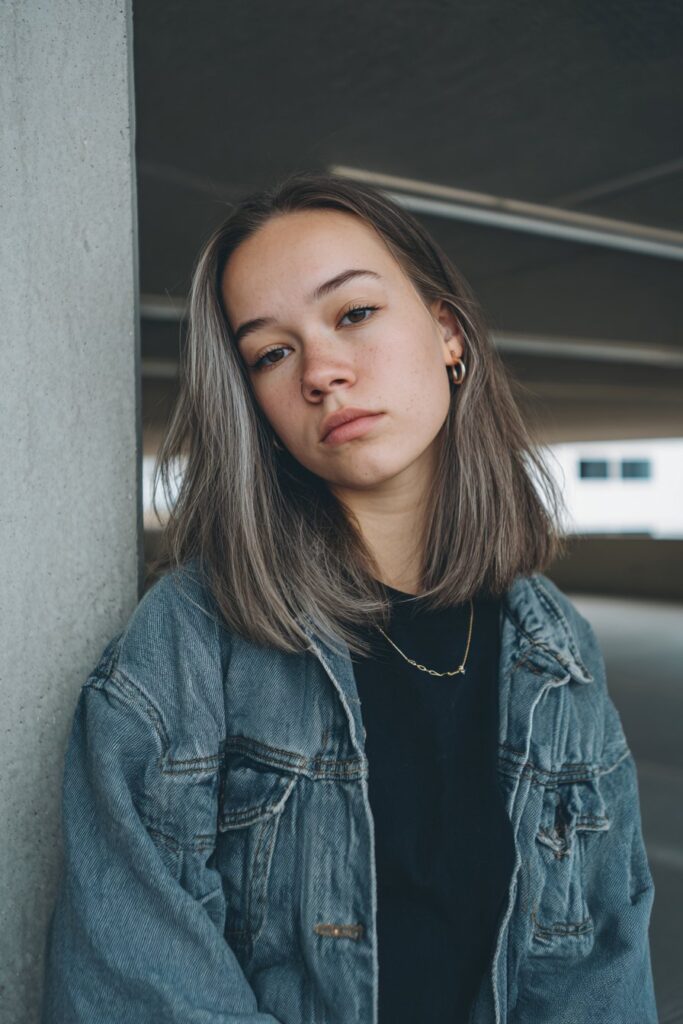
Charcoal lowlights have changed the game for my clients who want that perfect balance between embracing gray and maintaining dimension. Last month, I worked with a client named Elsa who was hesitant about her increasing silver strands. After applying subtle charcoal lowlights, she couldn’t believe how naturally her grays blended—finally, a solution that didn’t fight against her natural transition.
Subtle Charcoal lowlight technique
When applying charcoal lowlights, I primarily use semi-permanent or demi-permanent formulas as they’re significantly gentler on gray hair. These formulas merely deposit color without opening the hair shaft too much, maintaining your hair’s natural structure and preventing further dryness.
The technique involves strategically placing darker strands throughout the hair to break up concentrated gray areas. For most of my clients, I recommend staying within two to three shades of your natural base color for the most seamless blend.
In my Charleston salon days, I learned that the placement matters just as much as the shade. I focus on:
- Adding depth at the roots and around the face
- Creating subtle shadows underneath top layers
- Avoiding too much contrast which can look artificial
Why Charcoal blends well with silver strands
Charcoal works exceptionally well with gray hair since both share cool undertones. As one stylist reminded me early in my career, “You want to create harmony, not fight against what’s naturally occurring.” This shade essentially fights against unwanted yellow tones that sometimes appear as hair transitions to gray.
For clients with less than 40% gray hair, charcoal lowlights offer an ideal solution. The cool, ashy nature of charcoal creates dimension without the stark contrast that warmer shades might produce against silver strands.
I’ve noticed that charcoal lowlights work beautifully for clients with cool skin undertones. The complementary cool tones in both their complexion and the lowlights create a harmonious look that enhances their natural features.
Charcoal lowlights upkeep
The beauty of charcoal lowlights lies in their low-maintenance nature. Depending on how dark you go, these lowlights typically last between six to twelve weeks. As they grow out, the transition appears gradual and natural—exactly what we want when embracing gray hair.
To maintain that fresh-from-the-salon look, I recommend:
- Using sulfate-free, color-safe shampoo to prevent fading
- Incorporating a blue or purple-tinted product occasionally to combat brassiness
- Applying weekly moisturizing treatments, as gray hair tends to be drier and more porous
Throughout my years working with clients transitioning to gray, I’ve found that charcoal lowlights provide that perfect middle ground—they add rich dimension while still honoring and working with your natural silver. The result is sophisticated, intentional, and surprisingly low-effort.
Dimensional Mushroom Brown
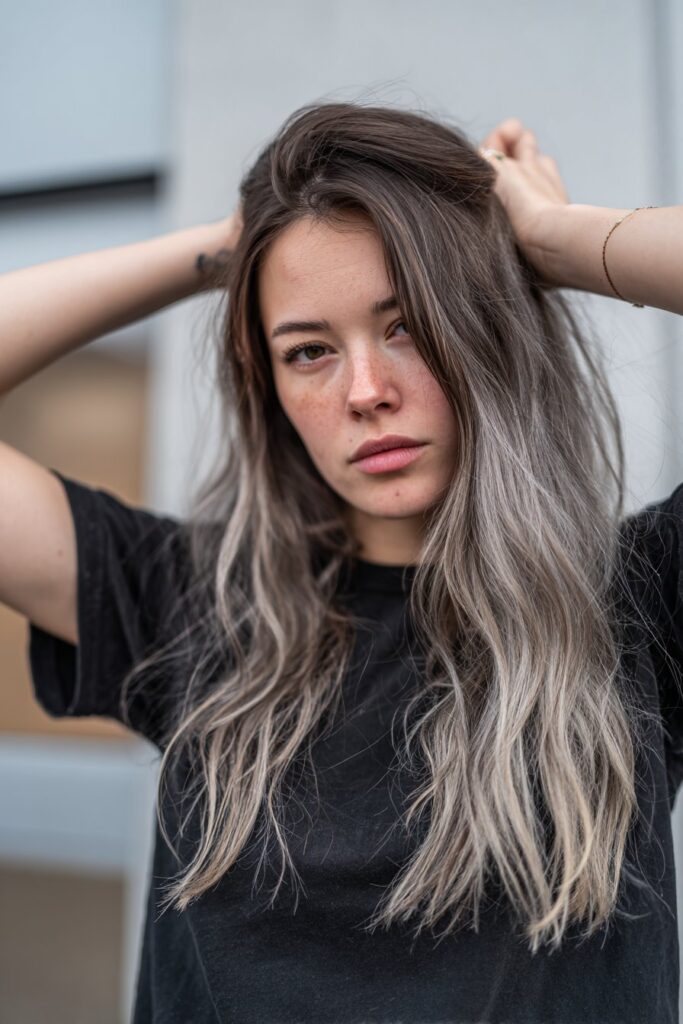
Mushroom brown lowlights became my signature technique after helping a client named Rachel embrace her silver strands. She came to my chair frustrated with traditional hair color that looked flat against her emerging gray. That appointment changed both our perspectives on gray hair transitions.
Mushroom Brown lowlight technique
Mushroom brown creates a multi-dimensional effect with an ashy brown base layered with strategic highlights and lowlights. The color gets its rich, blended appearance from this careful combination. In my experience, the most natural-looking results come from:
- Starting with an ash-brown base
- Adding lighter neutral highlights (one to two shades lighter)
- Incorporating lowlights for depth and dimension
This technique works beautifully through balayage or traditional foiling. For my clients with more scattered gray patterns, I often recommend “babylights”—ultra-fine highlights that create seamless blending. The goal is creating a lived-in look that grows out naturally.
Why Mushroom Brown suits gray hair
I’ve discovered that mushroom brown is exceptionally well-suited for gray transitions given that both share cool undertones. This harmony creates a natural blend that looks intentional rather than like an ongoing battle with your roots.
In fact, mushroom brown is ideal for correcting brassiness that sometimes appears with growing-out grays. Its cool, ashy tones neutralize those unwanted yellow hues that make many clients self-conscious about their transition.
Perhaps most importantly, the mushroom brown shade allows your natural gray strands to work as built-in highlights. As a colorist in Charleston, I learned that embracing—rather than fighting—natural patterns creates the most authentic results. Many of my clients appreciate how this approach makes their silvery strands look purposeful instead of problematic.
How to maintain Mushroom Brown lowlights
On balance, maintaining mushroom brown lowlights requires minimal effort compared to full-color coverage. Most of my clients only need touch-ups every six to eight weeks, though this varies based on your natural base color and growth pattern.
Between appointments, I recommend:
- Using sulfate-free shampoo and conditioner specifically formulated for color-treated hair
- Incorporating a weekly hair mask to nourish color-treated strands
- Alternating with a purple shampoo once weekly to maintain those cool, ashy tones
For those with particularly resistant grays or naturally warm hair, a toning gloss between appointments can refresh those mushroomy tones beautifully. The beauty of this approach? As your gray percentage increases, the transition becomes increasingly seamless—exactly what we want when embracing our natural silver.
Smoky Beige Lowlights
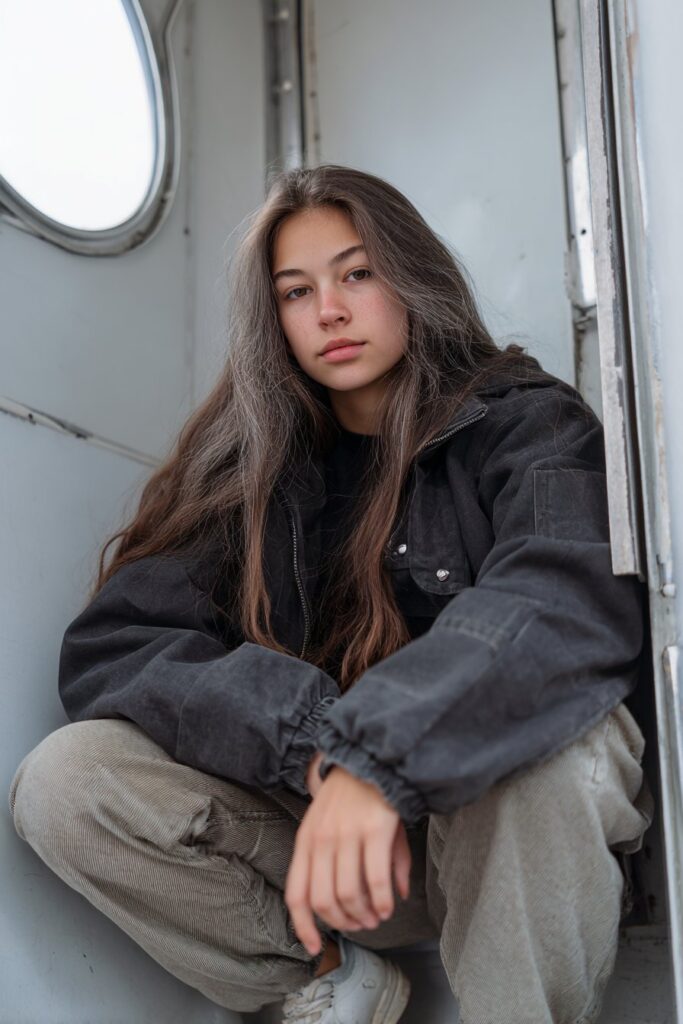
Smoky beige lowlights changed my entire approach to gray hair blending after a memorable client experience. Lisa walked into my salon frustrated with her patchy grays but adamant about not returning to full color. Together, we discovered that smoky beige created the perfect balance of dimension without fighting her natural transition.
Smoky Beige lowlight technique
My approach to smoky beige lowlights involves using semi-permanent color that won’t alter your hair’s natural porosity levels. This gentler formula merely deposits color on the surface rather than penetrating deeply. Typically, I apply multiple shades of lowlights simultaneously for greater depth and dimension.
In my experience, the placement matters tremendously. I focus on creating a strategic frame around the face while ensuring the lowlights blend seamlessly throughout to avoid harsh lines. For clients with patchy gray patterns, I work with ultra-thin sections to achieve that fully blended effect that makes grays look intentional.
Why Smoky Beige flatters gray tones
Smoky beige creates magic with gray hair primarily because both share complementary undertones. The key? Selecting shades that are just one or two levels darker than your natural gray. This subtle contrast adds dimension without overwhelming your silvery strands.
As a colorist who considers each client’s unique features, I’ve found that smoky beige adapts beautifully to different skin tones. Naturally, I always evaluate skin undertones before recommending any color service – smoky beige’s neutrality makes it particularly versatile across various complexions.
The combination of creamy beige with your natural platinum strands creates an almost marble-like dimension that makes gray hair look deliberately sophisticated. Of course, this is exactly what most of my transitioning clients desire!
Smoky Beige lowlight care tips
To maintain your smoky beige lowlights between appointments:
- Use only the mildest shampoo possible—detergents and artificial additives will quickly strip color and create brassiness
- Apply a gentle conditioner followed by a tonal gloss to maintain that salon-fresh look
- Consider a blue or purple shampoo once weekly to counteract any warming
- Incorporate moisturizing treatments as gray hair tends to feel drier
The beauty of smoky beige lies in its low-maintenance nature. Undoubtedly one of the most client-friendly techniques, these lowlights typically require touch-ups only every six to eight weeks, with visits becoming even less frequent as your gray percentage increases.
Natural-Looking Mocha Lowlights
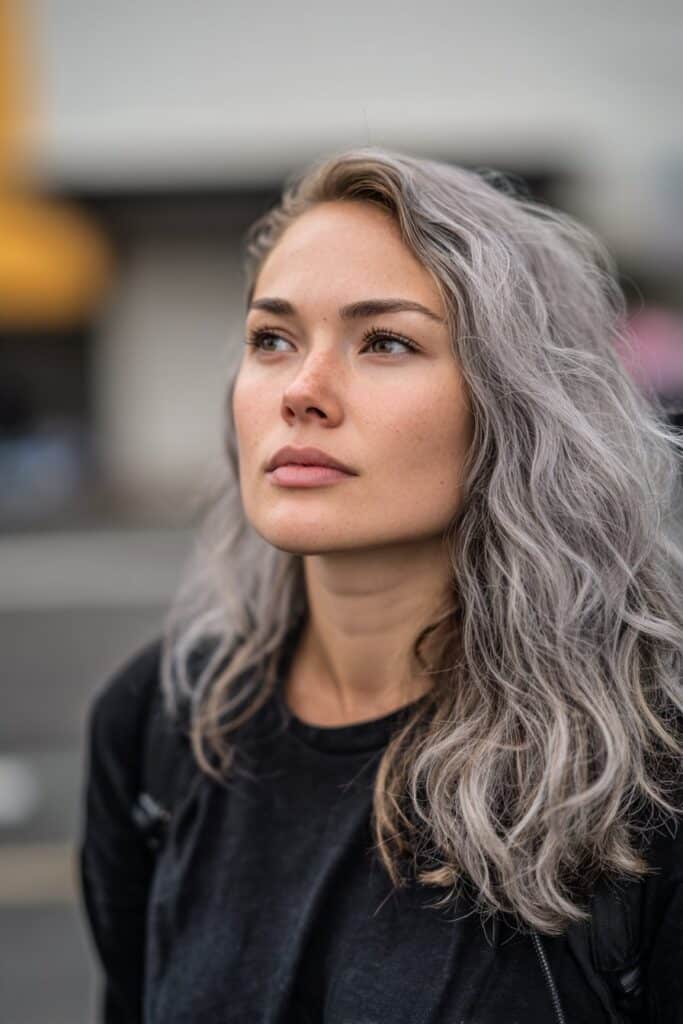
The transformative power of mocha lowlights first captured my attention after working with a client struggling with patchy grays. In my Charleston salon days, I remember a woman named Janet who walked in frustrated with her silver strands but hesitant about full color commitment. Mocha lowlights created such a stunning transformation that I’ve been recommending them ever since.
Mocha lowlight technique
Mocha lowlights require a thoughtful approach focused on creating dimension without overwhelming natural gray. Above all, I recommend semi-permanent, non-ammonia products which preserve hair integrity while delivering rich color. My technique involves:
- Keeping the money piece (face-framing section) slightly lighter
- Adding deeper mocha tones throughout the body of the hair
- Creating strategic shadows that break up the hard gray line of demarcation
This dual-tone strategy works beautifully for blending grays—darker at the roots with strategic placement throughout creates natural depth without harsh transitions.
Why Mocha adds depth to gray hair
Mocha lowlights excel at diffusing and breaking up the hard gray line that often appears during transition. Important to realize, these darker tones work particularly well with natural gray hair as they’re more soft and ashy than rich or saturated.
For clients concerned about yellowing, mocha lowlights offer another advantage—they help fight against unwanted yellow tones that sometimes appear with gray. What I love most about this shade is how it creates depth while honoring your natural silver strands.
Mocha lowlight maintenance
Maintaining mocha lowlights requires minimal effort compared to full color coverage. First thing to remember, hydration is absolutely essential. “The best way to maintain lowlights is by using the right products that ensure hydration and smooth, shiny hair,”.
To keep your mocha lowlights looking fresh:
- Use shampoo and conditioner formulated for color-treated hair
- Apply weekly hydrating masks to combat dryness
- Consider blue-tinted products to prevent brassiness
At the end of the day, mocha lowlights create that perfectly blended, intentional gray that looks sophisticated rather than accidental.
Ash Blonde Lowlights for Silver Hair

Ash blonde lowlights completely transformed my client Elsa Claire’s relationship with her silver strands. After years of fighting her natural gray, Elsa walked into my studio feeling defeated. “I’m tired of harsh root lines,” she confessed. That day marked the beginning of her journey with ash blonde—a perfect transitional shade that made her grays look intentional and sophisticated.
Ash Blonde lowlight technique
My approach to ash blonde lowlights focuses on creating a seamless blend with existing silver. In this case, I combine cool ash tones with blonde to create a wonderful color where gray hair is covered naturally without appearing artificial. For Elsa’s transformation, I used a technique colorists often call “gray blending”—applying ashy tones that lean toward natural silvery shades while staying away from the gray spectrum.
Technically speaking, I achieve this look by mixing specific color formulations. Many stylists create ash blonde by combining a 9T GLAZE shade with a blonde such as 10P. This creates that perfect cool undertone that complements rather than competes with natural gray.
Why Ash Blonde complements silver strands
Ash blonde works magnificently with gray hair precisely because it doesn’t contain warm tones like oranges and reds. As Meryl Streep has demonstrated, natural gray matches perfectly with blonde highlights to give a sophisticated cool undertone.
For clients in transition phases, ash blonde serves as the perfect stepping stone. It creates that modern, lived-in look that grows out beautifully without harsh demarcation lines. The combination of cool tones, subtle highlights, and a smoky root makes the gray look intentional.
Ash Blonde lowlight upkeep
To maintain those beautiful ash tones between appointments:
- Use purple products with every wash—my favorite trick for keeping brassiness at bay
- For stubborn brassiness, apply purple conditioner as an overnight treatment with a shower cap
- Check your water quality—hard water often turns perfect ash blonde into an orangey mess
What makes ash blonde truly special is its low-maintenance nature. The smooth, natural grow-out means less frequent salon visits and freedom from those harsh root lines that drove Elsa to my chair in the first place.
Steel Gray Lowlights for a Monochrome Look
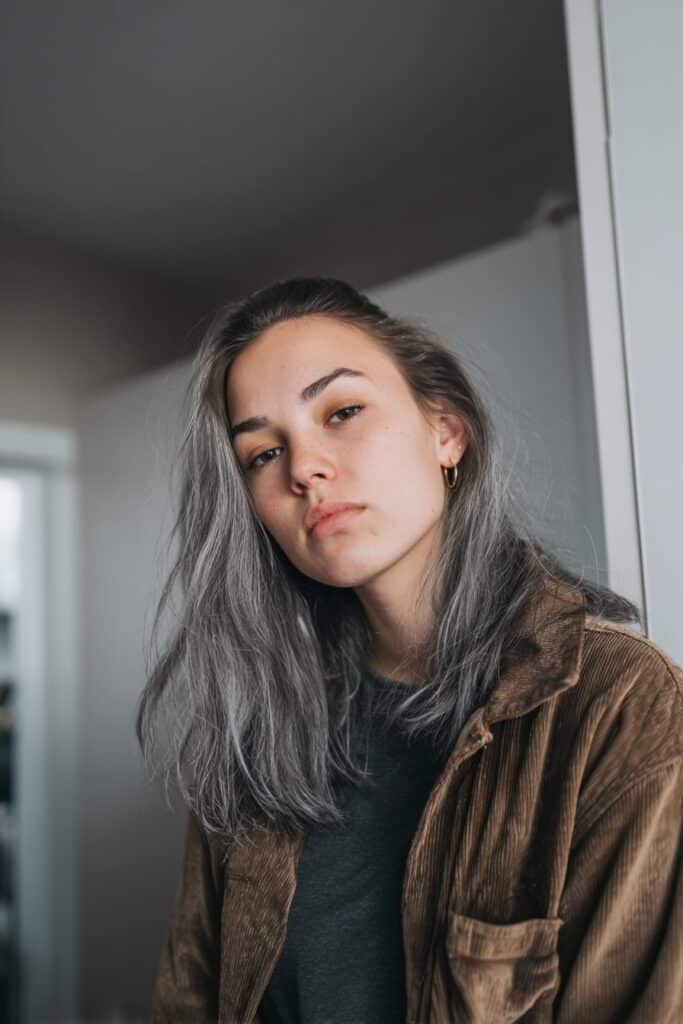
Steel gray lowlights have saved countless clients in my chair who wanted to embrace their silver strands completely while still adding dimension. I remember working with a client, Maria, who was tired of fighting her gray—she wanted to enhance it, not hide it. The monochromatic steel gray approach transformed her patchy silvers into a stunning, deliberate statement.
Steel Gray lowlight technique
With steel gray lowlights, I take a completely different approach than with traditional coloring. Instead of covering gray, this technique aims to incorporate existing gray hair. I typically use semi-permanent, non-ammonia products which protect the hair shaft from unnecessary damage.
The application focuses on creating dimension through strategic placement. I paint darker steel shades among the natural silver, concentrating on areas that need shadow and depth. This breaks up any patchiness while maintaining the overall silver appearance. The goal isn’t contrast—it’s subtle dimension within a single color family.
Why Steel Gray enhances natural grays
Steel gray works remarkably well with natural gray hair precisely because it doesn’t fight against what’s already happening. As one client said after her transformation, “It makes my gray look intentional instead of accidental.”
This monochromatic approach softens the contrast between gray roots and previously dyed hair. The steel tones counteract any unwanted yellowish tints that often make growing-out gray look dull or brassy.
What makes steel gray truly special is how it creates depth without introducing conflicting colors. The result is sophisticated, modern, and completely different from traditional coloring approaches.
Steel Gray lowlight maintenance
Maintaining steel gray lowlights requires minimal effort. Unlike full coverage color, this technique grows out naturally without harsh demarcation lines. Most clients need touch-ups only every 6-8 weeks, with visits becoming less frequent as their transition progresses.
Between appointments, I recommend:
- Purple shampoo and conditioner to neutralize any yellowing
- Color-safe, sulfate-free products to prevent fading
- Weekly hydrating treatments since gray hair tends toward dryness
Steel gray lowlights offer that perfect middle ground—embracing your natural transition while ensuring it looks polished and intentional.
Neutral Taupe Lowlights
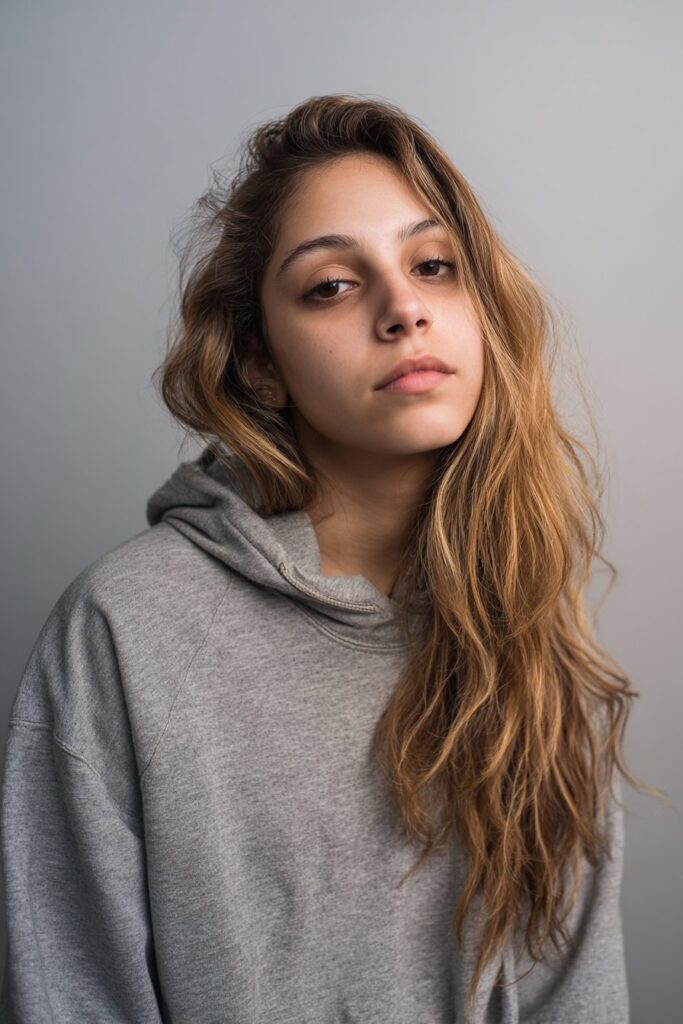
Neutral taupe lowlights became my secret weapon after working with a client who was frustrated by her cool-toned skin clashing with warmer hair colors. This versatile shade creates harmony between natural gray and remaining pigmented strands without fighting what nature intended.
Taupe lowlight technique
For taupe lowlights, I rely on semi-permanent formulations that deposit color without damaging the hair shaft. This method breaks up concentrated gray areas while maintaining the hair’s natural integrity. My approach involves strategic placement throughout the head, focusing on creating shadow and dimension rather than full coverage.
Working with one client’s salt-and-pepper pattern, I applied ultra-fine babylights using taupe tones that complemented her natural coloring. The result? A seamless blend that looked intentional rather than like an ongoing battle with her roots.
Why Taupe works with cool undertones
Taupe’s neutral quality makes it exceptionally versatile for clients with cool skin tones. According to color theory principles, matching your hair shade to your skin’s undertones creates natural harmony.
As I tell my clients, “Don’t fight what you’ve been given: work with it and make it more beautiful.” This philosophy applies perfectly to taupe lowlights, which enhance rather than compete with gray’s natural coolness.
Taupe lowlight care tips
Maintaining taupe lowlights requires minimal effort. Most clients need touch-ups every 6-8 weeks, with visits becoming less frequent as gray percentage increases.
Between appointments, I recommend:
- Gentle, sulfate-free cleansers
- Weekly hydrating treatments
- Occasional blue-tinted products to maintain cool tones
The beauty of taupe? It grows out naturally without harsh demarcation lines, making this technique perfect for busy clients seeking elegance without commitment.
Chestnut Brown Lowlights for Warmth
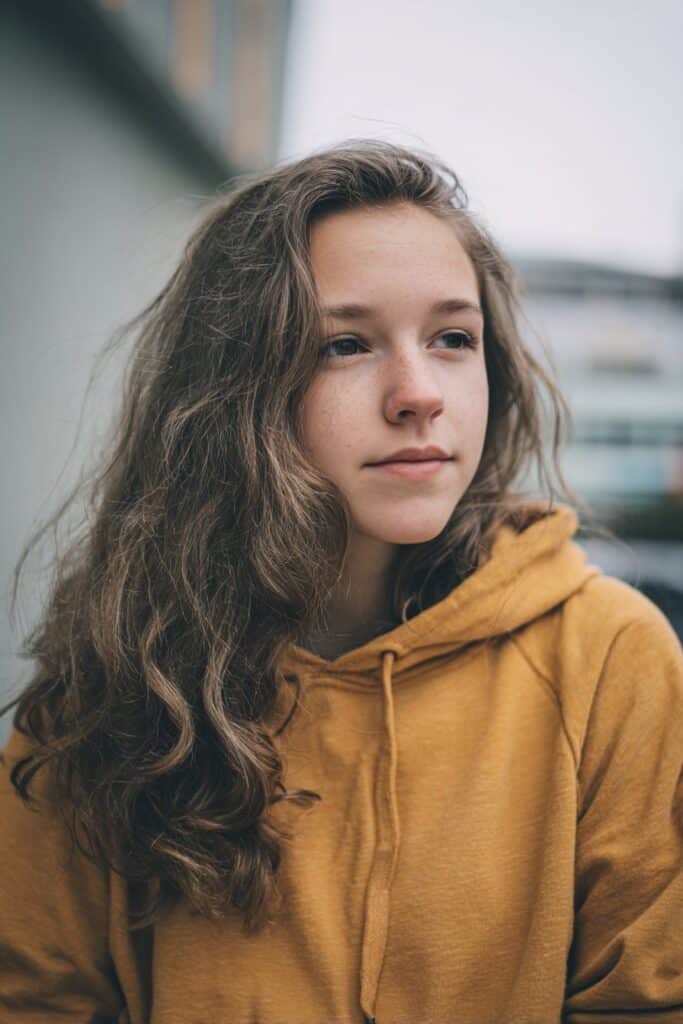
Warm-toned lowlights changed everything for my client Amanda who wasn’t ready to fully embrace her gray but dreaded those obvious roots. Chestnut brown became our perfect solution—adding richness without completely covering her silver strands.
Chestnut Brown lowlight technique
In my experience, applying chestnut brown lowlights requires a gentle touch. I use semi-permanent formulas that break up the gray without creating harsh lines of demarcation. This technique adds color back while keeping maintenance low—no more frequent root touch-ups every three weeks.
Initially, I concentrate on framing the face, then strategically place lowlights throughout to create a natural-looking blend. The result? A beautiful dimensional brown with some gray still visible, creating depth without complete coverage.
Why Chestnut adds warmth to gray hair
Chestnut brown works wonderfully for clients with warm skin undertones. As a stylist committed to enhancing natural beauty, I always assess skin undertones first—warm complexions need warmer hair tones to avoid appearing washed out.
Indeed, chestnut lowlights add that subtle warmth gray hair often lacks. The dimension from these tonal streaks softens the contrast between silvery roots and darker strands.
Chestnut lowlight maintenance
For many clients like Amanda, maintaining chestnut lowlights typically requires touch-ups every 2-3 months. Between appointments:
- Use only mild shampoos—products with detergents or artificial additives strip color and create brassiness
- Avoid harsh cleansers that can damage hair’s natural structure
- Consider color-protecting products specially formulated for color-treated hair
Icy Brunette Lowlights
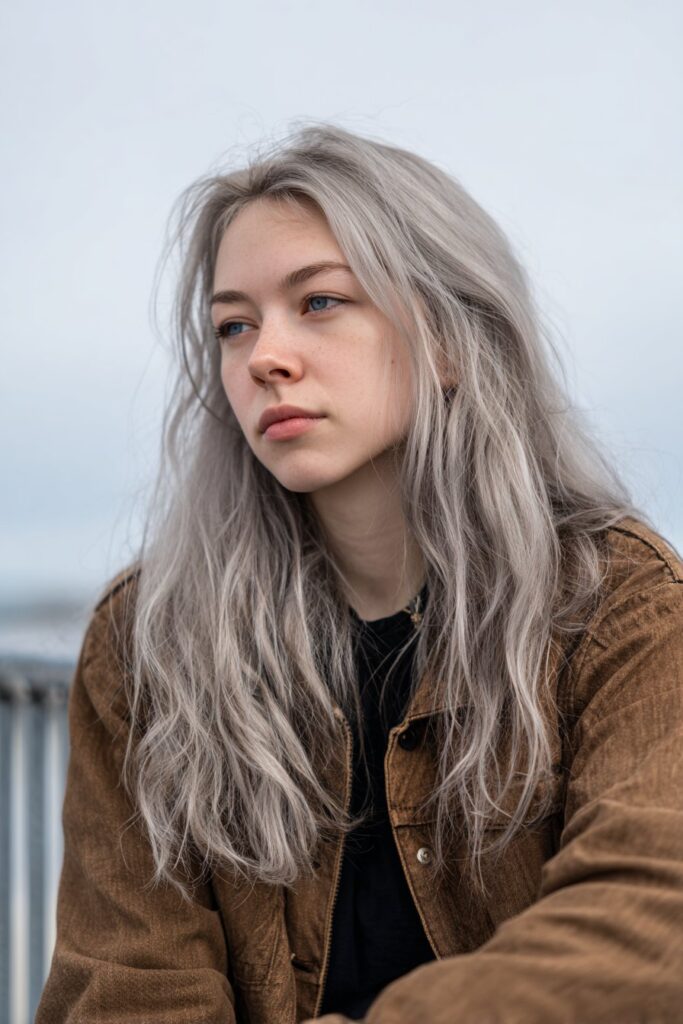
Icy brunette lowlights completely changed my perspective on gray blending after working with a client desperate to soften her salt-and-pepper pattern. This technique creates a stunning dimensional effect while honoring natural silver strands.
Icy Brunette lowlight technique
When creating icy brunette lowlights, I typically apply gray blending techniques that work with silver hair rather than against it. This process involves either highlighting or adding lowlights that are slightly darker than the natural gray. For best results, I use semi-permanent, non-ammonia products which protect the hair shaft while delivering rich color.
My approach focuses on strategic placement—creating shadows that break up the gray without overwhelming it. Prior to application, I carefully analyze each client’s natural pattern, ensuring a customized result that looks intentional rather than forced.
Why Icy Brunette is ideal for gray blending
Icy brunette works exceptionally well for gray blending as it helps create a smooth transition from natural hair tone to silver shades. This technique effectively softens the contrast between silver roots and darker strands, minimizing that harsh line of demarcation many clients dread.
As an illustration, when working in my Charleston salon, I had a client with patchy grays who felt self-conscious about her transition. The icy tones perfectly complemented her natural silver while adding dimension her hair previously lacked.
Icy Brunette lowlight upkeep
For maintaining icy brunette lowlights between appointments:
- Use only the mildest shampoo possible—detergents strip color quickly and create unwanted brassiness
- Apply a blue-tinted product regularly to maintain shine and fight yellowing
- Schedule touch-ups every 2-3 months, with visits becoming less frequent as your transition progresses
What makes this approach truly liberating? There’s no need to cover grays completely—you can simply blend them into your natural tone while maintaining your hair’s structure and health.
Face-Framing Lowlights for Gray Hair

Face-framing lowlights became my favorite technique after a client walked into my salon frustrated with her patchy gray hairline. I’ll never forget her words: “I don’t mind my gray, I just wish it looked intentional!” That experience taught me how strategic placement can transform a client’s relationship with their silver strands.
Face-framing lowlight technique
When applying face-framing lowlights, I concentrate on the temples and front sections where gray typically first appears. This strategic placement works exceptionally well because it addresses the most visible areas without committing to full coverage. For clients transitioning to gray, I often recommend focusing on these areas exclusively—no need to treat the entire head.
The technique varies slightly depending on your natural base color. For my blonde and dark blonde clients, I use lighter lowlights to diffuse and blend the gray seamlessly. On darker bases, I carefully select shades that won’t create harsh contrasts.
Why face-framing lowlights brighten the face
In reality, face-framing lowlights do more than just blend gray—they create the illusion that your silvers are growing in evenly, even when they naturally concentrate in certain areas. This subtle framing effect brightens your complexion while drawing attention to your best features.
Many clients tell me they receive compliments on looking “refreshed” or “vibrant” after this treatment. The dimensional effect enhances your natural beauty without fighting against what nature intended.
How to maintain face-framing lowlights
To keep your face-framing lowlights looking fresh:
- Touch up only every 6-8 weeks
- Use color-safe products free of harsh sulfates
- In the event that you notice brassiness, incorporate a purple shampoo every two weeks
Not to mention, this technique actually extends the time between salon visits compared to full color coverage. The seamless grow-out means no more embarrassing demarcation lines—just a beautiful, intentional transition to your natural silver.
Conclusion
Throughout my years behind the chair, I’ve watched countless clients transform their relationship with gray hair through these lowlight techniques. Their smiles tell me everything — that moment when they finally see their silvers as beautiful rather than burdensome.
After all, embracing gray hair doesn’t mean surrendering to a flat, one-dimensional look. Lowlights add depth, dimension, and personality while honoring your natural transition. Whether you choose soft ash brown for subtle dimension, cool espresso for rich contrast, or face-framing lowlights for a brightening effect, each technique creates intentional sophistication without monthly root touch-ups.
My client Janet perhaps said it best when she looked in the mirror after her mocha lowlights: “For years I’ve been fighting my gray. Now I’m finally showcasing it.”
This shift from covering to enhancing represents everything I love about modern hair coloring. Gray hair transitions become less about hiding something unwanted and more about creating something beautiful. Specifically, lowlights break up patchy gray patterns, neutralize unwanted yellowing, and add richness without harsh demarcation lines.
Many clients express surprise at how quickly their salon visits decrease — most need touch-ups only every six to eight weeks, with visits becoming even less frequent as their transition progresses. Consequently, both their time and their hair health benefit tremendously.
Remember that your ideal lowlight shade depends largely on your skin undertones, existing hair color, and personal style preferences. Cool skin tones typically harmonize beautifully with ash, charcoal, or steel gray lowlights. Warm complexions often glow alongside chestnut or neutral taupe tones.
My approach has always centered on enhancing what nature gave you rather than fighting against it. Gray hair represents wisdom, experience, and confidence — qualities worth celebrating, not concealing. Lowlights simply provide that polished finish that makes your silver strands look purposeful and sophisticated.
The journey to embracing your gray might feel daunting at first, yet these lowlight techniques offer the perfect middle ground — neither fully committed to complete coverage nor completely surrendered to untamed grays. Your hair tells your unique story. My job simply involves helping you tell that story with confidence and style.

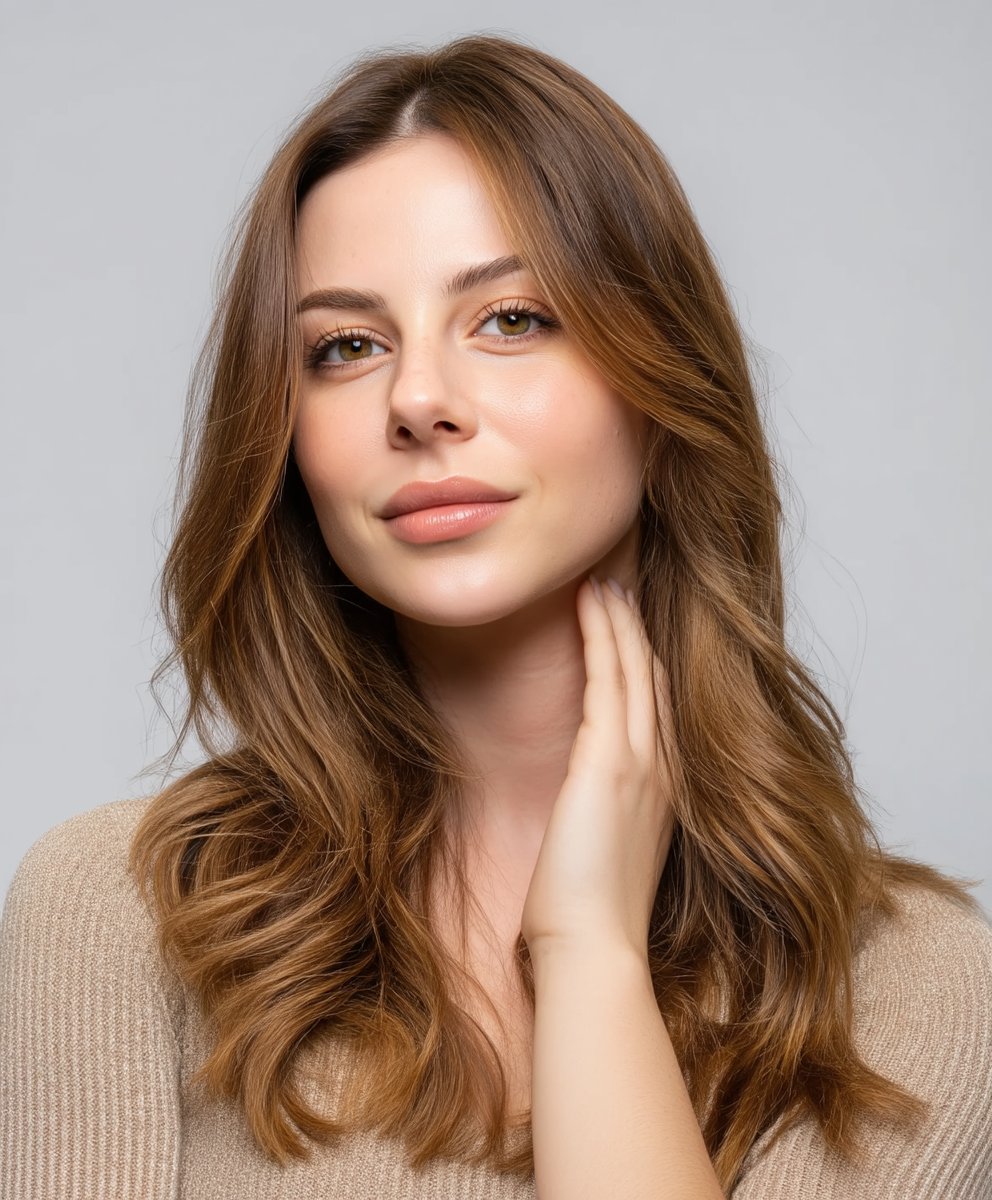
Elsa Claire is the founder and editor of ElsaClaire.com, where she writes about hairstyles, hair care, and the everyday routines that help real people feel good about their hair.