The right track day hairstyle transforms from a potential distraction into a confidence booster, allowing you to channel all your energy into performance rather than constantly adjusting falling strands.
Track day hairstyles have saved me from countless distractions over my years of marathon training. I’ve learned the hard way that a ponytail that comes loose mid-sprint isn’t just annoying—it’s a performance killer!
Whether you’re gearing up for your first 5K or you’re a seasoned track athlete, finding hairstyles that actually stay put is more than just about looking good. Track meet hairstyles need to provide stability and comfort while you’re pushing your limits. Race day hairstyles should be the last thing on your mind when you’re focused on beating your personal best. After all, who wants flyaway strands stuck to a sweaty face or hair poking into your eyes during a crucial moment? As someone who coaches hairstyles for track runners regularly, I’ve compiled this list of 15 styles that will keep you looking great without compromising your performance.
Plus, these aren’t just any styles—they’re techniques I’ve personally tested through sprints, long-distance runs, and everything in between. I promise these looks won’t just stay put through your warm-up; they’ll still be intact when you cross that finish line!
High Slicked-Back Ponytail
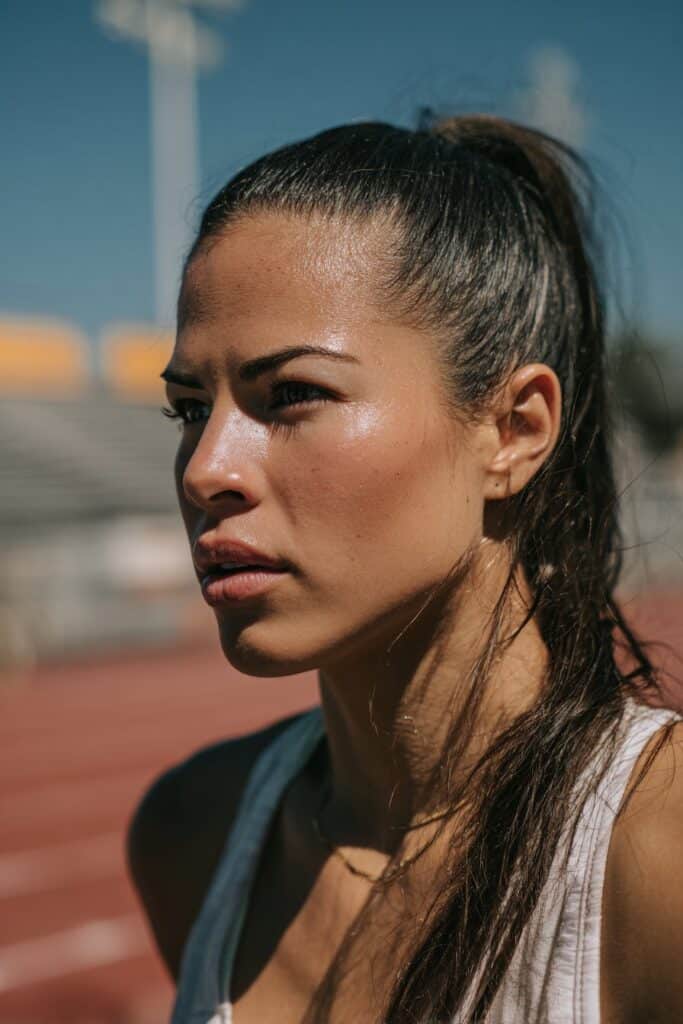
The high slicked-back ponytail has become my signature track day hairstyle for good reason. Unlike other styles that loosen with each sprint, this one stays firmly in place throughout even my most intense workouts.
How I Style It for Track Days
First, I decide where to place my ponytail based on my training plans. Generally, the higher the pony, the more statement-making it is—but also potentially more uncomfortable during extended sessions. For most track days, I choose a mid-to-high placement that balances style and comfort.
My foolproof method begins with freshly washed hair for extra bounce and sleekness. I apply a small amount of styling gel (Matrix Controller Gel works wonders) and use a boar bristle brush to smooth everything back—no part line means no sunburned scalp on bright days!
To create the perfect high pony:
- Section the front quarter of hair from the top of your head to the back of your crown
- Clip this section away temporarily
- Brush the remaining hair upward into a tight ponytail
- Secure with a damage-free elastic
- Release the front section, brush it back, and connect with another elastic
- Wrap a small piece of hair around the band to hide it
Why It Works on the Track
The beauty of this style lies in its functionality. The slicked-back technique keeps every strand secured against your head, eliminating distractions during crucial moments. Furthermore, this style works with various track conditions—it fits perfectly under helmets or headgear while keeping hair completely off your face.
For runners specifically, this high pony provides ventilation to your neck, keeping you cooler during those scorching summer meets. Plus, the bounce of a well-executed ponytail adds a psychological boost—I always feel more energized when my hair moves rhythmically with each stride.
My Pro Tips for All-Day Hold
Through years of track competitions, I’ve discovered several secrets for making this style last:
- Replace standard elastics with bungee hair ties—they have hooks on each end that provide superior hold without causing breakage
- Apply volumizing spray at the roots before styling if you have fine hair
- For thick hair, use a leave-in conditioner first, then a strong-hold pomade from roots to crown
- Combat postpartum regrowth or flyaways with a pomade stick, repeatedly slicking and brushing
- If you experience ponytail headaches, slightly loosen the band or opt for a slightly lower placement
The high slicked-back ponytail remains my go-to because it combines simplicity with reliability—precisely what every athlete needs on track day.
Double Dutch Braids
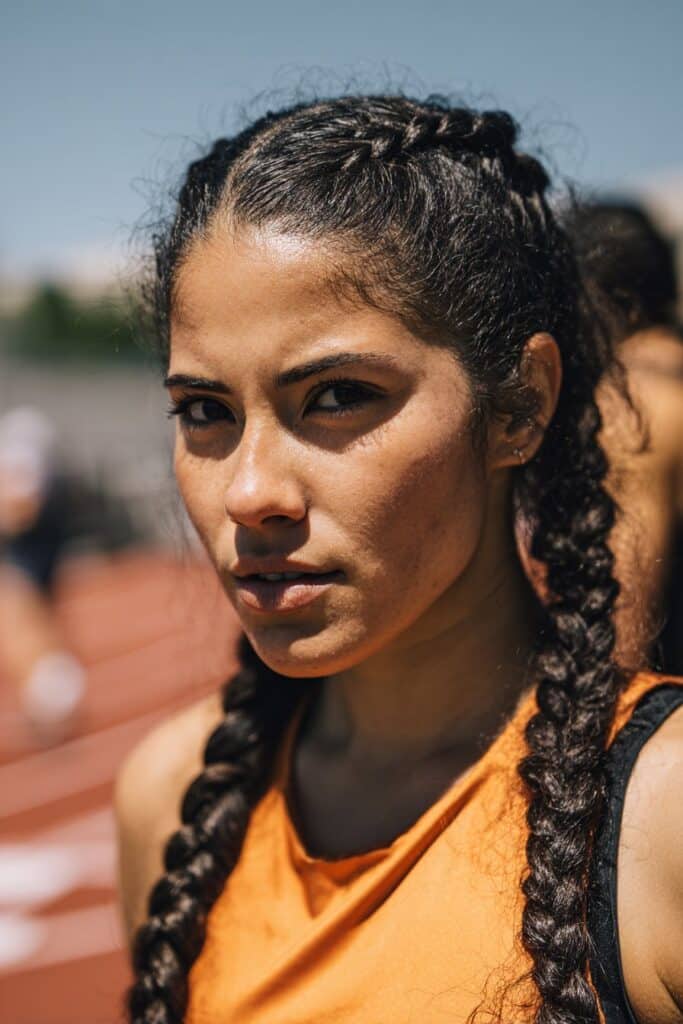
Dutch braids saved my track career! As someone who struggled with hair constantly falling in my face, discovering this style completely changed my race day experience.
Step-by-Step Styling Guide
Creating perfect Dutch braids for track days isn’t complicated once you master the technique:
- Start with second or third day hair – it makes braiding significantly easier by providing natural texture
- Brush through your hair thoroughly to remove any tangles
- Create a clean middle part, dividing your hair into two equal sections
- Clip away one section temporarily to prevent mixing hair between sections
- On the free section, grab hair at the front and divide into three equal strands
- Begin Dutch braiding by placing each side section under the middle one (opposite of French braiding)
- As you continue, add more hair to each section before crossing under
- Keep the braid tight and close to your head for maximum security
- Continue until you’ve incorporated all hair, finishing with a regular braid
- Secure with a clear elastic and repeat on the other side
For added volume, gently tug on the edges of your completed braids to create a fuller look.
Best For These Track Conditions
Double Dutch braids excel in practically all track environments. Throughout my years coaching runners, I’ve found this style particularly beneficial for:
- Long-distance events where hair needs to stay put for extended periods
- Intense sprinting sessions with quick direction changes
- Hot, humid days when you need hair completely off your neck
- Rainy conditions where wet hair won’t slap against your face
The structure holds impressively well even through high-intensity workouts – you won’t need to stop mid-run to fix them.
Track Meet Day Hairstyles Tips
For maximum hold on crucial race days:
First, consider braiding wet hair if you want amazing post-race curls. Moreover, add small clear elastics along each braid for stronger hold, especially helpful if you have layers.
Applying texturing spray before braiding or light hairspray after significantly enhances longevity. For the most secure race day hairstyles, try combining your braids with other styles – wrap the ends into a low side-bun to prevent them from hitting your face.
Finally, don’t be afraid to make them slightly messy – a bit of controlled chaos looks stylish plus gives better grip than perfectly sleek braids. I typically pull out a few face-framing pieces to soften the look while keeping the functional structure intact.
Bubble Ponytail
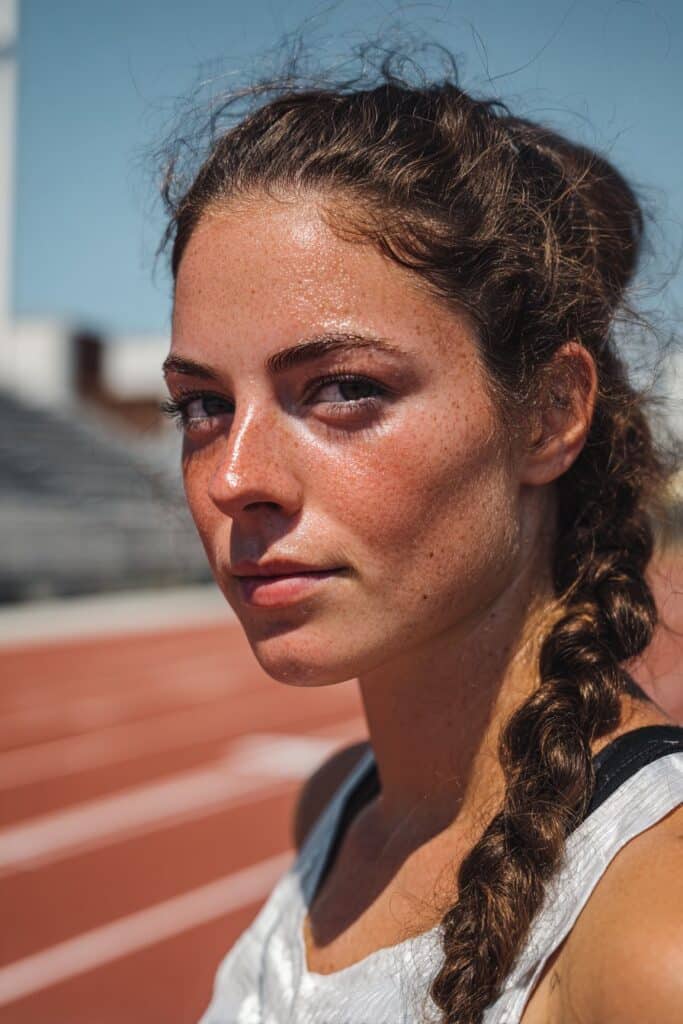
For athletes seeking the perfect balance of security and style, the bubble ponytail has become my go-to recommendation. This playful yet practical hairstyle involves securing multiple hair ties down the length of a ponytail, creating rounded “bubble” sections that stay put through even the most intense workouts.
Creating the Perfect Bubbles
Getting this look right requires some technique. First, I always start with clean, dry hair or second-day hair that has some natural grip. After applying a texturizing spray at the roots, I gather my hair into a high or mid-height ponytail, making sure it’s completely smooth at the base.
The bubble magic happens next! I place elastics every two to three inches down my ponytail, depending on my hair length. After securing each elastic, I gently tug outward on that section of hair to create the bubble effect. The key is pulling carefully and evenly to maintain symmetry. Throughout years of coaching track athletes, I’ve found this works best when you:
- Start with small tugs and gradually increase
- Pull from both sides simultaneously
- Secure with clear elastics for a seamless look
Why Runners Love This Style
The bubble ponytail has become increasingly popular among track athletes – and consequently, I’ve incorporated it into countless race day looks. What makes it perfect for the track? Primarily, it provides exceptional stability without the tightness of braids. Since each elastic creates a separate section, even if one bubble loosens during your race, the others stay secure.
Furthermore, this style creates ventilation between sections, keeping your head cooler during summer meets. Many of my marathon clients prefer this style because it maintains its structure throughout lengthy events yet doesn’t cause the headache that tight braids sometimes do.
My Favorite Products for This Look
After trying countless products, I’ve discovered several essentials for creating bubble ponytails that genuinely last through track meets:
My must-have is a strong texturizing spray applied before styling – it gives fine hair enough grip to hold the bubbles’ shape. For sleeker looks, I apply a lightweight hair serum first to tame frizz, followed by a small amount of gel around the hairline.
The final essential is a quality hairspray misted over the completed style. Essentially, this creates a flexible hold that moves with you rather than cracking under pressure. For athletes with layers or shorter pieces, bobby pins placed strategically inside bubbles work wonders for keeping everything secured all day long.
Classic High Bun
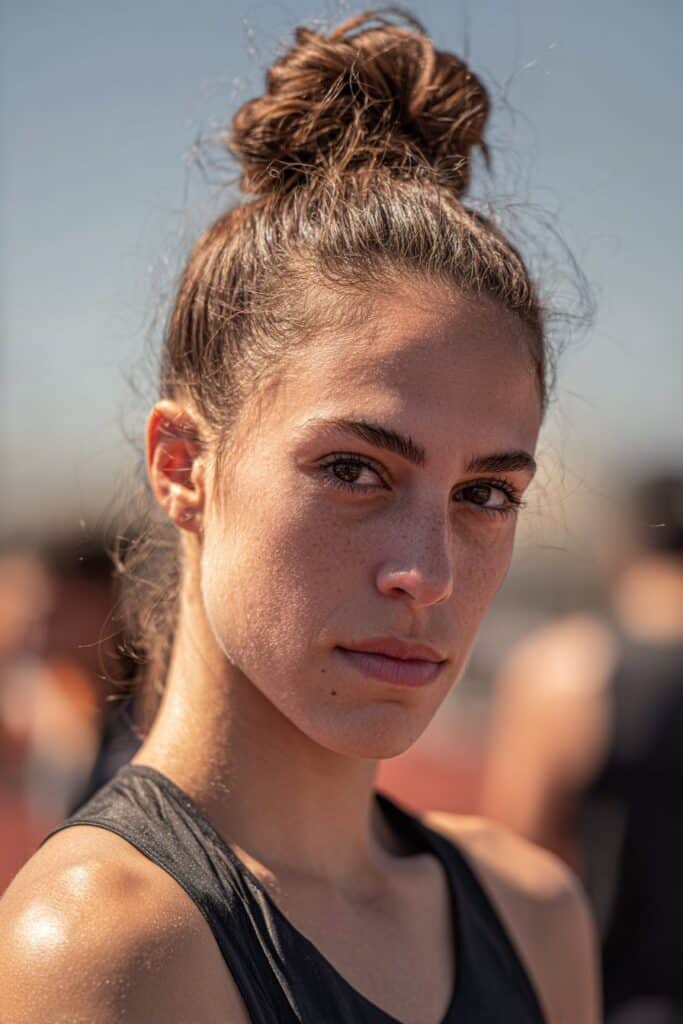
Nothing beats a classic high bun for reliable track day performance. Throughout my years coaching track athletes, this timeless style has proven itself as the ultimate no-fuss solution when performance matters most.
How to Secure It Properly
The key to a track-worthy bun starts with strategic placement. I’ve discovered that positioning your bun where your fingertips reach when placing your palm on your forehead creates the perfect balance. This placement prevents the uncomfortable pressure point that causes pain during backward movements.
For maximum hold, I follow this foolproof method:
- Begin with a tight, high ponytail using two hair ties wrapped three times
- Check that your ponytail base doesn’t wobble – this foundation is crucial!
- Split the ponytail into sections and lightly tease each one for fuller volume
- Twist the ponytail while wrapping it around the base
- Secure with multiple bobby pins inserted from different angles
- Add a hair net in a matching color, wrapping it 2-3 times
- Finish with strong-hold hairspray
The magic happens in step 4 – twist as you wrap to create tension that keeps everything locked in place.
When This Style Works Best
Although I recommend this style for nearly any track event, it’s particularly ideal for distance running where hairstyles need exceptional staying power. Likewise, the high bun excels during humid conditions or rainy meets where wet hair can become heavy and unmanageable.
Fortunately, this style works across most hair types. Nonetheless, those with extremely thick hair might find a low braided bun more comfortable for extended wear.
Preventing Bun Headaches
External compression headaches from tight hairstyles can ruin your performance. Overall, I’ve found several techniques to avoid this common problem:
First, never place your bun directly on top of your head if you’ll be wearing it for hours – this creates a painful pressure point during movements. Instead, position it slightly forward or back.
Additionally, distribute weight evenly by using multiple bobby pins rather than pulling tightly with elastics. For those prone to tension headaches, try securing the bun with spin pins which grip without pulling.
Primarily, remember to give your scalp regular breaks – taking your hair down between events can prevent the throbbing pain that develops after hours of tension on sensitive nerve endings.
French Braid Ponytail
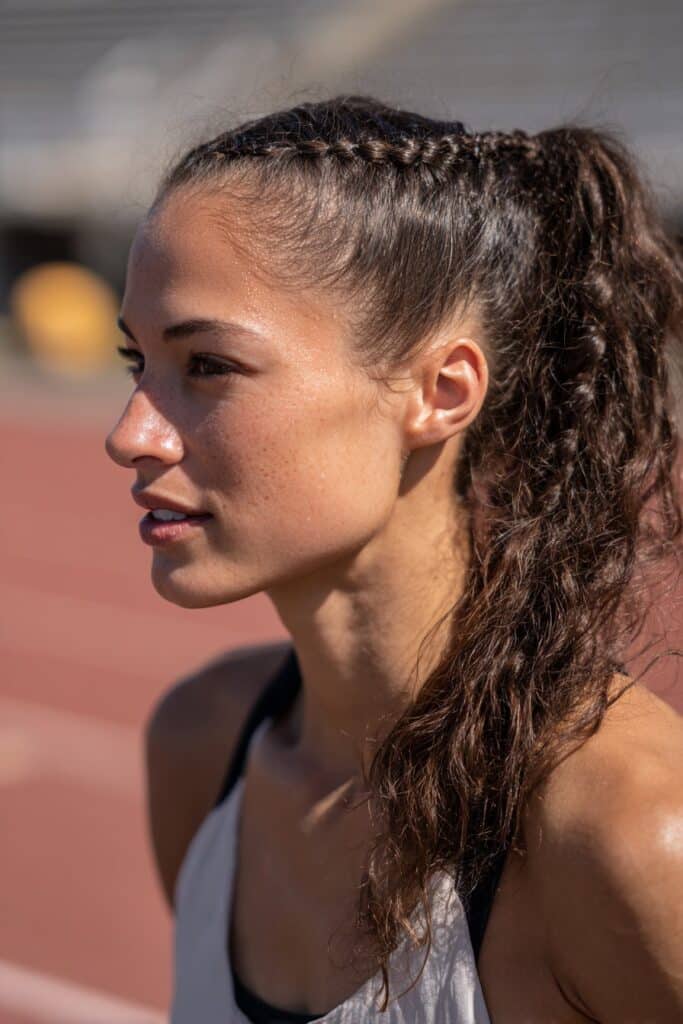
The French braid ponytail combines elegance and practicality for my track days. This hybrid style has saved me through countless competitions where I needed both security and style without the bulk of a full braid.
My Go-To Braiding Technique
Creating this look requires some practice, yet once mastered, I can complete it in under five minutes. First, I thoroughly brush my hair to remove tangles—this step is non-negotiable for a clean result. Next, I section the top half of my hair horizontally, similar to a half-up style, and split the front into three small sections to begin my French braid.
The magic happens in the braiding technique itself. In French braiding, I cross sections over the middle strand, creating a softer, flatter look against my head. This differs from Dutch braiding where strands cross underneath for a more pronounced texture.
As I weave (right over middle, left over middle), I continuously add equal-sized sections from below into the braid. I continue this pattern until reaching my crown, then secure both the lower section and remaining hair into a ponytail with a strong elastic.
For flyaways, a light mist of finishing spray works wonders.
Why This Combo Is Track-Perfect
Throughout my years coaching athletes, I’ve found this style uniquely beneficial. The French mohawk braided ponytail (as my clients often call it) allows hair to rest flat against the head, making it perfect for fitting under helmets or headgear.
This style truly shines during multi-event days—the braid prevents hair from slapping against your face during direction changes, while the ponytail keeps everything contained. Plus, its structure creates a secure base that resists loosening even through intense sprints.
I’ve noticed many Olympic athletes choose braided ponytails because they’re easy to recreate consistently before each competition. There’s something powerful about having a go-to style that never lets you down.
Styling Variations I Love
Over the years, I’ve customized this classic look for different needs. For medium-length hair, try the side French braid into a low ponytail—perfect for helmet-wearers.
For added security, I recommend running leave-in conditioner through your ponytail before braiding it. Then secure the braided ponytail with multiple bands as you move downward—this prevents layers from escaping during high-intensity movements.
My personal favorite variation involves starting with a tight high ponytail secured with a bungee elastic, then braiding the tail itself. This works beautifully for clients with extremely thick hair who find full French braiding too time-consuming on race day.
The most elegant adaptation combines French braided sides pulled back into a single ponytail—my long-distance runners swear by this balanced style for comfort during marathon events.
Low Braided Bun
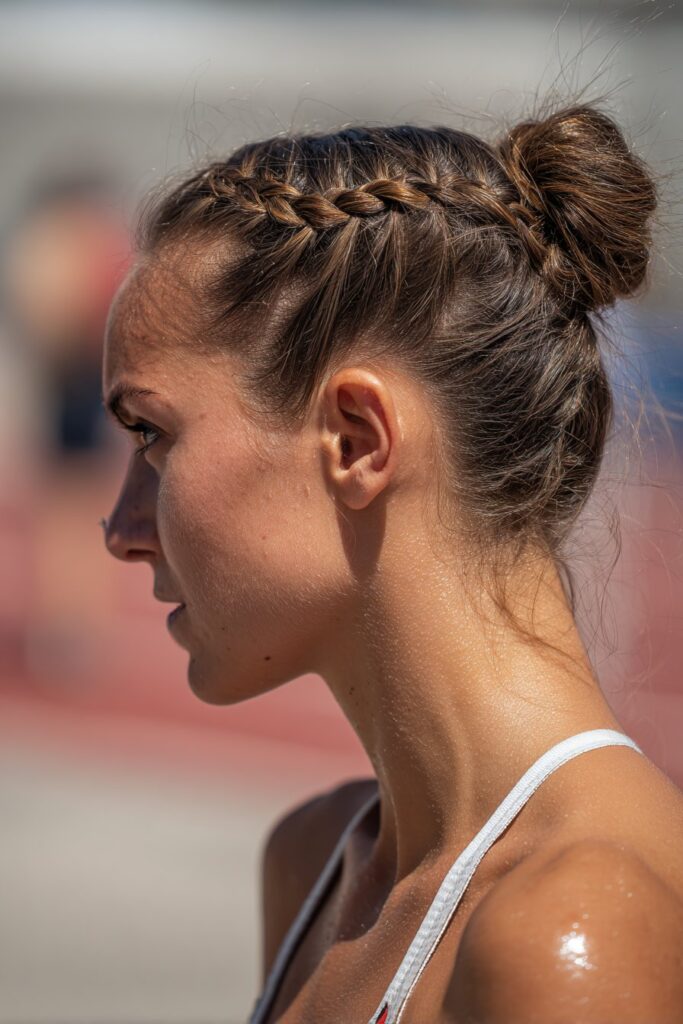
I’ve discovered that the low braided bun provides unmatched stability for intense track workouts. As someone who coaches track athletes regularly, this hairstyle has become my secret weapon for runners seeking both performance and comfort.
Building a Secure Base
Creating a low braided bun starts with properly prepped hair. For this style, your hair needs sufficient length to create a ponytail, braid it, and then wrap it around the base. Throughout my career, I’ve found this works best with medium to long hair—extremely short or excessively long hair may struggle with proper proportions.
First, I smooth all tangles with a brush, then gather hair at the nape of my neck. Next, I separate my hair into two sections for braiding. Starting with one side, I create a French braid by crossing sections over the middle while adding new hair from below. After securing both braids at the back, I join them with a hair tie before wrapping the remaining ponytail into a bun.
Track Race Day Hairstyles Benefits
The low bun’s position at the nape of your neck offers remarkable physics-based advantages. Previously, I struggled with high ponytails acting like pendulums during races. Alternatively, the low bun minimizes movement by positioning weight closer to your center of gravity.
This placement distributes pressure evenly across your head instead of concentrating it at one point, reducing stress on both hair shaft and follicle. Accordingly, it’s ideal for helmeted sports and lengthy endurance events where comfort becomes crucial.
Bobby Pin Placement Secrets
Bobby pins seem simple yet require specific technique. Henceforth, I recommend placing pins not too far from the ponytail base or your bun proportions will appear unbalanced. Instead, insert pins at varying angles, creating a cross-pattern that locks hair in place.
For maximum hold, place 4-5 bobby pins strategically around the bun, tucking ends securely. Remember that wavy or curly hair creates beautiful texture in this style, whereas straight hair provides a sleeker finish.
Half-Up Top Knot
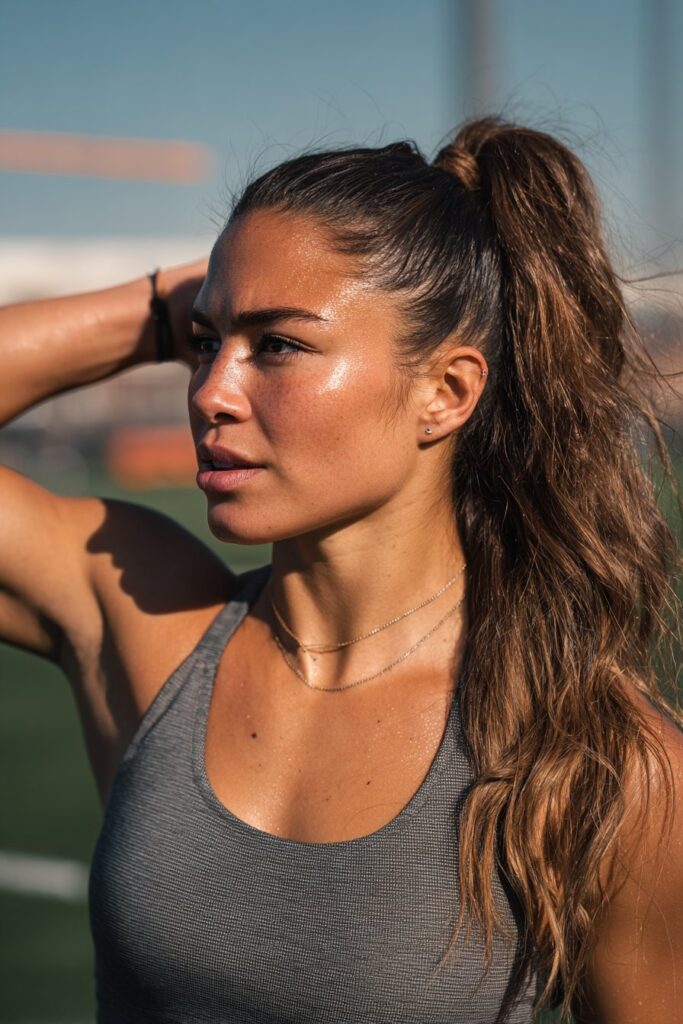
The half-up top knot has been my secret weapon for athletes who want the best of both worlds—hair that’s partially secured yet stylishly flowing. This versatile style keeps front sections completely out of your face while letting the rest of your hair maintain its natural movement.
Quick Styling Method
Creating this track day essential takes me under two minutes:
- Start with day-old hair for better texture and grip
- Section off just the crown area from temple to temple
- Gather this hair into a high ponytail and secure with an elastic
- Twist the ponytail around itself to form a knot
- Secure with bobby pins or wrap the hair tie around again
- Gently tug at the knot’s edges for a messier, fuller look
Best Hair Lengths for This Style
Surprisingly, this style works universally! Short-haired athletes can create mini knots, whereas medium to long hair creates more dramatic volume. Curly hair creates gorgeous texture naturally, while straight hair offers a sleeker finish.
Adding Volume That Lasts
For race day staying power, I recommend:
First, apply dry shampoo directly to your roots before styling—this creates texture that prevents slipping. Next, after securing your ponytail, loosen the elastic by dragging it down half an inch. Then, create a hole in the ponytail above the elastic and flip the tail through it for extraordinary volume that truly lasts through intense workouts.
Undoubtedly, this style’s greatest advantage is how it performs during high-intensity training—your vision stays clear without sacrificing comfort.
Fishtail Braid
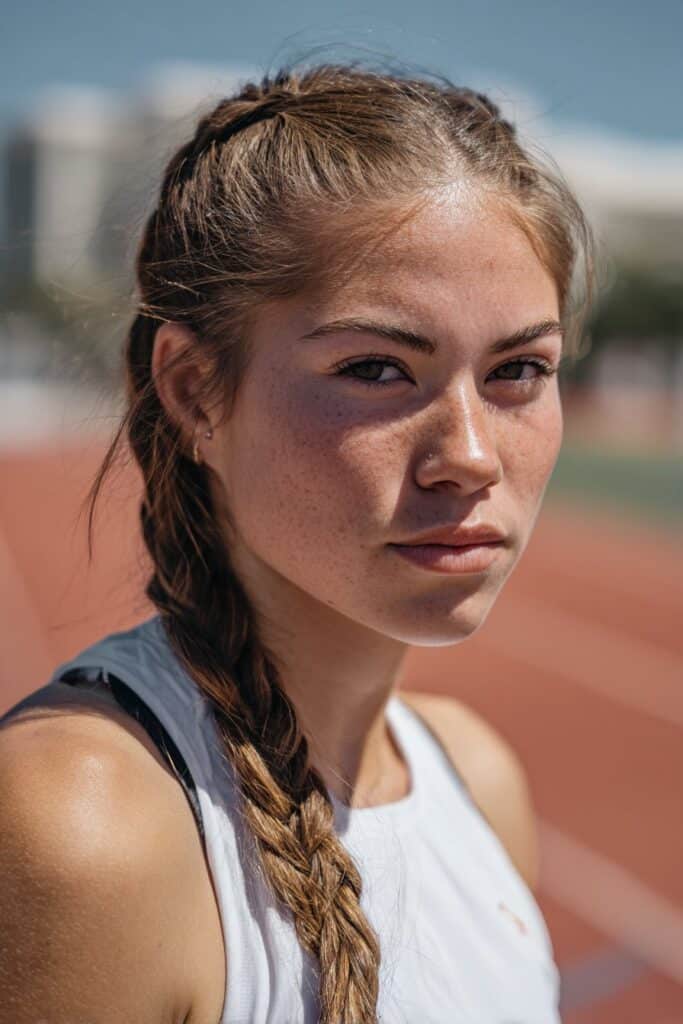
Fishtail braids completely changed my approach to track day styling when I discovered their remarkable staying power. In contrast to traditional three-strand braids, this elegant technique creates a secure style that withstands even the most intense sprints.
Mastering the Technique
Creating a fishtail braid is simpler than it appears. First, gather your hair into a ponytail position, then divide it into just two equal sections. Taking small pieces from the outside of one section and crossing them to the inside of the opposite section creates that distinctive fish-scale pattern. The smaller the pieces you grab, the more intricate and secure your braid becomes. For beginners, I recommend:
- Start with clean, detangled hair
- Divide into two equal sections
- Take a thin slice (about half an inch) from the outer edge of the left section
- Cross it over to join the inner right section
- Repeat with the right side, alternating until you reach the ends
Why It Holds Up During Races
Indeed, fishtail braids are ideal for track events due to their remarkable security. The tight weaving pattern catches even the shortest hairs that typically escape during intense movement. As a result, I’ve completed entire races without a single strand coming loose. This style provides protection against the constant friction experienced during scrums, tackles, and direction changes.
Finishing Touches That Matter
Subsequently, once your braid is complete, gently tug on the outer edges—a technique called “pancaking”—to create fullness without sacrificing stability. Secure with a clear elastic, then mist with a flexible-hold hairspray for all-day endurance.
Crown Braid

Crown braids have earned their royal status among my track day hairstyles collection. This elegant style—sometimes called the halo braid—wraps around your head like a crown, keeping hair completely off your face and neck during crucial race moments.
Creating the Perfect Circle
First of all, I’ve found two main techniques work best. For beginners, try creating two regular three-strand braids and pinning them across your head in a circular motion. Alternatively, the Dutch crown method starts with tilting your head forward and French braiding from the nape upward. The secret? Start with a clean middle part, then gather three strands near your neck. Braid up toward one ear, continue over your head, and lead down toward the opposite ear. Finally, secure with an elastic and wrap any tail ends back around.
Race Day Hairstyles Elegance
This style excels in track competitions primarily because it distributes weight evenly around your head. Throughout marathon training, I’ve noticed it prevents that “hair headache” many athletes experience with ponytails or high buns. Most importantly, the crown braid creates a secure foundation that accommodates helmets or protective gear without compromising performance. For longer events, this classic style’s staying power truly outperforms many alternatives.
Securing for Maximum Hold
To maximize hold, prep with texturizing powder or dry shampoo. Secondly, the “pancaking” technique—gently pulling out the edges of your completed braid—not only creates fullness but improves grip. Use clear elastics and strategic bobby pin placement underneath the braid for invisible support. For runners with fine hair, consider wrapping finished braids twice around your head for added security and visual impact.
Side Dutch Braid

Side Dutch braids became my hair salvation after discovering how wonderfully they stay put throughout intense track sessions. Unlike center braids, this asymmetrical style offers unique benefits I can’t achieve with other techniques.
Asymmetrical Styling Guide
First and foremost, I begin by parting my hair on one side (typically the right). Initially, I separate a small face-framing section before dividing hair on the opposite side into three even strands. The key technique involves crossing outer strands under the middle section—the opposite of a French braid—which places the braid on top of the hair. I keep the braid close along my hairline, gradually incorporating hair from across the back of my head. Once all hair is integrated, I secure with a clear elastic and lightly pull the edges for fullness.
When I Choose This Over Center Braids
Admittedly, I select side Dutch braids whenever I need asymmetrical balance during competitions. For events requiring quick direction changes, this style distributes weight more comfortably than center braids. Throughout my coaching career, I’ve noticed side Dutch braids work exceptionally well for athletes wearing helmets or protective gear, as the offset positioning prevents pressure points.
Track Meet Hairstyles Advantages
Naturally, the side Dutch braid’s primary benefit is superior security—it’s noticeably more secure than a French braid. Additionally, its structure keeps hair completely off your face during crucial moments. Given its versatility, I’ve adapted this style for different track conditions, sometimes combining it with ponytail variations for extra security. Whenever I coach athletes with headaches from tight center styles, this asymmetrical alternative consistently provides relief without sacrificing stability.
Twisted Low Ponytail
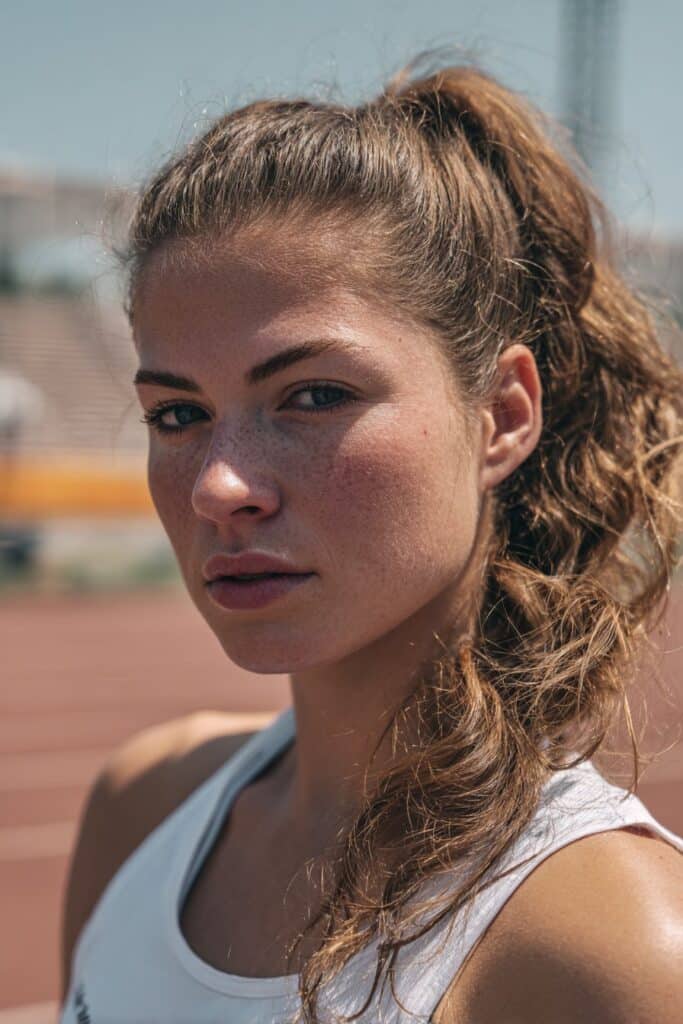
The twisted low ponytail has become an essential part of my track day arsenal, offering both security and style without the complexity of intricate braids.
Simple Yet Secure Method
First, I gather my hair at the nape of my neck for a comfortable low ponytail that works perfectly under helmets. Next, I secure it with a strong elastic, creating a small gap above the band by separating my hair. I pull the ponytail through this gap for an instant twisted effect. For extra security during intense meets, I sometimes add a second elastic mid-way down the ponytail. This method creates a secure anchor that prevents the frustrating mid-race ponytail slippage I experienced during my early competitive days.
Adding Texture and Interest
Throughout my coaching career, I’ve discovered that applying texture spray to damp hair before styling creates natural waves that enhance this look. For track meets requiring a more polished finish, I’ll divide the lower portion of the ponytail into two separate strands and twist them together. This technique adds visual interest while providing additional hold. Meanwhile, for casual training days, I often opt for a messier approach with some face-framing pieces left loose—combining practicality with a touch of softness.
Product Recommendations
Primarily, I rely on silicone-based hair ties with non-stick coatings that eliminate the painful tangling and pulling traditional elastics cause. These specialized ties feature an easy-release clasp that only opens when intentionally lifted at an angle. For fine hair, texturizing powder creates essential grip, as such preventing slippage during intense movement. A lightweight finishing spray applied at the end locks everything in place without creating that crunchy, helmet-unfriendly stiffness.
Boxer Braids

Among all the track day hairstyles I’ve tested, boxer braids remain undefeated for serious competitions. These two Dutch braids that hug your scalp have become my signature style whenever performance matters most.
Professional Athlete Favorite
Primarily, elite athletes choose boxer braids because they stay securely in place throughout intense movements. Many UFC fighters and Olympic wrestlers consider these braids essential for competition—even saying once their hair is braided, they transform into “fight mode”. Given that these athletes can’t wear headbands or clips during events, boxer braids provide unmatched security without accessories.
Hairstyles for Track Runners Benefits
First off, boxer braids excel at keeping every strand completely secured against your head. For marathon events, this means no mid-race adjustments or distractions. Their tight construction prevents opponents from grabbing hair (which happens more often than you’d think!). Plus, they work beautifully under helmets or headgear while providing complete face and neck ventilation.
My Styling Secrets
Starting with second-day hair gives the perfect texture for grip. I part directly down the middle, creating two equal sections. The magic happens as you cross each strand under (not over) the middle piece while adding hair from each side. For maximum hold, I apply texturizing spray beforehand. After braiding, I gently tug the edges outward for a fuller look that still maintains security.
Braided Crown with Low Bun
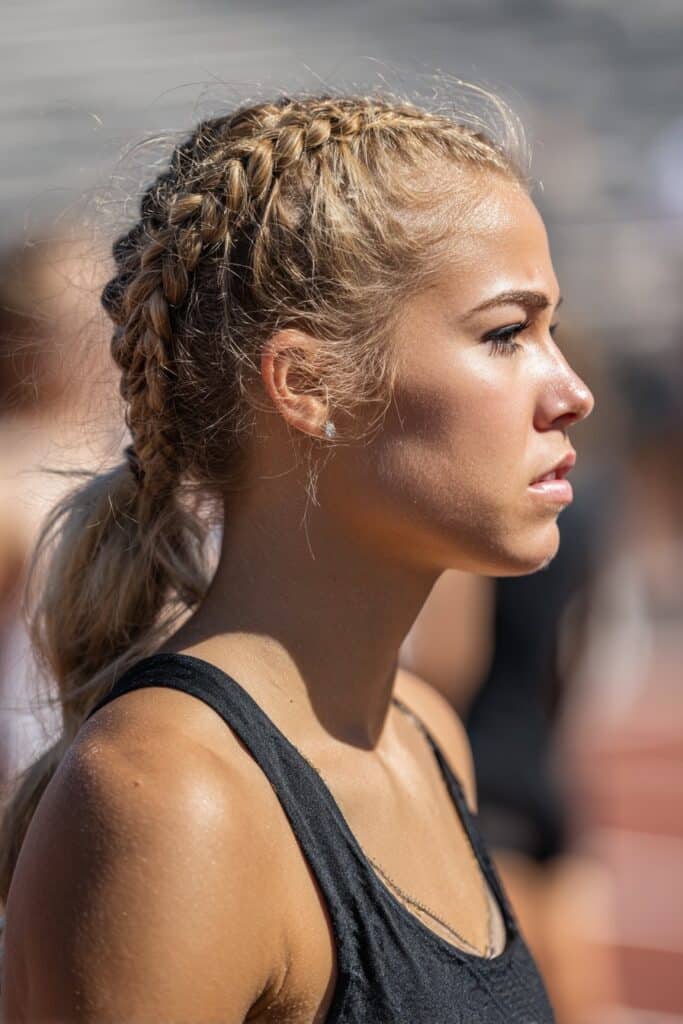
My favorite track day style combines elegance with unbeatable security: the braided crown with low bun. This hybrid look saved me during a championship where I needed both hair security and a touch of sophistication.
Combining Two Classic Styles
The magic of this style comes from blending two proven techniques: the crown braid’s secure framework with the low bun’s stability. Merging these creates something greater than either style alone – complete hair containment without the tightness of double braids. By starting with a crown braid that flows seamlessly into a gathered low bun, you get maximum security around your hairline plus concentrated weight at your nape where it won’t bounce or shift.
Elegant Yet Practical
This combination works perfectly for track events requiring both performance and presentation. The crown portion keeps every strand away from your face without the headache tight ponytails often cause. Simultaneously, the low bun position prevents that distracting swinging sensation during direction changes. Plus, this style distributes pressure evenly across your head rather than creating uncomfortable pressure points.
Step-by-Step Instructions
- Begin with slightly textured hair (second-day works perfectly)
- Create a center part, then start Dutch braiding from behind one ear
- Continue braiding around your head, incorporating hair from both sides
- Once you’ve completed the crown, secure remaining hair into a low bun
- Pin everything thoroughly, focusing on braid-to-bun transition points
For added security, consider weaving a small clear elastic halfway through your crown braid before finishing with the bun. This technique has carried me through countless finish lines with every hair still perfectly in place!
Rope Braid Ponytail
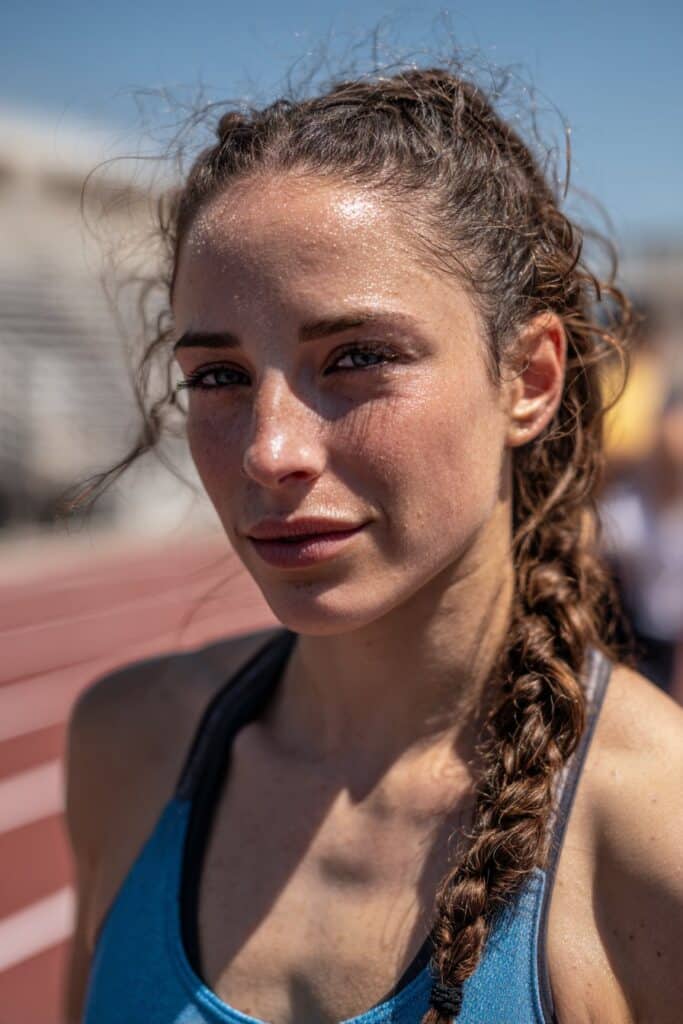
I absolutely fell in love with rope braid ponytails during my first major coaching season. This deceptively simple style creates incredible hold through a unique twisting pattern that outperforms traditional three-strand braids for intense workouts.
Easy Two-Strand Technique
First of all, the “trick” to perfect rope braids is counterintuitive yet simple—twist two sections in the same direction, then cross them in the opposite direction. I start by dividing my ponytail into two equal sections, twisting each away from my face before crossing them toward my face. This opposing motion creates essential friction that prevents unraveling during sprints.
Why This Holds Better Than Regular Braids
Ultimately, rope braids provide superior stability because their twisted structure creates natural tension. Plus, they’re quicker to create than fishtail or Dutch braids—taking five minutes or less! The twist mechanism naturally catches shorter hairs that typically escape during high-intensity movements. Comparatively, rope braids tend to get frizzier faster than traditional braids, so I recommend them for single-day events.
Styling Tips for Different Hair Types
For fine hair, apply texturizing spray first for extra grip. Those with thick hair should divide their ponytail into smaller sections before starting. My curly-haired runners find rope braids create beautiful waves post-workout when styled while 80% dry. At this point, I always remind my clients that rope braids are perfect for summer track meets—they keep bangs completely off the face while holding up against heat and activity.
Sleek Low Bun with Headband
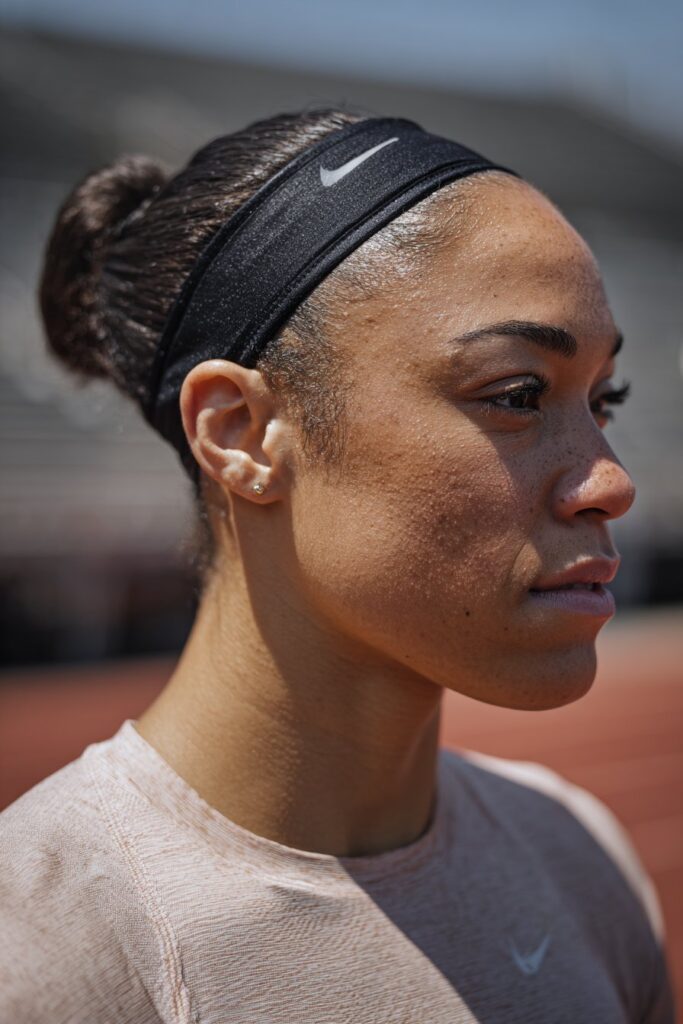
The sleek low bun with headband has rescued me from countless bad track days. This minimalist style offers protection without sacrificing elegance – perfect for when I’m coaching elite athletes or competing myself.
Creating a Polished Look
For this track-friendly style, I start with clean hair for easier manipulation. Using a medium-bristle brush, I gather my hair at the nape of my neck and secure it with a tangle-free elastic. Next, I twist the ponytail while wrapping it around the base, securing with strategic bobby pins. A light mist of flexible-hold hairspray completes the foundation.
Choosing the Right Headband
Naturally, not all headbands are created equal for serious track work. For training sessions, I prefer bamboo fabric headbands that offer breathability during extended wear. Padded headbands create a modern-day crown effect that works beautifully for track meets where style matters. Athletic headbands made from stretchy, absorbent materials perform best for high-intensity workouts.
When Style Meets Function
Throughout my coaching career, I’ve observed how this combination creates unmatched stability. The low bun eliminates the pendulum effect of high ponytails, coupled with a headband that anchors thick hair without requiring additional pins. For track athletes with long hair, this pairing keeps everything securely in place while adding a polished, intentional element to your race day look.
Key Takeaways
Track day hairstyles are performance tools, not just esthetic choices—the right style eliminates distractions and keeps you focused on crushing your personal best.
• Security beats style: Choose braided styles like Dutch braids or boxer braids for high-intensity events where hair absolutely cannot come loose during crucial moments.
• Position matters for comfort: Low buns and ponytails reduce headaches and pendulum effects, while high styles work better for ventilation during hot weather meets.
• Practice before race day: Test your chosen hairstyle during training sessions to ensure it holds up through your specific movements and activity level.
• Invest in quality accessories: Damage-free elastics, strong bobby pins, and texturizing sprays make the difference between styles that last and ones that fail mid-race.
• Match style to event type: Quick sprints need maximum security (boxer braids), while marathons benefit from comfortable, pressure-distributing styles (crown braids with low buns).
Conclusion
Finding the perfect track day hairstyle truly makes all the difference between focusing on your performance and constantly adjusting falling strands. Throughout my years of coaching and competing, I’ve learned firsthand that hairstyles aren’t just about esthetics—they’re essential performance tools. Whether you prefer the security of tight boxer braids or the elegant functionality of a crown braid with low bun, each style serves a specific purpose depending on your activity level and hair type.
My journey with these hairstyles began out of necessity. After one particularly frustrating race where my ponytail came completely undone during the final sprint, I committed myself to mastering styles that actually stay put. Consequently, I’ve tested each of these fifteen options through countless training sessions, competitions, and coaching appointments.
Remember that different hairstyles work better for different situations. High-intensity sprints might call for the unbeatable security of double Dutch braids, whereas a marathon might benefit from the comfort of a sleek low bun with headband. Above all, consider your personal comfort—the most secure style becomes a liability if it causes a headache halfway through your event.
Don’t be afraid to practice these styles before your big race day. Actually, I recommend trying them during training sessions first to ensure they’ll hold up through your specific movements. Furthermore, investing in quality hair accessories like damage-free elastics and strong bobby pins will significantly improve your style’s longevity.
My athletes often tell me their performance improves when they’re not constantly brushing hair from their faces or adjusting slipping ponytails. Undoubtedly, eliminating these small distractions allows you to channel all your focus where it belongs—on crushing your personal best.
These fifteen styles have carried me and countless athletes through finish lines with hair perfectly intact and confidence soaring. Therefore, next time you lace up your running shoes, give your hair the same thoughtful preparation you give the rest of your training routine. Your performance—and your post-race photos—will thank you!

Elsa Claire is the founder and editor of ElsaClaire.com, where she writes about hairstyles, hair care, and the everyday routines that help real people feel good about their hair.