I’ll never forget the time my carefully pinned bun came completely undone during the 800-meter finals. Finding the right hairstyles for track meets became my mission after that day, certainly not just for performance but for confidence too. Track meets put your hair through more than almost any other athletic event. You need track and field hairstyles that stay secure from warm-ups through finals, look cute in team photos, and take minimal time on competition mornings. In this guide, I’m sharing 12 easy hairstyles for track meets that check all those boxes, including my personal favorites for different hair types and event demands.
Tight Dutch Braid Pigtails
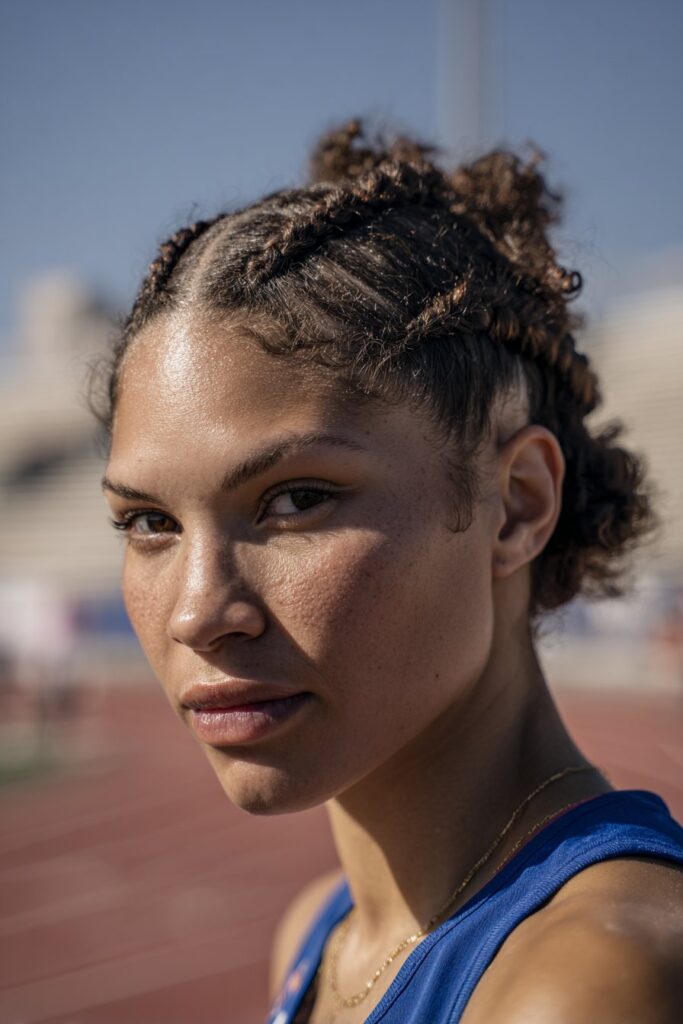
During my years working with track athletes, Dutch braid pigtails became one of my most requested track hairstyles. The first time I tried them on myself before a race, I was amazed at how completely secure they felt even during sprint intervals.
How to Style It
Start by parting your hair down the center from your forehead to the nape of your neck. On the left side near the part, section out a small amount of hair and divide it into three even sections.
Here’s where Dutch braids differ from regular braids: instead of crossing strands over the middle section, you cross them under. Do one full rotation by crossing the bottom section under the middle, then the top section under the middle.
Add a small amount of hair to the bottom section but don’t cross it under yet. Do the same with the top section. Now cross the bottom section (which is thicker from the added hair) under the middle section. Next, pass the top section under the middle section.
Continue this pattern all the way down, keeping your hands right against your scalp for the tightest braids. Once you reach the nape and can’t add more hair, continue with a regular three-strand braid to the ends. Secure with an elastic and repeat on the right side.
Why It Stays Put
Dutch braids lie flat against your head, which creates incredible security no matter how much you jump or run. The pigtails keep all those shorter layers neatly tucked away while preventing flyaways from getting in your eyes mid-race. I’ve found this style has minimal bounce, which keeps hair off your neck even during distance events. The under-crossing technique creates a raised braid that grips tighter than traditional French braids.
Belle’s Pro Tip
Always start with dry hair whenever possible. Using a texturizing spray or dry shampoo at the roots before braiding gives your hair more grip, making the braids tighter and more secure. Unwashed hair is actually easier to braid than freshly washed hair because the natural oils give your hair better texture. If your hair is very sleek or slippery, add some texturizing mousse first. The biggest secret I learned from Elsa Claire: keep your hands right against your scalp throughout the entire braiding process. This single tip makes the difference between braids that loosen during your race and ones that stay perfect through finals.
High Bun with Athletic Headband
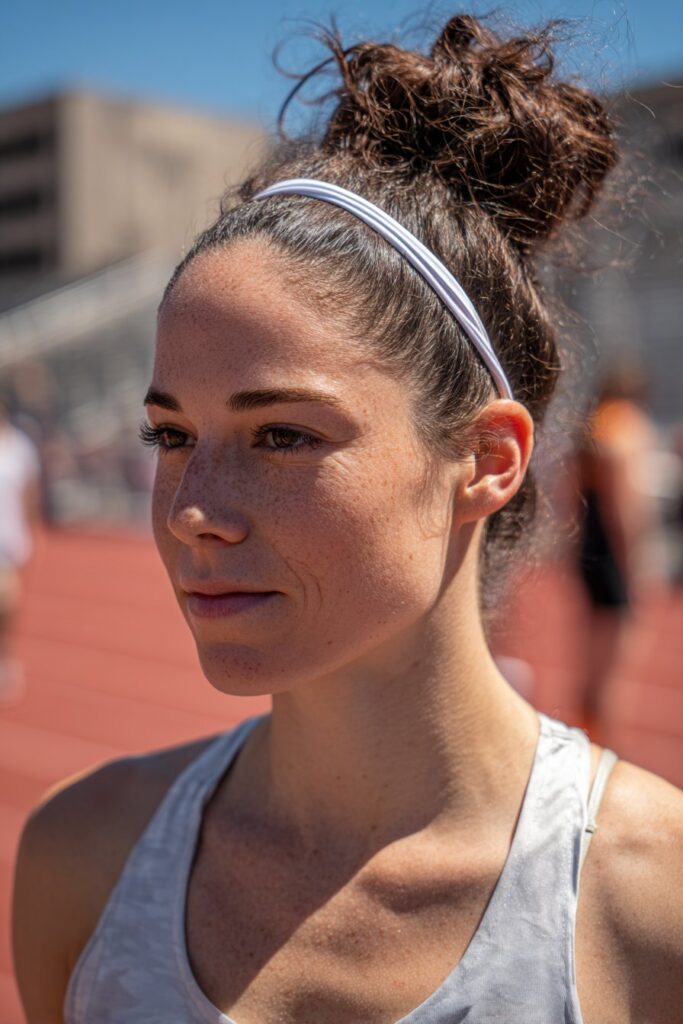
Long-haired sprinters know the struggle of finding track meet hair that doesn’t bounce with every stride. After watching my own high ponytail swing like a pendulum during the 400-meter dash, I discovered the game-changing combination of a high bun with an athletic headband.
How to Style It
Pull your hair up into a high ponytail, positioning it directly on top of your head rather than at the back. This placement is critical because the weight of your hair won’t pull the bun loose when positioned at the crown. Twist the ponytail tightly around its base to form a compact bun shape.
Secure the bun with a second hair tie, twisting it around the bun at least twice for thick hair. For extra security during longer races, add a third or even fourth elastic around the base. Use bobby pins to catch any loose strands that stick out, placing them perpendicular to your head for the strongest hold.
Position your athletic headband about an inch back from your hairline, ensuring it sits snugly without causing discomfort. The headband should feel secure but not overly tight. For fine hair, applying hairspray to your hairline before placing the headband creates additional grip and prevents slippage.
Why It Stays Put
The high positioning prevents gravity from working against you during jumps and sprints. When placed at the crown, your bun stays balanced and secure rather than sagging backward. Athletic headbands serve dual purposes: they absorb sweat that would otherwise loosen your style and hold flyaways firmly in place.
Headbands with silicone or rubber grips provide superior hold compared to fabric-only versions. The moisture-wicking properties keep your forehead dry, which maintains the headband’s grip even during humid conditions or intense events.
Belle’s Pro Tip
Elsa Claire taught me that spiral hair pins outperform traditional bobby pins for securing high buns, particularly for athletes with very long hair. Insert three spiral pins at different angles through the bun for maximum security. They won’t loosen or fall out during your race.
Given that sweat can actually help set your style, try this trick: apply a light mist of hairspray before creating your bun, then add another layer after securing it. Once perspiration mixes with the product, your bun becomes remarkably stable through multiple heats.
Bubble Braid Ponytail
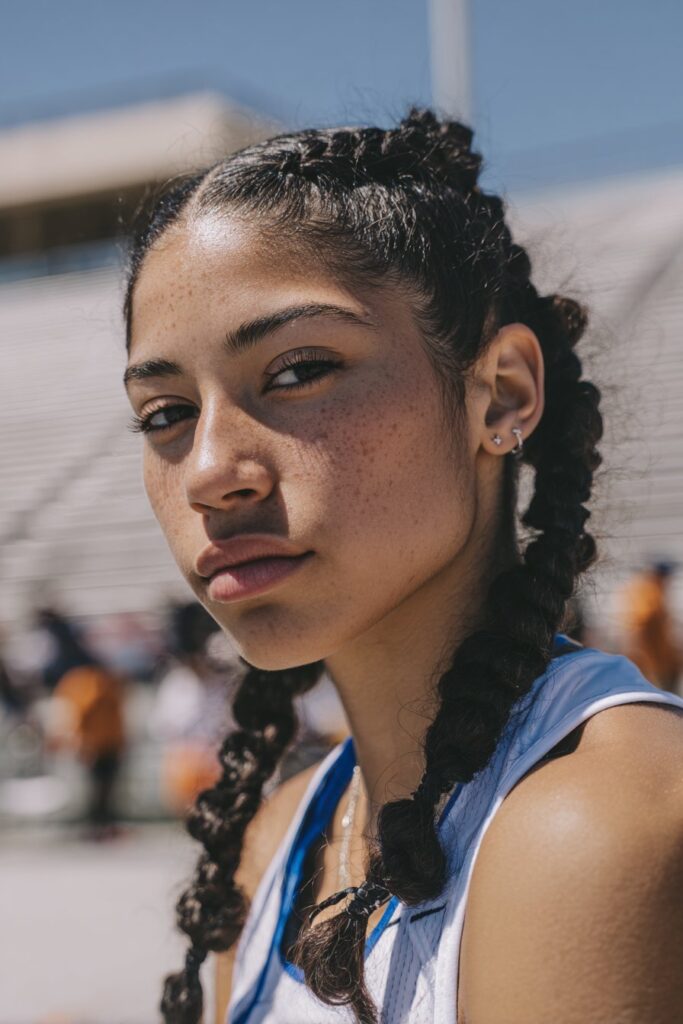
Elsa Claire first showed me bubble braids backstage at a fashion event, and I honestly thought they looked too delicate for athletic wear. Then a runner friend insisted I try them before a meet, and I was surprised by how well they actually held up during my race.
How to Style It
Begin by brushing your hair back into your preferred ponytail position. High ponytails give a playful vibe, while low ponytails create a more understated look. Secure your base ponytail with an elastic.
Wrap additional hair ties down the length of your ponytail at uniform intervals. The exact spacing depends on your hair length and how large you want each bubble, but keeping equal distance between elastics creates the most polished result. For shoulder-length hair, place elastics about one to two inches apart. Longer hair can accommodate slightly wider spacing.
Once all elastics are in place, use your index fingers and thumbs to gently pull each section of hair outward between the elastics. Start at the section beneath your base ponytail and work downward. Pull slowly and evenly on both sides to create symmetrical bubbles. You can customize the look by varying bubble sizes, starting larger at the base and getting smaller toward the ends.
Finish by misting your entire style with a long-lasting hairspray. The fine-mist formula provides strong but workable hold, keeping your bubble braid intact without feeling stiff or crunchy. This gives you 24-hour humidity resistance and flexible hold.
Why It Stays Put
The segmented structure prevents your ponytail from forming knots as you run. Unlike regular ponytails that tangle from constant movement, the elastics compartmentalize your hair. Runners specifically mention being able to brush their hair after running like they never worked out.
The multiple anchor points distribute tension evenly along the length of your hair rather than concentrating all the weight at one elastic. Consequently, there’s less strain on your hairline and less chance of the style loosening mid-race.
Belle’s Pro Tip
Bubble braids can last from several hours to a couple days depending on elastic tightness and hair texture. However, don’t leave them in too long. Using multiple elastics increases tension, so remove them gently one by one to minimize breakage. Elsa taught me to use clear elastics or ones matching my hair color for the cleanest look. For overnight preservation, sleep with your hair wrapped in a silk scarf to prevent friction and frizz.
Sleek Slicked-Back Ponytail
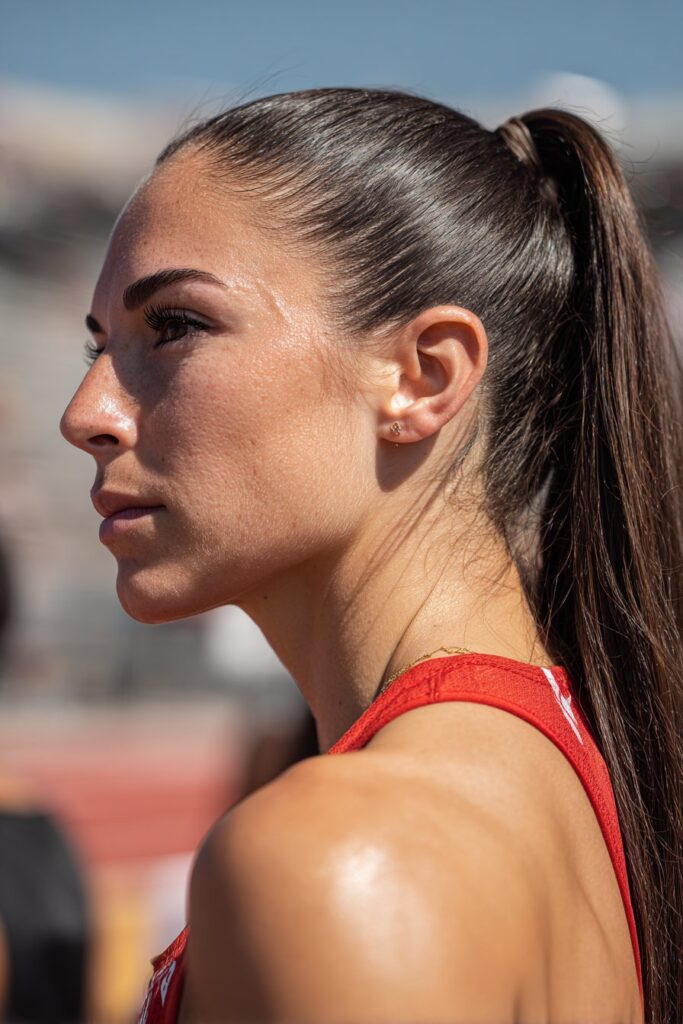
Track star Allyson Felix pairs her tight ponytail with an equally secure headband for sprint events. After watching footage of professional athletes, I noticed this pattern: the sleeker the ponytail, the faster they seemed to move. Slicked-back ponytails work for any occasion depending on how you tailor them.
How to Style It
Start with dry hair, as wet hair is more vulnerable to damage from the tension of tight pulling. Using a boar bristle brush, blow dry your hair while directing strands where you want the ponytail to land. This brush type is essential because it smooths and flattens hair for an ultra-sleek look.
Instead of gathering all your hair at once, divide it into three subsections: one around the face, then split the remaining hair horizontally at the crown. Subdividing helps control how high or low the ponytail base lands. Work a taming serum through each section for control and shine.
Spritz hairspray onto your boar bristle brush to control flyaways, then brush the back sections together at your desired height. Secure with an elastic cord rather than a traditional hair tie. By using elastic cording, you control the tension more effectively. The more tension, the better.
Sweep the remaining front sections back into your ponytail using your brush and hairspray again. After securing everything with a new elastic, work a small amount of texture paste onto your edges and flyaways. For a seamless finish, Elsa taught me to wrap a one-inch section of hair from the ponytail around the elastic and secure it with a bobby pin underneath.
Why It Stays Put
Soccer star Alex Morgan secures her ponytail tight at the crown with no chance of wisps getting in her way. Similarly, track phenom Maggie Vessey gathers her hair high and tight during the pounding sprint of an 800-meter dash. The controlled tension creates what stylists call a “mini facelift” effect, keeping everything locked in place.
Saturation and product distribution highly influence the end result. Consequently, the combination of serum, hairspray, and paste creates multiple layers of hold without crunchiness.
Belle’s Pro Tip
Elsa once told me that slicked-back ponytails don’t have to be limited to gels. For instance, sprays, serums, and pastes work equally well depending on whether you want a matte, semi-sheen, or wet-looking finish. I prefer a pomade stick for taming my postpartum regrowth. The stick slicks hairs back precisely, and after brushing over those sections a few times, my track meet hair looks competition-ready in under five minutes.
Two French Braids
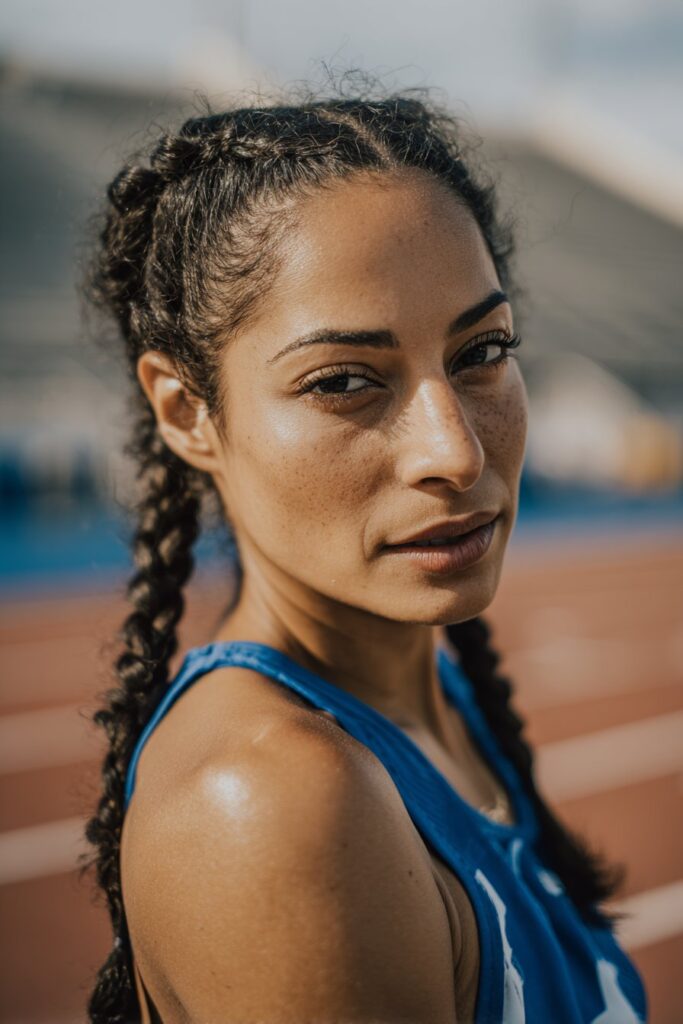
Race-day photos tell the whole story. I learned this after seeing myself in the team’s Instagram post with half my hair escaping a messy bun. French braids take a little extra effort, but they stay in place better than your basic ponytail, and they look cool in race-day photos too.
How to Style It
Part your hair all the way down the middle through the nape of the neck. Secure one side with a hair tie to keep it out of the way.
On the loose side, start a three-strand braid up near the forehead. Begin braiding by taking the outer strand and crossing it over the center strand, then repeat on the other side. Here’s the key difference from Dutch braids: you cross strands over the center instead of under.
Each time you cross a strand over, grab a little bit more hair from outside and work it into the braid. Keep braiding until you get to the nape of your neck and secure with a hair band. Do the same braid on the other section of hair that you previously put into a ponytail.
When both braids are done, get rid of the small ponytails and grab all the remaining hair into one big ponytail. For a look that will keep your neck super cool, after you make the big ponytail, twist all the hair into a bun and pin it to your head.
Why It Stays Put
French braids keep hair secure and tangle-free. They look cute and feel comfortable under a hat or buff, which matters during cold-weather meets or sunny outdoor competitions. The style has been sweat-tested on long runs and windy days.
By pulling your hair in on each side of your head, this braid helps distribute the tension from the braid evenly. Evidently, this prevents the concentrated pulling that happens with single ponytails. The braided structure doesn’t flail around like a ponytail would, keeping your focus entirely on your performance.
Belle’s Pro Tip
Elsa taught me that French braids work beautifully for keeping bangs in place. If you have shorter front pieces that normally escape other track hairstyles, start your braid right at the forehead to incorporate those pieces from the beginning. She also showed me how to pancake the braids after securing them: gently pull on the outer edges of each braid section to create a fuller, more textured look that photographs better while actually tightening the overall structure.
Natural Curly Puff with Headband
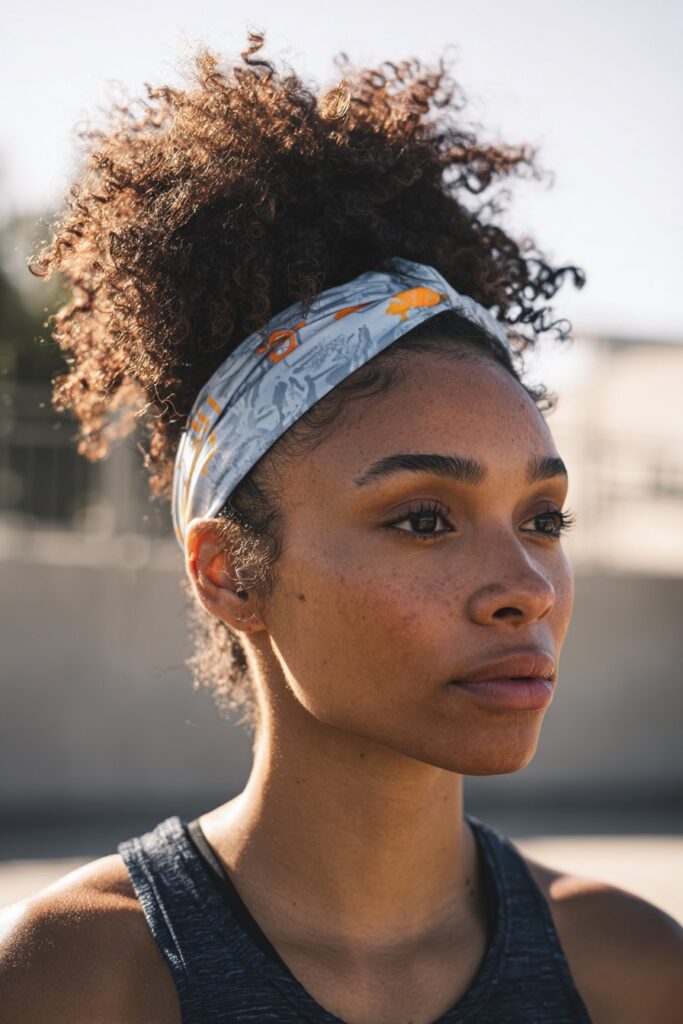
Elsa Claire once worked with a sprinter who had gorgeous natural curls but avoided meets because her hair would frizz within minutes. After that consultation, Elsa taught me the curly puff with headband technique, and it completely changed how I approach track meet hair for textured hair types.
How to Style It
Gather your hair at the crown or mid-height on your head, depending on your curl pattern and desired volume. Use a hair tie that won’t snag or damage your curls. In fact, cutting old sheer stockings into strips creates customizable ties with more slip that rarely fall apart.
Position your puff where it feels balanced and secure. Natural curls have built-in volume, so you don’t need to tease or manipulate them much. The key is allowing your texture to work for you rather than against it.
Place your headband about one to two inches back from your hairline. For curly hair specifically, moisture-wicking headbands pull sweat away from your curls. This prevents that dreaded moisture from soaking into your hair and causing frizz mid-race. Sweat-wicking headbands are crafted from unique fabric designed especially for functional styling, effectively absorbing moisture while protecting textured hair and edges.
Why It Stays Put
Headbands serve as your frontline defense against sweat running down your locks. Athletic headbands keep perspiration away from your eyes, allowing you to maintain focus during your run. Particularly for natural hair, this moisture control prevents your edges from sweating out while you work out.
Quality headbands come in different sizes to match your needs. Single-layered options measuring 8cm wide work for lighter coverage, while double-layered headbands stretch from 8cm to 16cm when fully open to cover a wider surface area. Despite being thick, they remain breathable and designed to stay put through your entire race.
Belle’s Pro Tip
Elsa taught me that silk or satin headbands reduce friction better than cotton versions. Cotton absorbs moisture and can cause breakage, while silk and satin help maintain your hair’s natural oils and keep curls smooth. For overnight preservation between heats or multi-day meets, wrap your puff in a silk scarf to prevent friction and maintain your curl definition. Headbands made from lightweight, breathable materials provide comfort for extended wear without causing tension headaches.
Single Dutch Braid Down the Center
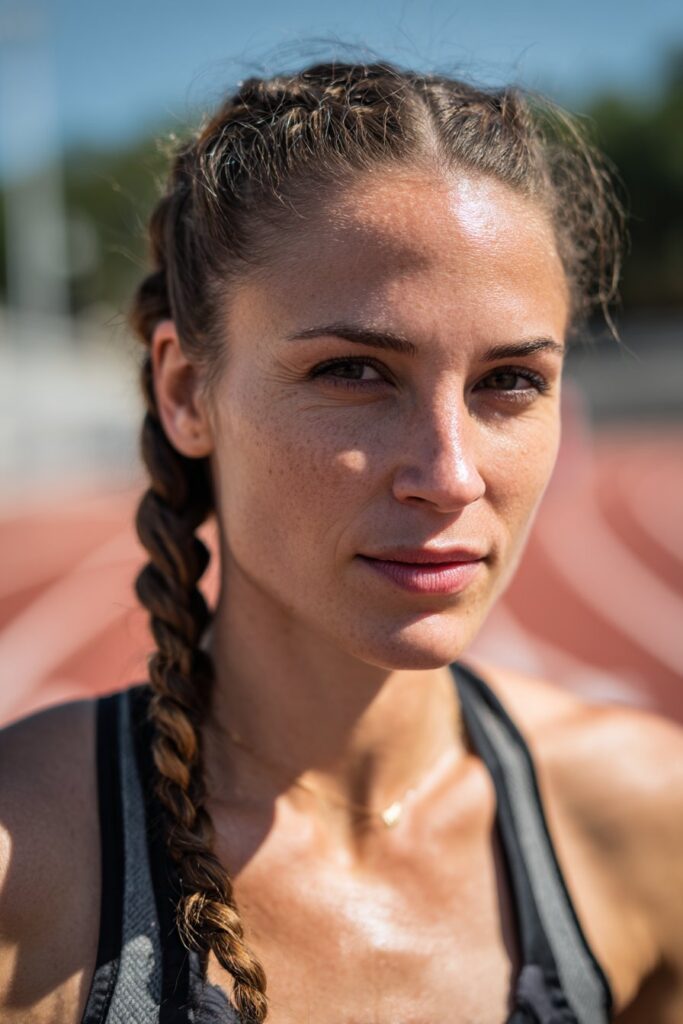
Athletes with medium-length hair asked me constantly which style would last through an entire day of heats and finals. A single tight Dutch braid straight down the center became my answer every time.
How to Style It
Since you already know the Dutch braid technique from the pigtails section, applying it to a center braid is straightforward. Part your hair down the middle from forehead to nape, then gather everything to one side.
Start your braid at the crown, taking a small section and dividing it into three parts. Cross strands under the middle section instead of over, adding hair from both sides as you work down. The critical difference here: keep your hands right against your scalp throughout the entire braid. This prevents sagging and creates the tight security you need for athletic performance.
Continue braiding all the way down your spine until you run out of hair to add, then finish with a regular three-strand braid to the ends. Secure with a clear elastic that won’t distract from your braid’s clean lines.
Why It Stays Put
This braid runs flat against your spine and creates zero movement or bounce during sprinting. Specifically, the center positioning eliminates the side-to-side swing that happens with ponytails or even pigtail braids.
The style holds through an entire meet without any adjustment and remains comfortable to wear for six to eight hours of competition without creating pressure points. Medium hair is actually the ideal length because the braid has enough length to be secure from root to tip without creating weight or movement issues.
Belle’s Pro Tip
Elsa taught me to use multiple hair ties down the length of my braid for competitions lasting more than four hours. Place small clear elastics every few inches for additional anchor points. Apply texturing spray before braiding or mist with hairspray afterward for superior hold. The bonus: braiding causes less hair breakage than tight ponytails.
Braided Bun for All-Day Comfort
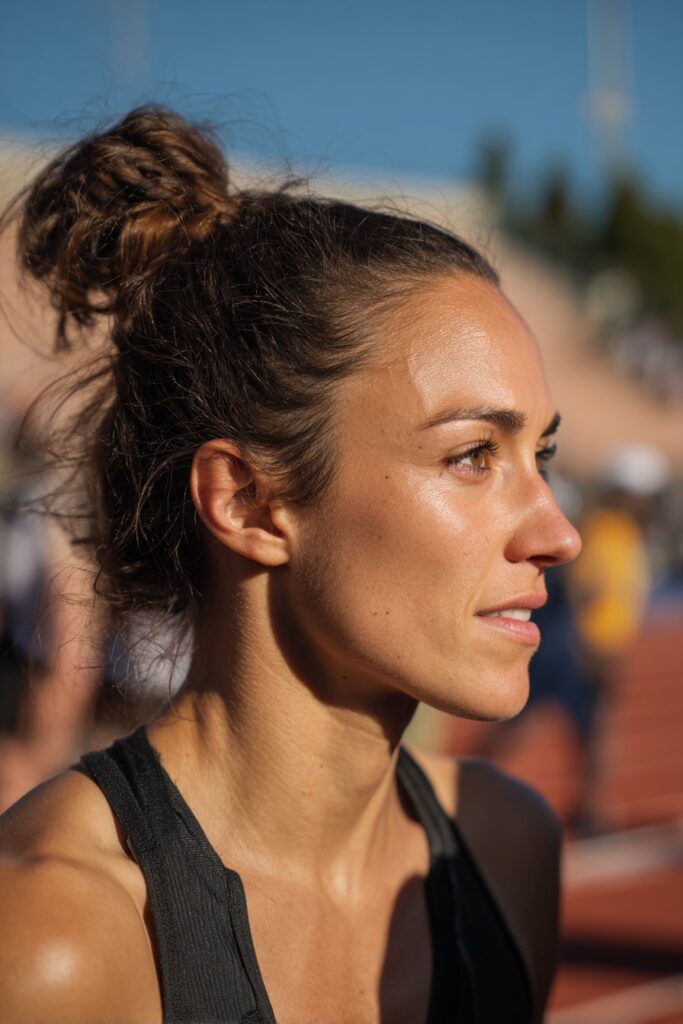
When I started running longer distances, I needed track meet hair that could transition seamlessly from warm-ups through finals and still look presentable afterward. The braided bun became my solution for those all-day competitions.
How to Style It
Pull your hair into a ponytail at your preferred height. I typically position mine at mid-height for balance between security and comfort. Braid the entire length of your ponytail using a standard three-strand technique, then secure the end with a small elastic.
Coil the braid around the base of your ponytail to form your bun shape. This wrapping motion creates a compact, stable structure. As you wrap, insert bobby pins to anchor the bun firmly in place. Elsa taught me a technique that changed everything: place your bobby pins perpendicular to your head and away from your scalp. This positioning prevents the pins from poking you during those final kilometers when even minor irritations become unbearable.
Finish with a generous application of maximum strength hairspray. For long distances, Elsa recommends using a formula like Redken Max Hold Hairspray. The fine mist coats every strand without weighing down your bun or making it feel stiff.
Why It Stays Put
A low bun will bounce around and unravel, but positioning your braided bun higher on your head keeps it stable. The combination of elastics and strategic bobby pin placement creates a style that ensures zero distractions from loose hair. For thick hair specifically, the bun may feel heavier, but the final look is both elegant and intimidating.
Belle’s Pro Tip
The smallest details make the biggest difference during extended competitions. By placing bobby pins tightly yet comfortably into your braided bun and keeping them away from direct scalp contact, you reduce the risk of irritation becoming a distraction toward the end of your race. I learned this during a marathon where poorly placed pins nearly derailed my focus at mile 20.
Cornrow Braids for Track Season
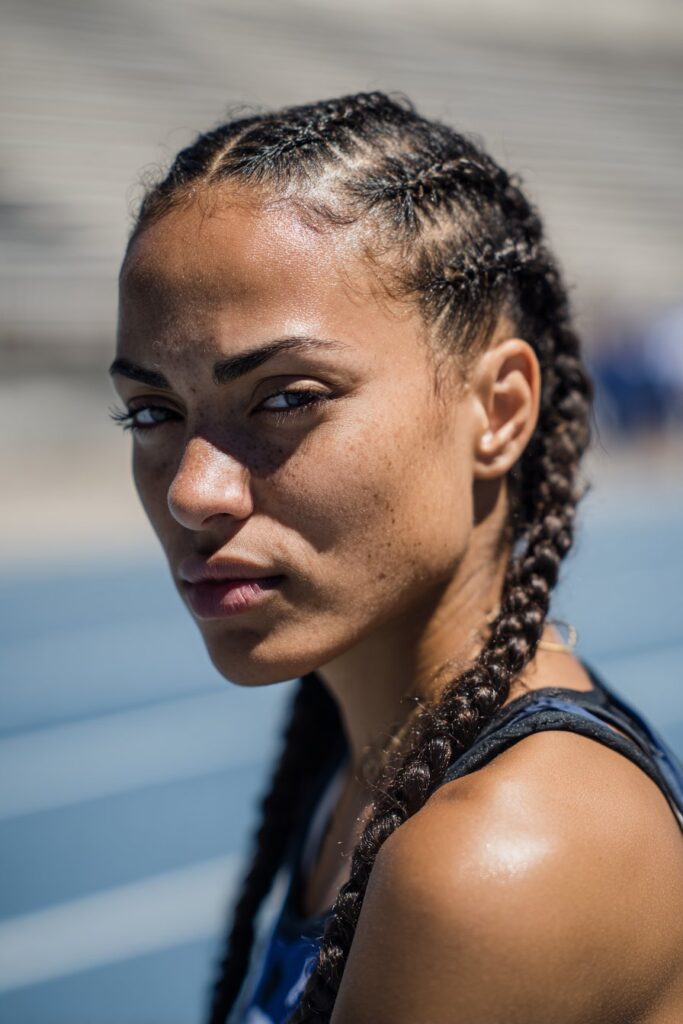
Cornrows solve a problem most other track hairstyles can’t: they last the entire season. I discovered this during my first multi-week competition series when rebraiding every few days became exhausting.
How to Style It
Start with detangled, stretched hair for the smoothest results. Comb through thoroughly before sectioning. Using a tail comb, create neat, precise parts along your scalp. Apply braiding gel directly to your scalp to keep the braids frizz-free.
Dampen each section slightly with water, making the hair easier to manipulate. Divide a small section into three strands and begin braiding close to your scalp. Cross strands under the middle section (identical to Dutch braids), adding hair from below as you work down.
The tension matters enormously. Pull firmly enough to create security without causing discomfort. Overly tight cornrows can lead to breakage and follicle damage, so find that sweet spot between secure and comfortable. Finish each braid with a small elastic band at the ends.
Why It Stays Put
Cornrows are perfect for activities involving quick movements or bursts of energy. They reduce friction and sweat buildup during high-intensity workouts, keeping your hair completely off your face and neck throughout every event.
Belle’s Pro Tip
Elsa taught me to wrap cornrows in a silk scarf before bed. This single step extends their lifespan from days to weeks. Apply a small amount of argan or coconut oil before your race to minimize post-workout frizz.
Low Ponytail for Fine Hair
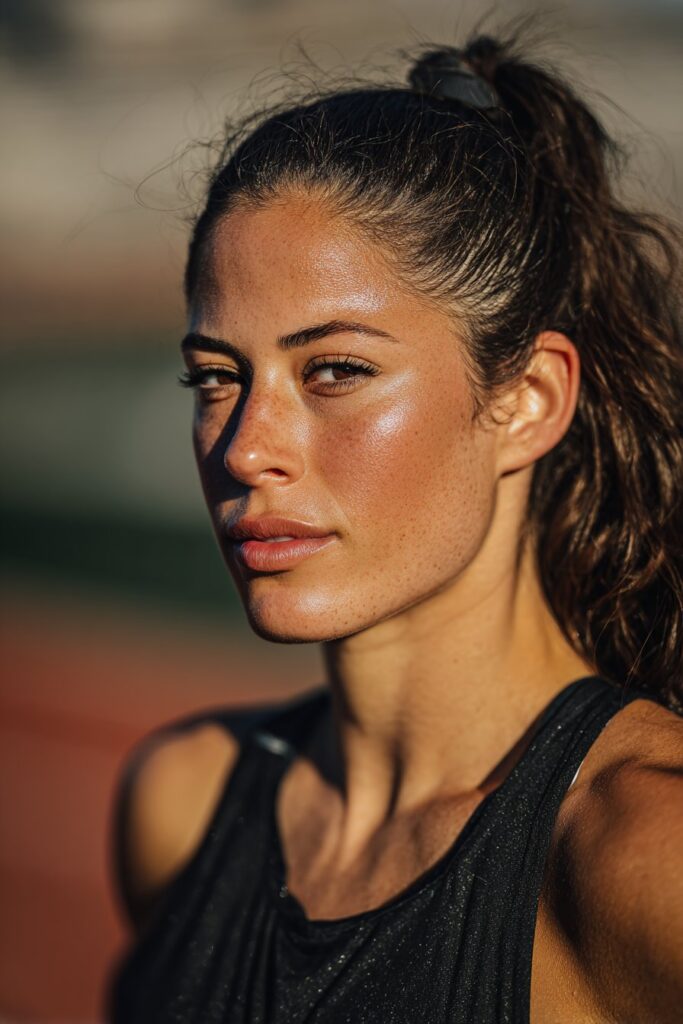
Fine hair presents unique challenges when selecting track meet hair. The weight of a high ponytail can strain delicate strands, but a ponytail positioned at the nape of your neck eliminates that gravity-defying pull. You’ll feel less discomfort because this placement doesn’t tug your strands in unnatural directions.
How to Style It
Brush your hair back to the nape using a wide-toothed comb for gentle detangling. Gather everything at the base of your skull and secure with a silk or satin scrunchie rather than traditional elastics. Elastic hair ties with metal components pull on your hair and cause more breakage than softer alternatives.
For a sleek finish, work a hair gel through your strands to create a smooth, frizz-free look. If volume is your goal, create waves beforehand and finish with a volumizing hairspray at the roots. The styling flexibility makes low ponytails adaptable to your personal esthetic.
Why It Stays Put
Low positioning means your ponytail won’t bounce or swing during races. Wearing your ponytail too tightly every day can lead to tension and hair breakage, so take time to style it without putting pressure on your scalp. This gentler approach protects your hairline during competition season.
Belle’s Pro Tip
Elsa swears by silk scrunchies because they’re gentler on fine hair and don’t cause the dreaded ponytail headache. She taught me to vary my ponytail placement between low, mid, and side positions so stress isn’t concentrated at one point on my scalp.
Space Buns with Secure Pinning
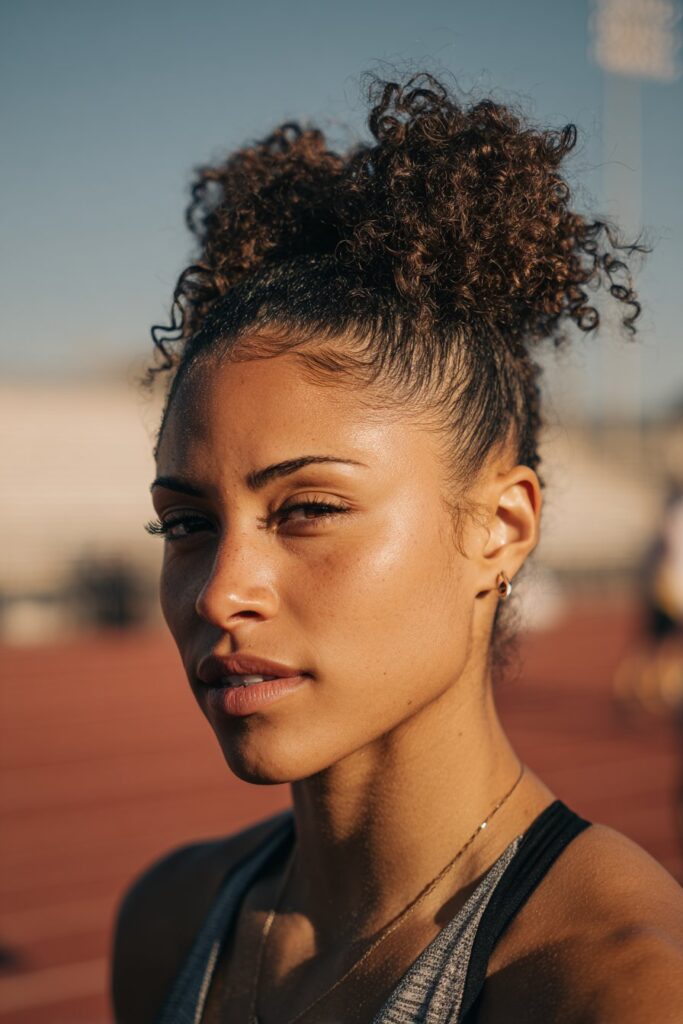
Space buns might look playful, but keeping two buns secure through hurdles and sprints requires serious pinning strategy. When Elsa Claire first demonstrated this style for athletic wear, she emphasized that the secret lies in anchoring each bun properly rather than relying on elastics alone.
How to Style It
Part your hair down the middle and create two high ponytails at equal heights. Pull one section up into a ponytail, then tease the hair for added volume. Twist the ponytail tightly before wrapping it around the base to form your bun. This creates a more structured shape that holds better during movement.
Secure each bun with another hair tie, using three to four elastics total if needed. Insert bobby pins with the ridged side facing your scalp for maximum grip. Push each pin through the outer edge of the bun, hook a bit of base hair, then push it back into the center. Use at least two bobby pins per bun, though you may need more for thick hair. Finish with hairspray, holding the can twelve inches from your head and spraying in short bursts.
Why It Stays Put
The double-anchor system distributes weight evenly across your head rather than concentrating it at one point. Multiple elastics prevent the buns from loosening during jumps or quick directional changes.
Belle’s Pro Tip
Elsa taught me that unwashed hair holds this style better. Second or third-day hair has natural texture that creates better grip than freshly washed strands.
Box Braids Pulled Back
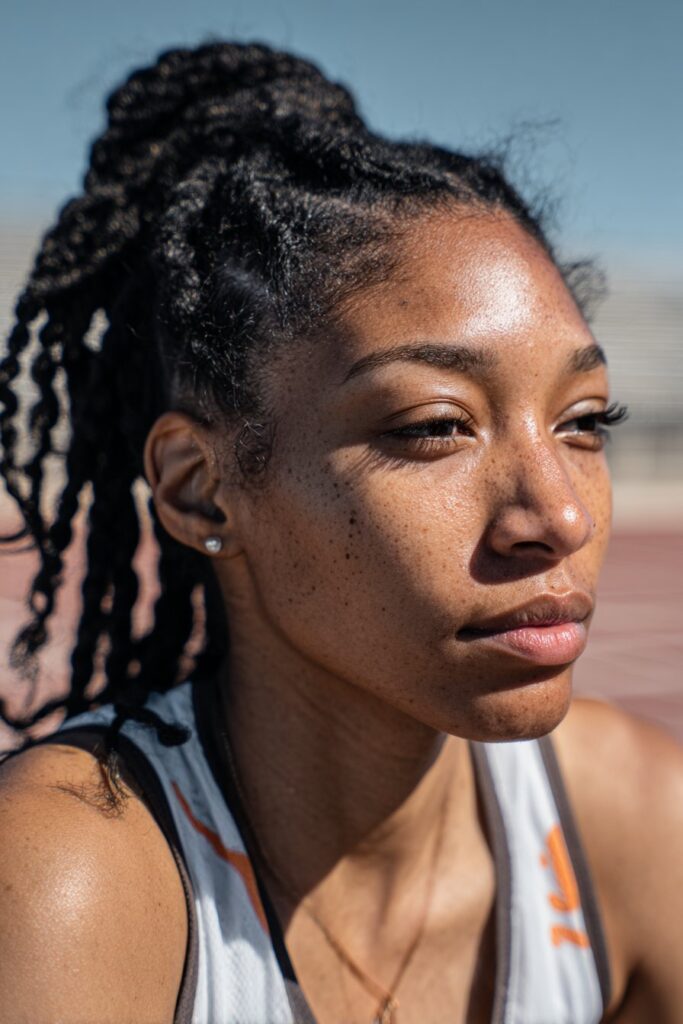
Venus Williams rocked box braids throughout her entire career, proving they’re built for athletic performance. When Elsa installed my first set of box braids years ago, she warned me about the weight factor, particularly during cardio. That first run felt awkward until she taught me proper styling techniques.
How to Style It
Sweep your braids into a high, loose ponytail or bun positioned at the crown. Bungee cords work better than traditional elastics because they offer flexible sizing and maintain good tension without causing breakage. Alternatively, gather your braids into a loose, low ponytail at the nape to alleviate weight from your neck and shoulders.
Smaller braids prove lighter and easier to manipulate into updos, keeping them comfortably off your neck and back during races. Some runners tuck their braids between their shirt and hoodie, securing everything with a headband before throwing the hood on.
Why It Stays Put
Box braids are low-maintenance and long-lasting, making them perfect for athletes. The individual plaits stay contained when pulled back, eliminating the constant hair adjustments that distract from your performance.
Belle’s Pro Tip
Elsa taught me to avoid tight buns or high ponytails that create tension on your hairline. Pulling braids too tightly is a direct path to edge damage. Instead, use a moisture-wicking headband to keep braids flat at your hairline until your scalp dries completely post-workout.
Conclusion
Finding the perfect track meet hairstyle is deeply personal, and what works for your teammate might not work for you. All things considered, experimenting with several styles during practice sessions helps you discover which ones truly stay put during your events. Elsa taught me that confidence starts before you even hit the track, and feeling secure about your hair eliminates one more distraction from your performance. Whether you choose Dutch braids for their grip, a slicked-back ponytail for speed, or box braids for the entire season, the right hairstyle becomes part of your competitive edge. Try a few options, find your favorites, and focus entirely on crossing that finish line first.

Elsa Claire is the founder and editor of ElsaClaire.com, where she writes about hairstyles, hair care, and the everyday routines that help real people feel good about their hair.