Back to school cornrows are having a major moment, and as a matter of fact, I couldn’t be more excited about it. Over the years, I’ve styled countless little ones preparing for their first day, and finding cute back to school cornrows that are equally protective never gets old. Natural hair back to school cornrows offer the perfect balance of style and low maintenance for busy mornings. From simple back to school cornrows to elaborate back to school hairstyles for black girls cornrows, I’m sharing 12 of my favorite back to school cornrows hairstyles that will have your little one walking into class with confidence.
Straight Back Cornrows
What Makes It Special
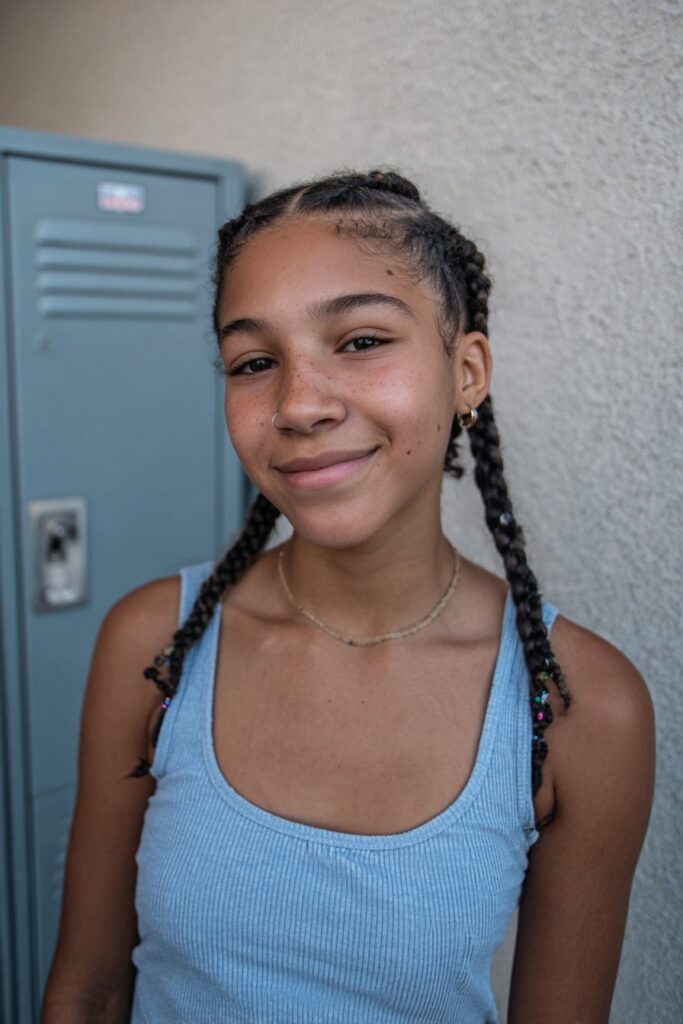
Simple straight back cornrows hold a special place in my heart. Over the years, I’ve watched this become the gateway style for so many little ones. The hair is parted into neat, even rows from the front hairline straight down to the nape, then braided close to the scalp so everything lies flat and tidy. What I love most is how this timeless protective style can be customized with beads, accessories, creative partings, and varying braid sizes.
The beauty is in its versatility. You can keep the ends plain for a no-fuss look, or we can add a few beads for extra fun without making styling too complicated. I’ve also added curly ends for families who want a little playfulness, or even honey blonde or cinnamon color to the ends for an understated touch. Equally stunning is the option to braid them into a high or low bun or ponytail if your daughter prefers not having braids hang down her back.
Best For
Initially, I recommend straight back cornrows for busy families juggling school drop-offs and after-school activities. This look works well for school days because it fits under hats and helmets and doesn’t get in the way during recess or sports. Actually, I’ve styled countless kids heading into their first day of kindergarten with this exact style because parents know it will hold up through playground time.
The style also suits girls with various hair textures. Whether we’re working with natural hair alone or adding braiding hair for a feed-in approach, straight backs adapt beautifully. Larger cornrows will require more hair and may not last as long, but they make a statement while installed.
Styling Tips
When I’m creating this style, I focus on precise, straight lines and weave the hair tightly to create neat, narrow braids. To illustrate, I often alternate between small and larger braids for visual interest, or add gold, silver, or wooden beads to give a more ethereal look.
The time varies based on braid size and length. Typically, cornrows can take anywhere from one to four hours. For younger children with less patience, I lean toward medium-sized braids that balance durability with installation time.
Maintenance
Make sure the braids are not too tight around the edges. I always check tension as I work because protecting those delicate edges matters more than a super-sleek finish. Moisturize the scalp every few days, and protect the hair at night with a satin bonnet so the style lasts up to two weeks.
In the meantime, the style should last two to three weeks, sometimes up to four weeks with proper care. This includes regularly moisturizing the scalp, wearing a satin or silk scarf at night to reduce friction, and avoiding excessive manipulation of the braids. I tell parents to apply mousse or setting foam and tie down the cornrows with a silk scarf after installation.
Fulani Braids
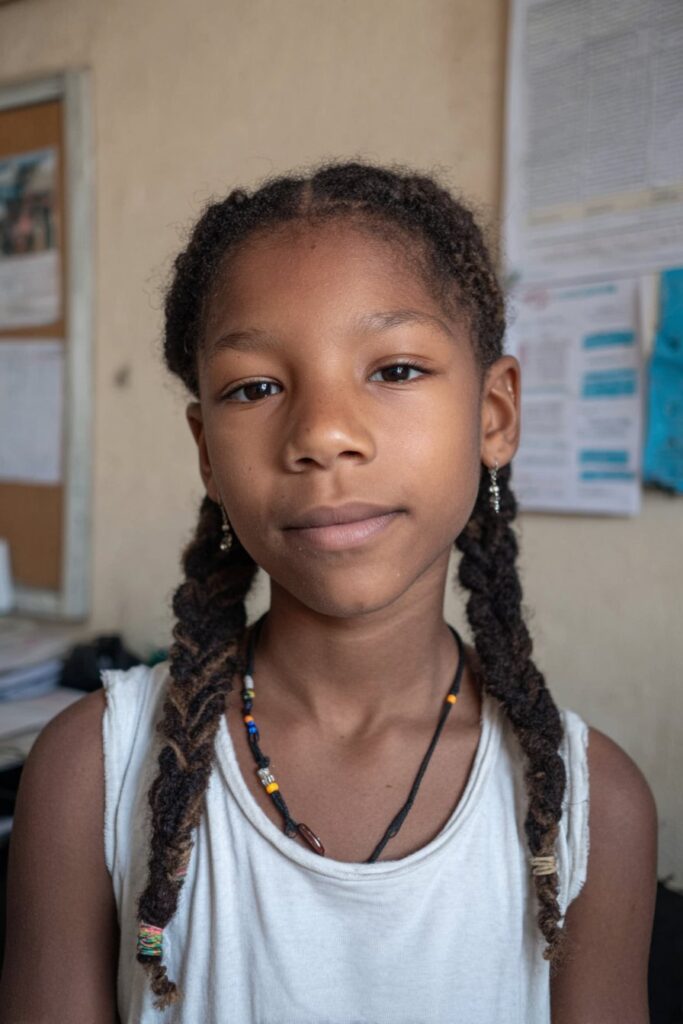
What Makes It Special
Fulani braids carry a rich cultural heritage that originated with the Fulani people in West Africa. What sets them apart is their distinctive pattern: a central cornrow running down the middle of the head, complemented by side cornrows that frame the face, with the remaining hair braided into individual plaits. Traditional designs feature beads, shells, or decorative accessories at the ends, though modern variations allow endless creativity.
I’ve styled countless variations for little ones preparing for school, and the beauty lies in how customizable this protective style becomes. From boho Fulani with soft curls left loose at the ends to simple, clean patterns perfect for everyday wear, each look tells its own story. The knotless version has become particularly popular among parents concerned about scalp tension, since the hair gets fed in gradually rather than starting with a tight knot.
Best For
This style works wonderfully for active kids who need their hair to stay put through playground adventures and after-school activities. The single center part with diagonal sections on the sides creates a secure base that holds up well. Particularly suitable for special occasions or everyday school wear, Fulani braids adapt to whatever your daughter needs.
I recommend this style for families wanting something beyond basic cornrows. The cultural significance adds meaning, while the decorative elements let kids express their personality through bead selection and color choices.
Styling Tips
Installation typically takes between four to eight hours, so I always suggest scheduling during a relaxed weekend. Arrive with clean, detangled hair for the smoothest process. When working on children, I focus on minimal tension around the delicate hairline area, leaving fine edge hairs loose rather than pulling every strand.
Beads transform the entire look. Wooden beads create an earthy, traditional esthetic, while lighter plastic options work better for younger children with sensitive scalps. You can swap accessories depending on the occasion, making this style incredibly versatile.
Maintenance
Proper care extends the style’s lifespan to about four to eight weeks. Moisturize the scalp every two to three days using lightweight oil or a spray bottle with water and jojoba oil. Massage gently with fingertips to stimulate blood flow without disturbing the braids.
Sleep protection matters equally. A satin bonnet or silk pillowcase prevents friction and frizz. For active kids involved in sports, secure braids in a low ponytail to minimize pulling. Apply edge control weekly to smooth flyaways and maintain that fresh-from-the-chair appearance.
Feed-in Cornrows
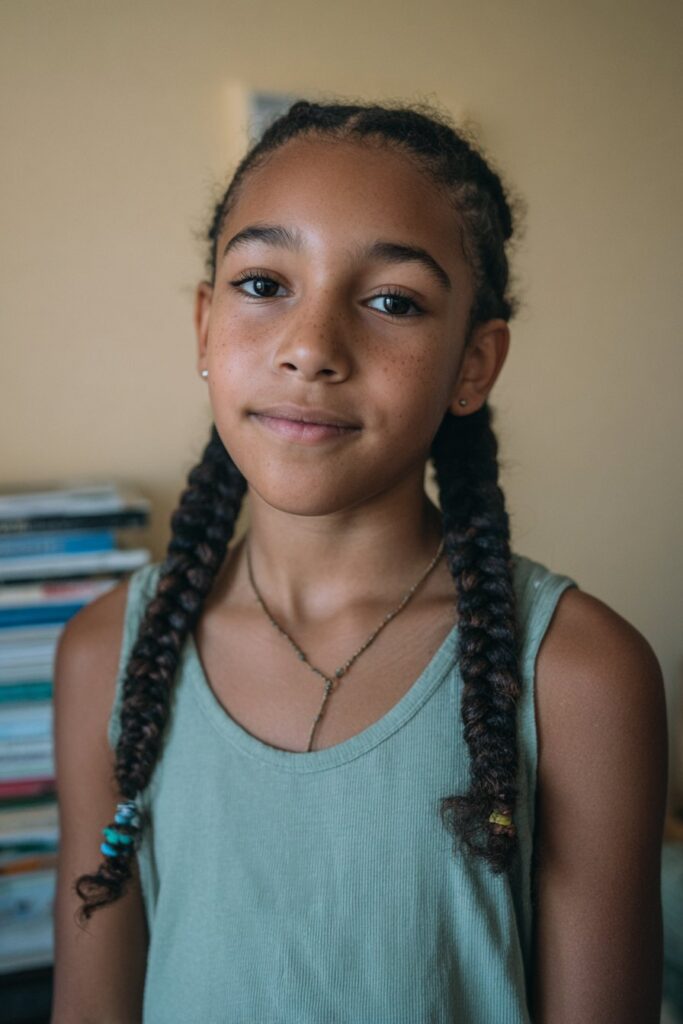
What Makes It Special
Feed-in cornrows use a technique where I gradually add synthetic braiding hair to your daughter’s natural hair as I braid. Essentially, this creates the illusion of thicker plaits or extra-long length without the bulk of traditional knotted styles. The hair color can match her natural shade, or we can opt for playful tones to add personality.
What sets this apart from other cornrow methods is the knotless approach. Since I’m feeding hair in bit by bit rather than starting with a tight knot at the base, the style puts less stress and tension on the scalp. For little ones with tender scalps, this makes a noticeable difference in comfort during installation and wear.
The versatility continues with styling options. Feed-in braids work beautifully woven into crown braids, side-swept looks, or even pigtails topped with a fun hat. You can add beads and ribbons for texture, creating effects similar to extensions. I’ve also transformed these braids into fishtail patterns or rolled them into updos with accessories for special occasions.
Best For
Feed-in cornrows suit active school-age children who need durability without excessive weight. However, this style may not work well for those with particularly sensitive scalps, as the braids do require some tightness to maintain their sleek appearance. That said, they remain gentler than traditional knotted braids due to the gradual feed-in method.
I recommend finding an experienced stylist to avoid braiding too tight, which can cause hair breakage and scalp soreness. The right tension matters, especially around delicate edges.
Styling Tips
Most feed-in styles use synthetic kanekalon hair. This type looks and feels natural after blow drying, without the excessive shine of other synthetic options. Look for pre-stretched hair to prevent unraveling at the ends.
Cost varies based on design complexity and braid quantity. In cities, expect to pay anywhere from USD 65.00 to upward of USD 200.00. Installation time depends on the pattern chosen, but plan for several hours to achieve that polished finish.
Maintenance
Feed-in braids typically last about two weeks before hair growth loosens the sleek look. Your daughter’s scalp needs consistent attention even with braids in place. Use a gentle cleansing spray or diluted shampoo every one to two weeks, focusing on the scalp rather than the braids themselves. This prevents itching and buildup.
Moisturize two to three times weekly using a spray bottle with water and your preferred oil. Lightly mist the braids so they’re damp, not dripping, then add a small amount of leave-in cream or shea butter. Apply at night and use a satin bonnet to lay down any fuzziness.
Friction from pillows causes premature frizz. Wrap her hair in a silk or satin scarf before bed, or switch to a satin pillowcase. This simple step extends the style’s lifespan while protecting her natural hair underneath.
Lemonade Braids
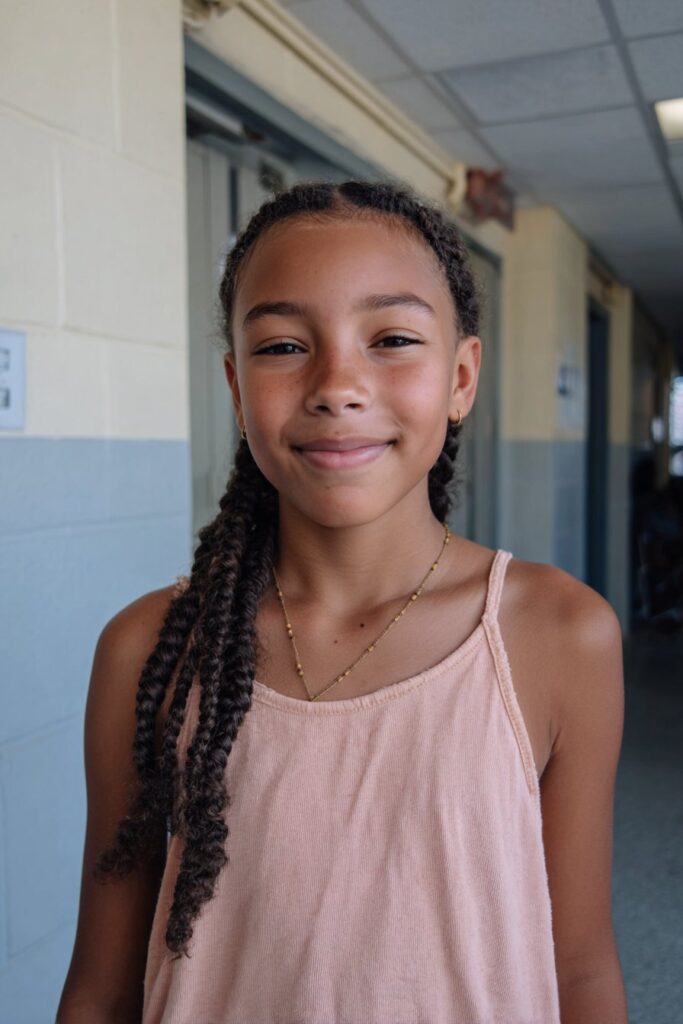
What Makes It Special
These side-swept cornrows became a cultural phenomenon after appearing in a major music video a few years back, and I’ve been styling them for little ones ever since. The defining feature is the asymmetrical cascade where all braids flow over one shoulder rather than straight back. This creates a geometric, face-framing effect that kids absolutely love.
What makes lemonade braids one of the cutest and most practical protective hairstyles is how they keep hair neat while letting your child show personality through length, color, and accessories like beads or cuffs. They work well on natural curls, relaxed hair, or hair with extensions. I’ve created everything from simple, school-friendly versions with natural-colored extensions to bright, party-ready designs with pops of color. The chunky versions feature pale pink or dark blue thread interlaced throughout for extra flair. Curly ends add volume and a girly touch that makes kids feel special.
Best For
Lemonade braids for school girls focus on neatness, comfort, and rules-friendly designs that still let kids feel stylish. Most parents choose natural-colored extensions or braids done entirely with the child’s own hair, keeping the length moderate and the pattern simple so it looks tidy for uniforms or dress codes. Your child can wear this hairstyle to various occasions, including birthdays and weddings, along with everyday school.
This style cuts down on daily combing and detangling, saving time during busy mornings and reducing the stress that constant styling can put on growing hair. Particularly helpful for active kids, the side-swept design pulls hair off the face for maximum comfort.
Styling Tips
Installation can take anywhere from three to six hours to complete. To cut down on time, use feed-in braids and pre-braided hair extensions that are added seamlessly and naturally. Jumbo lemonade braids don’t take much time to make, are simple to remove, and look great decorated with strings.
Medium-sized braids equally spaced work well, and adding a fancy zigzag parting creates a lovely break from braided monotony. The key is choosing a skilled braider and watching tension around the hairline.
Maintenance
Most designs last a couple of weeks with good nighttime care. Teach your child a simple routine: wrapping her hair at night, using a light scalp spray, and gently patting rather than scratching. This keeps braids fresh-looking through the school week and her scalp healthy and clean. With the right care and thoughtful design, lemonade braids can become a go-to protective hairstyle that makes your child feel confident and camera-ready for everyday life.
Ghana Braids
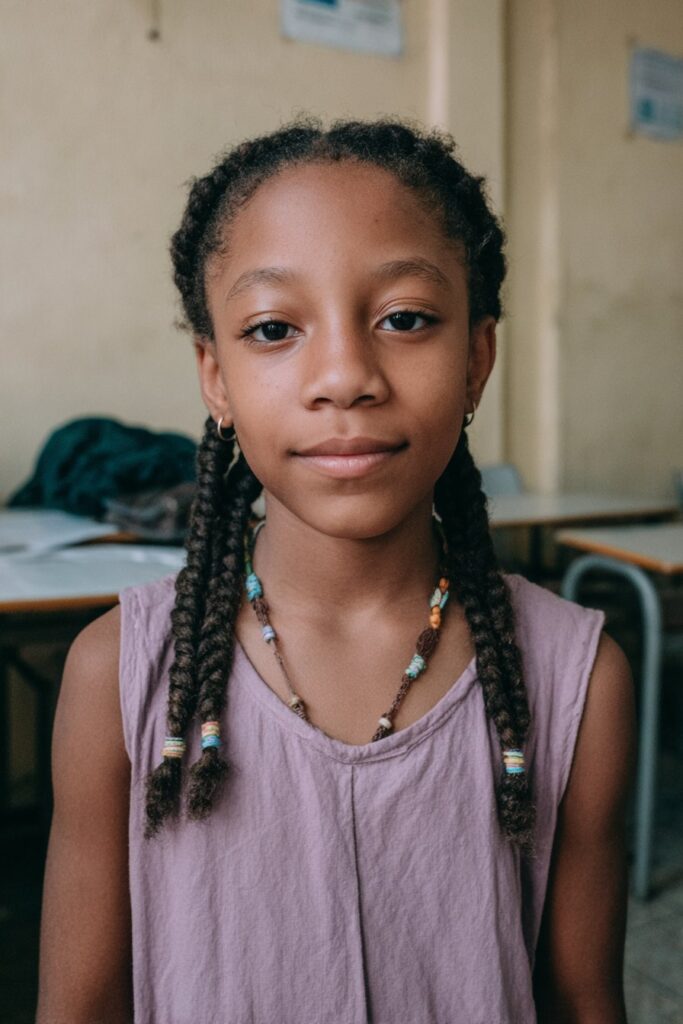
What Makes It Special
Ghana braids, sometimes called banana cornrows or invisible cornrows, bring drama without overwhelming small faces. Whereas standard cornrows lie relatively flat, these braids are thicker and more elevated, creating a bold three-dimensional effect. I use the feed-in method to start each braid incredibly thin right at the hairline, then gradually increase the size as I add hair along the length. This technique produces a raised, defined braid that looks full without pulling too much tension on delicate roots.
What I appreciate most is how protective this style becomes for active school days. The braids seal moisture into your daughter’s natural hair while shielding it from sun exposure, wind, rain, and dust. These environmental factors can dry out and damage hair, but Ghana braids act as a barrier.
Best For
Girls with thicker 4c hair textures particularly love this style because it holds exceptionally well and reduces the need for daily hair manipulation throughout the school week. In fact, I’ve found that Ghana braids work beautifully for families seeking a protective option that lasts without constant restyling.
For school settings, I recommend keeping the pattern simple with straight-back or gently curved rows. This creates a polished, neat appearance that fits dress codes while still looking special.
Styling Tips
The feed-in approach allows customization in braid size and pattern. Straight-back rows create clean lines, while curved designs add artistic flair. You can incorporate the fishbone pattern for geometric interest or alternate between thin and thick cornrows for textured dimension.
Installation time varies based on complexity, but expect to set aside several hours for a thorough job. I always start with clean, moisturized hair to make the braiding process smoother.
Maintenance
With proper care, Ghana braids last anywhere from two to five weeks. Shampoo the braids every two weeks to remove sweat and buildup, then air dry and apply light oil to the scalp. In the meantime, moisturize regularly with a lightweight oil to prevent dryness and itching.
Synthetic hair extensions develop flyaways over time, so carefully trim these with small scissors to maintain the neat appearance. Protect the style at night using a satin scarf or bonnet. This prevents frizzing and moisture loss, keeping those braids looking fresh through multiple school weeks.
Cornrow Ponytail
What Makes It Special
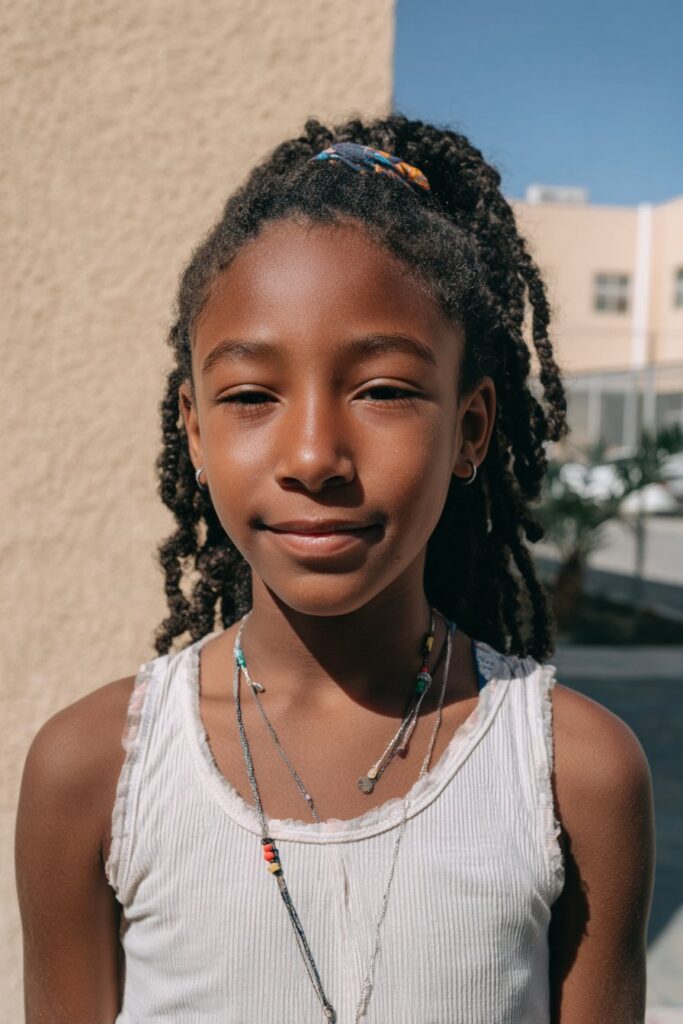
Cornrow ponytails rank among my most requested back to school cornrows hairstyles, and for the same reason every time: they combine style with pure functionality. The scalp gets braided in neat rows moving toward the crown, where I gather everything into a high or mid-level ponytail. What makes this approach brilliant is how it keeps hair completely off the face and neck, particularly helpful during PE class and recess.
I offer families two main variations. The single ponytail creates a sleek, sporty look, while two ponytails distribute tension more evenly across the scalp. Kids love the two-ponytail version because beads on the ends create that playful swing, and the beads also help ends feel finished so children won’t pick at them. Curly braid extensions attached at the ponytail base add volume and personality, creating a youthful, fresh finish that holds up neatly throughout entire school days.
Best For
This style suits any face shape and works beautifully for active kids juggling sports days and long school schedules. Due to how securely the braids are gathered, the ponytail version handles movement better than loose styles. Medium and long braid lengths work best, giving enough hair to create a substantial ponytail.
Styling Tips
I wrap the ponytail base with a thin braid for that polished, finished appearance. Beads, bows, and baubles transform the look from simple to special. For younger children, I recommend the two-ponytail approach since it balances weight and reduces pulling in one concentrated spot.
Maintenance
Keep cornrows in no longer than three weeks. Moisturize the scalp frequently and protect the style at night using a satin scarf or bonnet. When you remove the braids, cleanse with moisturizing shampoo and conditioner, then let hair rest about a week before installing another protective style.
Stitch Braids
What Makes It Special
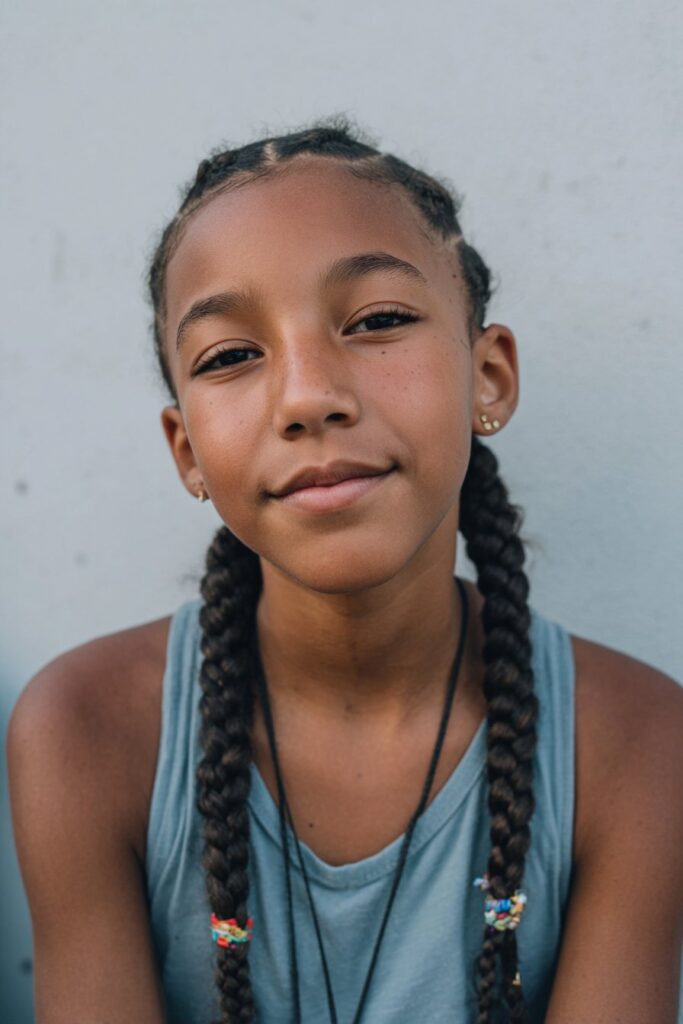
I first discovered stitch braids a few years back when a mother requested something beyond standard cornrows for her daughter’s school year. The stitching technique creates sharp, horizontal parting lines between each braid segment, producing a grid-like appearance that looks incredibly polished. Unlike traditional cornrows that simply braid hair back, stitch braids use your fingers or a fine comb to carve out those crisp, clean parts that give an edgy yet elegant finish.
The precision is what draws families to this style. Those neat little stitches aren’t just decorative; they create definition that photographs beautifully and holds up through active school days. You can customize them endlessly with straight-backs, zigzags, heart parts, buns, or ponytails, making them versatile for any personality.
Best For
This style suits children who need something durable and photogenic. However, I don’t recommend stitch braids for little ones with thin edges or alopecia, since the technique requires tension to achieve those clean stitch patterns. The braider typically uses their pinky fingernail to create the stitching, which means more gel product to keep everything tight. For children with healthy hairlines and thicker textures, stitch braids become a fantastic protective option.
Styling Tips
Expect to invest around USD 86.00 for installation, though prices vary based on complexity. The process takes time because precision matters. I always start with clean, moisturized hair and work methodically to create even sections that showcase the signature ribbed look.
Maintenance
With proper care, stitch braids last anywhere from four to six weeks. Wrap them nightly using a silk or satin scarf to preserve those parting lines and reduce frizz. Apply a few drops of scalp serum every few days to soothe tightness. Keep the braids relatively dry, especially if your child sweats during sports. A light hydrating mist perks up roots without creating buildup. Massage the scalp gently with fingertips to boost circulation while avoiding over-handling that stresses the hairline.
Goddess Braids
What Makes It Special
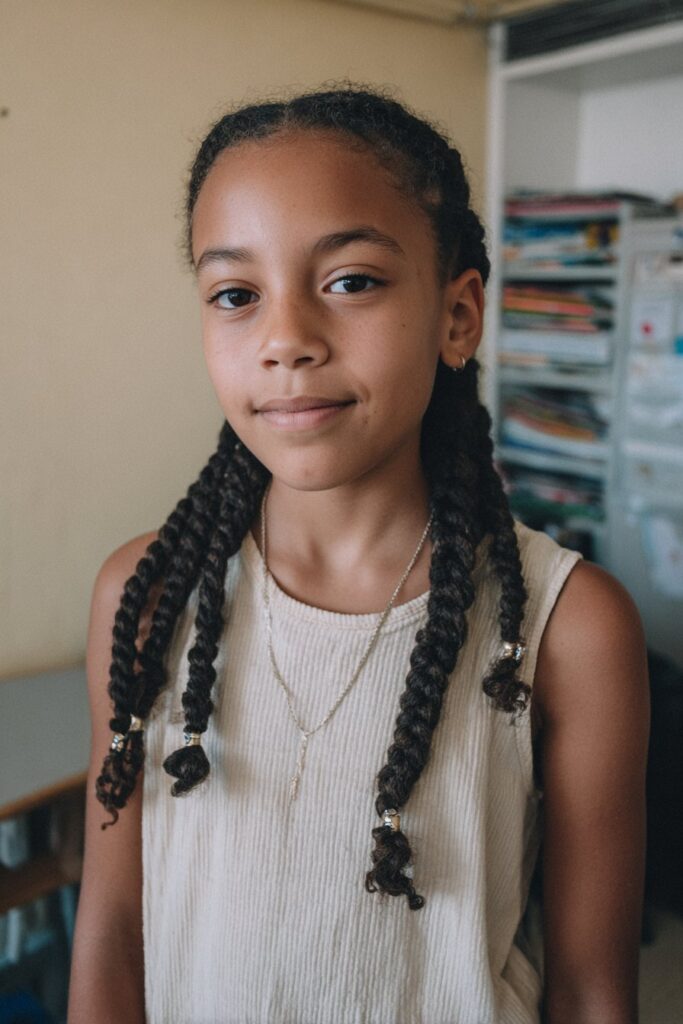
Goddess braids remind me why I fell in love with hairstyling in the first place. They combine structure with softness in a way that feels almost magical. These braids are essentially box braids with a romantic twist, featuring curly or wavy hair extensions woven throughout the length and cascading from the ends. While they’re woven close to the scalp similar to cornrows, they tend to be larger and raised higher than traditional box braids, creating that dimensional, lived-in esthetic parents and kids both adore.
The whimsical feel comes from those curly pieces peeking out, giving an ethereal vibe that looks effortlessly put together. I’ve watched little ones light up when they see how the curls frame their faces. It’s particularly special because goddess braids work as a protective style, keeping natural hair shielded from elements while looking absolutely beautiful.
Best For
This style suits school settings beautifully since it lasts six to eight weeks with proper care. Active children benefit from how securely the braids stay in place through playground adventures and sports. In fact, the style requires minimal daily maintenance, making rushed mornings significantly easier.
Styling Tips
Installation takes anywhere from four hours to a full day, depending on head size, braid length, and section size. The average cost runs around USD 162.00, though this varies based on extension quality and design complexity. I always recommend arriving with freshly shampooed, conditioned, and moisturized hair. For children with tightly coiled textures, stretching hair beforehand makes the process smoother.
Maintenance
Oil the scalp every couple of weeks when dryness or itching appears. Wrap braids in a satin bonnet nightly to minimize frizz and extend longevity. When washing, focus shampoo on the scalp, let it run through the braids, then apply lightweight conditioner for three to five minutes before rinsing. Skip dry shampoo entirely, as it creates buildup and removes natural oils the braids need.
Zig Zag Cornrows
What Makes It Special
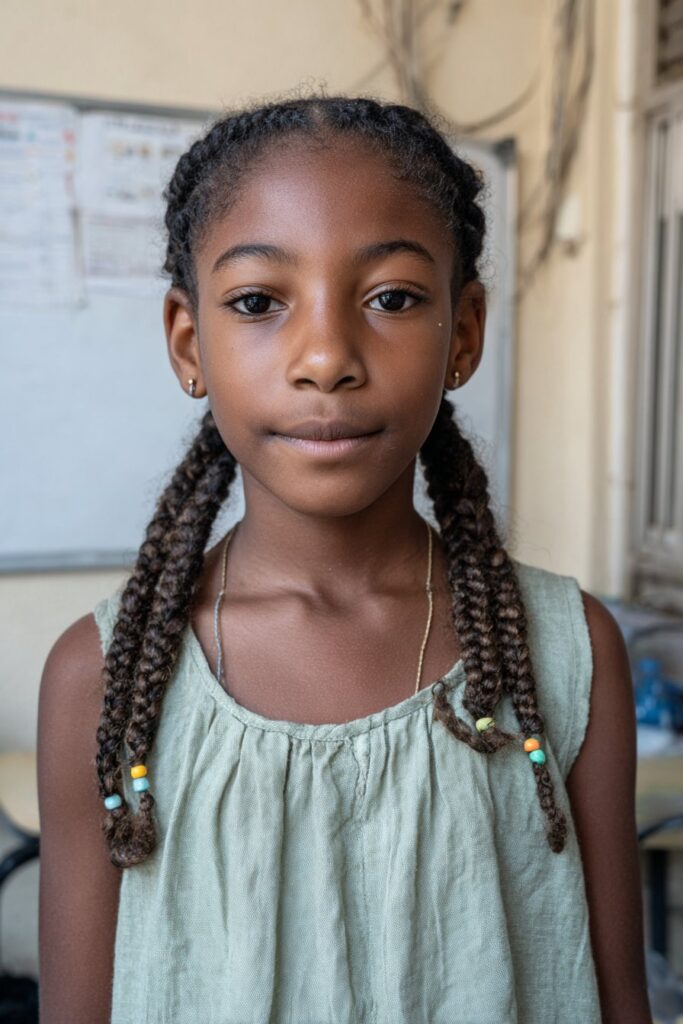
The zigzag pattern transforms ordinary cornrows into something visually striking. Rather than straight lines, I create a zigzag formation across the scalp by dividing hair into small zigzag sections. This classic and timeless approach to braiding close to the scalp adds artistic flair while maintaining the protective benefits families need for school.
What draws me to this style is how it locks in moisture and nutrients, preventing ends from drying out and splitting. In essence, the braiding creates a barrier that shields natural hair from daily wear.
Best For
Particularly helpful for busy mornings, zig zag cornrows reduce daily hair styling time. Active children benefit from how securely the pattern holds through playground activities and sports.
Styling Tips
You can customize complexity based on preference. Simple zigzag patterns work beautifully for everyday school wear, while more intricate designs suit special occasions. The braiding follows a zigzag pattern across the scalp, creating visual interest through geometric lines.
Maintenance
Zig zag cornrows last about 10-15 days with proper care. By and large, they’re easy to maintain when done professionally, though home care remains essential to keep the look fresh and the scalp healthy. Unlike styles requiring frequent visits, zigzag lines hold their shape well, giving families breathing room between styling sessions.
Triangle Box Braids
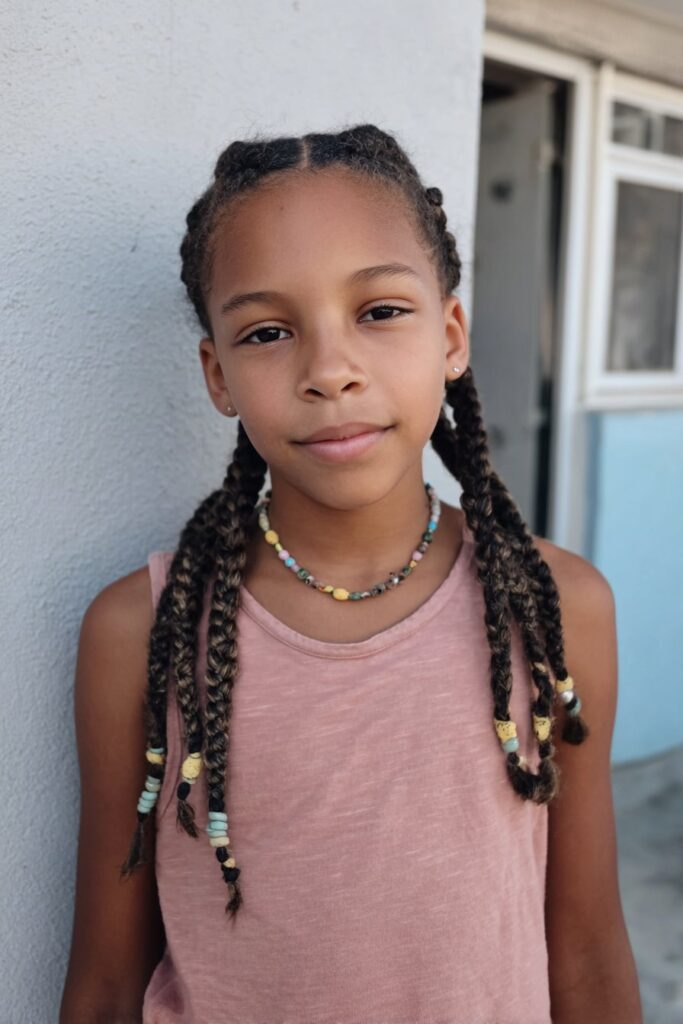
What Makes It Special
Triangle box braids switch up the traditional rectangular parting by sectioning hair into triangular shapes instead. This geometric pattern creates visual interest across the scalp without overwhelming the overall look. Box braids themselves are time savers for school mornings and function as a protective style, which is exactly why busy families reach out to me for this option.
The triangle parts create an artistic, decorative feel that appeals to minimalists and style enthusiasts alike. According to the design, these braids work for all hair textures and face shapes, making them incredibly versatile. I’ve added playful curly ends for clients wanting something fun, and the style looks equally beautiful with beads, cuffs, or kept simple and clean.
Best For
Medium to thick hair types benefit most since these braids enhance natural volume. School-age children who need a break from daily hair manipulation find this style particularly helpful. The protective function prevents damage and breakage, which matters during active playground days.
Styling Tips
Creating triangle parts requires a rat tail comb, edge control, and your favorite styling jam for that neat appearance. Installation takes time but lasts about 4 to 6 weeks. You can add beads or accessories from craft stores for personalized touches.
Maintenance
Oil the scalp regularly to prevent dryness. Edge control keeps edges smooth, while foam controls frizz. Wrap braids at night and avoid pulling, which loosens them faster.
Tribal Braids
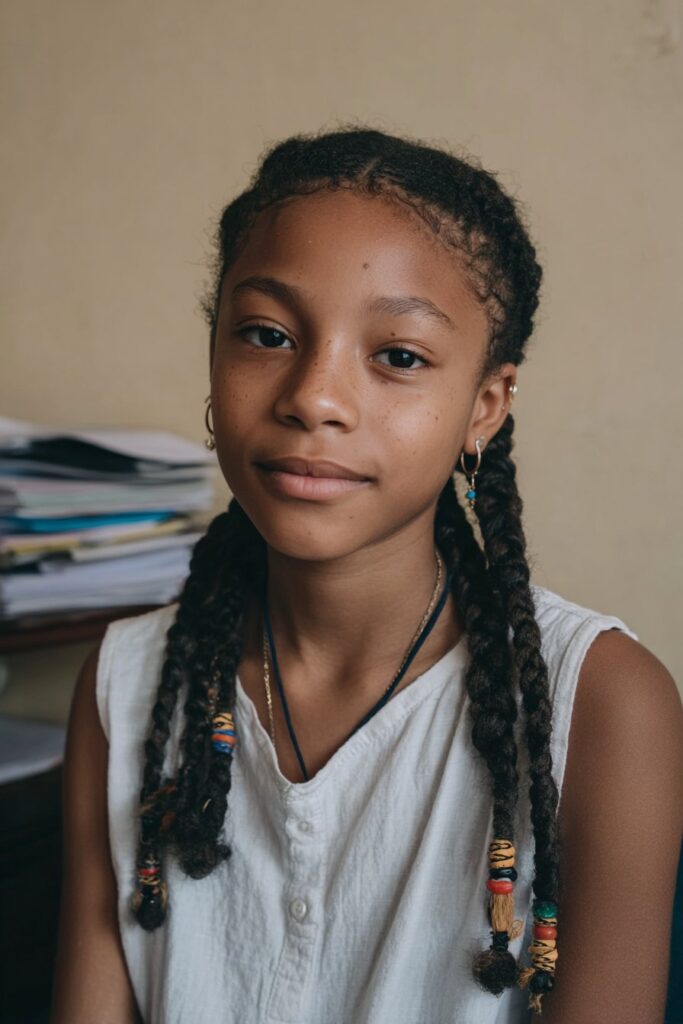
What Makes It Special
Tribal braids celebrate a diverse braiding tradition rooted in African and Black cultures, empowering little ones to express their heritage through hair. What sets these apart is their versatility. Whereas other cornrow styles follow specific patterns, tribal braids encompass various techniques, typically featuring cornrows at the front or sides with individual braids or twists flowing down. You can adorn them with beads or cuffs, letting your daughter customize her look based on her personality and mood.
Best For
This protective style works wonderfully for maintaining healthy hair growth, particularly for busy school schedules. I recommend larger parts for toddlers to be gentler on young scalps, keeping them comfortable through installation and wear.
Styling Tips
Tribal braids offer creative freedom. Create neat cornrow patterns that pull back into a braided pony or bun for school, ensuring hair stays tidy all week. The boho approach incorporates loose curls at the ends for a softer, free-spirited esthetic.
Maintenance
In essence, tribal braids are incredibly low maintenance once installed. They last anywhere from 4-6 weeks, depending on care and growth rate. Keep the scalp moisturized with a light oil spray daily and protect braids at night using a satin bonnet. This simple routine keeps the style fresh through multiple school weeks.
Cornrow Pigtails
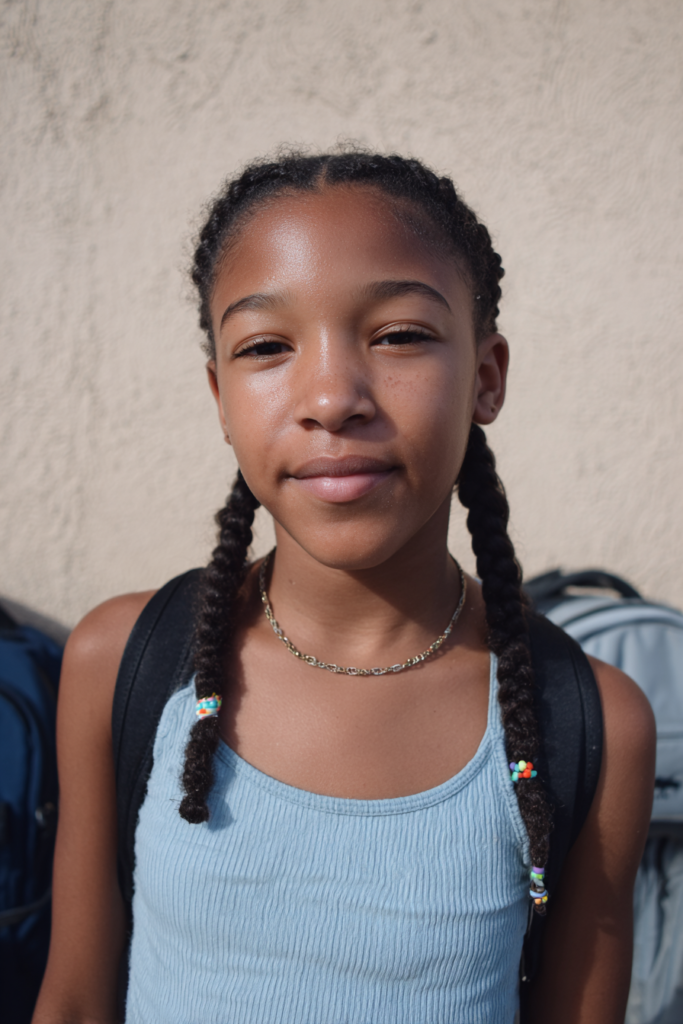
What Makes It Special
Watching a little girl swing her beaded pigtails on the first day of school never gets old for me. Cornrow pigtails are fun and functional, making them suitable for school use. Partitioning the cornrows into two groups creates a youthful and balanced esthetic that kids absolutely adore. The symmetrical hearts, clean parts, and playful approach frame the face beautifully, whether you opt for high pigtails or low ones.
What I particularly love is how beads transform the entire experience. When your daughter shakes her head, those beads make rattling sounds that bring so much joy. Beyond the fun factor, this style keeps hair completely up and out of the way, which matters during active school days.
Best For
This hairdo suits young people or individuals who like fun hairstyles. Medium length braids work best, and the style is especially flattering on round and heart-shaped faces. Equally perfect for younger children who need something cute yet practical.
Styling Tips
Creative parting patterns or braided bangs elevate the classic pigtail to something totally fresh. Accessories such as beads can be added to increase attractiveness.
Maintenance
Keep them loose and neat for a protective style that can last up to two weeks. Don’t leave cornrows in longer than three weeks because they continually pull on the hairline, which can cause thinning around the edges. Moisturize the scalp frequently and tie hair down at night using a satin scarf or bonnet.
Conclusion
Finding the perfect back to school cornrows doesn’t have to feel overwhelming, particularly when you understand which styles match your daughter’s lifestyle and hair texture. Whether you choose classic straight backs or elaborate Fulani braids, the goal remains the same: protecting her natural hair while building confidence for those first school days. Every style I’ve shared offers that protective barrier busy families need, cutting down morning routines without sacrificing personality. Your little one deserves to walk into her classroom feeling beautiful and ready to take on the world. These cornrows give her exactly that.


Elsa Claire is the founder and editor of ElsaClaire.com, where she writes about hairstyles, hair care, and the everyday routines that help real people feel good about their hair.