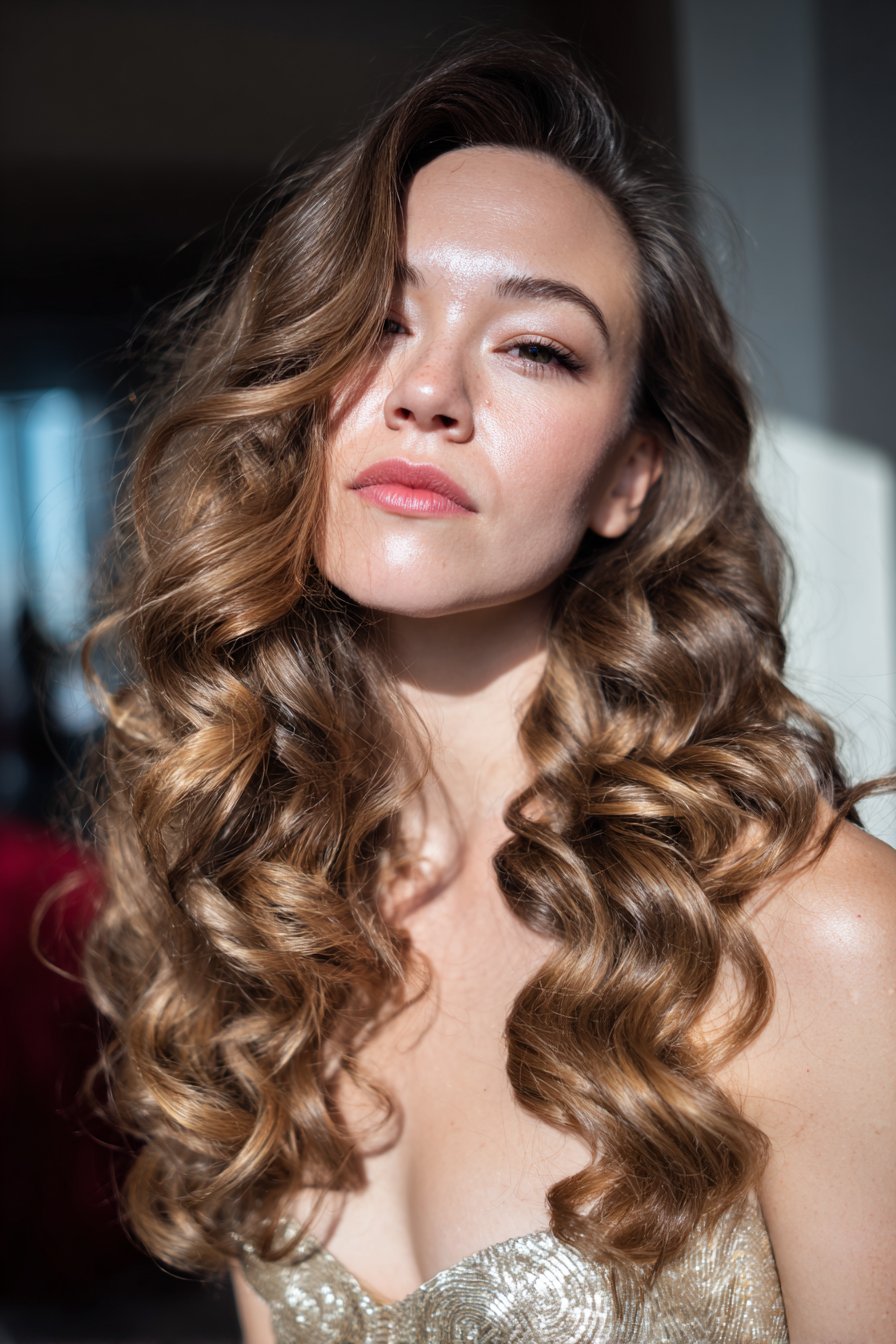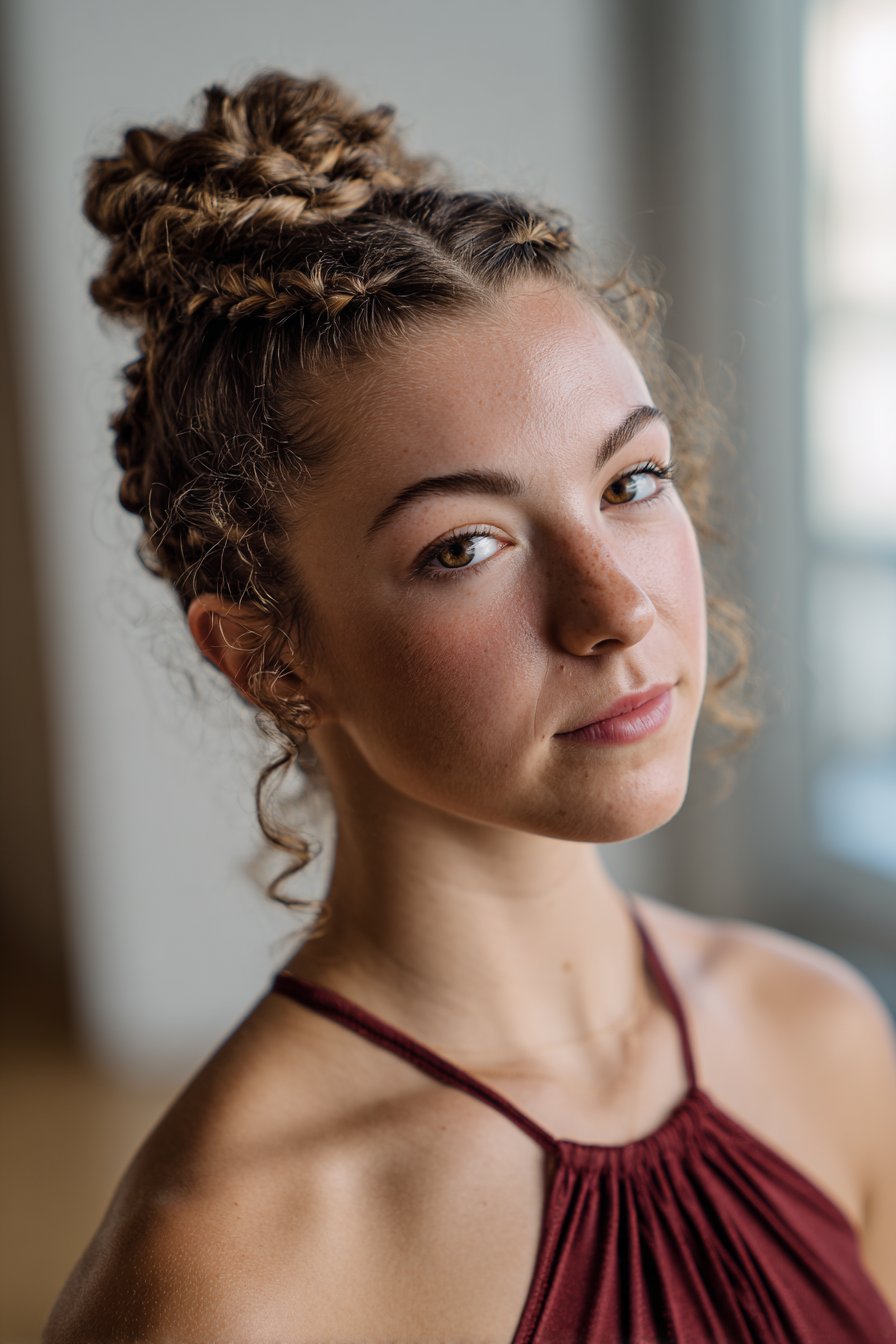
The best dance hairstyles are the ones you completely forget about while performing. After years of styling dancers for everything from recitals to major showcases, I’ve learned that a great hairstyle needs to survive sweat, sharp movements, and hours under stage lights without budging.
Whether you need competition dance hairstyles with maximum hold, easy dance hairstyles for quick changes, or styles tailored for long or short hair, I’ve gathered 12 tried-and-true options. These include classic buns and braids alongside creative options like space buns and bubble ponytails. Each one delivers both security and style for contemporary and high-energy performances alike.
The Classic Ballet Bun
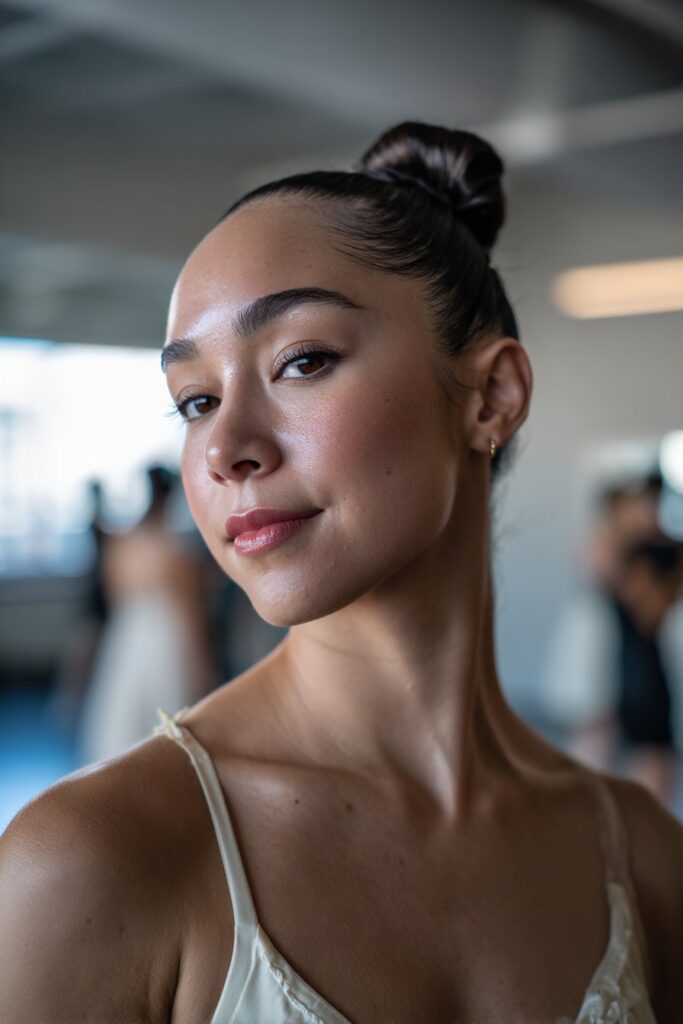
Ballet buns sit at the center back of your head, invisible from the front. This positioning creates clean lines that dance instructors and choreographers expect, particularly in classical settings where uniformity matters.
Why This Style Never Fails
The ballet bun earned its reputation through decades of demanding performances. When executed correctly, this style becomes nearly indestructible. The secret lies in its construction: a tightly twisted rope of hair coiled flat against your head, secured through multiple anchor points. I’ve styled hundreds of dancers who needed their hair to survive eight-hour rehearsal days, and this technique consistently outperforms other options.
The round, even shape sits smoothly against the head without creating bulk. Unlike looser styles that shift during movement, a proper ballet bun stays centered because the pins anchor into both the elastic band and the hair beneath.
How to Secure It Properly
Start by pulling hair into a tight ponytail at your desired height. Brush thoroughly to eliminate bumps, then apply a small amount of gel from roots to ends. This step prevents flyaways before they start.
Twist the ponytail firmly into a rope, then coil it flat around the elastic band. Continue coiling in the same direction as your twist to prevent unraveling. Initially, place 3-4 hairpins around the bun while keeping one hand on it.
For thick hair, divide the ponytail in half. Coil one section around the elastic, then wrap the second section around the outside of the first coil. This two-piece method keeps the bun flat instead of creating that dreaded doorknob look.
The pinning technique makes the difference. Hold the U-shaped hairpin at the closed end with prongs facing the coil’s center. Insert the prongs slightly into the bun edge, catching a small amount. Turn the prongs outward to catch hair outside the bun, then push them back into the center. Hairpins work better than bobby pins because their crimped prongs grip more hair. The thicker, less flexible pins provide the strongest hold.
Use between 10-20 pins depending on your hair thickness. Bobby pins should match your hair color for performances. Subsequently, place a hairnet over the finished bun and secure with additional bobby pins.
Best Dance Styles for This Look
Ballet demands this style, but I’ve used it successfully for lyrical, contemporary dance hairstyles requiring polish, and formal performances where appearance standards run high. Any dance form emphasizing clean lines and professional presentation benefits from this classic approach.
My Personal Tips for All-Day Hold
I learned this from years of backstage quick-fixes: insert your pins through the ponytail elastic, not just the bun itself. This creates the secure foundation that prevents sagging during long performances.
For slippery hair, dampen it before styling or add texturizing powder throughout the length. Essentially, you need friction for pins to grip effectively. Conversely, gel works better for coarse or curly hair.
Keep extra pins backstage. Even the best bun occasionally needs reinforcement between numbers.
Sleek High Ponytail
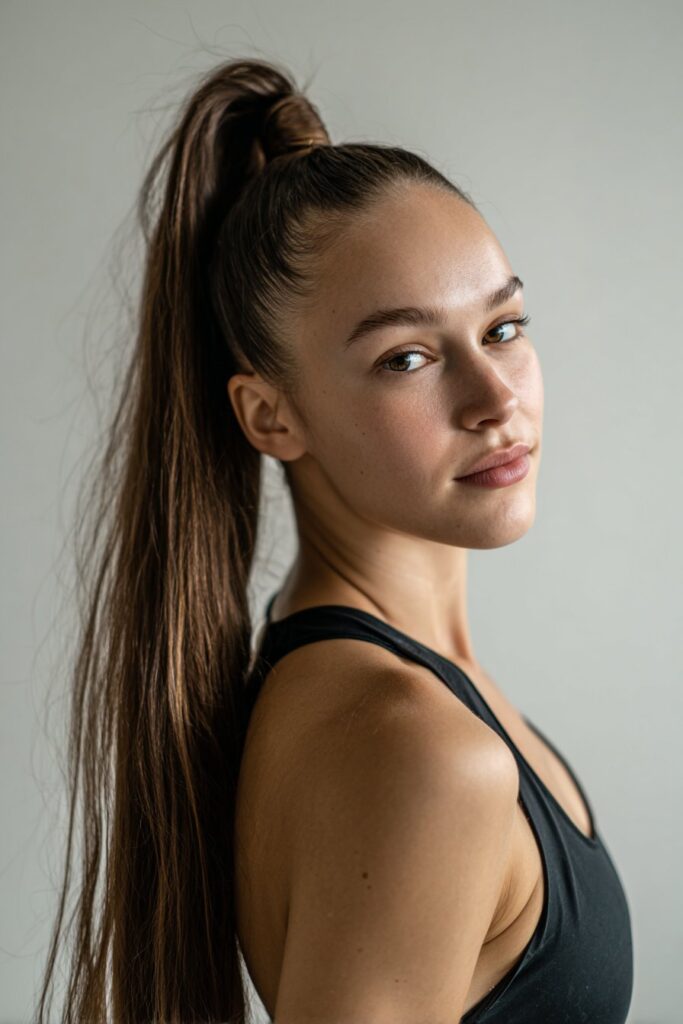
A sleek high ponytail seems simple until you’re backstage watching it sag during warmups. After styling countless dancers through competitions and showcases, I’ve perfected a technique that creates volume and security simultaneously. This style works because it combines the right products with specific application methods that transform an everyday ponytail into performance-ready perfection.
What Makes It Stage-Ready
High ponytails offer unobstructed visibility of facial expressions and neck lines, which matters enormously for contemporary dance hairstyles and jazz performances. The elevation naturally lifts features and creates an energized appearance before dancers even move. When positioned correctly at the crown, this style stays centered through turns and leaps without shifting sideways or drooping. The sleek sides eliminate distractions, allowing judges and audiences to focus entirely on movement quality.
Step-by-Step Styling Process
Firstly, saturate hair completely with water. Getting the hair super wet provides the foundation for products to grip effectively. Apply your chosen gel from roots to midshaft, working it through thoroughly. Then coat everything generously with freeze spray. I learned this technique from a colleague who styles performers, and the spray-over-gel combination creates an almost shellac-like hold.
Immediately after spraying, use a hair dryer on low heat for a few seconds to stiffen the hair in place. This step locks everything down before you even create the ponytail. Brush hair upward to your desired height and secure with a strong elastic. For added volume, some dancers tease the ponytail length slightly before smoothing the surface. Wrap a small section of hair around the elastic to conceal it, securing with a bobby pin underneath.
Ideal for High-Energy Performances
High ponytails survive the intense movement requirements of competitive routines. Teams performing hip hop, jazz, and energetic contemporary pieces rely on this style because it moves with the body rather than against it. I’ve watched this hairstyle hold through eight-hour competition days without needing major reconstruction between performances.
Products That Keep It Smooth
Got2be Yellow Freeze Hold Spray works exceptionally well paired with any gel or even just water. Shine n’ Jam has earned recommendations throughout dance communities for its reliability. For those preferring non-sticky, flake-free options, Eco Style Olive gel performs beautifully, especially when covered with Got 2 B Glued Blasting Freeze Spray. Kenra gel offers pleasant scent alongside strong hold. Dancers with textured hair often prefer Kinky Curly curling custard, as a result of its conditioning properties and grip strength. Test products during practice before using them for important performances.
Dutch Braid Crown
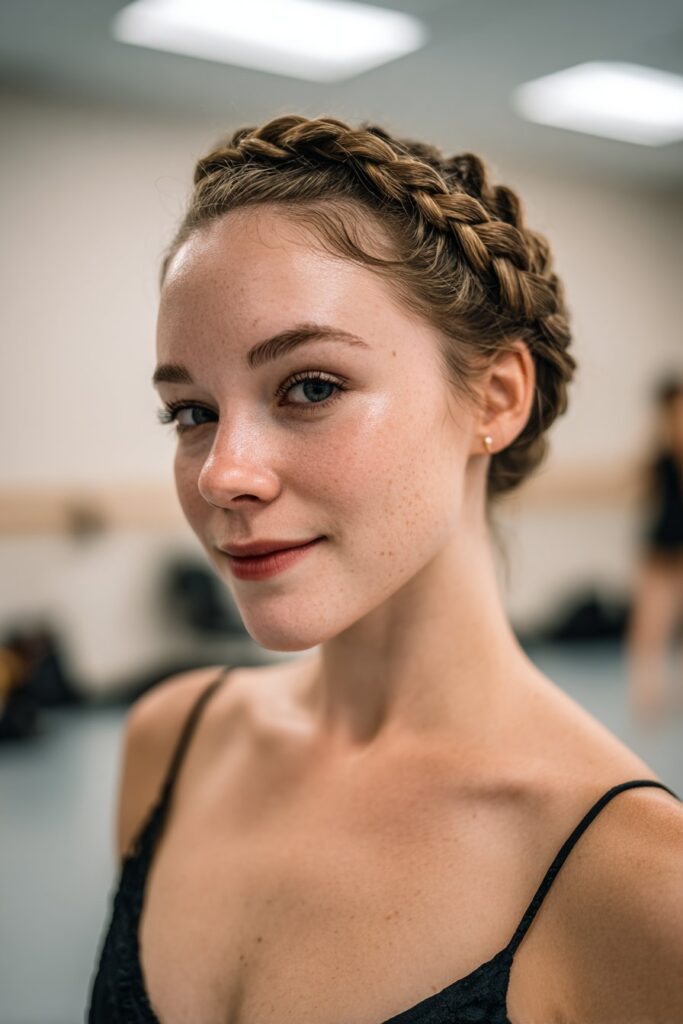
Dutch braids create dimension that regular French braids cannot match. The underhand technique makes each plait pop visibly away from the scalp, which explains why this crown variation has become a favorite for performers who want their hairstyle to register from the audience.
Why Performers Love This Style
This crown works for any hair length without requiring extensions. I’ve styled dancers with short hair, medium hair, long hair, thin hair, and curly hair using this exact technique. The braid catches baby hairs around the hairline beautifully, making it particularly useful when growing out bangs or managing those frustrating flyaways that seem to appear right before curtain call.
The style stays put through intense movement. I wear mine to the gym, simply pulling the finished crown into a ponytail when needed. It gets hair completely off the face while maintaining security through sweat and activity. For contemporary dance hairstyles requiring both polish and personality, this option delivers.
Creating the Perfect Crown
Start by creating a deep part on the right side. Pick up a small section on the heavier side of the part and divide it into three strands. Dutch braiding differs from French braiding in one critical way: you cross strands underneath the middle strand rather than over it. Cross the right strand under the middle, then cross the left strand under the middle.
Continue this pattern while incorporating new hair from both the top of the head and the nape of the neck. Work the braid down toward the left ear, then switch hands and continue around the back of the head. Before reaching the right ear again, bring all remaining hair into the braid to minimize bumps on one side of the head.
Once all hair is incorporated, finish with a regular three-strand braid to the ends and secure with an elastic. Lay this tail across the top of your head, positioning it behind where you started the braid. Slide 4-6 bobby pins into the center of the braid, keeping them aligned with the braid direction so they stay hidden.
Best for Contemporary Dance Hairstyles
The crown braid brings an elegant, slightly bohemian quality that works exceptionally well for contemporary pieces. The raised, dimensional effect creates visual interest without distracting from movement quality. I’ve used this for lyrical performances and modern dance showcases where a softer esthetic suits the choreography better than severe buns.
Finishing Touches That Matter
Pull gently on the braid edges to widen and add fullness. This “pancaking” technique transforms a tight, narrow braid into something more substantial and stage-worthy. Spray the entire style with medium-hold hairspray, then smooth down any stray hairs that stick out from the braid. The combination of proper pinning and strategic hairspray application keeps everything locked down through multiple performances.
Double French Braids
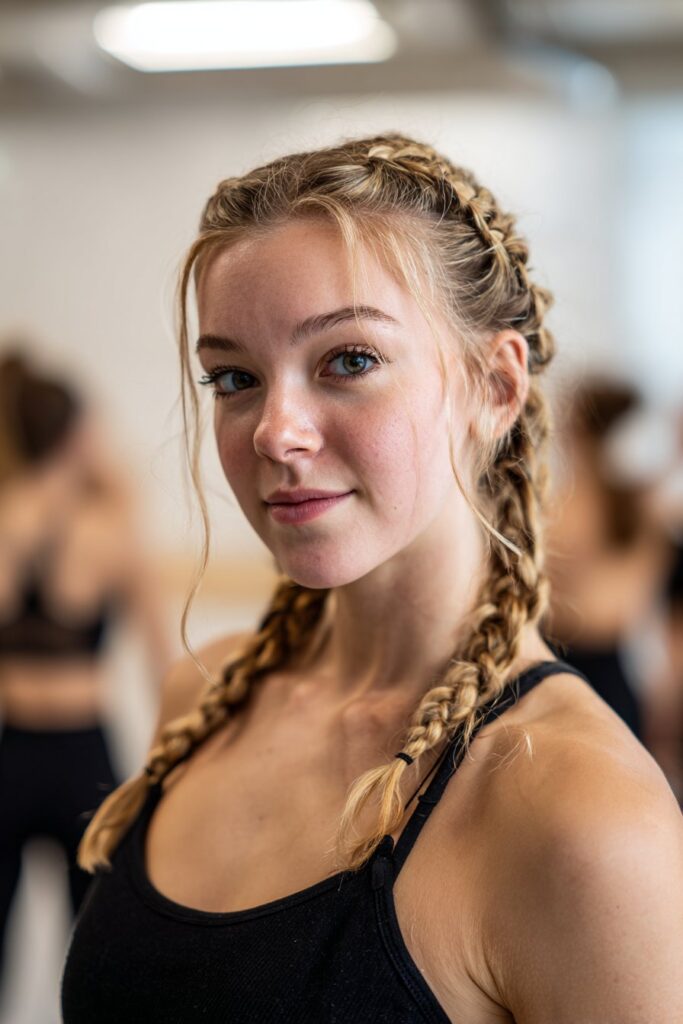
Competition dancers face a unique challenge: their hair needs to survive not just one performance, but an entire weekend of routines across multiple styles. I’ve worked with performers who’ve switched from jazz to lyrical to contemporary within hours, and double French braids consistently deliver the security they need.
The Security Factor
Two French braids distribute tension evenly across your entire scalp rather than concentrating it at a single point. This distribution creates a foundation that can last for days without needing adjustments. I’ve seen dancers keep these braids in for a couple of days, requiring zero touch-ups throughout active rehearsals. The technique works because you never actually hold the middle strand during construction. You tighten it as you pull to the side, then drop the new middle strand to rest until pulling from the other direction.
One dancer I styled performed 10 routines over 2 days, moving between jazz, lyrical, and everything in between. Her French braids, secured into a bun, eliminated flyaways and required no redoing between dances. That reliability transforms stressful competition days into manageable ones.
How to Braid for Maximum Hold
Start at the crown and work down the center or sides, gathering hair as you go. The secret to tight, secure braids comes from keeping constant tension. Hold the hair as taut as possible to prevent sagging or buckling. When you reach the center of the head, ask your dancer to look down at their feet, not just lower their chin. This simple position change keeps the braid tight through that tricky mid-head section where looseness typically develops.
Feed side sections straight across and keep them as tight and clean as possible to avoid gaps. Maintain uniform section sizes throughout, including the pieces you incorporate from the sides. For slippery hair, apply texturizing spray before braiding. Conversely, use smoothing cream on curly or textured hair to control frizz.
I work on dry hair and use spray wax for extra hold. Fasten ends with proper hair ties rather than rubber bands, which damage hair.
Perfect for Competition Dance Hairstyles
Double French braids adapt to any performance requirement. Tuck them into a bun for ballet or leave them long for contemporary dance hairstyles with more movement. The versatility makes them perfect for dancers competing in multiple categories who need one hairstyle to work across different esthetics.
Quick Fixes Between Performances
Bobby pins matching your hair color handle any baby hairs that escape. The same pins work for securing stray ends from layered cuts. Most dancers need zero fixes once properly braided, making this an ideal choice for easy dance hairstyles that look complex but require minimal maintenance backstage.
Low Twisted Bun
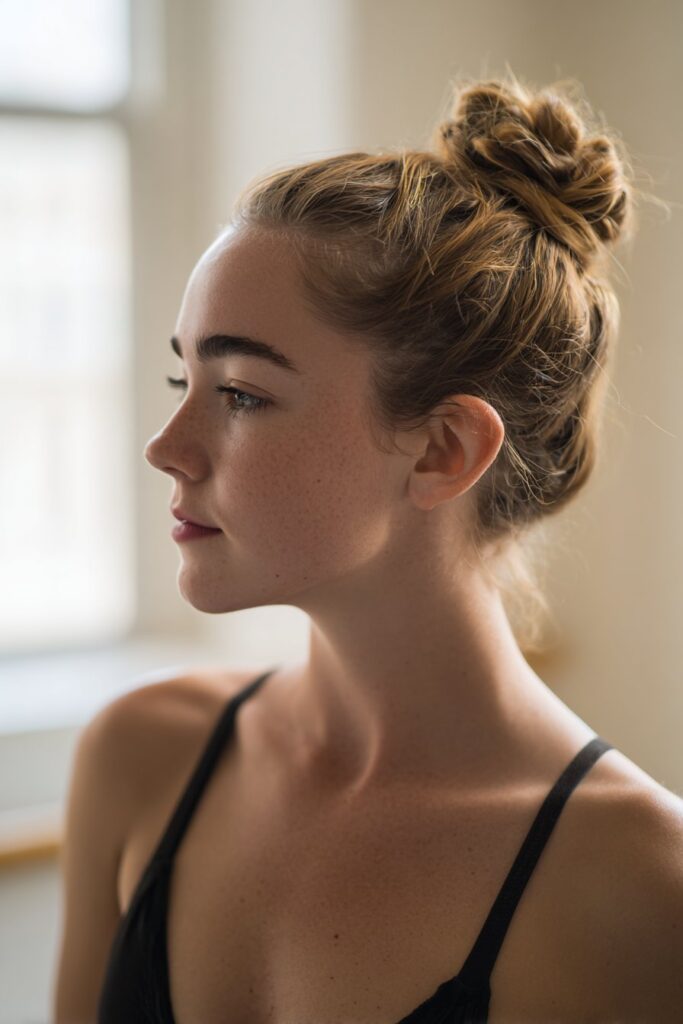
I discovered the low twisted bun while preparing a dancer for her first formal ballet performance. She needed something that looked polished yet felt natural, and this style delivered both. Since that day, it’s become one of my go-to options for performers seeking elegance without sacrificing security.
Elegant Yet Secure
The low twisted bun sits at the nape of your neck, creating a sophisticated silhouette that works beautifully under stage lights. Unlike standard ponytails that can appear casual, this style brings immediate refinement to any performance. The twisting process compresses hair into a dense rope before coiling, which means it withstands movement better than loosely gathered buns. I’ve styled dancers who wore this through three-hour showcases without needing a single adjustment.
The Twisting Technique
This process takes roughly 3 minutes once you understand the method. Start by gathering hair into a low ponytail at the nape. You can work with wet hair and apply gel for an ultra-sleek finish, or style dry hair for a softer appearance. Hold your ponytail at the ends and twist firmly until the entire length becomes a tight rope. The key lies in maintaining consistent tension throughout the twist.
Coil the twisted rope flat around your elastic band, continuing in the same direction as your original twist. This prevents unraveling during performance. Tuck the ends underneath and secure with 3-4 hairpins initially without releasing your grip on the bun. Place a hairnet over everything, then add additional pins around the edges until it feels completely anchored.
Dance Styles That Suit This Look
Low twisted buns complement ballet, contemporary dance hairstyles requiring refined esthetics, and any formal performance setting. I’ve used this for lyrical solos and classical variations where neck lines matter. The positioning works particularly well for short to medium length hair, making it accessible for dancers who haven’t yet grown their hair long.
My Favorite Styling Secret
I always tell dancers to twist until they think they’ve twisted enough, then twist some more. The tighter your initial rope, the flatter and more secure your finished bun. For busy performance days, this style saves precious time backstage while delivering the polished appearance choreographers expect from competition dance hairstyles and recitals alike.
Bubble Ponytail
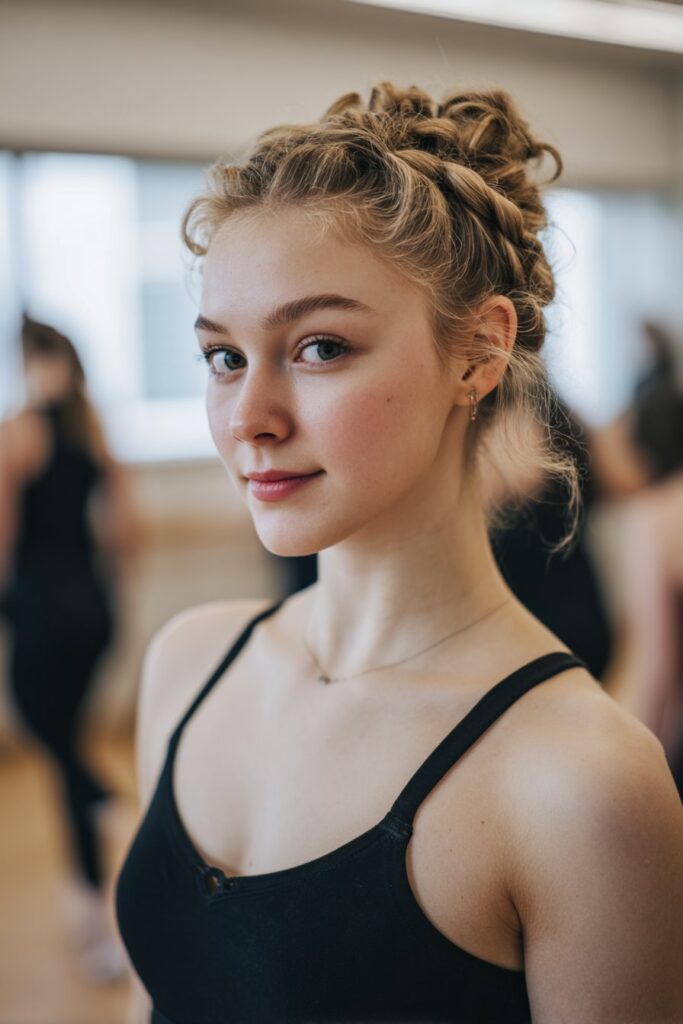
I stumbled upon the bubble ponytail while styling a jazz dancer who wanted something eye-catching but functional. After creating it, she performed an entire two-hour showcase without a single adjustment. That performance convinced me this style deserves recognition among competition dance hairstyles requiring both personality and staying power.
Adding Fun Without Sacrificing Hold
Bubble ponytails work better with second-day hair. The dry shampoo and product buildup actually helps because you need volume and texture for this look. I’ve created this style in roughly five minutes while running between backstage quick-changes. The elastics spaced down your ponytail create dimension that photographs beautifully under stage lights while staying completely secure through jumps and turns.
How to Create Perfect Bubbles
Start with clean, dry hair or apply dry shampoo beforehand. Pull hair into a tight ponytail, then place elastics approximately 2-3 inches apart down the length. Continue adding elastics until you reach about six inches from your ends.
For each bubble section, pinch the hair beneath the elastic and pull the remaining ponytail up to create the bubble effect. Tug at all bubbles to expand them, aiming for identical sizes both vertically and horizontally. Spray each bubble immediately after creating it for maximum hold. Clear elastics give a seamless appearance without harsh lines. If your hair sits at shoulder-length, weave in extensions to achieve this look.
Best for Energetic Routines
The bubble ponytail survives high-energy dance styles exceptionally well. Jazz, hip hop, and contemporary dance hairstyles for long hair benefit from its secure construction. The multiple anchor points prevent sagging during intense choreography.
Keeping It Tight Through Movement
Spray each section as you build it rather than waiting until the end. This technique locks everything in place progressively. For extra security, especially during all-day competitions, carry additional elastics backstage for quick reinforcement between performances.
Half-Up Top Knot
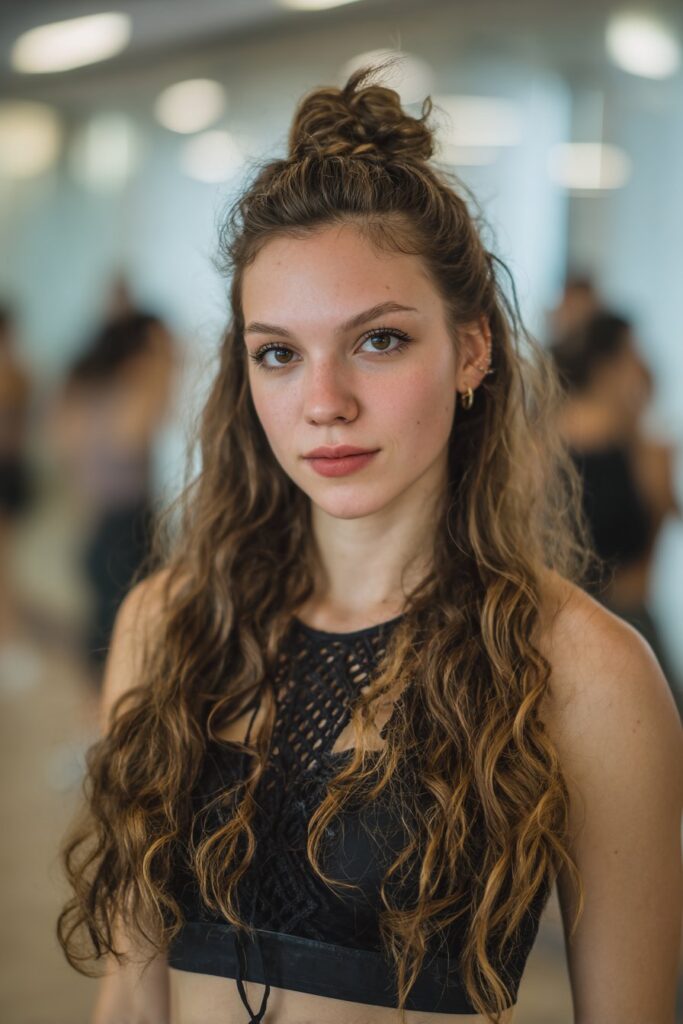
Long hair dancers often ask me about styles that showcase their length while keeping everything secure. The half-up top knot answers both needs beautifully, which is why it became one of my signature recommendations after years of working with performers who wanted options beyond complete updos.
Why This Works for Long Hair
This style adapts to any hair length, whether short, medium, or long. I’ve created half-up top knots on dancers with hair barely reaching their shoulders and others with hair down to their waists. The technique remains identical. What makes it particularly effective for dance hairstyles for long hair is how it keeps the top section controlled while allowing the bottom to move naturally with choreography. Works best on second or third day hair when natural oils provide the grip needed for lasting hold.
The Balancing Act
I start by dusting dry shampoo powder onto the roots for texture. When hair feels too silky or freshly washed, the bun lacks staying power. Next, I spray dry texturizing spray through the section that will become the ponytail, then backcomb from ends to roots. This creates the volume that makes the style photograph well under stage lights. Take the ponytail and fold it over itself to create the bun shape, securing with an elastic wrapped around twice. Between 3 and 4 bobby pins anchor any fallen pieces back into the bun.
Ideal Performance Settings
I recommend this for contemporary dance hairstyles requiring softer esthetics and rehearsals where complete updos feel too severe. The style works equally well for casual run-throughs and polished showcases, making it versatile for easy dance hairstyles that transition between settings.
Products I Always Use
Thermal dry conditioner protects the bottom section before adding heat. I apply this without delay before using my straightener to add random curled sections for that lived-in appearance. The combination of texturizing spray at the crown and heat protectant on lengths creates a balanced finish that survives movement without stiffness.
Braided Ponytail Combo
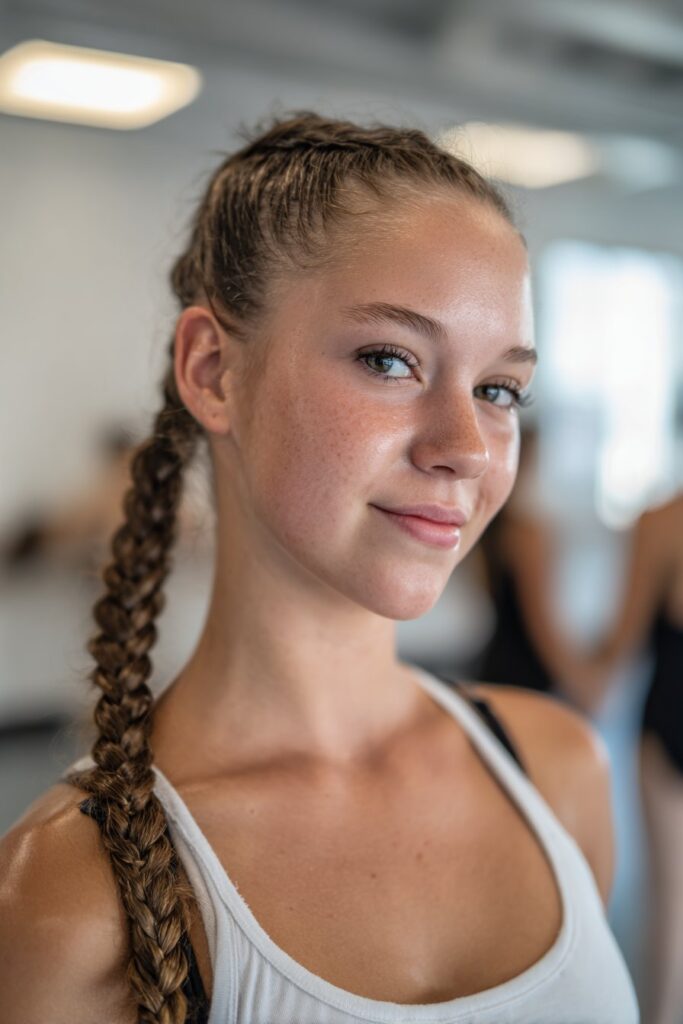
Mixing braiding techniques within one ponytail creates security that single-method styles cannot achieve. I learned this while preparing a competitive dancer who needed her hair to survive an eight-hour competition day across multiple categories. The combination approach locked everything down without a single adjustment needed between performances.
Combining Strength and Style
Braided ponytails offer versatility that makes them perfect for dancers competing in multiple categories. The technique allows you to blend Dutch braids, fishtail braids, and classic three-strand braids into one cohesive look. I’ve styled dancers with short hair, thin hair, and thick hair using this exact method. The combinations add depth and texture that single-braid techniques miss. For competition dance hairstyles, this approach provides the polished sophistication of structured braiding with the dynamic movement of a ponytail.
Step-by-Step Creation
Initially, divide hair into four sections using a rat tail comb. Comb the back two sections into a high ponytail while leaving front sections loose. Create Dutch braids from each front section, adding hair until reaching the crown. Continue braiding one side completely while combining the other with your ponytail. Wrap the completed braid around the hair tie to conceal it, securing underneath with bobby pins.
Split your ponytail and begin fishtailing for about an inch. Subsequently, switch to three-strand braiding for another inch. Keep alternating techniques down the length. Starting at the bottom, gently tug sections to create volume without unraveling the braid.
Perfect for Dance Hairstyles for Long Hair
This style works exceptionally well for contemporary dance hairstyles and lyrical performances where movement matters. The mixed techniques create visual interest that photographs beautifully from the audience.
Troubleshooting Common Issues
For dancers with piercings, tightness matters enormously. Make your ponytail and braid extremely tight to prevent catching. The hair should stay close enough to your head that it cannot hook onto jewelry during turns or floor work.
Space Buns
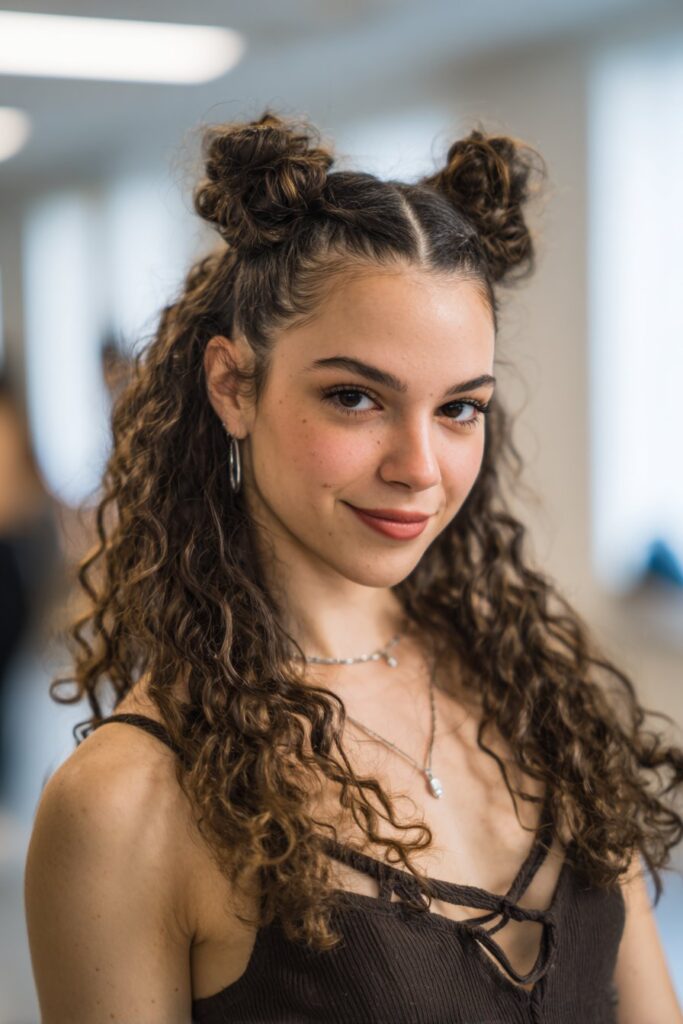
Space buns surprised me when I first started incorporating them into my repertoire. A former client’s daughter needed something fun for her jazz recital, and I hesitated because these felt too casual. That performance changed my perspective entirely when her buns stayed flawless through three costume changes.
The Playful Yet Practical Choice
These two symmetrical buns offer unexpected comfort compared to single high buns and ponytails. The split positioning distributes weight evenly across your head rather than pulling from one central point. I’ve had dancers tell me they forget they’re wearing an updo, which rarely happens with traditional styles.
How to Make Them Stage-Secure
The challenge with space buns lies in their tendency to unravel after 30-60 minutes. Thick hair presents particular difficulty staying contained. Create a center part, then form two tight ponytails positioned where you want your buns to sit. Twist each ponytail firmly into a rope before coiling it around the elastic base. The tighter your twist, the more height you’ll achieve and the longer it lasts. Secure with multiple bobby pins through both the bun and the hair beneath it.
Best Dance Styles for This Look
Hip hop, jazz, and contemporary dance hairstyles benefit most from space buns. The playful esthetic matches energetic choreography while maintaining complete security.
My Experience with This Style
I now recommend space buns for dancers wanting personality without sacrificing function. Accordingly, finish with strong-hold hairspray and extra pins backstage.
Slicked Back Low Bun
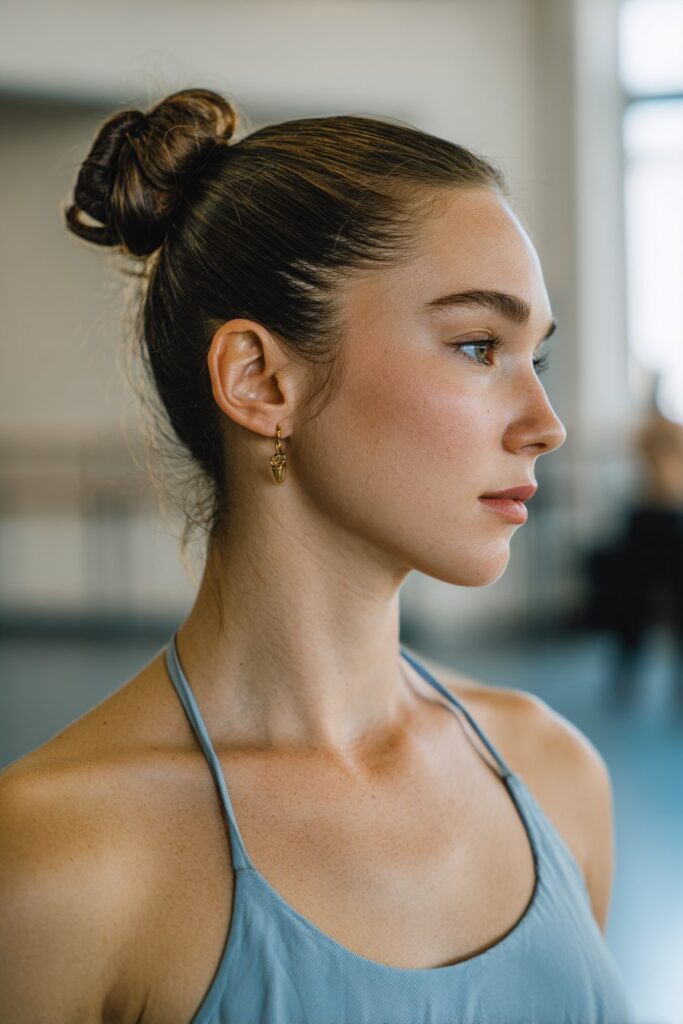
The classic low ballet bun remains the standard for competitive performances. This style works on all hair types and textures, which explains why I’ve relied on it for countless formal showcases throughout my career.
Professional Polish That Lasts
The slicked-back low bun accentuates cheekbones and provides an invisible contour effect. I’ve watched this transformation happen repeatedly when styling dancers before competitions. The tightly pulled style creates a natural face lift that enhances stage presence without makeup adjustments. This timeless classic delivers professional polish for competition dance hairstyles and contemporary dance hairstyles requiring refined presentation.
The Slicking Technique
Position your ponytail in the middle of the back of your head, avoiding placement too high or low in the nape. Use a natural bristle brush while gathering hair to achieve a smooth, bump-free finish. This works best on second-day hair when natural oils provide grip. Apply gel from roots through lengths, then secure with a bungee hair tie that allows multiple wraps for superior hold.
Ideal for Formal Performances
Ballet performances demand this style, equally effective for ballroom competitions requiring maximum sophistication.
Products That Work Best
Nexxus Strong Hold Hair Wax Slick Stick controls flyaways with weightless protection. Garnier Pure Clean hair gel provides all-day hold with easy rinse-out. Finish with Nexxus Firm-Hold Hairspray for lasting style.
Side Braid Updo
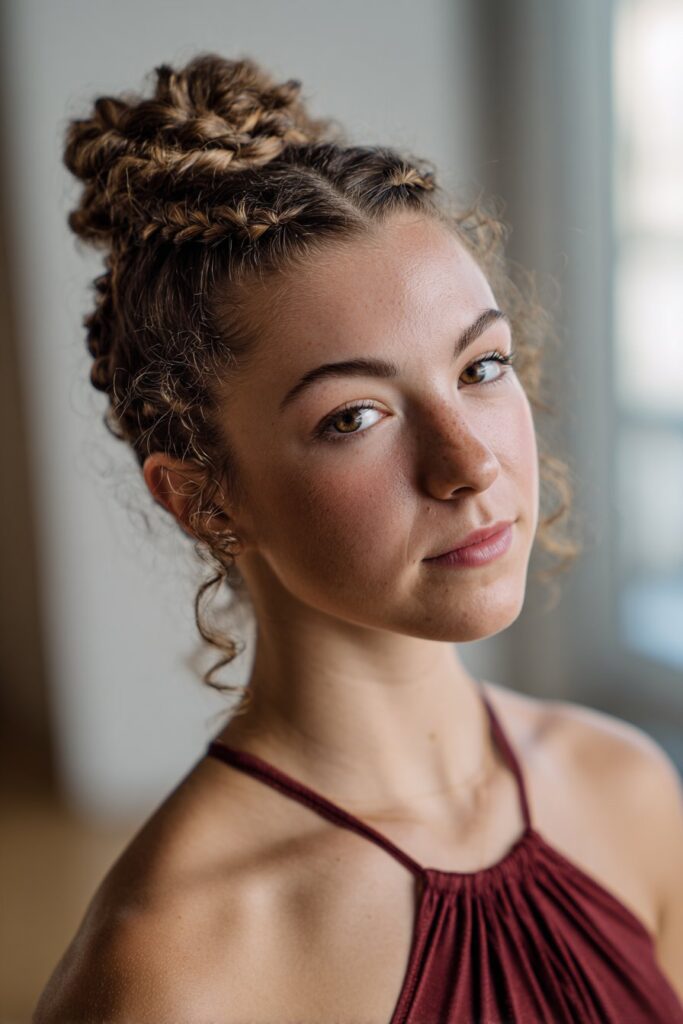
Asymmetrical styles caught my attention years ago when I realized dancers wanted options beyond centered, symmetrical looks. The side braid updo offers visual interest that photographs beautifully while maintaining the security performers need.
Asymmetrical Beauty with Security
Offset positioning creates dimension without compromising hold. I’ve styled this for dancers who wanted something different from standard center buns, and the asymmetry actually enhances facial features by drawing attention diagonally across the face.
Creating the Perfect Side Style
Start with a deep side part, using a zig zag pattern on the right side for added texture. Part straight down from that section to your ear. Create an uneven 3 strand braid with this front section and secure with a rubber band. Smooth remaining hair back to begin another uneven braid offset to the left side of your head. After completing one round of braiding, incorporate your accent braid from the right by crossing it over with the right section. This wrapping effect creates the signature look where your accent braid appears to frame the main braid.
Great for Various Dance Forms
This works for contemporary dance hairstyles, lyrical performances, and any setting where romantic yet secure styling matters.
Finishing Spray Application
Apply dry shampoo for grip and volume, then finish with strong-hold hairspray for lasting security.
Simple Twisted Ponytail
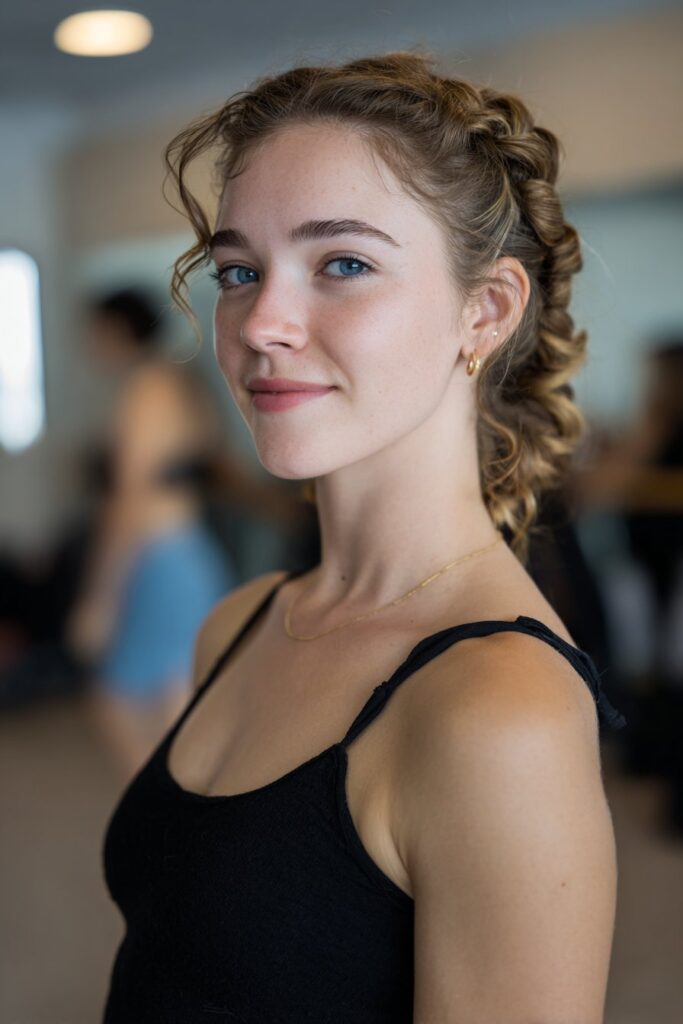
Backstage rushing between costume changes taught me the value of styles requiring minimal time yet maximum impact. The twisted ponytail delivers exactly that, taking 3-5 minutes yet appearing as though you spent 30 minutes creating it.
Easy Dance Hairstyles That Look Complex
This bohemian twisted ponytail works beautifully when chasing schedules or transitioning from rehearsal to performance. The technique looks intricate from the audience, but the construction stays remarkably straightforward once you understand the method.
The Quick Twist Method
Start with wet or dry hair, combing until smooth. Part on your preferred side, then pick up a small section from the same side as your part. Divide into two sections and begin twisting, adding hair along the bottom as you continue. Keep twisting around your head until reaching just past center back, then have someone hold your twist. Repeat the process from the other front side. When both twists meet, secure together with an elastic for a side ponytail or finish with a bun. The secret lies in twisting sections in opposite directions before wrapping them together. Twisting in the same direction causes unraveling every single time.
Perfect for Practice and Performance
This classic latin hairstyle suits all ages and levels, adapting to various dance forms beyond its traditional roots.
Time-Saving Tips from Experience
Conversely to freshly washed hair, this ponytail works best on second-day hair. I actually prefer fifth-day hair when natural texture provides the grip needed for lasting hold.
Conclusion
After years of styling dancers backstage and watching them perform under intense conditions, I’ve learned that the right hairstyle makes all the difference. These 12 options have proven themselves time and again through sweat, sharp movements, and endless costume changes. Significantly, each style balances security with esthetics, ensuring you never have to worry about your hair mid-performance.
Your perfect dance hairstyle depends on your hair type, dance style, and personal preference. Take the case of competition dancers who need all-day hold versus contemporary performers seeking softer esthetics. Experiment during practice before important performances, and always keep extra pins backstage. The hairstyle you completely forget about is the one that lets your talent shine.