
Key Takeaways
These battle-tested hairstyles will keep you focused on crushing your fitness goals instead of constantly adjusting your hair.
• High ponytails and braided styles provide maximum security for cardio and high-impact workouts by keeping hair completely off your face and neck • Protective styles like pineapple updos and curly buns preserve natural curl patterns while managing sweat effectively during intense training sessions • Short hair solutions including half-up bobs and double headband holds offer reliable options for those who can’t achieve full updos • Quick twist-ups and textured low ponytails deliver gentle yet effective styling for fine or damaged hair without causing tension headaches • Strategic placement matters – crown-level styles create airflow and cooling while low styles reduce equipment interference during weight training
The right workout hairstyle should function like your trusted fitness partner—reliable, supportive, and helping you perform at your best. Experiment with these sweat-proof options to find your perfect match and transform those distracted training sessions into focused, hair-worry-free workouts.
Sweat proof hairstyles are my absolute lifesaver during those intense workout sessions when everything else seems to be falling apart—especially my hair!
After years of dealing with strands in my face and constant readjustments at the gym, I’ve learned that finding the right hairstyle isn’t just about looking cute—it actually improves comfort, reduces distractions, and helps manage sweat so you can stay focused during your workout. As a hairstylist who’s equally passionate about fitness, I’ve experienced firsthand how the perfect gym hairstyle can be the difference between a distracted session and that celebratory endorphin rush we’re all chasing.
Frankly, nothing kills my workout momentum faster than constantly pushing hair out of my eyes or feeling overheated because my style isn’t working with me. Whether you’re into high-intensity training or gentle yoga, the right workout hairstyle needs to boost your confidence while staying firmly in place. That’s why headbands have become my styling best friend, particularly during those sweaty summer workouts.
I’ve tested countless styles through burpees, runs, and everything in between, and I’m excited to share the 12 hairstyles that have consistently proven themselves worthy. These aren’t just any styles—these are battle-tested looks that actually stay put when you’re giving your all. Let’s get those tresses under control so you can focus on what really matters: crushing your fitness goals!
Secure High Ponytail
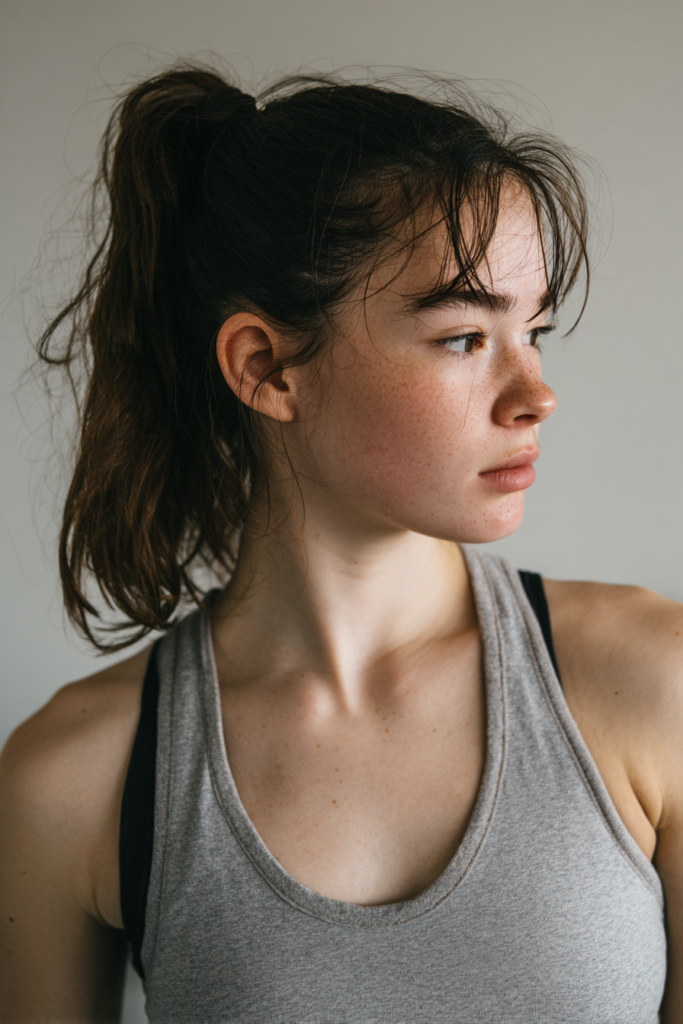
The classic high ponytail remains my go-to recommendation for clients who need a truly bulletproof workout style. I’ve relied on this timeless option throughout my years as both stylist and fitness enthusiast—it never fails me even through the most intense training sessions.
Secure High Ponytail overview
A secure high ponytail isn’t your average everyday style—it’s strategically designed to withstand movement and sweat. Unlike regular ponytails that loosen with activity, this version uses specific techniques to create a workout-friendly style that truly stays put. I love recommending this option for cardio, circuit training, and high-impact workouts where hair flipping around becomes a genuine distraction. The beauty of this style lies in its simplicity combined with purposeful modifications that transform a basic ponytail into a performance hairstyle.
Why Secure High Ponytail works
The secure high ponytail works remarkably well for several reasons. First, positioning the ponytail at your crown creates natural airflow around your neck, helping you stay cooler throughout your workout. Additionally, this placement keeps hair completely away from your face and shoulders, eliminating the need for mid-workout adjustments.
What truly makes this style effective is the strategic securing technique. Unlike regular ponytails that rely on a single elastic, the secure version uses multiple points of contact to distribute tension and prevent slippage. Furthermore, this style works perfectly with textured hair—those little bumps actually help lock everything in place rather than working against you.
I’ve found this style prevents the “halo of flyaways” that many clients with fine hair complain about after workouts. Most importantly, it eliminates distractions, effectively manages sweat, and protects your hair from unnecessary friction damage.
How to style Secure High Ponytail
Creating this gym-ready style requires just a few simple steps:
- Start with dry or slightly damp hair to reduce frizz (completely wet hair will slip)
- Flip your head upside down and gather all hair at your crown
- Use a strong, snag-free elastic to secure the ponytail tightly
- For extra security, twist the ponytail and add another elastic about 2-3 inches down to prevent whipping
- Optional: Add a moisture-wicking headband to lock down any remaining flyaways
For those with particularly slippery hair, I recommend adding dry shampoo before styling—it creates grip that helps everything stay in place. Alternatively, try using a coiled hair tie or scrunchie instead of regular elastics, as they distribute pressure more evenly and cause less damage.
Remember that this style doesn’t need to be perfectly sleek—those natural textured bumps actually help secure everything in place. I’ve tested this through countless jumping sessions and sprints, and can confirm it truly does stay put!
Braided Ponytail
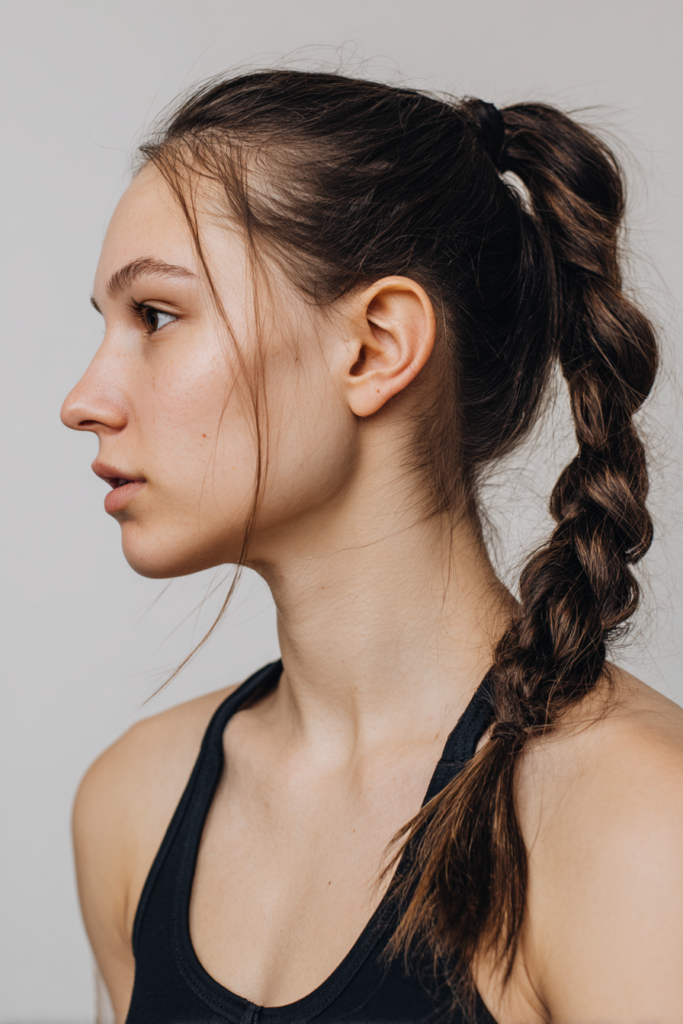
For those looking beyond basic styles, I’ve found the braided ponytail to be a game-changer for my most active clients. This style has saved me countless times during my own intense training sessions when I need something that truly stays put.
Braided Ponytail overview
The braided ponytail brilliantly combines functionality with fashion, making it ideal for both athletic activities and casual outings. As a stylist who’s constantly moving between clients, I appreciate how this sleek and structured look keeps hair neatly tied back while still looking polished. What makes this style particularly special is its versatility—it works wonderfully with various hair textures and lengths, plus it transitions perfectly from gym to errands without needing a complete restyle.
I first discovered the power of braided ponytails when training for a charity run. My regular ponytail kept coming loose, but after braiding it, I completed the entire route without touching my hair once!
Why Braided Ponytail works
The braided ponytail excels as a workout option for several compelling reasons. First, once secured properly, this low-maintenance style allows you to continue your workout without worrying about your hair. I’ve noticed with my clients that braiding effectively keeps hair contained and tangle-free, which makes post-workout hair care significantly quicker and less frustrating.
Moreover, braiding your hair before workouts helps protect your ends and actually aids in retaining hair length. The style dramatically reduces friction and prevents knots, which I’ve found essential for clients with longer hair who struggle with tangling during high-movement exercises.
I often recommend this style to my most active clients specifically because it stays put through everything from burpees to dance classes. The braid holds everything in place even when your hair is completely sweat-soaked—something I’ve personally tested through countless hot yoga sessions!
How to style Braided Ponytail
Creating the perfect workout-ready braided ponytail is simpler than you might think:
- Start with a spritz of dry shampoo for added texture and grip
- Pull your hair into a high or mid-height ponytail and secure with a strong elastic
- Don’t worry about getting it perfectly smooth—those textured bumps actually help keep it secure
- Divide your ponytail into three equal sections and create a simple three-strand braid
- Secure the end with a clear hair tie or small elastic
- For extra security, gently tug on sections of the braid to create a looser, textured look that won’t budge
For those rushed mornings, this 30-second style becomes lightning-fast once you’ve done it a few times. I’ve perfected it to the point where I can create this style with my eyes closed when I’m running late for my morning fitness class!
Consequently, if you’re looking for a truly sweat-proof hairstyle that combines function with style, the braided ponytail deserves a permanent spot in your workout rotation.
Top Knot Bun
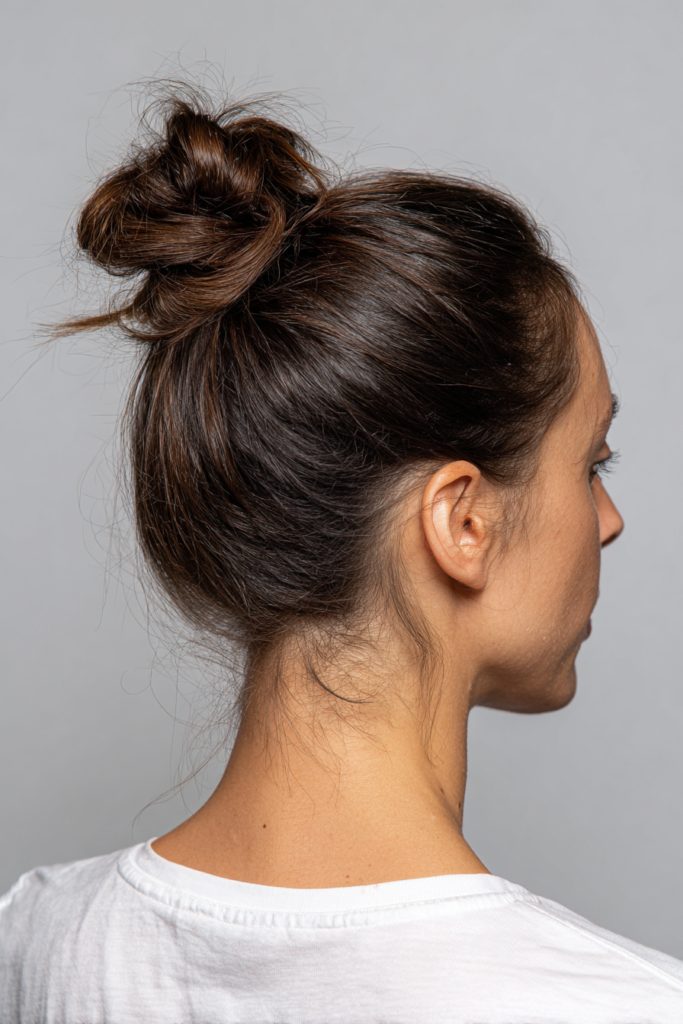
After years of testing countless styles, I’ve crowned the top knot bun as the ultimate “set it and forget it” hairstyle for intense workouts. This versatile updo has saved me from hair disasters in my most challenging training sessions.
Top Knot Bun overview
The top knot bun isn’t just another casual updo—it’s a strategic workout ally that keeps every strand secure. Unlike conventional buns, this style positions your hair high on your head, creating a knot that actually tightens with movement instead of loosening. The beauty of the top knot lies in its ability to secure those annoying baby strands that typically stick to your neck during intense sessions.
As someone who’s trained clients through everything from HIIT to yoga, I’ve seen how this style works across various workout types. The high placement preserves volume and curl shape for my curly-haired clients, although I sometimes recommend a slick side-parted variation for those with shorter layers.
In my early days as a stylist, I struggled with keeping my own unruly hair contained until I discovered this game-changer. Now I confidently recommend it as one of my top sweat proof hairstyles for the gym.
Why Top Knot Bun works
The top knot excels as a workout hairstyle for several reasons. First, its positioning keeps hair completely off your face and neck, eliminating that uncomfortable sweaty feeling. Since discovering this, I’ve never again suffered through that frustrating experience of hair sticking to my skin during training.
Moreover, this style is remarkably durable—much stronger than a classic ballerina bun. The twisted construction creates tension that actually increases security as you move, making it ideal for exercises involving jumping or head movement.
Throughout my career, I’ve noticed the top knot works exceptionally well for diverse hair types and textures. For my clients with curls, it prevents stretched-out patterns, whereas those with fine hair appreciate how it keeps everything contained without constant readjustment.
How to style Top Knot Bun
Creating the perfect workout-ready top knot is simpler than you might think:
- Start by brushing hair until it’s completely tangle-free
- For a classic top knot, gather hair at the crown of your head; for a slick version, create a sharp side parting first
- Secure with a strong hair tie (I prefer coiled elastics as they distribute tension more evenly)
- For a basic version, twist hair around the base and secure with bobby pins
- Alternatively, separate your ponytail into two sections, tie them in a standard knot, and secure with pins
- Finish with a light mist of hairspray to tame flyaways
I’ve discovered through trial and error that texturizing spray applied before styling gives the knot extra grip—essential for those marathon training sessions.
For clients with shorter layers, I always recommend the slick knot variation since it specifically addresses those pesky baby hairs that escape during movement. Nevertheless, regardless of which version you choose, this sweat proof hairstyle offers both functionality and style that transitions seamlessly from workout to whatever comes next.
Fishtail Braid
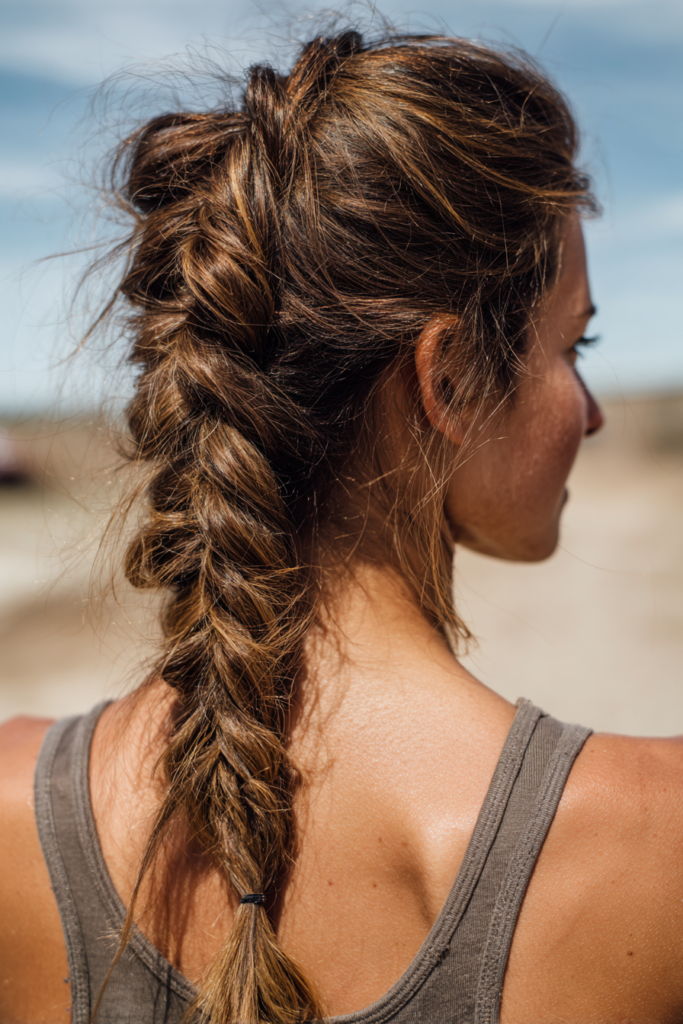
The fishtail braid has become my secret weapon for clients who want both style and functionality during their most rigorous workouts. This intricate-looking style consistently impresses me with its staying power through even the sweatiest training sessions.
Fishtail Braid overview
Unlike traditional three-strand braids, the fishtail uses just two main sections of hair. This deceptively simple technique creates an elegant, intricate pattern that looks complicated yet is surprisingly easy to master. I first discovered its workout potential during a beach yoga retreat where my usual styles kept falling flat. The fishtail not only survived multiple sessions but looked even better as the day progressed!
What makes the fishtail special is its versatility—you can create it directly from loose hair or add it to a ponytail for extra security. I often recommend this style to my long-haired clients who struggle with hair management during outdoor activities. The finished look adds a beautiful boho-chic vibe that transitions perfectly from workout to whatever comes next.
Why Fishtail Braid works
The fishtail braid excels as a workout hairstyle for several key reasons. First, it remains intact even with heavy sweating, making it ideal for intense cardio or hot yoga. Throughout my years of styling active clients, I’ve found it particularly effective for hiking and beach workouts where environmental factors add extra challenges.
Furthermore, the unique weaving pattern actually tightens with movement rather than loosening. This self-securing quality means you won’t need to readjust mid-workout—a game-changer for maintaining focus during training sessions.
Beyond function, fishtails offer protection by reducing knots and preventing the dreaded post-workout hair disaster. My clients with thicker hair especially appreciate how this style keeps everything contained yet comfortable.
How to style Fishtail Braid
Creating a workout-ready fishtail braid is straightforward once you master the basic technique:
- Start by gathering your hair as if making a low ponytail, optionally pulling it slightly to one side
- Divide your gathered hair into two equal sections
- Take a small piece (about 1/4 inch) from the outside of one section
- Cross this small piece over and add it to the inside of the opposite section
- Repeat the process on the other side, taking a thin strand from the outside
- Continue this alternating pattern until you reach the ends
- Secure with a strong elastic and gently tug at sections to create desired fullness
For extra security during intense workouts, I recommend creating the fishtail from a ponytail rather than loose hair. This double-security approach has never failed me through countless training sessions!
Side Dutch Braid Bun

I discovered the Side Dutch Braid Bun after searching for a solution that would keep my curly-haired clients’ strands fully contained throughout intense workouts. This hybrid style has quickly become a favorite in my repertoire for anyone looking to completely eliminate mid-workout hair distractions.
Side Dutch Braid Bun overview
The Side Dutch Braid Bun combines two powerful techniques—the under-braiding method of a Dutch braid with the security of a bun finish. Unlike traditional French braids where strands cross over the middle, Dutch braids cross under, creating that gorgeous raised effect that stays remarkably secure. The style begins above one ear, travels across the head, and can either hang freely or be twisted into a bun depending on your preference.
In my studio, I’ve seen how versatile this style can be—it works wonderfully for various hair textures, yet I’ve found it particularly beneficial for curly and biracial hair types. One client with beautiful 3C curls struggled with workout styles until we discovered this technique, which not only kept her hair contained but actually helped retain moisture between wash days.
Why Side Dutch Braid Bun works
The genius of this style lies in its dual function: it securely contains hair while simultaneously protecting it. Through years of styling experience, I’ve learned that Dutch braids naturally resist loosening during movement because the under-crossing technique creates a secure foundation.
Beyond simply staying put, this style distributes weight evenly across the head, eliminating that painful tugging sensation many experience with regular ponytails. Furthermore, the fully contained nature of the bun variation minimizes friction against gym equipment and clothing.
For those with baby hairs or shorter layers around the face, I’ve found the side starting position naturally incorporates those troublesome strands that typically escape during workouts. This makes it perfect for high-intensity training where even the smallest hair distraction can break concentration.
How to style Side Dutch Braid Bun
Creating this sweat-proof masterpiece takes just minutes once you’ve mastered the technique:
- Begin by lightly spraying hair with water for manageability
- Using a wide-tooth comb, gently detangle from tips to roots
- Start the Dutch braid above one ear, crossing hair sections under (not over) the middle strand
- Continue braiding across your head toward the opposite side
- Once you’ve incorporated all hair, finish with a regular three-strand braid
- Secure with an elastic band
- For maximum sweat protection, twist the braid into a bun at the nape of your neck
- Secure with bobby pins or a second elastic
This style typically takes me under ten minutes to create, yet remains absolutely bulletproof through everything from cardio to weight training sessions.
Twisted Crown

The twisted crown might just be my favorite five-minute miracle for clients wanting a secure yet elegant workout style. This halo-type braid consistently impresses me with how quickly it comes together, even as it delivers maximum security through the most intense training sessions.
Twisted Crown overview
The twisted crown is essentially a beautifully crafted halo of twisted hair that sits elegantly around your head. Unlike traditional braids requiring three strands, this style uses just two sections twisted together on each side of your head, making it remarkably quick to create. As someone who styles athletes regularly, I appreciate how this look works wonderfully for hair going through awkward growth stages. What truly sets this style apart is its whimsical, almost ethereal appearance despite taking less than five minutes to accomplish.
Why Twisted Crown works
Certainly, the effectiveness of the twisted crown lies in its structural design. By creating tension through twisting rather than braiding, this style manages to hold firmly without putting excessive pressure on your scalp. I’ve recommended this style to countless pilates and barre enthusiasts because it keeps hair secure without flattening it against your head. This creates a polished appearance while maintaining volume.
Furthermore, this style works exceptionally well for diverse hair types—curly-haired clients particularly love how it showcases their texture while keeping strands contained. The twisted crown excels at keeping everything from baby hairs to longer layers neatly in place, making it ideal for upper-body strength workouts where you need to feel put-together without a full updo.
How to style Twisted Crown
Creating this sweat-proof style requires minimal tools—just a few quality bobby pins (avoid flimsy ones that bend easily!) and two elastic bands:
- Begin by taking a triangle section of hair near your part
- Divide this section into two equal parts
- Start adding new hair to the front piece, then add new hair to the back piece
- Twist the sections together with the front piece crossing over the back
- Continue until you reach the back of your head, then stop adding hair and simply twist the remaining length
- Secure with a clear elastic and repeat on the opposite side
- Push your thumb and index finger through a gap in one twist
- Pull the other twist through this hole
- Finish by securing with bobby pins and removing the elastics
I often recommend curling your hair beforehand or sleeping in a braid the night before to give fine hair extra texture and grip. This simple trick transforms the twisted crown from pretty to absolutely bulletproof during even the sweatiest workout sessions!
Pineapple Updo for Curls

For my curly-haired clients struggling with workout hair management, the pineapple updo has proven to be an absolute revelation. This protective style has saved countless training sessions from becoming hair disasters.
Pineapple Updo overview
The pineapple updo gets its playful name from its resemblance to the crown of a pineapple fruit. It’s a well-loved curly hair technique specifically designed to protect natural curl patterns during physical activities. What makes this style exceptional is how it keeps curls contained without compromising their shape or definition. Afterward, you’ll find your curls remain bouncy and defined rather than stretched or flattened.
Why Pineapple Updo works
The pineapple method works remarkably well because it minimizes friction against pillows, gym equipment, and clothing. By gathering curls at the crown, this style effectively reduces frizz while preserving curl definition throughout even the sweatiest workouts. Undoubtedly, its loose nature prevents tension-related damage, making it ideal for maintaining hair health. Meanwhile, the high placement creates natural airflow, helping manage sweat effectively.
How to style Pineapple Updo
Creating this sweat-proof style requires minimal effort:
- Flip your head forward and gather all curls at the crown of your head
- Secure loosely with a silk or satin scrunchie—tight enough to stay put yet loose enough to prevent tension marks
- Allow curls to cascade freely around your face
- For extra security, add a silk scarf or headband
I recommend this style to all my clients with textured hair—it transitions perfectly from workout to post-gym errands with just a light spritz of refreshing spray!
Curly Bun with Headband

The curly bun with headband combo quickly became my favorite recommendation after I saw how effectively it worked for my client with 3C curls who struggled with gym hair management. This dynamic duo packs a powerful punch against workout sweat.
Curly Bun overview
This style brilliantly pairs a ballerina-style slicked-back bun with a moisture-wicking headband for maximum protection. Altogether different from loose styles, this option offers a polished look that transitions seamlessly from workout to wherever you’re headed next. Throughout my career, I’ve noticed many curly-haired clients avoiding exercise due to hair concerns—this combination changed everything for them.
Why Curly Bun works
The headband component is what truly elevates this style. These specially designed sweat-wicking bands effectively absorb excess moisture on your head, preventing it from running down your locks. This protection is crucial for textured hair and edges that can easily “sweat out” during intense training.
Furthermore, the bun keeps hair completely off your neck, minimizing sweat contact and reducing the frequency of washing. This preservation aspect makes it ideal for those wanting to extend their wash cycles between workouts.
How to style Curly Bun
- Apply generous gel throughout your hair
- Use a bristle brush to create a perfect slick back
- Form a tight bun at your preferred height
- Optional: Leave some baby hairs free to style at the front
- Position your moisture-wicking headband halfway between hairline and crown
- Lift curls over (not under) the headband to preserve volume
Half-Up Bob Style

Finding sweat proof hairstyles for short hair can feel impossible, but as a stylist who cuts dozens of bobs monthly, I’ve found the half-up bob style to be a game-changer for active clients with shorter locks.
Half-Up Bob overview
The half-up bob style is ideal for hair landing anywhere from chin to collarbone length. It cleverly keeps the front sections secured while allowing the back to remain natural. For my clients with in-between lengths who can’t quite manage a full ponytail, this style offers the perfect compromise. Initially, I developed this technique for a client who complained about hair constantly falling in her eyes during yoga but hated wearing headbands.
Why Half-Up Bob works
This style works remarkably well because it keeps the front sections of hair completely out of your face without requiring enough length for a full updo. Primarily designed for weight training or exercises where you might have a bar on your shoulders, it prevents hair from jutting out too much behind your head. Even better, the half-up approach allows you to showcase your bob cut while maintaining control during intense activities.
How to style Half-Up Bob
- Section off the top half of your hair from temples to crown
- Secure with a small, grippy elastic that won’t slide during movement
- Optional: Transform into a mini-bun or twist for extra security
- For curly bobs: Add a moisture-wicking headband to control edges
Double Headband Hold

Short-haired clients often struggle with keeping their locks in check during workouts—until I discovered the double headband hold technique. As someone who sees dozens of active clients weekly, this method has been nothing short of magical for those with fine hair.
Double Headband overview
The double headband method employs two moisture-wicking bands working in tandem to create an unbeatable grip. Unlike single headbands that tend to slide back with movement, this dual-layer approach features an inner suction grip paired with an outer decorative layer. In essence, it’s the perfect solution for those with freshly washed hair that typically slips out of traditional styles.
Why Double Headband works
Beyond that, what makes this approach truly effective is how the two layers work together to prevent slipping once sweat kicks in—almost like they tag-team your hair. The braided plastic base inside many double-layer designs clips firmly onto hair while the fabric overlay adds softness that prevents the usual plastic pinch-spot annoyance. Indeed, after extensive testing through humid runs and spin classes, these bands stay drier longer and demand fewer mid-workout hair fixes.
How to style Double Headband
Applying this technique is refreshingly simple:
- Place the first moisture-wicking headband around your head, just above your forehead
- Add a second headband about an inch behind the first, creating a layered grip
- Use your fingers to tuck stray strands between the two bands
- Gently press down both bands to lock everything in place
This setup provides a secure fit without pins or elastics, holding up throughout high-intensity activities like bootcamp, spin, or dance classes.
Textured Low Ponytail

As a stylist who values both elegance and function, the textured low ponytail has earned its spot in my workout hairstyle arsenal. This sophisticated yet practical style offers a perfect solution for clients who need a reliable option that doesn’t sacrifice style.
Textured Low Ponytail overview
The textured low ponytail delivers body and stability in one quick style. Positioned at the nape of your neck, this ponytail creates a chic look while remaining firmly in place throughout your workout. I love recommending this option to my long-haired clients who find high ponytails uncomfortable or experience tension headaches from traditional upstyles.
Why Textured Low Ponytail works
The genius behind this style lies in its strategic design. The teased crown and low placement work together to create the illusion of thicker hair while preventing uncomfortable tension on finer strands. This makes it excellent for cycling, elliptical workouts, or light cardio sessions. Henceforth, the soft structure provides comfort without sacrificing security.
How to style Textured Low Ponytail
- Start with dry hair and apply a light texturizing spray for grip
- Gently tease the crown with a comb to create volume at roots
- Pull hair back into a loose ponytail at your nape
- Secure with a soft fabric elastic that won’t slide or pull tightly
For maximum security, consider using two separate ponytail holders to create a stronger foundation.
Two-Minute Twist-Up

Recently, I stumbled upon what I now call my “miracle solution” for clients with thin hair who need gentle yet effective gym styles. The Two-Minute Twist-Up has completely changed how I approach workout hair.
Two-Minute Twist-Up overview
This underrated hair hack uses a French pin rather than traditional elastics or claw clips to secure your style. The beauty lies in its simplicity—it’s quick, beginner-friendly, and looks effortlessly polished without trying too hard. Typically, I recommend this for straight, wavy, or lightly textured hair, primarily when you need your hair off your neck without causing damage.
Why Two-Minute Twist-Up works
First of all, unlike tight ponytails that cause tension headaches, the French pin distributes weight evenly throughout your hair. This makes it perfect for those with fine or thin hair, scalp sensitivity, or anyone experiencing breakage. In fact, short bursts of activity like this quick style have their own benefits—just as brief intense exercise offers health advantages, quick hairstyling solutions provide immediate relief with lasting results.
How to style Two-Minute Twist-Up
- Twist your hair correctly for French pin placement
- Insert the pin where it will provide maximum hold
- Gently secure without creating tension
- For gym-proofing, add a second pin at a different angle
Generally, I find clients with thinning hair absolutely love this style—it gives them confidence without further damaging their delicate strands.
Conclusion
Finding the right hairstyle for your workout routine truly makes all the difference between constant distractions and focused training. After years of styling active clients and testing these looks during my own sweaty sessions, I can confidently say these twelve hairstyles stand the test of even the most intense workouts.
Remember that secure high ponytails work wonderfully for cardio, while braided options like fishtail and Dutch braids offer both security and style. My curly-haired clients swear by the pineapple updo or curly bun with headband combo, which protects their natural texture while keeping everything in place.
Short-haired fitness enthusiasts needn’t worry either – the half-up bob style or double headband hold will keep those shorter strands perfectly contained. Those with fine hair often tell me how much they love the two-minute twist-up method since it secures without causing tension or breakage.
What amazes me most about these styles is how versatile they are. Many transition perfectly from gym to errands, requiring just minimal touch-ups afterward. Throughout my career, I’ve watched clients transform from constantly adjusting their hair mid-workout to confidently powering through their routines.
Perhaps the most rewarding part of sharing these styles is seeing someone’s face light up when they discover a solution that actually works for them. One client recently messaged me after trying the braided ponytail, thrilled that she finally completed an entire spin class without touching her hair once!
Ultimately, the right workout hairstyle should feel like your trusted fitness partner – reliable, supportive, and helping you perform at your best. Therefore, experiment with these options until you find your perfect match. Your focused, distraction-free workouts will thank you!


