Tanning hairstyles saved my hair after I spent years damaging it under the sun without a second thought. I used to throw my hair up in whatever style was quickest, not realizing that proper protection could prevent dryness, breakage, and color fade. Given that UV rays can be just as harsh on your hair as they are on your skin, choosing the right style makes all the difference.
I’ve spent countless hours experimenting with looks that are both cute and protective. In this guide, I’m sharing the 15 best tanning hairstyles that keep your hair safe while you soak up the sun, especially styles that work for the beach, pool, or tanning bed.
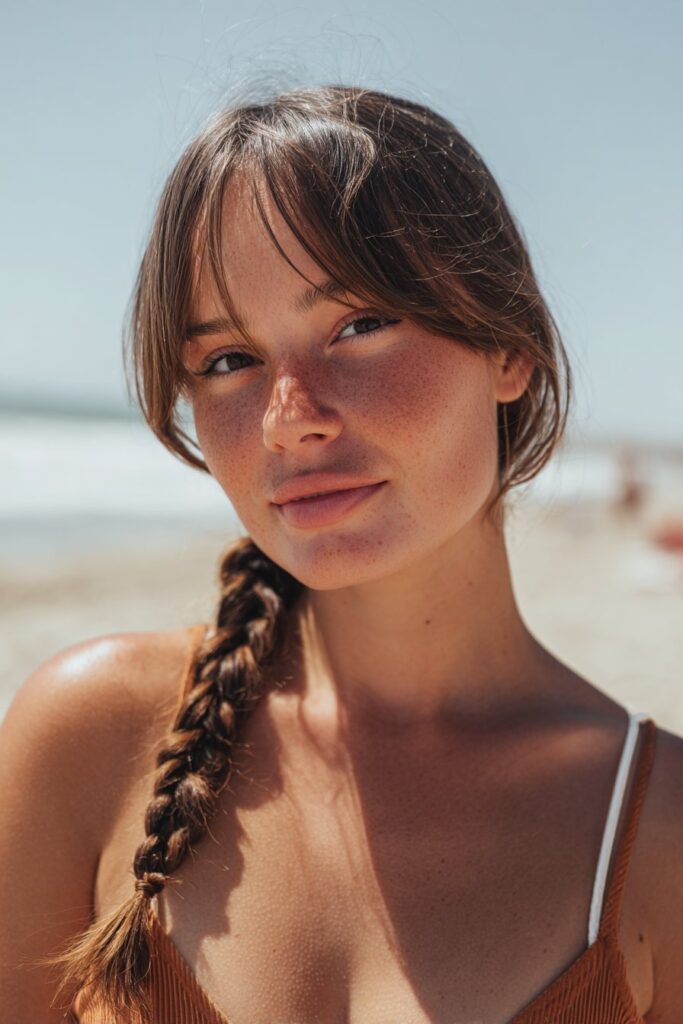
Classic French Braid
What Makes This Tanning Hairstyle Special
The French braid is hands-down one of the most reliable tanning hairstyles I recommend to clients who spend time outdoors. I learned this technique early in my training, and it’s become my go-to protective style for beach days. What sets it apart is how it covers your scalp while reducing the surface area of hair exposed to sunlight. The braid sits close to your head, creating a barrier that shields most of your strands from harsh UV rays.
Besides being functional, the French braid works beautifully on day-two hair and stays put through swimming, workouts, or hours of lounging poolside. The woven pattern looks polished without feeling overly styled.
Why It Protects Your Hair
French braids offer protection in ways that surprised me when I first studied their benefits. Braiding keeps strands together, which reduces the risk of tangling and breakage from friction. When your hair is secured this way, it’s less exposed to air, helping it retain moisture and preventing it from becoming dry and brittle.
Split ends become less of an issue since the ends stay tucked away. I’ve noticed that clients who braid their hair regularly experience less frizz and fewer flyaways, especially those with curly or wavy textures. Essentially, you’re minimizing manipulation, which means less daily combing and heat styling that can weaken hair over time.
How to Create the Perfect French Braid
Start with slightly unwashed hair for natural grip. Apply texturizing spray or dry shampoo if your hair is freshly washed. Divide a section at the crown into three equal parts, then cross the right strand over the middle, followed by the left strand over the middle.
As you continue, incorporate small sections of hair from the sides into the outer strands. Keep additions even to avoid bumps. For a modern 2026 look, maintain tighter tension near the front for lift and looser tension near the crown for softness. Once you reach the nape, switch to a standard three-strand braid and secure with an elastic.
Best for
This style works perfectly for all-day sun exposure, beach trips, and pool sessions where you need reliable protection without constant touch-ups.
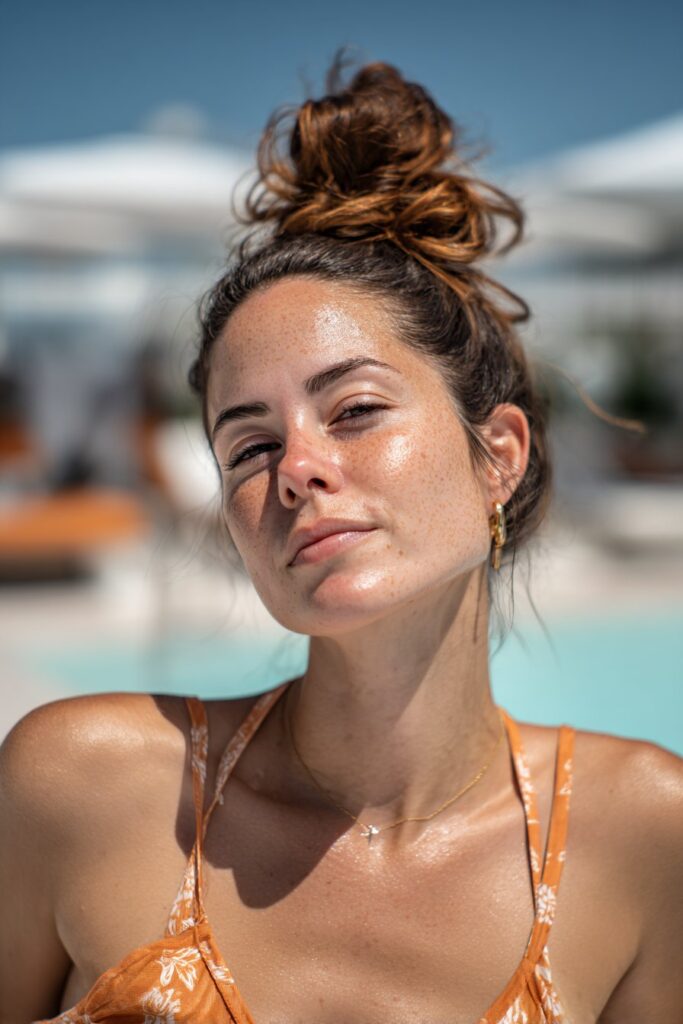
High Messy Bun
What Makes This Style Work
When I’m running late for a beach day, the high messy bun is my lifesaver. I’ve styled countless clients who need something that looks effortlessly cool without requiring mirror time, and this style delivers every single time. The beauty lies in its carefree nature. You’re not aiming for perfection here, which is exactly why it works so well for tanning sessions.
I remember one client who used to stress about her hair looking “too messy.” After I showed her how a few loose strands actually add charm and softness, she never went back to overthinking it. This style keeps hair completely off your back and shoulders, which matters when you’re applying sunscreen or lying on a beach towel. Equally important, it matches every outfit and doesn’t require constant adjustments throughout the day.
Protection Benefits
Pulling your hair up in a high bun provides additional protection for your scalp against UV rays. I learned this after years of seeing clients with sun damage on their parts, and it changed how I approached tanning hairstyles entirely. The bun formation creates a barrier that shields most of your hair from direct sunlight, reducing exposure to damaging rays.
Specifically for wavy hair types, pairing a high bun with a silk scrunchie works wonders. I always recommend applying a lightweight protective texturizing spray that envelopes strands in a protective film blocking the damaging effects of sun, sea, and pool water. The right spray contains filters for UVA and UVB rays along with nourishing oils that preserve color and keep strands strong. In reality, this keeps your hair completely out of the water and away from tangled locks.
Styling Steps
Start by applying texturizing spray or dry shampoo for volume. I like pulling two face-framing pieces before gathering everything up. These money pieces hide the forehead and give the bun extra dimension whether you keep them straight or curled.
Gather your hair into a high ponytail, but don’t make it too tight. Use a teasing comb to smooth the hair and eliminate gaps. After wrapping the ponytail around its base, really pull at the bun and around your hairline to create soft, wispy pieces. Secure everything with a large silk scrunchie for less friction and creasing.
Pro Tips
Choose a scrunchie the same color as your hair because it makes your bun look thicker and fuller. A hair wax stick makes slicking back front sections easier and quicker. Don’t over-brush your hair before styling. Embrace natural waves or add texturizing spray for that authentic beach vibe everyone loves. When you take the bun down later, you’ll often get gorgeous natural waves as a bonus.
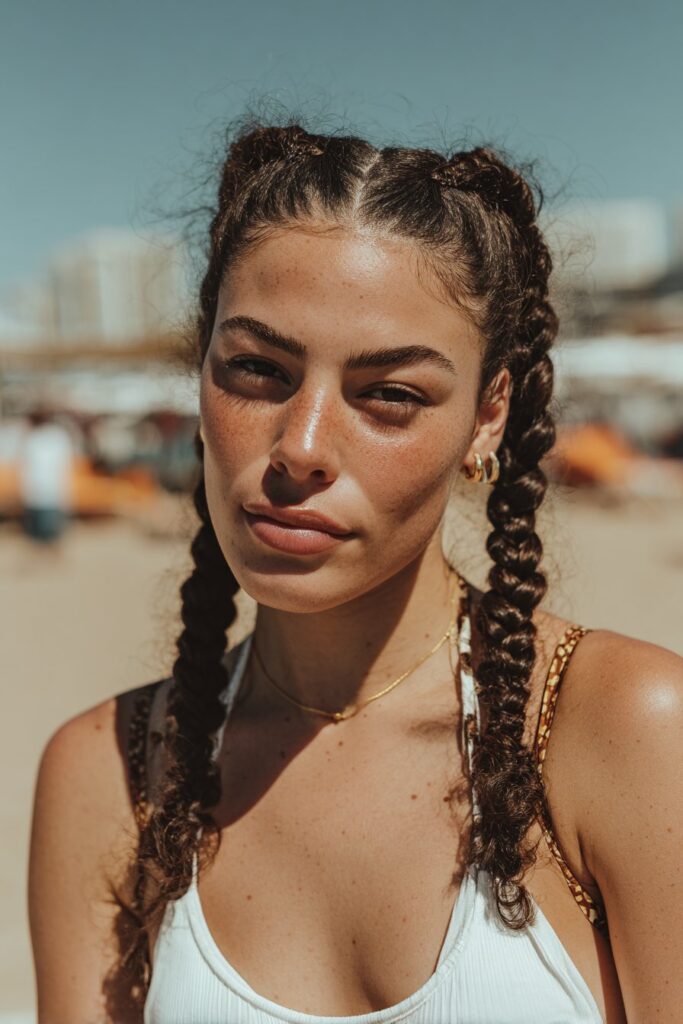
Dutch Braids (Double Braids)
Why This Is One of the Best Tanning Hairstyles
Double Dutch braids became my favorite summer protective style after I discovered how well they handle humidity during a beach wedding I styled. Unlike traditional braiding techniques, Dutch braids create an inside-out effect that sits raised on your scalp, providing exceptional coverage. This symmetrical and trendy look keeps hair completely off your face and neck during hot summer days.
I’ve watched countless clients struggle with regular braids that fall flat by midday. Dutch braids solve this problem entirely. The raised texture means more scalp protection from direct sun exposure, and the dual braid system distributes hair evenly so no single section bears too much weight or tension.
Hair Protection Features
Dutch braids function as a protective style that minimizes daily manipulation. When styled correctly, they can create heatless waves once you take them out, giving you two looks from one effort. The technique keeps strands secured and reduces exposure to environmental stressors like chlorine, saltwater, and UV damage.
Specifically for those alternating hairstyles, switching between regular and Dutch braids helps distribute tension differently across your scalp. This variation prevents stress on the same hair follicles repeatedly.
How to Achieve This Look
Part your hair down the middle, creating two equal sections. Working with one side, take a 3-inch section at your hairline and divide it into three parts. Here’s where Dutch braids differ: pass each outer strand under the middle section rather than over it.
Keep your arms up and above your head while braiding for proper placement. Your braid should sit centrally on each section, not along the edge or part line. As you work down, keep your hands close to your scalp to maintain tension that lasts all day. Smaller sections create tighter, longer-lasting braids.
When to Choose This Style
Choose Dutch braids for extended sun exposure, beach vacations, or any situation requiring reliable all-day protection without maintenance.
Top Knot
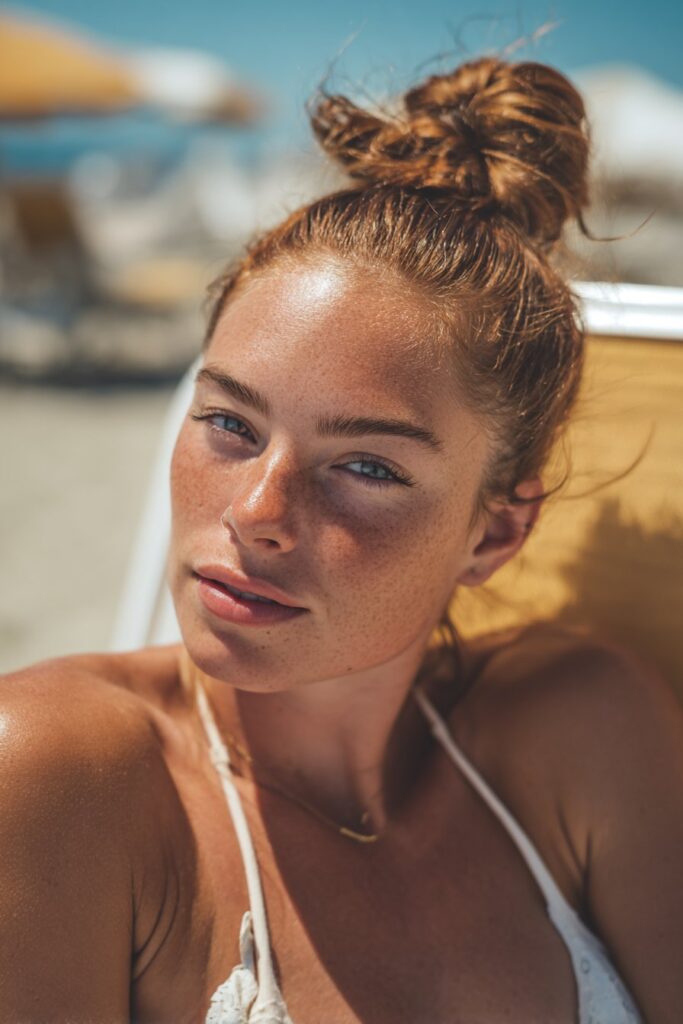
What Makes the Top Knot Perfect for Tanning
I discovered the power of top knots during my first summer working at a beachside salon. A client rushed in asking for something quick before her beach volleyball tournament, and I showed her this style. She came back the next week telling me it stayed perfect through six matches and three ocean dips.
Top knots excel at keeping hair completely off your neck and shoulders, which matters more than most people realize. When you’re applying sunscreen or lying on a towel, having hair plastered to your skin creates discomfort and uneven coverage. This style solves both problems without delay.
What I love most is the versatility. You can style a top knot to look casual for a day out shopping or more polished for situations requiring a put-together appearance. I’ve had clients wear this same style to pool parties and then straight to dinner afterward. Coupled with accessories like a headband or oversized scrunchie, you can customize the look to match your vibe.
Sun Protection Benefits
Wearing your hair in a top knot instead of parted helps protect your scalp from sunburn. I learned this after styling a bride who ended up with a painful scalp burn from her rehearsal day. The top knot creates coverage that prevents direct UV exposure to your most vulnerable area.
This style also keeps hair off your back and out of your eyes when summer breezes sweep in, making it functional beyond just sun protection. Your strands stay contained and protected rather than whipping around and getting damaged by wind exposure.
Quick Styling Guide
Apply hair serum to damp or dry hair, then brush through for even distribution. Pull hair into a high ponytail at the crown of your head using both hands. Wrap the length around its base, securing with an elastic. For extra fullness, gently pull on sections of the bun to loosen it.
Fishtail Braid
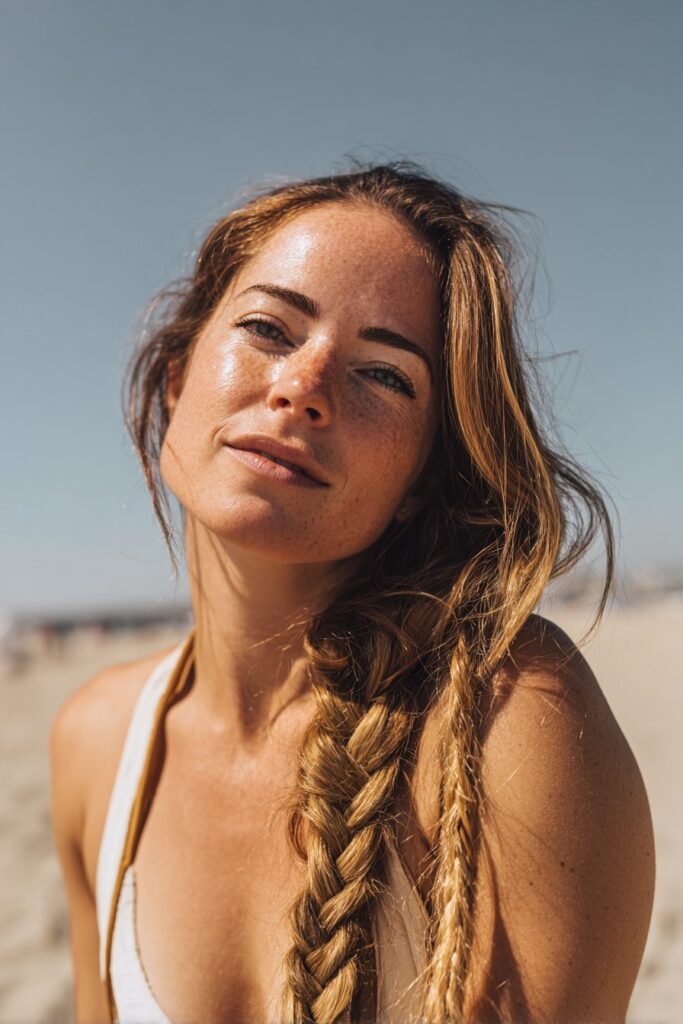
Why I Love This Cute Tanning Hairstyle
A client once told me fishtail braids looked too complicated for her skill level, but after I showed her the two-strand technique, she texted me photos from her beach vacation wearing it every single day. That’s what I love about this style. The intricate skeletal pattern makes people think you spent hours on it, when in fact, it’s simpler than traditional three-strand braids.
Besides looking polished, fishtail braids work beautifully for all hair types. I’ve styled them on straight, wavy, and curly textures with equal success. The interlocking construction prevents the braid from unraveling even when you’re dealing with constant wind or water exposure. This makes fishtail braids particularly reliable for beach settings where other cute tanning hairstyles might fall apart.
How It Shields Your Hair
Wearing your hair in a fishtail braid decreases the surface area exposed to direct sunlight. Specifically, this style keeps your hair secured in place, preventing it from sticking to your neck during hot weather. The weaving pattern creates multiple connection points throughout the braid, which distributes tension evenly and reduces breakage.
Step-by-Step Tutorial
Start with slightly damp hair or second-day hair for better grip. Separate your entire length into two equal sections. From the outer edge of your left section, take a small piece and cross it over to join the inner edge of your right section. Repeat this motion on the opposite side, always pulling from the outer edges. Continue alternating sides with consistent tension until you reach the ends, then secure with an elastic. For a looser bohemian vibe, gently tug at the outer edges to add volume and texture.
Maintenance Tips
Smaller sections create more intricate, detailed designs, while larger pieces give a relaxed casual appearance. Apply texturizing spray beforehand if your hair is freshly washed.
Low Twisted Bun
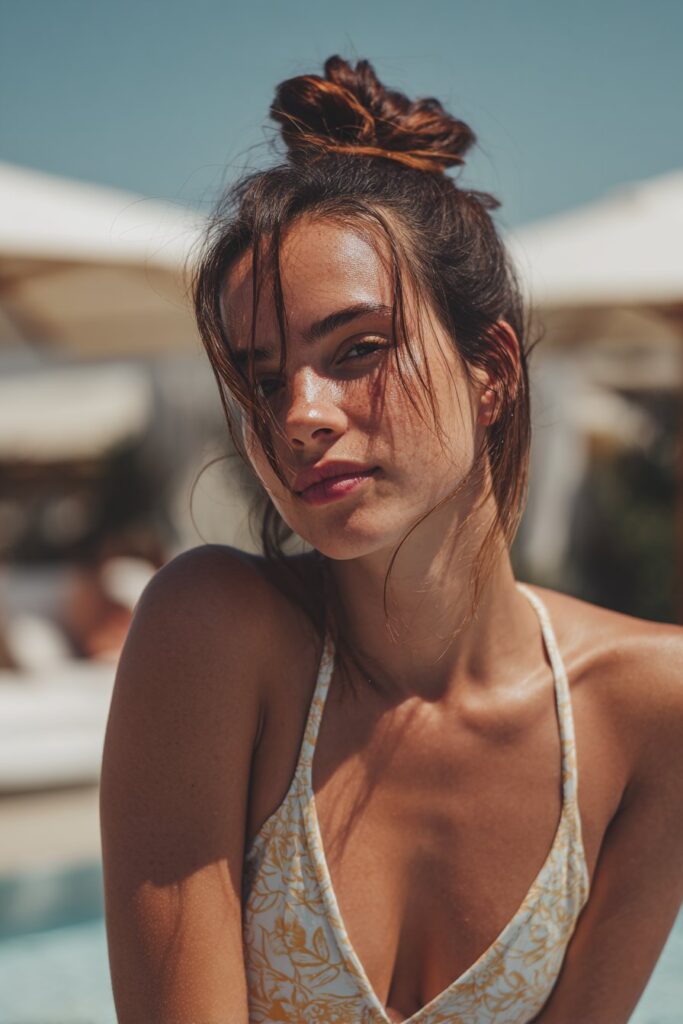
The Appeal of This Protective Style
Twisted buns became part of my styling repertoire after working with a client who needed something elegant yet comfortable for a week-long beach resort stay. She wanted protection without the structured feel of traditional braids, and this style delivered perfectly. Twists are created by wrapping two strands of hair around each other, and they often feel lighter than braids while placing less tension on the scalp.
The elegance factor stands out immediately. Unlike messy buns that lean casual, the twisted bun offers a refined appearance suitable for both daytime tanning and evening events. I’ve styled this look for clients heading from pool sessions straight to dinner reservations.
UV Protection Advantages
The low twisted bun excels at keeping your entire length tucked away from sun exposure. Protective hairstyles reduce manipulation, which helps lower the risk of breakage and split ends. Research from 2024 suggests repeated friction and styling stress can damage the hair shaft.
Specifically, this style supports moisture retention. Curly and coily hair often loses moisture more easily because its tightly coiled shape makes it harder for natural oils to move down the hair shaft, and protective styles help hair stay hydrated. The bun formation creates a barrier against environmental stressors while preventing heat damage by eliminating the need for styling tools.
Creating the Look
Part your hair on one side and clip away the forward section. Gather remaining hair into a low ponytail at the nape. Divide the ponytail into sections, twist each section individually, then wrap them around the base to form the bun shape. Secure with bobby pins and finish with medium-hold hairspray.
Best Hair Types for This Style
This technique works beautifully on medium to long lengths. The twisted formation particularly benefits curly and coily textures seeking reduced daily manipulation.
Crown Braid
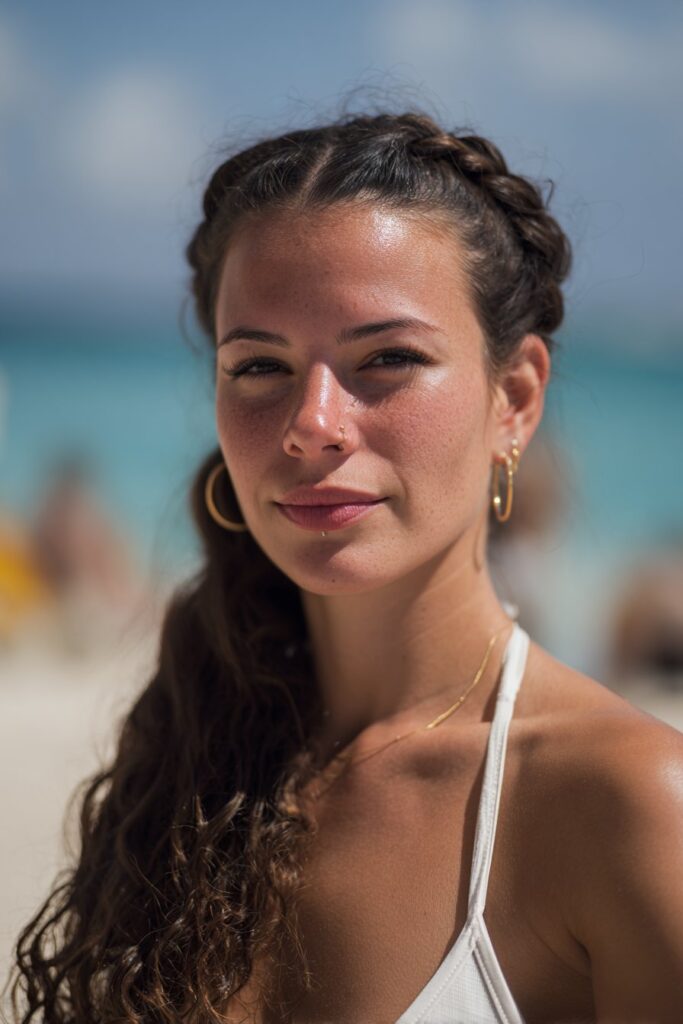
What Makes This Style Stand Out
Crown braids remind me of the first bridal client I styled in my New York days. She walked in nervous about her outdoor ceremony, worried about heat and humidity ruining her look. I suggested this style, and watching her face light up when she saw herself in the mirror remains one of my favorite memories. The crown braid resembles a braided tiara that wraps around your head, creating an instantly regal appearance without feeling overdone.
This versatile tanning hairstyle works beautifully for second day hair when you need something polished quickly. The romantic, slightly messy esthetic means you’re not chasing perfection. Rather, you’re embracing a naturally beautiful look that feels effortless.
Hair Protection Features
Beyond esthetics, this style keeps hair completely off your neck to keep you cool during hot summer days. The braided formation shields strands from direct UV exposure while functioning as a protective style that reduces daily manipulation. Your hair stays contained in a secure pattern that prevents tangling and breakage from environmental elements.
How to Style a Crown Braid
Start with freshly cleaned hair, then apply texturizing spray or mousse before braiding for better hold. Part your hair down the middle and gather a section of three strands near your neck. Tilt your head forward and French braid upward toward your ear, continuing across the top of your head. Wrap the tail end back around to make the crown thicker and secure with bobby pins. Your hair needs to be at least a little past shoulder length for this technique.
Perfect Occasions
This style transitions seamlessly from beach sessions to elegant evening events. I’ve styled crown braids for everything from summer weddings to casual dinner gatherings, proving their remarkable versatility.
Sleek Low Ponytail
Why This Simple Style Works
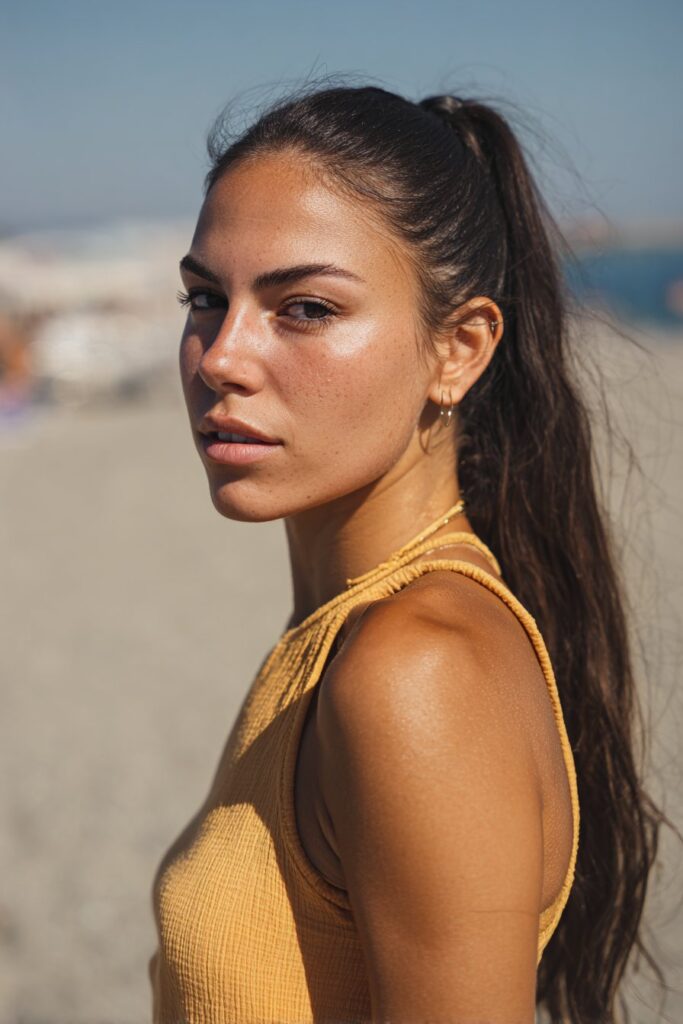
Sleek low ponytails prove that effective protection doesn’t require complexity. I reach for this style when I want something polished without spending more than two minutes styling. The beauty lies in its versatility: you can wear your ponytail high or low, but the secret to scalp protection is avoiding a part. This simple adjustment makes all the difference in preventing sunburn on your scalp.
Protection Benefits
A ponytail creates a physical barrier that reduces the surface area exposed to the sun. Your scalp stays covered while keeping hair completely out of your face. This matters because your scalp is skin too, and it faces directly toward the sun at all times. Equally important, a low ponytail sits at the nape of your neck, which means less discomfort since it doesn’t pull your strands in any gravity-defying direction.
Styling Instructions
Brush through clean hair to eliminate tangles. Gather hair into a tight, low ponytail and secure with a silk or satin scrunchie to protect strands from breakage and friction. Finish with hairspray to maintain hold and eliminate flyaways.
Added Protection Tips
If you choose to wear your hair parted, apply powder sunscreen onto your scalp where your hair parts. This protects without creating a greasy mess. Avoid wearing your ponytail too tightly every day to prevent tension and hair breakage.
Space Buns
The Fun Factor of This Tanning Hairstyle
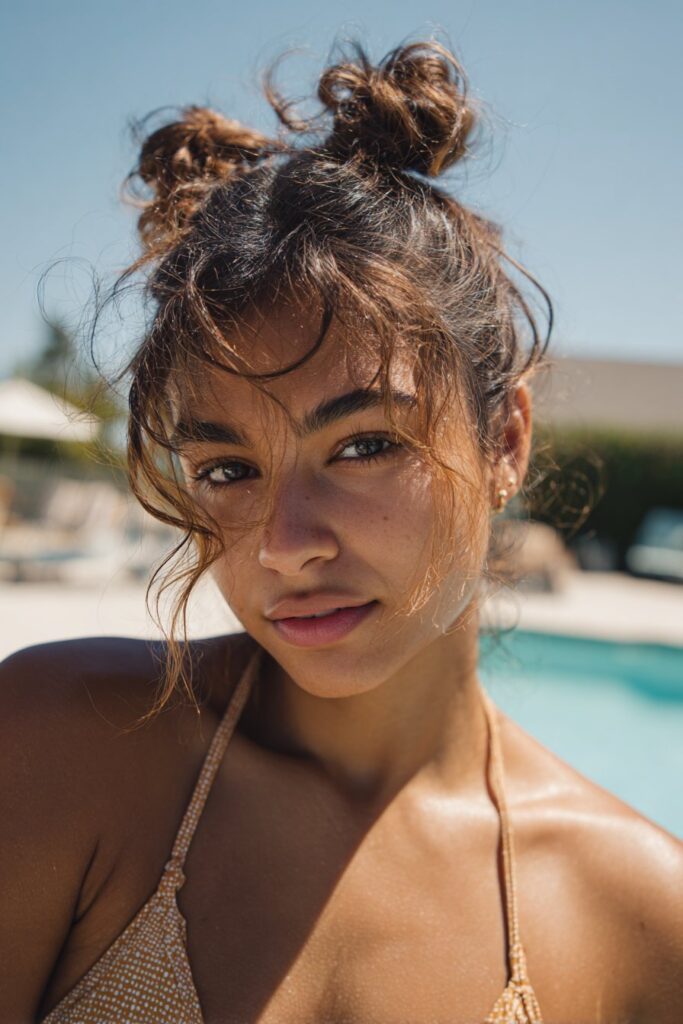
Space buns bring personality to protective styling in ways few other tanning hairstyles can match. This ’90s-inspired look features two high buns placed symmetrically on either side of your part, creating an instantly playful vibe that works everywhere from music festivals to casual coffee runs. While many consider them purely trendy, I’ve found space buns surprisingly wearable for everyday situations.
The versatility stands out immediately. You can style them messy for a relaxed tousled appearance or sleek for polished occasions. I particularly love how they keep hair completely off your face and neck during hot weather, which matters when you’re spending hours outdoors.
How It Keeps Hair Safe
Space buns function as a practical protective choice that keeps hair neatly secured away from environmental damage. The dual bun formation prevents strands from tangling and reduces exposure to chlorine, saltwater, and UV rays. Besides protection, this style distributes weight evenly across your scalp rather than pulling from a single point.
Creating Space Buns
Start by creating a straight middle part, dividing hair into two equal sections. Gather each section into a high ponytail where you want your buns to sit. Wrap the length around the base of each ponytail and secure with bobby pins or hair ties. Day-old hair actually holds better than freshly washed strands.
Who This Style Suits
This style works for all hair types, textures, and lengths. For shorter hair, try the half-up version that leaves the bottom section down.
Rope Braid
What Makes the Rope Braid Unique
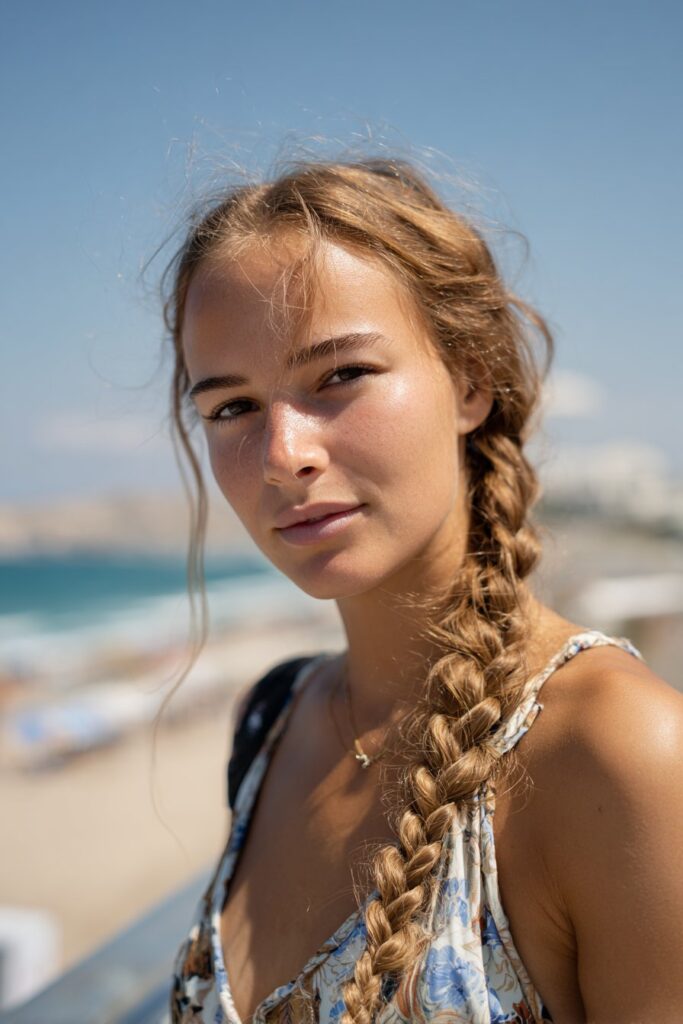
Rope braids changed my perspective on summer styling after years of relying solely on traditional three-strand techniques. The technique uses two sections twisted in the same direction, then crossed in the opposite direction. In fact, this method is easier than regular braids once you understand the pattern.
What I particularly appreciate is how rope braids keep bangs in place no matter how hot the day gets. Clients with fringe sections struggle to find styles that secure shorter pieces, and this quirky look solves that problem perfectly.
Sun Damage Prevention
This style functions as environmental protection. Braiding keeps strands together, reducing the risk of tangling and breakage from friction. Rope braids retain moisture by protecting hair from drying out, since braided hair is less exposed to air.
Easy Tutorial
Start with clean, brushed hair with a deep side part. Take a small section at your hairline and divide into two pieces. Twist both pieces in the same direction toward your face, then cross them in the opposite direction away from your face. Add small pieces to both sections before each crossing.
Variations to Try
Once mastered, try twisted milkmaid braids, twisted crown braids, or twisted ponytails. Double rope braids create a polished yet breezy pigtail variation.
Wrapped Scarf Updo
Why I Recommend This Style
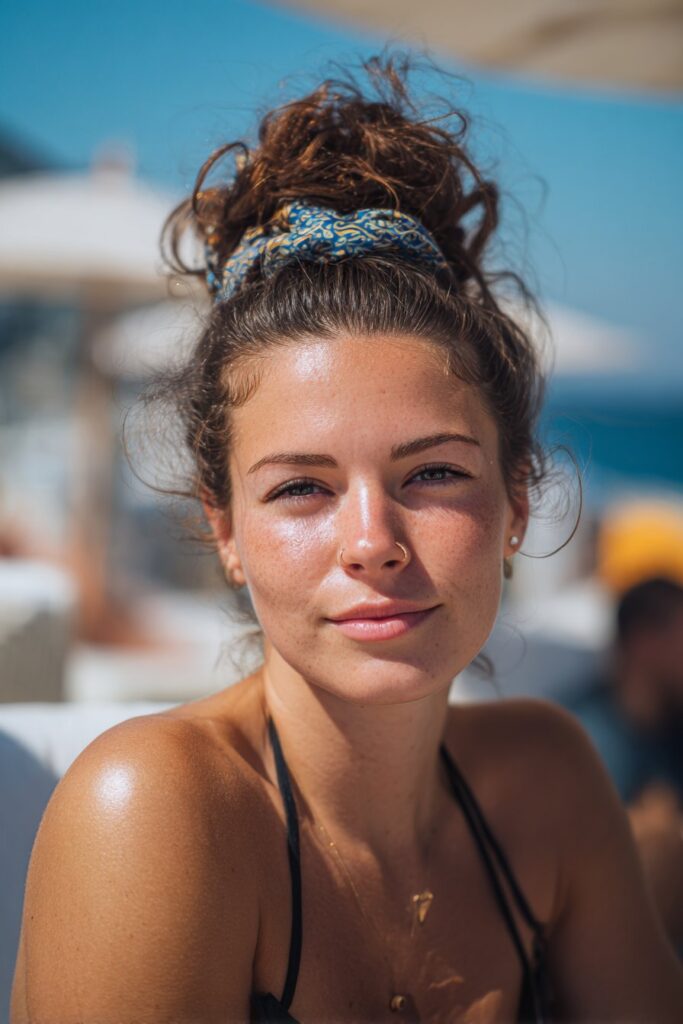
After years of experimenting with tanning hairstyles, I discovered scarf updos during a particularly humid summer when my curly hair refused to cooperate. This style became my secret weapon when hair looks yucky but there’s no time to wash, dry, and style it. In this case, wrapping a scarf transforms bad hair days into effortlessly chic moments.
I also wear my hair like this to air dry it, which works beautifully for big curly hair. The wrapped fabric holds everything in place while natural texture sets without frizz.
Maximum Hair Protection
A head scarf functions as more than a cute accessory. It’s a stylish shield between you and UV rays. When worn correctly, it protects your scalp, your hair, and your upper neck, areas often forgotten during sun protection routines.
Silk scarves create a physical barrier from harmful UVA and UVB rays. Likewise, the fabric allows moisture and natural hair sebum to be absorbed as the scalp warms up, giving your hair a hydration treatment from root to tip. This reduces the need to constantly wash your hair, saving time during beach vacations.
Choose breathable fabric so you stay cool and comfy.
How to Create This Look
Fold your scarf diagonally to make a triangle, then wrap around your head starting at your forehead and tie between your crown and nape. For silk scarves, pack bobby pins to keep everything secured.
Braided Headband with Low Bun
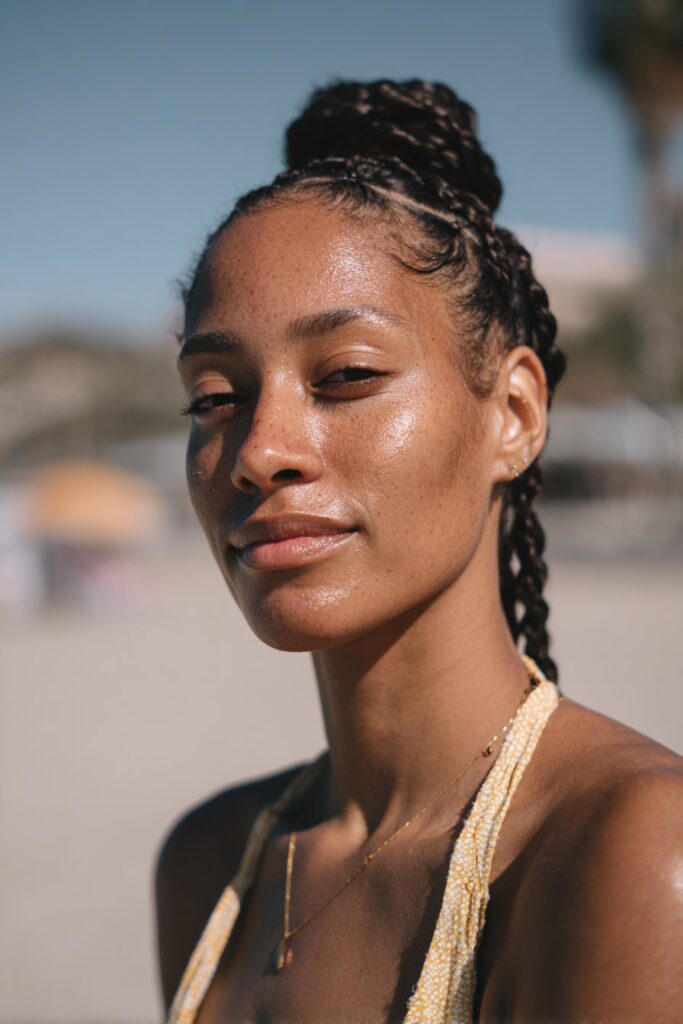
The Beauty of This Combined Style
This romantic braided updo is actually easier to create than it looks, and it easily transforms any beauty look. I love showing clients how pairing a braided headband with a low bun creates something that feels both sophisticated and effortless. The chic combination has never been easier to recreate, making it one of my favorite tanning hairstyles for clients who want elegance without complexity.
This versatile style keeps hair stylishly managed while adding a touch of sophistication to your overall look. Given that it works beautifully for shoulder length or longer hair, most people can pull it off. Besides being low-maintenance yet fashionable, it still looks good at the end of the day even after the most active beach sessions.
Protection Advantages
Braided headbands are not only esthetically pleasing but also practical since they keep hair away from the face. This makes them ideal for busy days, workouts, or special events. Equally important for tanning sessions, this style keeps hair in place all day long, which I find perfect for beach days, music festivals, or honestly any outdoor activity.
Step-by-Step Guide
Start by creating a 3-inch vertical section above your ear along the temple, braid the section, and secure it at the end with a small clear elastic. Repeat on the other side of your head. Take small sections on the top of your head and gently back-comb to get volume until you reach the back of your crown. Gather all your hair excluding the braids and twist into a bun, pinning into place with bobby pins until secure. Take the first braid and secure it across the top of your head with bobby pins. Pull the second braid across the top of your head and tuck the end into the first braid, hiding the ends.
Customization Options
There are many variations to try, such as French braids, Dutch braids, or fishtail braids, each providing a unique texture and look. For added flair, you can accessorize the braid with decorative pins, ribbons, or flowers, enhancing its charm for occasions like weddings or parties. You could secure your loose hair into a ponytail, create a beautiful braid with your remaining hair, or wind it into a low bun.
Twisted Side Ponytail
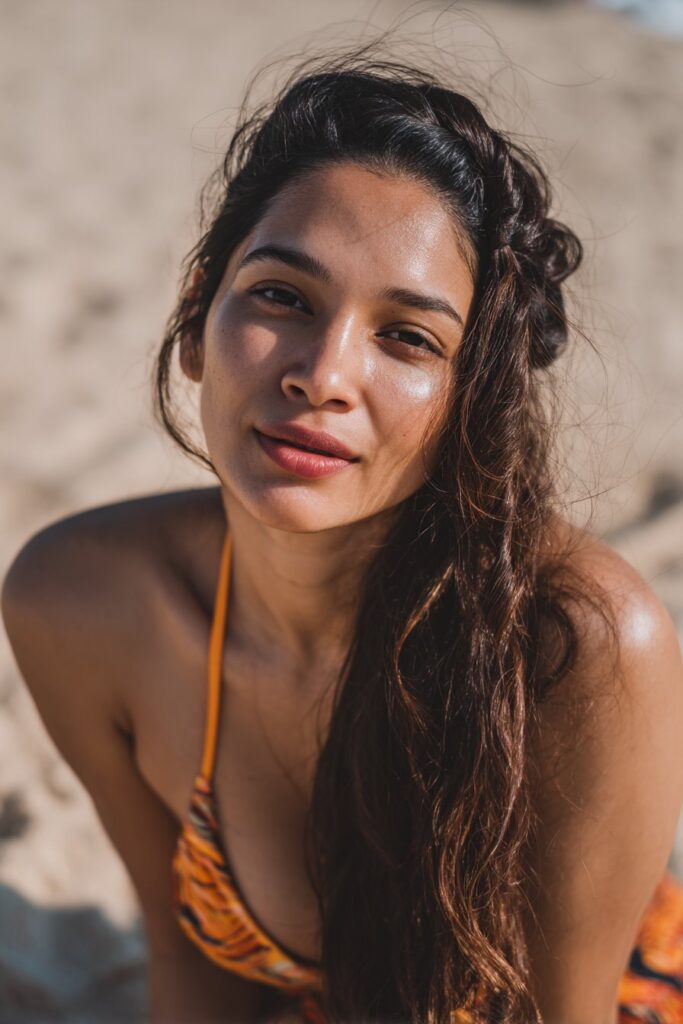
What Makes This Style Practical
This messy twisted side ponytail became my secret weapon after a client asked me about it at a grocery store. She’d seen someone wearing it and loved how effortless it looked. What makes this style particularly practical is the speed. You can complete it in 3-5 minutes, which matters when you’re rushing to meet friends at the beach.
The versatility stands out immediately. You can leave it as a side ponytail or finish with a messy bun, adapting the look based on your plans.
Hair Safety Features
Twisted ponytails reduce daily manipulation, which helps prevent breakage. The side placement distributes tension differently than center ponytails, giving your scalp relief from repetitive stress patterns.
Quick Styling Method
Pull hair into a low, loose side ponytail and secure with a rubber band. Spread the hair above the band apart to create a hole. Hold this opening, then pull the ponytail through from front to back (going the opposite direction looks wonky). Grab a section of leftover hair and wrap it around the rubber band, tucking the end or securing with a bobby pin. Scrunch and pull at your hair around the loop area to cover the hole.
Best Settings for This Look
This style works beautifully for beach days, casual outings, and any situation requiring quick styling without sacrificing appearance.
Bubble Ponytail
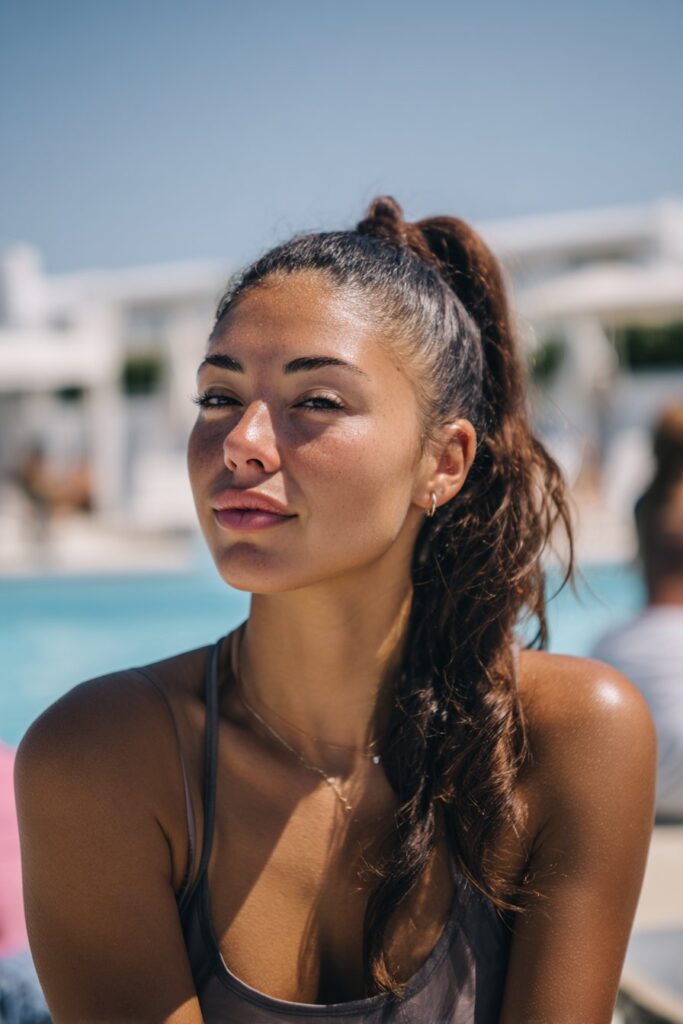
Why This Trendy Style Protects Hair
Bubble ponytails entered my styling routine when a client showed me photos from her favorite influencers rocking this playful look. What surprised me was discovering it’s actually a great protective option, especially if you want to add some waves to a few-days-old blowout or silk press. This no-heat styling option creates soft texture overnight, which means you get dual benefits: protection during sun exposure and gorgeous waves afterward.
The style works beautifully with second or third day hair, making it perfect when you’re at the beach for multiple days. I always tell clients that slicked-back ponytails have become a staple for people looking for chic ways to style older hair while keeping it completely off your face.
UV Shield Benefits
Beyond looking cute, bubble ponytails keep your hair secured and away from direct sunlight. The segmented sections reduce the amount of hair freely exposed to UV rays. Specifically, keeping hair contained in a ponytail formation prevents tangling and breakage from wind, water, and environmental stressors.
Creating the Perfect Bubble Ponytail
Start by brushing through your hair and applying oil or serum for moisture. Gather your hair into a ponytail using a silk scrunchie, then add scrunchies about two inches apart until you reach the end. After securing each section, gently tug and puff the hair between elastics to create those signature rounded bubbles. Avoid tying your scrunchies too tightly, or you could wake up to harsh creases instead of wavy bends.
Style Variations
High ponies create dramatic looks, while low versions offer relaxed sophistication. Add bows or ribbons for extra flair.
Protective Swim Cap Styles
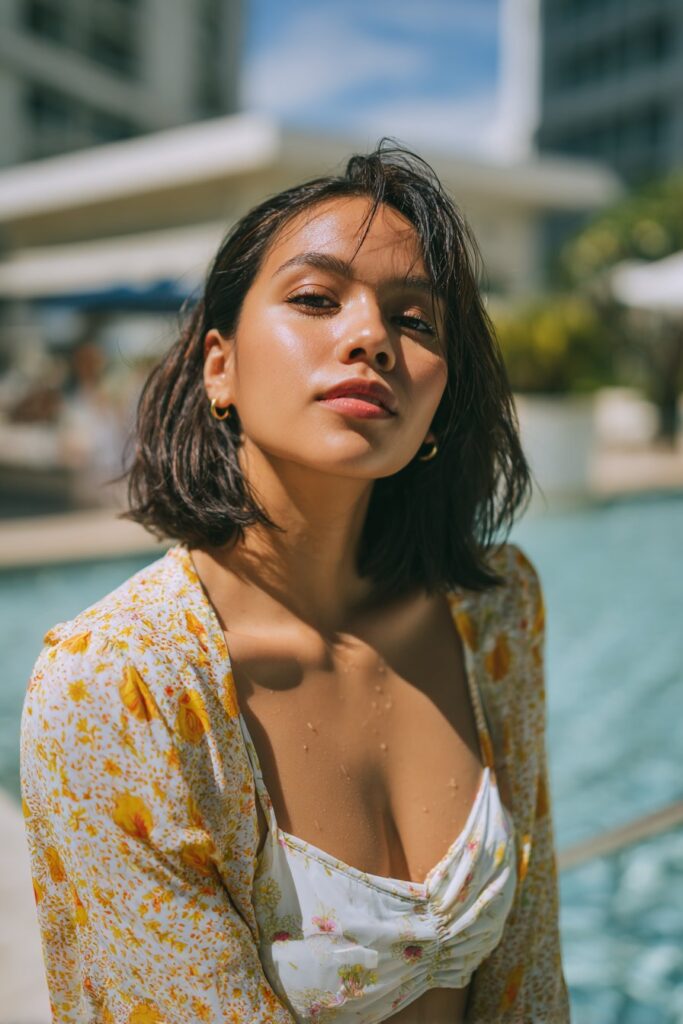
When to Use a Swim Cap
Swim caps offer the best protection when you’re actually getting in the water. I recommend them for pool swimming, ocean dips, or any situation involving chlorine exposure. Beyond keeping hair contained, they protect against environmental damage that happens the moment water touches your strands.
Hair Protection Level
Swim caps prevent hair from swishing through chlorinated water, which helps considerably. Silicone caps last longest, around 6 to 12 months with regular use, and resist tearing while protecting from chlorine. However, standard swim caps reduce water contact significantly but don’t create a 100% waterproof seal. Water typically seeps in around the edges. Double-capping, placing a latex cap under a silicone cap, is popular among swimmers with long or color-treated hair.
Stylish Cap Options
Modern swim caps are as cute as they are functional. Silicone caps are most popular since they’re durable, comfortable, and won’t pull hair. Lycra protects hair from UV rays, while some polyester caps provide UPF 50+ protection. For long hair, look for caps with extra dome space to accommodate buns or braids comfortably. Satin-lined options add a protective barrier.
Making It Work for You
Wet your hair or dampen the cap’s inside before application. Dry hair creates friction that makes caps harder to pull on and more likely to tear.
Conclusion
Your hair deserves the same protection you give your skin during those long sunny days. I’ve shared these 15 tanning hairstyles because they’ve genuinely saved my clients’ hair from damage I used to see constantly. Not every style will work perfectly for your hair type or lifestyle, and that’s completely normal. Start with whichever look feels easiest to recreate, then experiment from there. The key is finding two or three go-to styles you can rotate throughout summer. Your hair will thank you when fall arrives and you’re not dealing with fried, broken strands. Now get out there and enjoy the sunshine without the worry!

Elsa Claire is the founder and editor of ElsaClaire.com, where she writes about hairstyles, hair care, and the everyday routines that help real people feel good about their hair.