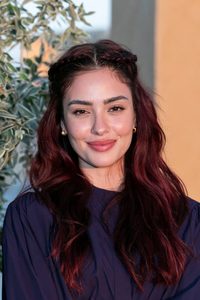
The 80s hairstyle women created during that decade still captivates me years later. Those bold, voluminous looks celebrated individuality in ways we’re only now rediscovering. The hairstyles of that era offered incredible versatility, adaptable to various lengths, textures, and face shapes. Big hair, particularly when permed to achieve maximum volume, defined the mid-1980s esthetic. Whether you’re drawn to punk-inspired spikes or soft, voluminous curls, eighties hairstyles let you make a statement. I’ve rounded up 15 iconic 1980s hair looks you can try in 2026, each with styling tips to help you nail the vibe.
Feathered Hair
What Makes Feathered Hair Iconic
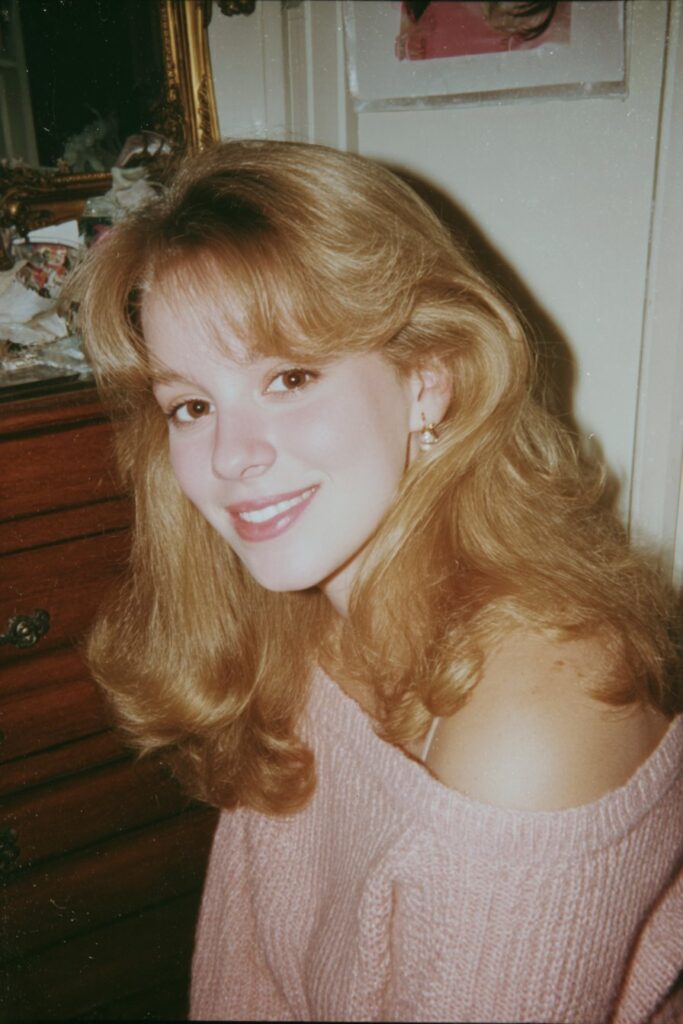
Layered strands tapered at the ends and brushed away from the face created the signature feathered look that dominated the late seventies and continued strong through the eighties. I’ve always admired how this technique mimics the delicate layering of bird feathers, which is exactly where the name originates. The style gained phenomenal popularity when certain actresses made it their signature look, and women rushed to recreate those soft, flowing waves.
What draws me to feathered hair is its democratic nature. The shoulder-dusting length flatters almost all face shapes, and those smooth layers create movement without demanding excessive maintenance. I’ve noticed how the wispy, airy texture achieved through special cutting techniques brings instant dimension to any look.
Suitable Hair Types for Feathered Hair
Originally designed for straight hair, feathered cuts have evolved to work beautifully across various textures. Fine hair benefits tremendously from this technique, as lighter layering maintains fullness while adding movement and lift. The strategic stacking of shorter pieces on top creates natural volume at the roots without making thin strands appear stringy.
Thick hair requires a different approach. The feathering method removes bulk from dense hair while keeping it full and maintaining defined layers. For wavy textures, the cut enhances natural wave patterns with layers that fall naturally down the back. Even curly-haired individuals can embrace feathered styles through specialized cutting techniques that enhance curl patterns while maintaining curl integrity.
How to Style Feathered Hair
I start by applying a heat protectant spray from mid-lengths to ends before any hot tool work. The round brush technique remains fundamental to achieving that iconic look. Section hair into manageable panels, wrap each around a medium-to-large round brush, and aim the blow-dryer nozzle slightly upward at the roots to create lift. Pull the brush down through mid-lengths while flicking ends outward.
For authentic feathered texture, part hair down the middle and curl sections away from the face using a 1-inch curling iron. Work with bottom layers first, then move upward. After curling, flip hair forward and run fingers through to create loose waves and volume.
Modern Variations
The feathered shag offers a contemporary twist, pairing wispy fringe with tousled appeal and retro glam. Face-framing feathered cuts focus layers around the eyes or cheekbones, cascading downward while curving away from the face. Soft layered versions start with subtle layers around the face, gradually blending into longer strands. These modern adaptations maintain the signature volume while feeling completely current for 2026.
Crimped Hair
The Crimped Hair Phenomenon
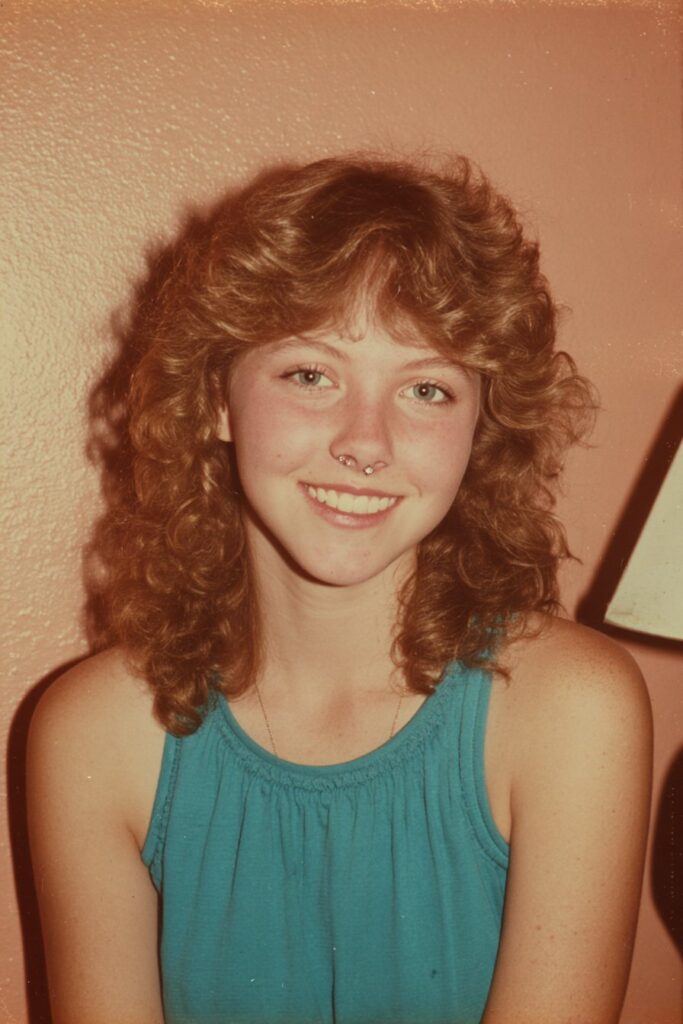
Crimping transforms straight hair into distinctive zigzag waves that make an instant statement. I’ve watched this technique create a sawtooth pattern that’s impossible to ignore. The modern crimping iron was invented in 1972 by Geri Cusenza specifically for one client’s hair, but it didn’t reach mainstream popularity until the mid-1980s. That’s when crimped hair became synonymous with bold eighties hairstyles.
What fascinates me about this trend is its cyclical nature. Crimping’s popularity returns in ten-year cycles, appearing frequently in fashion shows due to its visually striking effect. After peaking in the mid-80s, it resurfaced in 2007 at a runway show and gained traction through late 2007 and 2008. Now it’s back again with a contemporary twist.
Suitable Hair Types for Crimped Hair
I’ve found that all hair types can be crimped with the right preparation. For curly hair, you’ll want to either blow-dry straight or use a straightening iron first. This creates a smooth base that accepts the crimping pattern cleanly. The straight foundation proves important for achieving those defined waves.
How to Style Crimped Hair
A crimping iron features parallel heated plates designed with a flat S-shaped repeating groove. Start by applying heat protectant generously. Section your hair into manageable parts, beginning at the back. Clamp each section between the plates, holding for 5-10 seconds maximum. Work from roots downward, overlapping slightly to avoid gaps.
For a heat-free alternative, braid damp hair in multiple tight strands and leave for a couple of hours. The tighter your braids, the sharper your crimps. Modern crimpers create wider, more defined waves rather than the tight crinkles of traditional 1980s hair. This gives you flexibility to achieve either a subtle texture boost or full-on 80s womens hairstyles drama.
Voluminous Curls
What Defines Voluminous Curls
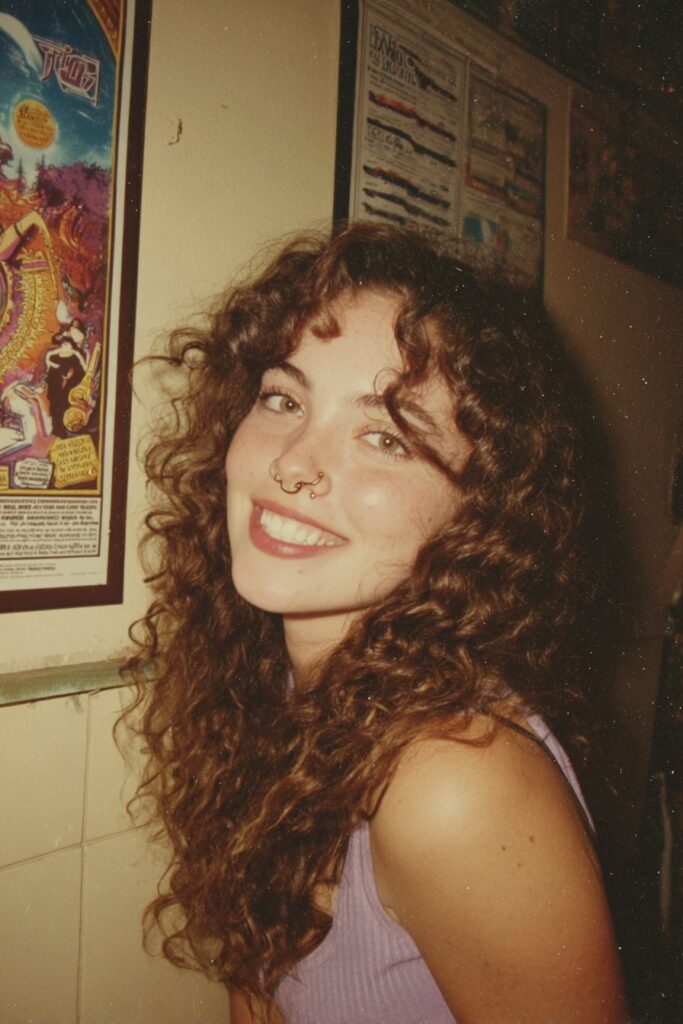
Big, soft curls achieved through hot rollers became the signature look I associate most with 1980s hair. I’ve always admired how this style emphasized bounce and fullness rather than tight ringlets. Volume stood as the defining characteristic, with hairspray becoming an essential companion to every styling session. What makes these curls iconic is their natural, movie-star quality when styled with wispy layers brushed around the face.
Suitable Hair Types for Voluminous Curls
In reality, around 60 percent of the world’s population has naturally curly hair, which tends to be more voluminous than straight hair. I’ve worked with every curl type, and voluminous styles work beautifully across the spectrum. Type 2A waves feature subtle texture that needs lightweight products to avoid weighing strands down. Type 3A curls display loose, big spiral shapes with natural shine. Type 3B curls create springy ringlets about the size of a marker, bouncing off each other to generate impressive volume. Moreover, Type 3C curls show tight corkscrews resembling pencil circumference with dense packing.
How to Style Voluminous Curls
I start by applying volumizing mousse to damp hair, working it from roots to ends. For authentic 80s womens hairstyles volume, wrap small sections around your curling barrel away from your face, alternating directions to create natural movement. After curling, clip each section in place while cooling to create that hot roller effect and help curls last longer. Diffusing proves essential for curly textures, as noted that drying with your head tilted or upside down encourages lift at the roots.
Products for Voluminous Curls
Lightweight mousses give curls lift and hold while keeping them soft and bouncy. Root-lifting sprays applied beforehand maintain volume throughout the day. I recommend curl-enhancing creams or gels to define each curl without weighing them down. Heat protectant remains non-negotiable every single time you use hot tools. For wavy textures, rice protein-enriched texturizing mists work beautifully.
Shaggy Mullet
The Shaggy Mullet Explained
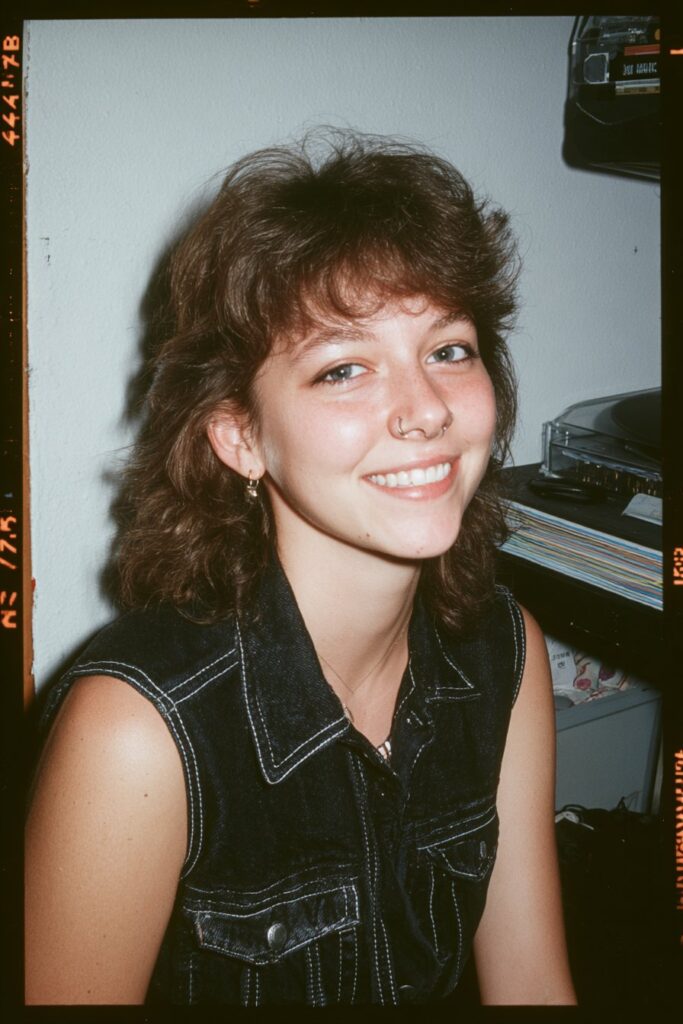
I’ve watched every woman who gets a shaggy mullet walk out with instant confidence, which is exactly why this cut holds such appeal. This timeless, heavily layered haircut draws inspiration from the 70s, featuring longer pieces in the back that accentuate shorter pieces at the front and crown area. In effect, you get extra volume, texture, fashion, and personality all working together.
The modern shaggy mullet differs significantly from what you remember. Where traditional 80s hairstyles emphasized extreme contrasts between long backs and super short tops, the modern version presents a cleaner, structured look with natural texture. I always tell clients they need bangs to prevent this from looking like a conventional layered cut. One important consideration: this style suits those who love wearing their hair down, inasmuch as the extensive layering causes hair to fall out from ponytails, buns, or braids.
Suitable Hair Types for Shaggy Mullet
Shaggy mullets work beautifully across all textures, though some require less effort than others. Wavy, curly, and coily hair types are natural fits because this cut needs texture and volume. For thick or rough hair, the layered approach cuts down bulk while maintaining an easy, stylish look through razor cutting techniques.
Fine or straight hair can absolutely work with this style, but you’ll need to commit to more styling effort to make your mullet hold shape. I recommend discussing expectations during your consultation, covering how wispy you want bangs or how short you prefer layers.
How to Style Shaggy Mullet
Start with wet hair and apply volume-adding mousse to enhance texture. Modern mullet care focuses on achieving a glossy, tangle-free shaggy look rather than rough edges. After washing regularly, detangle thoroughly and lock in moisture with hair oils. Pump up volume with a good blow dry, then add edgy texture through backcombing. For polished finishes, work lightweight pomade through ends or sweep fringe forward.
Side Ponytail

Why the Side Ponytail Defined the 80s
A side ponytail told the world you were spirited and fearless. I remember seeing this look everywhere during that era, from workout videos to school hallways. The beauty of this style lay in its attitude more than its technique. Hair gets pulled to one side of the head and secured into a ponytail, often with high placement and significant volume at the roots. Key features include a deep side part, teased roots, and voluminous, often curled ends.
This wasn’t just fashion. In effect, the side ponytail became a common hairstyle for exercise, appearing in popular aerobics workout videos alongside spandex leotards and leg warmers. I’ve styled countless women who fondly recall dancing around their living rooms with this exact look.
Suitable Hair Types for Side Ponytail
This style works well with a wide variety of hair types, especially those with medium to long hair. I’ve found that the asymmetric placement flatters different face shapes because you control where the volume sits. The ponytail transitions from a red carpet staple to an everyday look depending on how you style it.
How to Style Side Ponytail
Pull your hair to one side and secure it at the nape of the neck with hair grips. For a modern take, opt for placement closer to the top of the head, just slightly off-center. Tease your tail at the base for added volume. You can wear your ponytail in big bouncy curls or use a flat iron for an ultra-sleek look.
Similarly, the wrapped technique elevates this style. Leave out a small section on one side, secure the rest into a low ponytail behind the opposite ear, then wrap that loose section around the band and pin underneath.
Accessories for Side Ponytail
Finish your style with a scrunchie for that nostalgic 1980s hair feel. Neon scrunchies remain popular accessories for authentic eighties hairstyles.
Barrel Curls
Understanding Barrel Curls
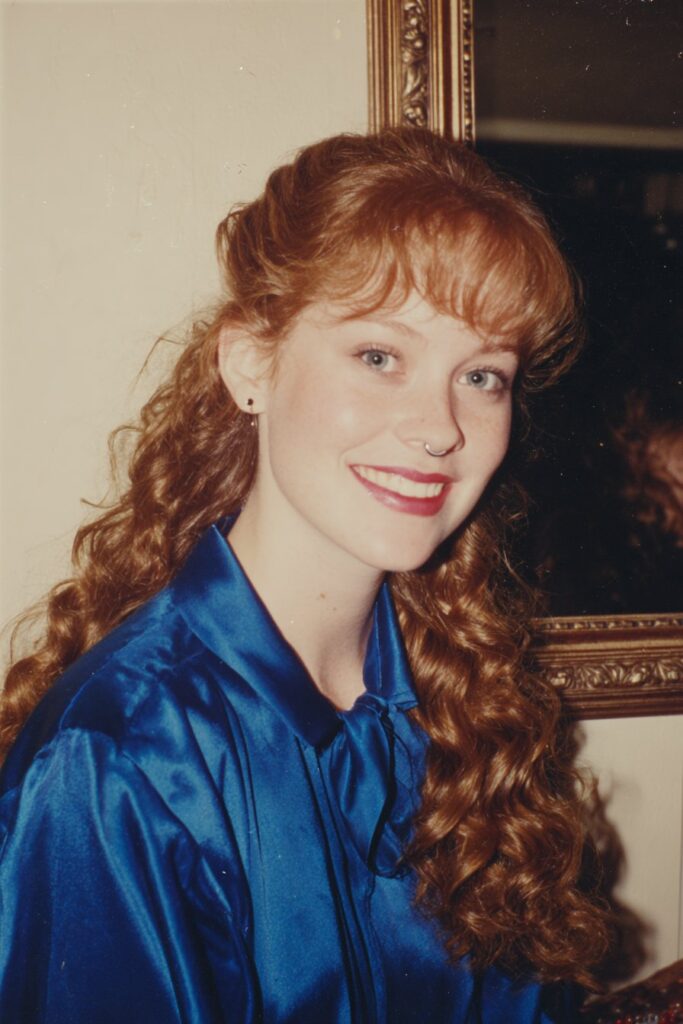
Barrel curls are oversized, loose spirals or ringlets of hair ideal for medium to long hair. I’ve styled countless women with these glamorous curls, and they never fail to deliver that red-carpet elegance. The beauty lies in their versatility. You can achieve classic long barrel curls suited for date nights, big barrel curls perfect for casual brunches, or triple barrel curls that work wonderfully on short to long hair. Large barrel curls pinned up create stunning looks for glamorous evenings, while mermaid waves offer a relaxed variation for beach days.
During the 80s hairstyles era, actresses like Catherine Bach flaunted barrel curls both on and off screen, using large rollers to recreate the look at home. Likewise, characters on hit shows displayed giant barrel curls that fit the southern charm esthetic perfectly. These 80s-style barrel waves are characterized by large, bouncy curls that emphasize volume and texture, offering a more relaxed, flowing curl while maintaining a defined wave pattern.
Suitable Hair Types for Barrel Curls
Medium to long hair works best for achieving those cascading spirals. The style adapts beautifully to different textures and lengths, making it accessible for most hair types. If your hair isn’t quite long enough yet, halo hair extensions blend seamlessly with natural hair and sit comfortably secured by a transparent wire.
How to Style Barrel Curls
Start by selecting the right barrel size. A 1.25-inch barrel creates old-Hollywood waves and glamorous hairstyles. For the most versatile option, a 1-inch barrel works on all hair lengths and creates everything from polished curls to tousled waves. A 1.5-inch barrel produces loose waves with subtle texture.
Before curling, spritz on heat protectant spray, which acts as a shield protecting your locks from direct heat and reducing damage. Set your temperature based on hair type: fine or damaged hair needs 300-350°F, normal hair 350-400°F, and thick or coarse hair 400-450°F. Wrap 1-inch sections around the barrel, alternating directions for natural movement. To achieve tighter barrel curls, slowly slide the iron down the hair; for looser curls, slide it down quicker. Hydration treatments prove vital for maintaining soft, bouncy curls ready for styling.
Permed Bob
The Permed Bob Revolution
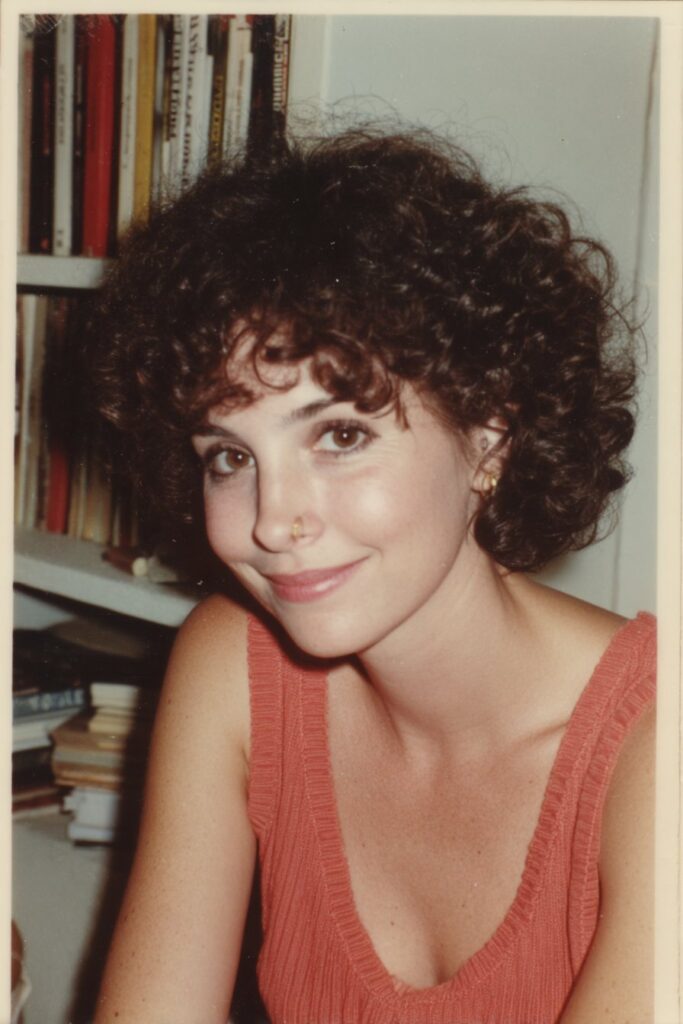
Permed bobs bring me back to curly-haired clients who want that sweet, angst-free approach to defined ringlets. In fact, this style resembles the natural-textured bobs gaining popularity lately, except with slightly tighter, more controlled curls. I’ve permed countless bobs over the years, and the transformation from 80s womens hairstyles to modern versions is remarkable.
The 80s perm left hair feeling brittle and dry, but modern techniques have changed everything. Chemical treatments now include active ingredients that repair and prevent damage. Similarly, styling products have evolved tremendously. Modern curl creams defrizz and moisturize without adding crunch or fuzz, giving you soft, shiny hair instead of that fried, thirsty look from decades past.
Suitable Hair Types for Permed Bob
Perms work best on virgin or healthy hair. I always assess hair condition before recommending this treatment. You can perm most hair types as long as the strands aren’t compromised.
How to Style Permed Bob
You have two main options. Body wave perms use larger rods to produce looser, more versatile curls, adding volume and creating a textured base. Beach wave perms require less maintenance and deliver a youthful look perfect for first-time perming. I recommend starting with beach waves before advancing to tighter body wave perms.
Maintenance Tips
The golden rule: don’t get your hair wet for at least 24 hours after treatment. I tell clients to wait two full days before washing and avoid combing for the first 24 hours.
Use sulfate-free shampoo and deeply nourishing conditioner. Limit washing to 2-3 times weekly. Deep conditioning masks once weekly keep curls soft.
One commitment aspect: perms last 3-6 months. You cannot undo the treatment, so choose wisely. Avoid coloring permed hair. This permanent decision requires dedication, but the effortless texture makes it worthwhile.
Big Hair
What Makes Big Hair Iconic
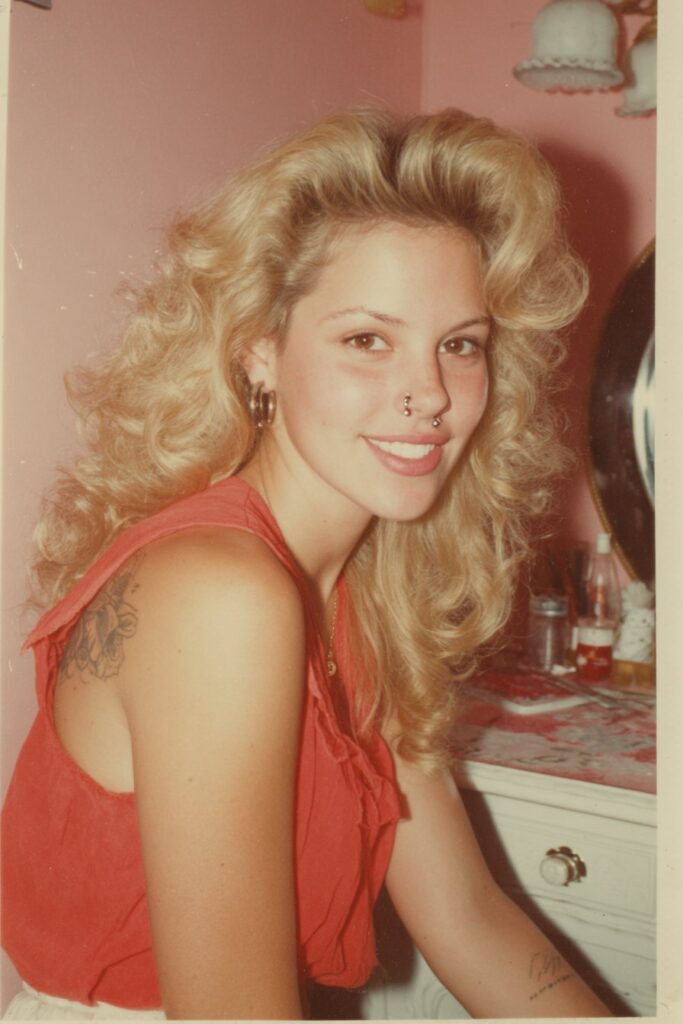
Volume defined everything about the 1980s, and big hair became more than a trend. This hairstyle emphasizes large volume, making hair occupy substantial space above and around the head. The label originated in the late 1970s when these styles began their rise to popularity.
I remember clients bringing in magazine clippings, eyes lighting up as they described wanting that confidence and attitude big hair represented. In effect, this wasn’t just about esthetics. Big hair symbolized individuality and a whole lot of personality. Following the rise of music videos, stars influenced millions to embrace teased, voluminous looks that could barely fit through doorways.
Brooke Shields became a dominant force after becoming a teen model in 1980, appearing on countless magazine covers with various big hair styles. Likewise, Madonna sported this look in the mid-1980s, prompting women everywhere to emulate her. Television shows like Dynasty helped popularize the high volume bouffant and its glamorous image.
Suitable Hair Types for Big Hair
Here’s something that surprised me early in my career: about 60 percent of the world’s population has naturally curly hair, which tends to be more voluminous than straight hair. For these individuals, big hair isn’t a deliberate fashion statement requiring special techniques but rather their hair’s natural state.
That said, any hair type can achieve this look with the right approach.
How to Style Big Hair
Backcombing (teasing) forms the foundation. I apply volumizing mousse at the roots first, then section hair and tease backwards from mid-lengths toward the scalp. Blow-dry with your head flipped forward for maximum lift at the crown. Aqua Net became synonymous with this era, helping styles withstand wind and weather. Finish with liberal hairspray application to lock in that volume.
Wolf Cut
The Wolf Cut Phenomenon
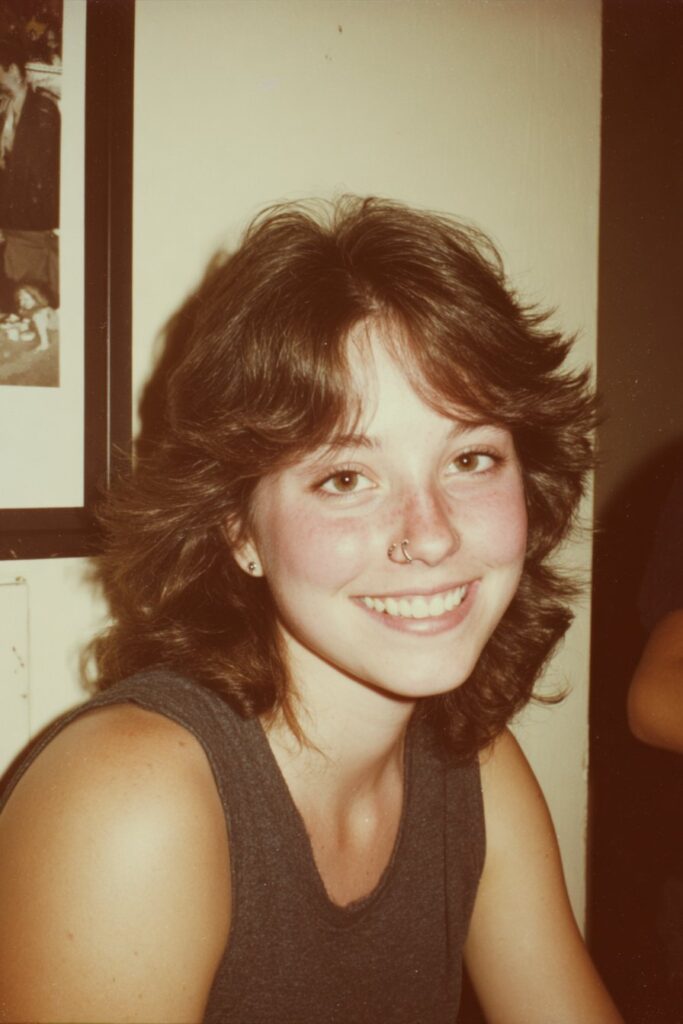
This layered masterpiece has captured hearts since 2022, and I’ve styled dozens of variations on clients who crave that effortless, undone esthetic. The wolf cut merges a shag’s choppy texture with a mullet’s structure, creating something entirely fresh for eighties hairstyles enthusiasts. What draws me to this cut is its wild, untamed appearance that actually requires minimal upkeep. The top and crown get cut shorter to build volume, while layers around sides and back stay longer, creating that signature wolfish mane effect.
Suitable Hair Types for Wolf Cut
Your hair needs to be at least chin-length to pull this off. I’ve worked with every texture imaginable, and this cut truly suits all of them. Wavy and curly hair naturally enhance the layered, messy shape without extra effort. For fine hair, I ask stylists to add soft, blended layers that build volume without creating wispy ends.
How to Style Wolf Cut
Apply volumizing mousse to damp hair, focusing on roots for lift. Blow-dry using a rounded brush to create volume at the crown. Use a curling iron or straighteners on random sections, alternating directions for natural texture. Scrunch with fingers and finish with texturizing spray.
Modern Wolf Cut Adaptations
Modern versions offer softer, more intentional shapes compared to the extreme 1980s hair styles. You can customize fringe length, layer intensity, and texture based on face shape and lifestyle preferences.
Pixie Cut
The Bold Pixie Cut
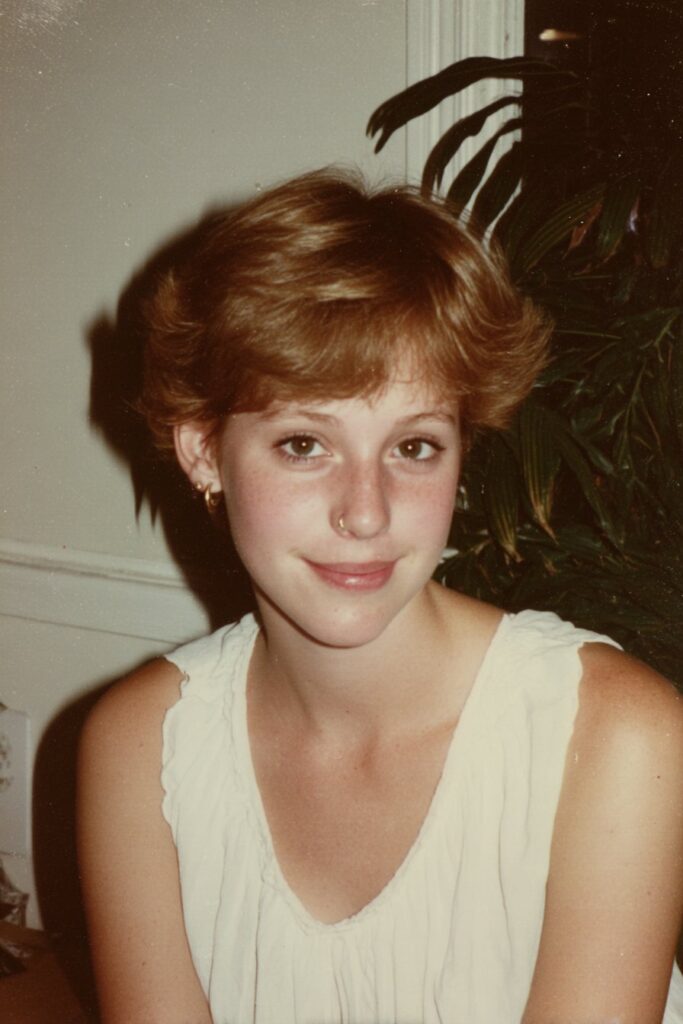
Bleach blonde pixie cuts dominated 80s hairstyles alongside big hair and perms. I’ve always loved how this daring crop made an instant statement about confidence and individuality. The real color of choice was bleach blonde, particularly for pixie cuts during that era. One iconic performer wore her bleached pixie super short for a night out in 1986, while another sported a choppy peroxide blonde version on set that same year. This wasn’t just fashion but rebellion against conventional femininity expectations.
Suitable Hair Types for Pixie Cut
Fine hair benefits tremendously from pixie cuts, as shorter lengths add volume and texture without weight pulling strands down. Thick hair works beautifully too, though you’ll need thinning and textured layers to prevent bulkiness. For curly textures, strategic shaping accommodates natural curl patterns while maintaining bounce. I always recommend discussing your lifestyle during consultations, given that this cut requires salon visits every few weeks to maintain shape.
How to Style Pixie Cut
Styling versatility makes pixies endlessly appealing. Apply fiber wax to create texturized, sculpted bangs, or use volumizing mousse for long-lasting lift. For sleek finishes, work smoothing serum through damp hair before blow-drying with a flat brush. Curly pixies need curl-specific products based on your texture. The soft pixie delivers high impact with low maintenance, whether you prefer polished or tousled vibes.
Teased Updo
The Glamorous Teased Updo
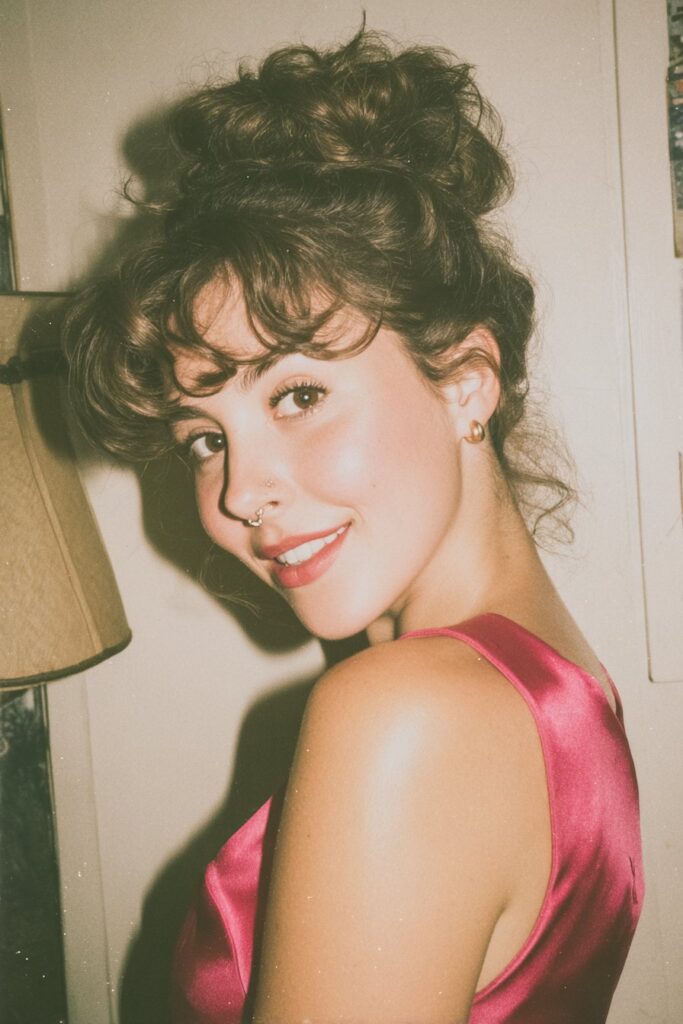
Teased updos transport me straight back to working with clients who wanted that glamorous, elevated look. This hairstyle involves rocking teased front strands layered with strong-hold hairspray for voluminous results that last all day long. I’ve recreated this style countless times, and it never fails to add drama. One actress famously tossed her grown-out hair into a teased updo during the 80s hairstyle women era, adding instant sophistication.
What makes teased updos special is their grungy edge combined with height. They lend your overall look an elevated quality while working beautifully for those inevitable dirty hair days.
Suitable Hair Types for Teased Updo
Thin hair benefits tremendously from this technique. Teasing helps add texture and body, creating the illusion of thicker, more voluminous hair. The backcombing process builds realistic volume at the crown without looking exaggerated.
How to Style Teased Updo
Start by sectioning hair into manageable parts. Hold each section taut and backcomb gently from mid-shaft toward roots using a rat-tail comb. Smooth the top surface lightly, then gather into your desired updo shape. Lock everything in place with strong-hold hairspray.
Best Occasions for Teased Updo
Teased updos work for red carpet events, weddings, or casual outings. They’re also my go-to recommendation for second or third-day hair.
High Ponytail
The High Ponytail Statement
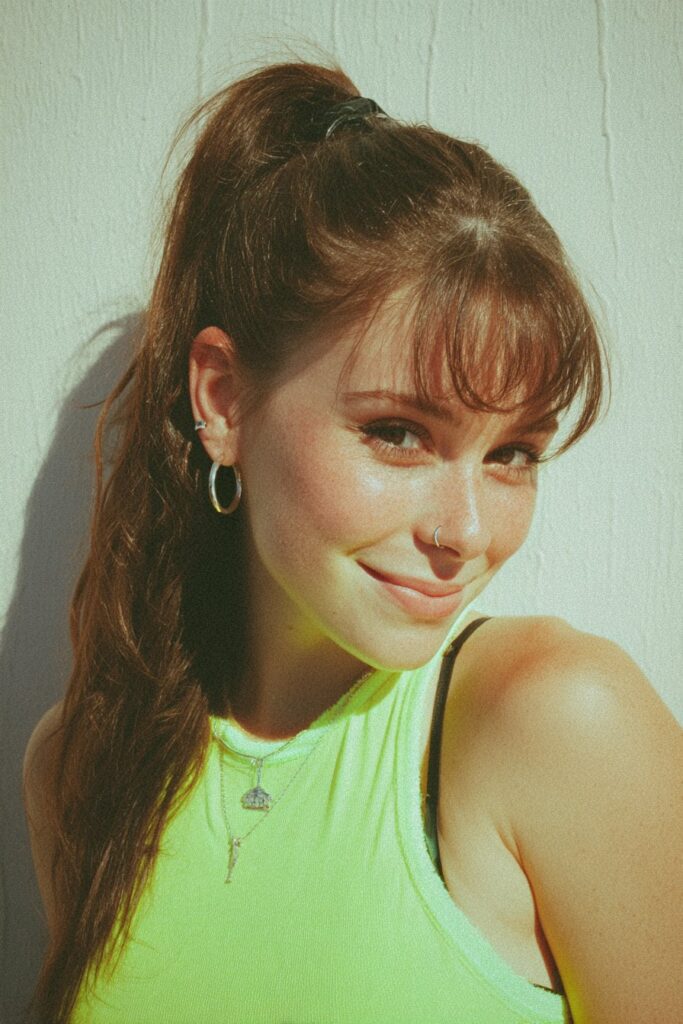
High ponytails sit near the crown of your head, creating a youthful and lifted feeling that I absolutely love recreating. Placement completely changes the vibe, which is why I always discuss this with clients first. This style became more than fashion during the eighties hairstyles era. In addition to being a statement, this look was a common hairstyle for exercise, appearing in popular aerobics workout videos alongside spandex leotards and leg warmers.
What made this truly quintessential 80s hairstyles was pairing it with bangs. I’ve styled dozens of women who remember that exact combination from their childhood photos.
Suitable Hair Types for High Ponytail
Ponytails work across various textures and lengths. Medium and even shorter hairstyles can rock this look with proper styling products. If you have naturally thinner hair, ponytail extensions add body and length while you wrap natural hair around the base to hide clips.
How to Style High Ponytail
Blow-dry hair in the direction you want the ponytail to sit for a sleek finish. For a modern update, use hair gel to smooth every strand into place. You can wear your ponytail in big bouncy curls or use a flat iron for an ultra-sleek look. Finish with a scrunchie for nostalgic 1980s hair authenticity.
Jheri Curl
The Jheri Curl Legacy
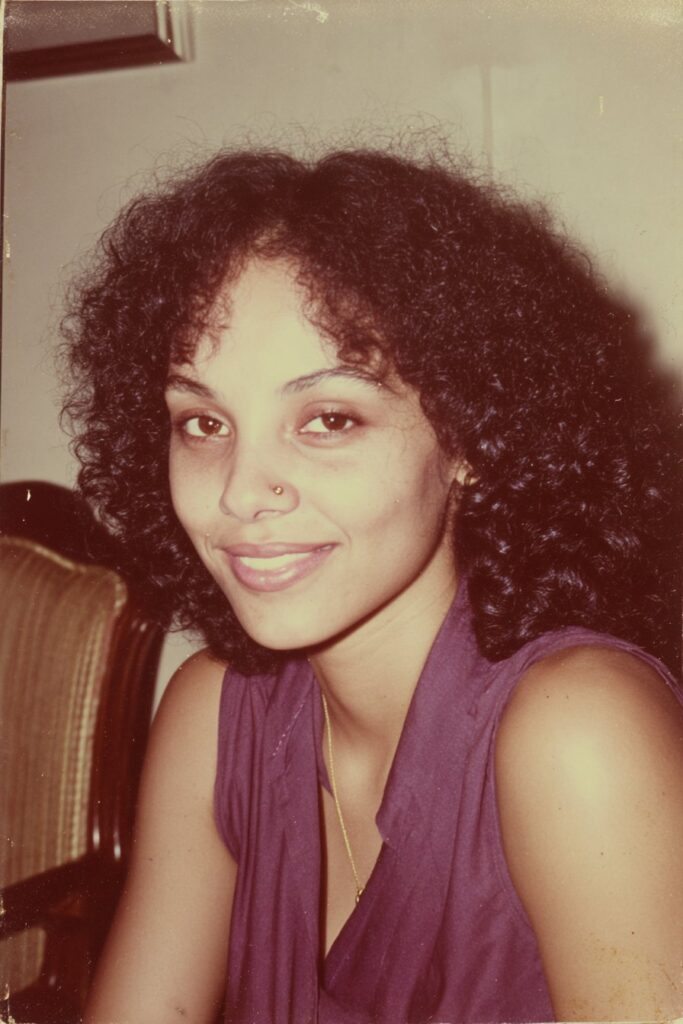
Hairdresser Jheri Redding invented this permanent wave hairstyle that gave wearers a glossy, loosely curled look during the 1980s and early 1990s. I’ve worked with clients who remember when one iconic performer appeared on an album cover in 1982, sparking a cultural movement that made this style synonymous with that era. What moves me about this history is how entrepreneur Comer Cottrell made the look accessible. Starting with just USD 600.00, he created the Curly Kit that brought a celebrity-exclusive style to everyday people.
Suitable Hair Types for Jheri Curl
This style works most effectively on curly, naturally textured hair. I’ve found it particularly suited for the Black community, where it became a cultural staple.
How to Style Jheri Curl
The classic approach uses a two-part application: a softener containing Ammonium thioglycolate loosens tight curls, then perm rods and a neutralizer set them permanently. For those avoiding chemicals, modern techniques use curl activator gel and moisturizing products to recreate the wet look without damage. In fact, hairstylist Gina Rivera reinvented this as the Gina Curl in early 2012, focusing on hair health.
Maintenance Requirements
Daily curl activator application keeps the style moist. Original activators retailed from USD 3.00 to USD 6.00 but depleted quickly. Similarly, sleeping with a plastic cap prevents drying. The activator’s greasy nature often stains clothing and furniture, which modern products have thankfully improved.
Soft Blowout
The Elegant Soft Blowout
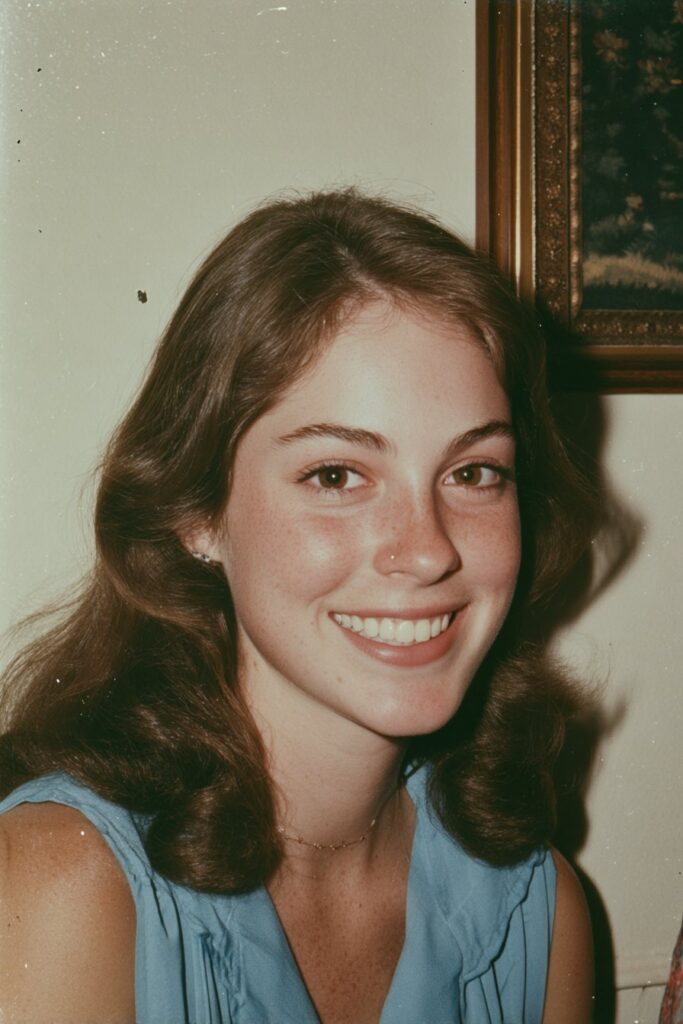
Soft blowouts remain one of my favorite techniques from the eighties hairstyles era because they prove you didn’t need extreme volume to make a statement. One actress wore her choppy bangs with a breezy blowout that became iconic, similar to what she later sported in a hit show. This style featured big, fluffy waves paired with teased roots, offering a softer variation while maintaining impressive fullness through strategic layering.
What draws me to this look is how it balanced glamor with wearability. Big, fluffy, bouncy hair defined that decade, with stars like one famous model and another bombshell making their blowouts the envy of everyone. In truth, their hair still inspires clients who visit me seeking that same confidence.
Suitable Hair Types for Soft Blowout
Soft blowouts adapt beautifully across various textures, though naturally wavy hair benefits most from this approach. The existing wave pattern enhances the final result without requiring excessive manipulation.
How to Style Soft Blowout
Lifting roots forms the foundation of authentic 80s womens hairstyles blowouts. Apply volumizing products generously at the roots, then use a metal round brush rather than wooden ones, which can stretch hair’s elasticity and create unwanted smoothness. Apply both volumizing and smoothing products simultaneously to achieve that signature soft, voluminous finish. The combination creates bounce without stiffness.
Spiky Layers
The Edgy Spiky Layers
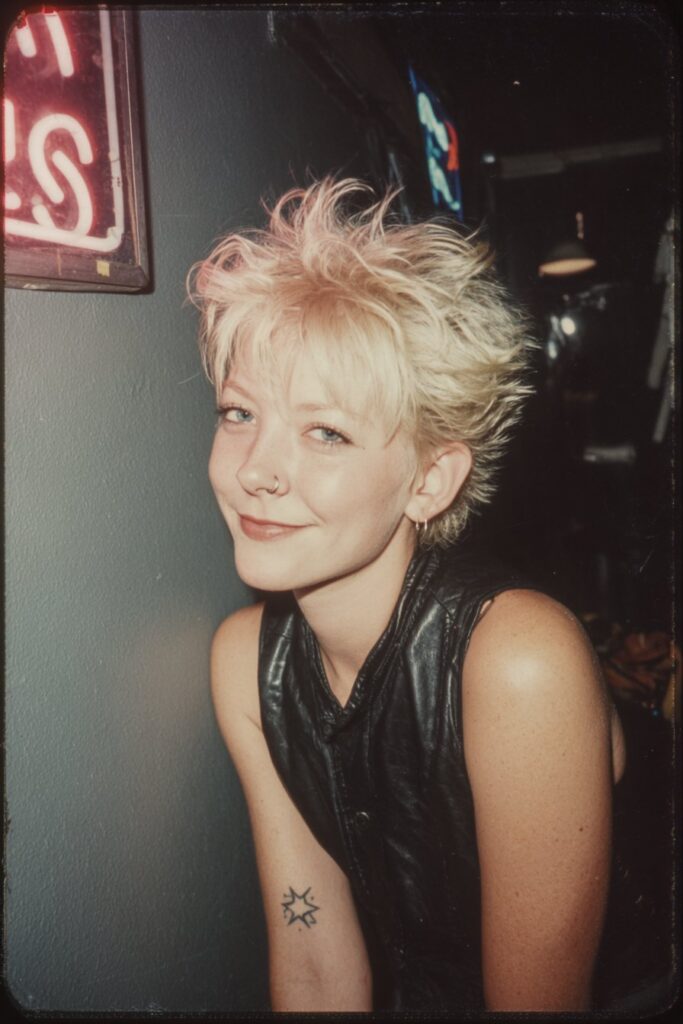
Short, textured layers styled with spiky ends brought punk-inspired attitude to eighties hairstyles. I remember working with clients who wanted that rebellious edge, achieving it through point cut layers incorporated throughout the hair. One iconic performer made this look synonymous with the era, and suddenly everyone wanted those choppy, defiant spikes.
Suitable Hair Types for Spiky Layers
Spiky layers work well on various hair types, including straight, wavy, curly or even fine hair. They’re a great option for adding texture and volume to hair that may be lacking natural fullness. What I love about point cut layers is their versatility: you can spike them when you want a casual look or smooth them down to look more sophisticated.
How to Style Spiky Layers
To style spiky layers, start with damp hair and apply hair products such as gel, wax or pomade to create the desired shape and hold. Work the paste into your hands, then run it through the top section, molding pieces how you’d like them to stick up. For stronger hold, apply mousse to damp hair before blow-drying upside down, then backcomb and set with hairspray.
Products for Spiky Layers
Gel, wax, and pomade remain the go-to products for achieving defined spikes. Styling paste works on all hair types without leaving hair feeling stiff. For maximum hold, strong-hold hairspray locks everything in place throughout the day.
Conclusion
Just to reiterate, these 15 iconic looks prove that 80s hairstyles still hold incredible appeal for anyone seeking bold, confident styles in 2026. Whether you’re drawn to soft feathered layers or dramatic crimped texture, each look offers a unique way to express your personality. Given these points, I encourage you to experiment with at least one or two styles that resonate with you. Not every look will feel right, and that’s perfectly fine. I’ve spent years helping clients discover their signature styles, and the journey itself proves just as rewarding as the destination. Start with the techniques that excite you most, and don’t be afraid to make these retro looks your own.

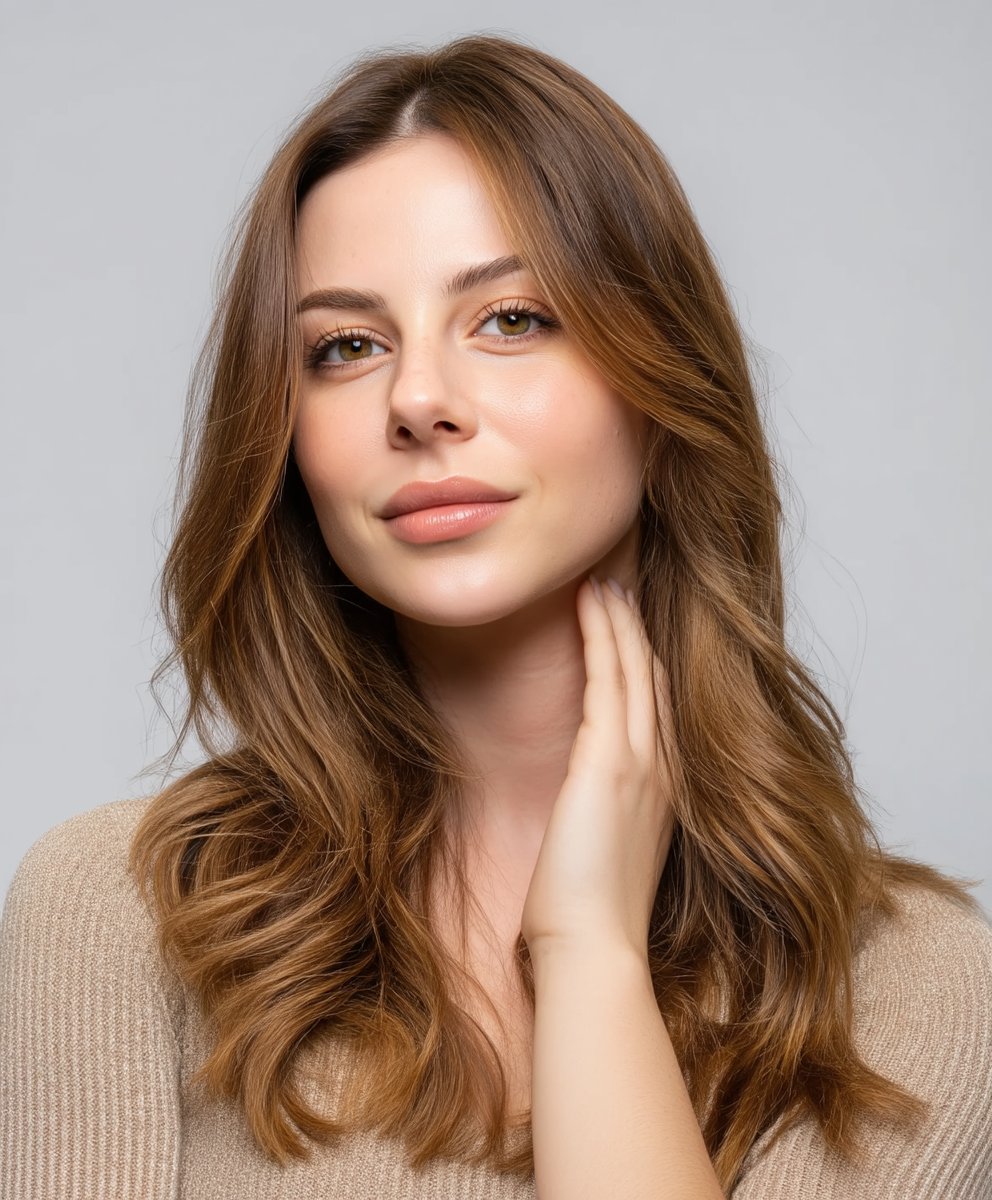
Elsa Claire is the founder and editor of ElsaClaire.com, where she writes about hairstyles, hair care, and the everyday routines that help real people feel good about their hair.