I know firsthand how challenging infant baby girl hairstyles short hair can be, especially when you’re trying to keep your little one comfortable and adorable at the same time. Consequently, over 14,000 people have searched for creative solutions, and I’ve been there myself, wondering how to style baby girl hair that’s barely past wisp stage. Coming up with baby girl hairstyles short hair on a daily basis for babies aged 0 to 24 months is no easy task. Furthermore, I’ve gathered 12 easy baby girl hairstyles and infant hairstyles that are gentle, quick, and absolutely precious for 2026.
Tiny Top Knot with Bow
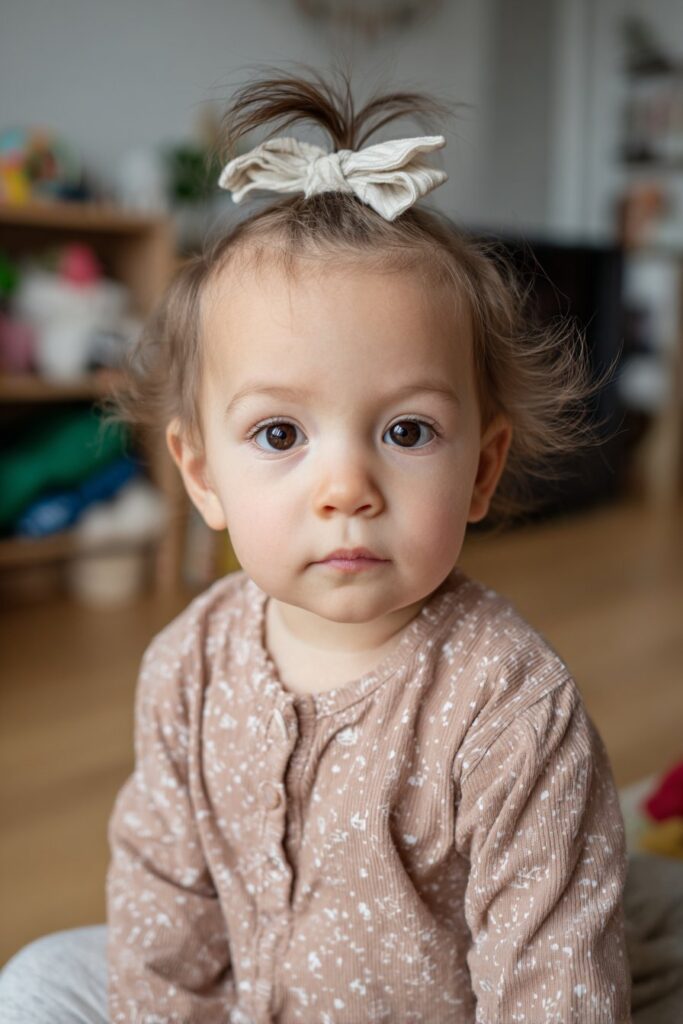
The tiny top knot with bow remains one of my favorite infant baby girl hairstyles short hair options because it transformed how I approached styling babies with minimal hair length. When Elsa Claire first showed me this technique during one of her baby styling workshops, I watched as she created an adorable focal point on a 3-month-old with barely an inch of hair.
What This Style Looks Like
This style gathers whatever hair your baby has at the crown of her head into a small, gathered knot secured with a soft elastic, then topped with a bow accessory. The look creates a sweet focal point that draws attention upward, making even the finest, shortest hair appear intentionally styled. The bow can match her outfit or provide a pop of color, and the knot itself sits like a tiny ballerina bun perched on top.
Best Age and Hair Type
I’ve successfully created this look on babies as young as 2 weeks old. By the time your little one reaches 6 months, she’ll likely have enough hair for a more defined knot. This style works beautifully on fine, wispy hair because you’re not trying to create bulk. Babies with straight, wavy, or loosely curled textures all wear this well. If your daughter has very fine hair that slips easily, the sock method I’ll describe below provides extra grip.
How to Create This Look
Tying a bow on someone so tiny can feel tricky, thus I recommend this approach:
- Gather the top section of hair at the crown using your fingers
- For babies with very short or fine hair, cut the toe off a baby sock and roll it into a small tube
- Secure the gathered hair with a small elastic band
- If using the sock method, slide the tube onto the small ponytail, then roll it down toward the scalp to create a fuller knot
- For the bow, tie it around a small can or cylinder object first to get the perfect shape, then carefully slide it onto your baby’s head and adjust
Styling Tips from My Experience
I learned from working with newborns in my early styling days that daytime wear works best for this look. Take the elastic and bow out before bedtime to avoid any discomfort. Vary the placement slightly each day so you’re not constantly pulling the same section of hair. Consequently, I recommend taking styling breaks every few days.
When your baby starts reaching for her hair, place the knot slightly back from the crown where her hands can’t easily grab it. Moreover, keep the elastic snug enough to hold but never tight. The whole process takes under two minutes once you get comfortable with the technique, making it perfect for those mornings when you want your little one looking put-together without a lengthy routine.
Side-Swept Clips and Barrettes
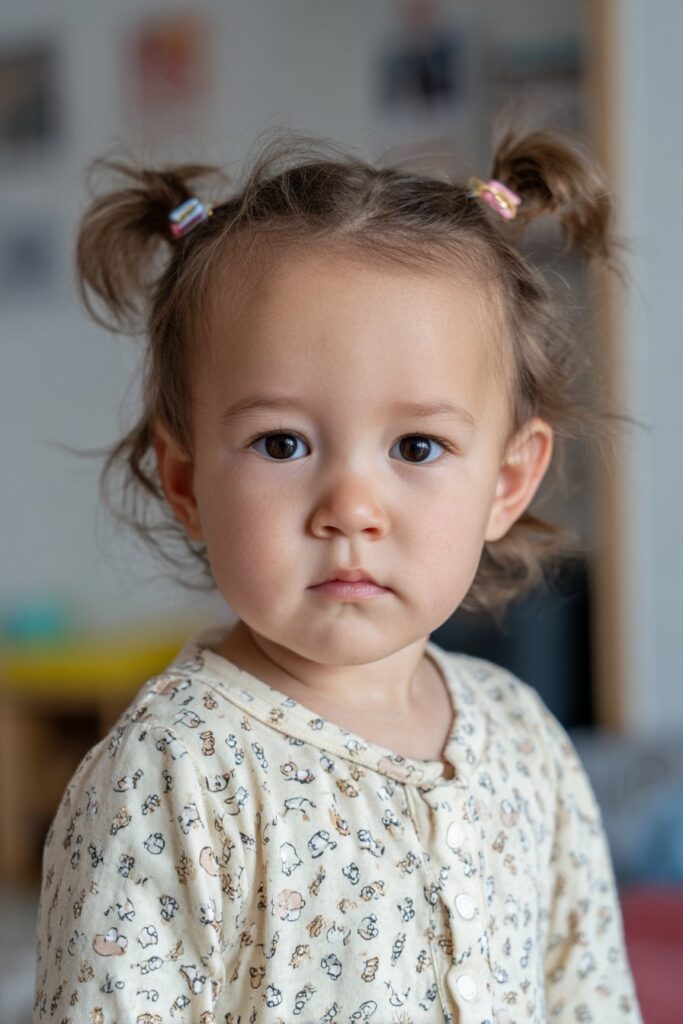
Side-swept clips became my go-to solution after meeting a frustrated mom whose daughter kept pulling off headbands but desperately needed hair out of her eyes. Elsa Claire showed me during one of our styling sessions how clips designed for fine baby hair could change everything, and I’ve been using this technique ever since.
What This Style Looks Like
This style sweeps your baby’s hair to one side and secures it with small clips or barrettes positioned near the temple or just above the ear. The swept section can be a small portion from the front or a larger side part, depending on how much hair your baby has. Barrettes are larger clips that can hold a significant amount of hair and often feature beautiful embellishments. The result creates an asymmetrical, charming look that keeps hair away from your baby’s face while adding a decorative touch.
Best Age and Hair Type
I’ve used this approach on babies as young as 3 weeks old with barely any hair. The style works particularly well for babies who grab at their bows or headbands but need help keeping their hair out of those pretty eyes. For instance, babies with fine, wispy hair benefit most because specialized clips grip better than traditional accessories. The Mini Latch Wisp clip works on the tiniest peach fuzz and even latches on to just one strand of hair.
How to Create This Look
Creating this look requires the right clips. I discovered shelf liner material keeps things from slipping in cupboards, and it works equally well for baby hair. When selecting clips, choose double prong hair clips that are about 1 3/4 inches long. Sweep a small section of hair from one side toward the ear or temple. For babies with extremely fine hair, velcro barrettes work beautifully because they’re lightweight and don’t pull the baby’s hair but stay secure. Position the clip at an angle that feels natural and secure it gently.
Styling Tips from My Experience
I learned through trial that rotating clip placement prevents the same hair section from being pulled daily. Switch between left and right sides throughout the week. Snap tape barrettes are harder to remove, which might be beneficial if you have a grabby girl. Equally important, ribbon-wrapped clips using 3/8 inch grosgrain ribbon provide a softer feel against delicate skin. Remove clips during naps and bedtime to ensure comfort. When your baby starts reaching for accessories, position clips slightly back where little fingers can’t easily grasp them.
Mini Pigtails with Elastic Bands
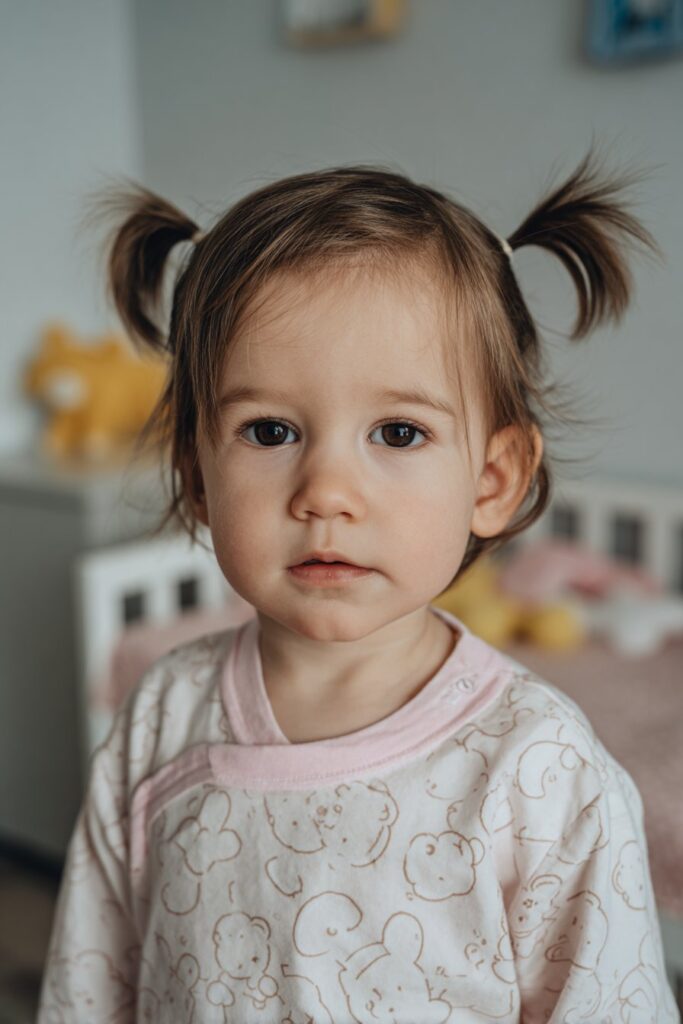
Pigtails ruled my childhood, and when Elsa Claire taught me how to adapt this classic for infant baby girl hairstyles short hair during one of her workshops, I realized this timeless style could work beautifully on babies with minimal length. She demonstrated on a 4-month-old with wispy hair, creating the most adorable symmetrical look I’d seen.
What This Style Looks Like
This style features hair vertically parted into two sections, each gathered and secured with elastic bands on either side of the head. The result creates two small ponytails or gathered sections that frame your baby’s face symmetrically. Hair is well brushed and packed with rubber bands, creating neat, defined sections. The look can be dressed up with bows or kept simple with colorful elastics.
Best Age and Hair Type
I’ve created mini pigtails on babies as young as 3 to 4 months old when hair reaches sufficient length. Dense, longer hair works particularly well, but I’ve also succeeded with fine textures. Babies who have crazy hair benefit from this style when you need to look respectable. At the same time, this works across all hair types, from straight to curly textures.
How to Create This Look
The key to perfect pigtails lies in the preparation and technique:
- Start with slightly damp hair for easier parting
- Have your daughter look down to make separating easier
- Use the metal pick at the end of a salon comb to create a straight line from top to bottom
- Ensure no zig-zags or curves in your part
- Comb each section smooth and neat
- Make the ponies as low as possible to keep them tidy
- Double the ponytail holders for security
- Be gentle when pulling them out
You’ll need quality rubber bands, hair moisturizer, and a hairbrush for this look. In particular, the entire process takes about five minutes once you develop your technique.
Styling Tips from My Experience
Hairspray became my secret weapon after Elsa Claire showed me this trick. Spray a small amount in the area before placing bows to help them stay secure. Equally important, use the spray in front to smooth baby hairs. Keep elastics snug but never tight to avoid discomfort. I rotate between high and low placement throughout the week to prevent pulling the same sections repeatedly. For babies who grab at their hair, tiny rubber bands made of scuba material provide stronger hold while remaining gentle.
Soft Curled Ends with Headband
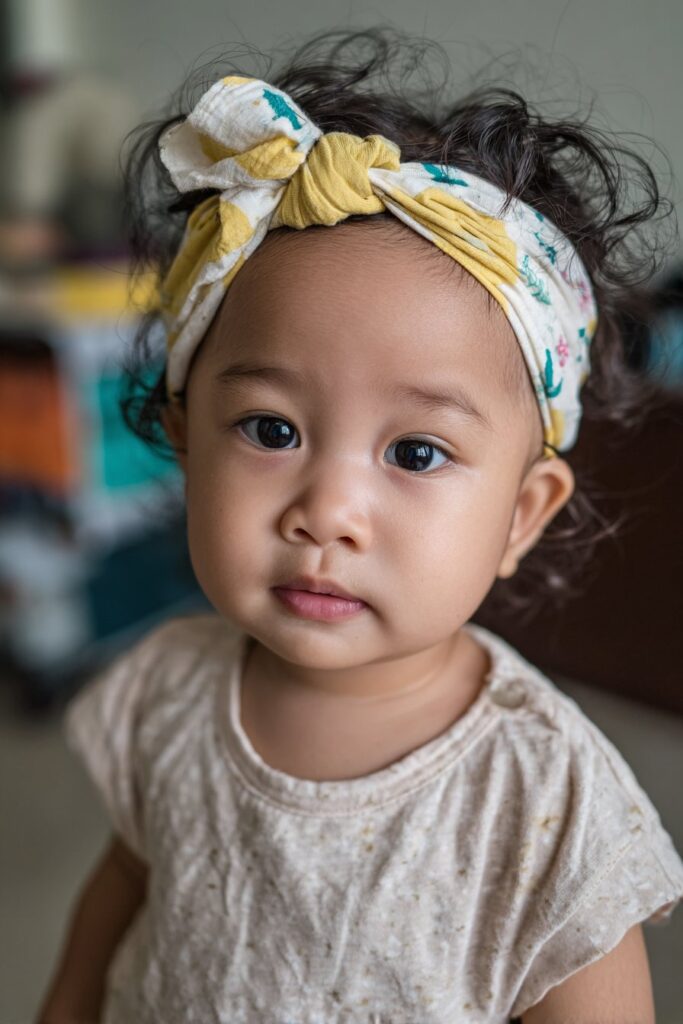
When Elsa Claire introduced me to styling naturally curly baby hair during a workshop focused on texture-based infant hairstyles, I discovered how enhancing what’s already there creates the most beautiful results. She worked with a 7-month-old who had the sweetest spiral curls, showing me how a simple headband could frame and celebrate that natural texture rather than fight against it.
What This Style Looks Like
This style showcases your baby’s natural curls or gently enhanced waves at the ends of her hair, paired with a decorative headband that sits across the forehead or slightly pushed back. The curled ends create soft movement and dimension, while the headband adds a polished finishing touch. Hair frames your baby’s face naturally, creating an effortless, romantic appearance that highlights her features while keeping accessories minimal.
Best Age and Hair Type
Babies with naturally wavy or curly textures wear this style beautifully from birth onward. I’ve created this look on infants as young as 2 months old. Similarly, babies with straight hair that develops a slight wave or curl at the ends benefit from this approach. The style works across curl patterns, from loose waves to tighter spirals, celebrating whatever texture your daughter naturally has.
How to Create This Look
Enhancing curls while maintaining comfort requires gentle techniques:
- Start with clean, slightly damp hair following your regular wash routine
- Apply a small amount of curl-defining product designed for babies
- Scrunch the ends gently to encourage curl formation
- Allow hair to air dry or use a diffuser on cool setting
- Select a headband made from soft, stretchy materials like cotton, silk, or satin
- Choose adjustable elastic or Velcro closures for a comfortable fit
- Position the headband with the decorative element (bow) slightly to the side
- Ensure the band sits behind the ear to prevent slipping
Styling Tips from My Experience
Prioritize comfort when selecting headbands. Opt for elastic bands with fabric coverings that won’t dig into delicate skin. At the same time, coordinate headbands with your child’s outfits for a polished appearance. Consequently, I keep several colors on hand for easy matching.
Stretch nylon headbands before placing them on your baby to reduce tightness. For the same reason, I check the fit regularly throughout the day. Remove headbands during naps and bedtime to ensure safety. Use hair around the sides to frame your baby’s face, emphasizing both the curls and the accessory.
Baby Bantu Knots
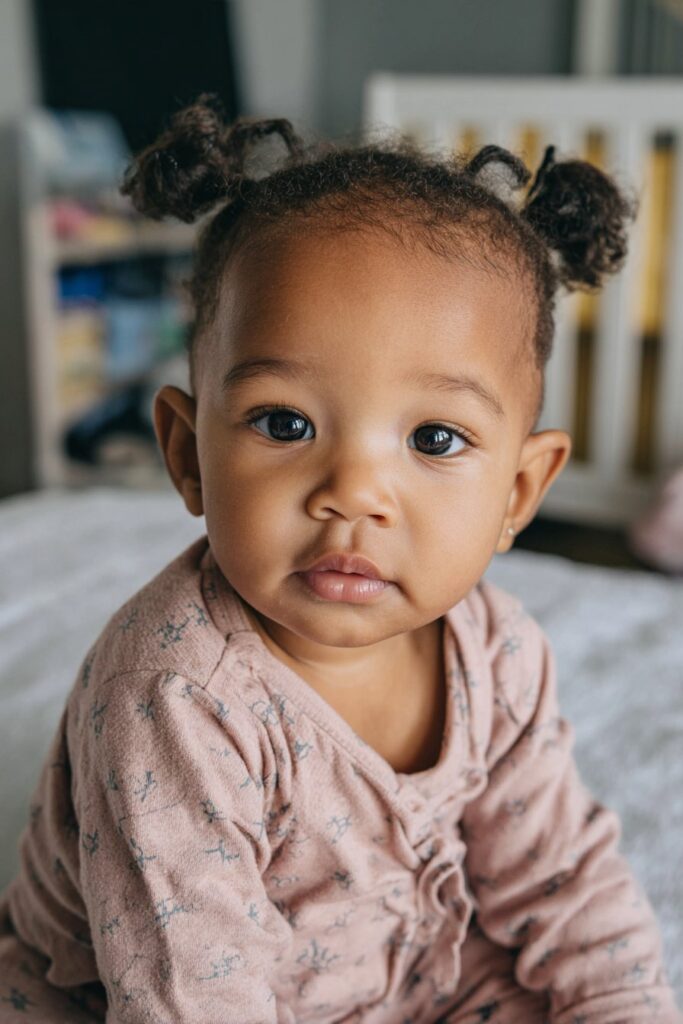
Discovering Bantu knots changed my approach to infant baby girl hairstyles short hair when I realized protective styling didn’t require length. Elsa Claire introduced me to this technique during a workshop focused on textured hair care for babies, demonstrating on a wispy-haired 1-year-old how twisted sections wrapped around themselves could create both style and protection.
What This Style Looks Like
Bantu knots are twisted or braided portions of hair wrapped around themselves to form small buns across the scalp. The style creates multiple small, rounded knots that sit like tiny decorative sculptures throughout your baby’s hair. For shorter hair, you’ll create more sections with smaller knots. The knots can appear fairly pointy or rounded on top depending on how you form them, and they’re characteristically hard and sometimes tall by design. Partitioning plays an important role when styling Bantu knots, because the sections determine the final appearance.
Best Age and Hair Type
I’ve successfully created this look on babies as young as 1 year old with super short hair. The style gained popularity in my practice when a mom told me her 3-year-old just started sitting still to get her hair done, and Bantu knots became their family favorite. This style works beautifully across all textures and can last a full week on any texture. Similarly, the versatility extends to hair length, looking equally adorable on short and long hair.
How to Create This Look
Bantu knots are super easy for anyone to learn and quicker than twisting or braiding the hair. Start by sectioning your baby’s hair based on length. Apply a small amount of moisturizer to each section, then twist the hair until it begins to coil. Wrap the twisted section around itself at the base to form a small bun. Tuck the ends under the knot to keep them protected. If the ends aren’t securely tucked or there isn’t enough hair to hold the knot in place, secure with a tiny elastic to prevent unraveling.
Styling Tips from My Experience
Position knots away from the hairline, edges, and nape of your baby’s neck to prevent discomfort during sleep. Because they can be uncomfortable when positioned close to the frame of the face, I learned to place them strategically for naptime comfort. Although Bantu knots can last a full week, they may unravel naturally over time or become frizzy at the base. Consequently, having your child wear a scarf, sleeping cap, or bonnet helps maintain neatness throughout the week. If your family doesn’t use night protection, redo the knots daily since they’re quick to create. After installing the knots, ask your child to rotate their head clockwise and counter-clockwise to check for excessive tightness. Twisting and tucking keeps ends protected while stretching the hair, making it fluffy, soft, and easy to detangle when you remove the knots.
Center Part with Tiny Bows
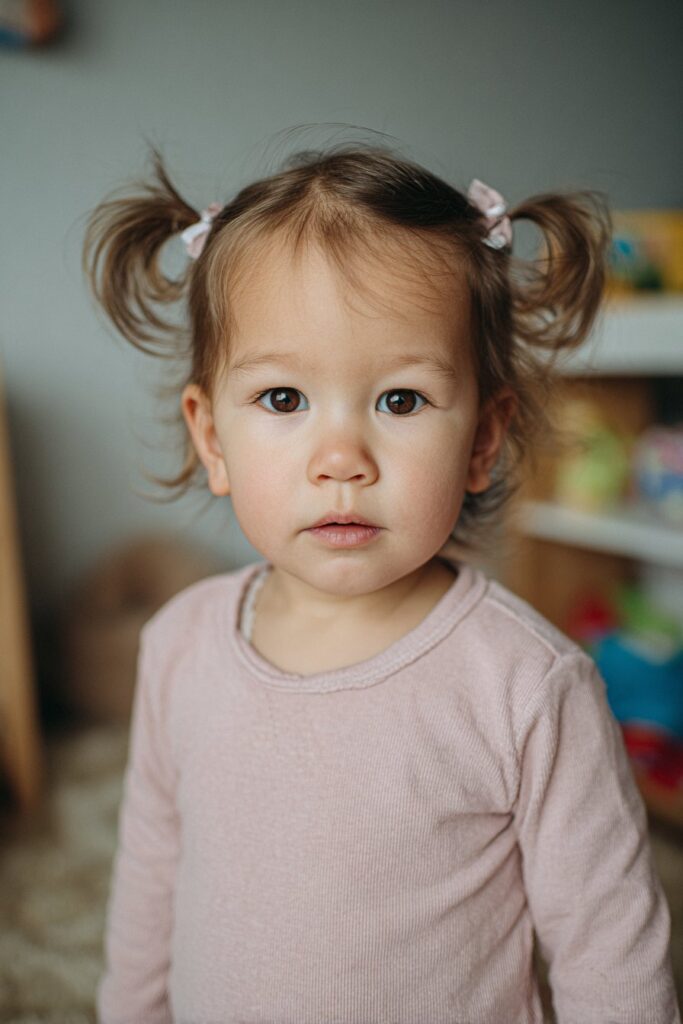
A mom once asked me during one of Elsa Claire’s workshops why her 2-year-old’s middle part never stayed in place, and watching Elsa demonstrate the solution changed how I approach baby girl hairstyles short hair with center parts. She showed us that parting properly and securing with bows creates a sweet, simple look that keeps baby hairs out of the face while providing the perfect backdrop for adorable accessories.
What This Style Looks Like
This style features hair parted straight down the middle from forehead to crown, with small sections gathered on either side and secured with tiny bows. The center part creates symmetry while the bows add pops of color and charm. Pulling small front sections back keeps wispy baby hairs neat and allows the bows to become focal points. The look can be dressed up for special occasions or kept casual for everyday wear.
Best Age and Hair Type
I’ve created this style successfully on babies from 9 months old through toddlerhood. Babies with fine, straight hair benefit because the part stays defined, though the technique works across all textures. Toddlers who constantly have hair falling in their eyes find this particularly helpful.
How to Create This Look
Part the hair down the center, ensuring no zig-zags or curves in your line. Gather small front sections on each side and start a ponytail with each. Right before pulling the hair through the final time, create a loopy bun that stands roughly 2.5 inches tall by stopping mid-pull. Spray lightly with hairspray, then add bows in front to cover the rubberbands. Velvet ribbon adds a soft, elegant look, while linen creates a classic sailor bow appearance.
Styling Tips from My Experience
Nylon headbands work beautifully if your baby won’t tolerate clips, and thin elastic lace provides a delicate alternative. Consequently, I keep both options available. Homemade bows feel more special than store-bought ones and allow you to match any outfit. For babies with persistent cowlicks, styling damp hair helps train the strands.
Natural Textured Look with Edge Control
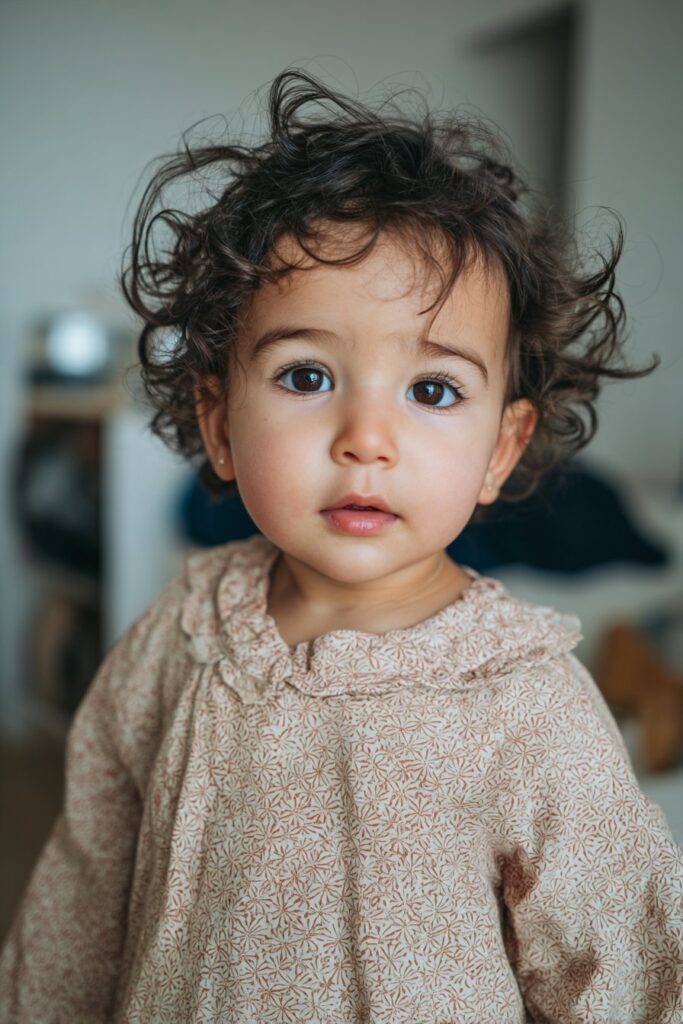
Embracing natural texture became my turning point when Elsa Claire sat me down one afternoon in her Los Angeles studio and explained why fighting baby hair patterns often causes more harm than celebration. She showed me a photograph from her Charleston grandmother’s salon where women with textured hair learned to work with their edges, not against them.
What This Style Looks Like
This approach showcases your baby’s natural hair texture while smoothing baby hairs into the rest of the hair or letting them lay in the direction they naturally lean. The look creates a polished appearance without elaborate styling, simply taming flyaways that might stick up everywhere. For babies with curly, coily, and kinky textures, the style celebrates those natural patterns while keeping edges neat and defined.
Best Age and Hair Type
I’ve used this technique on babies from 6 months onward. The style works beautifully for textured hair types, particularly babies with curly, coily, and kinky patterns. Children with biracial heritage whose hair requires different care approaches benefit significantly.
How to Create This Look
Start by working on damp edges using a spray bottle to apply water onto your brush or the front of the hairline before applying product. Apply a light cream or leave-in conditioner first to seal in moisture and prevent breakage. Use a dime-size amount of edge control gel formulated with gentle ingredients like avocado, coconut oil, and honey. Using a soft bristle or edge brush, smooth baby hairs into the rest of the hair or in their natural direction. Tie edges down with a silk or satin scarf for 10-20 minutes to set the style.
Styling Tips from My Experience
Moisturizing before applying edge control became my non-negotiable step after watching Elsa Claire demonstrate on a toddler with 4C texture. Avoid maximum hold gels containing drying alcohols like ethanol or isopropyl. Never continue applying product multiple days without cleansing, as buildup causes dryness and breakage.
Half-Up Style with Clip
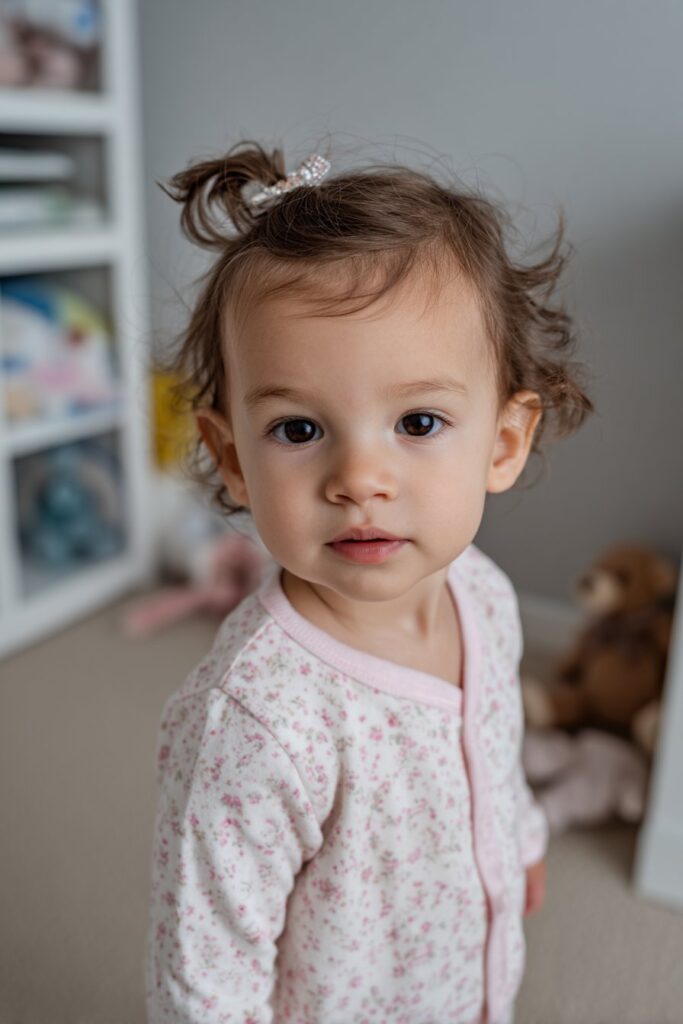
Half-up hairstyles saved me during a particularly hectic week when Elsa Claire invited me to observe her work with busy moms at her Los Angeles studio. She showed me how gathering just the top section creates an adorable focal point while leaving length to frame your baby’s face, and I watched mothers light up when they realized this easy baby girl hairstyles approach took under five minutes.
What This Style Looks Like
This style gathers hair from the crown or temple area, pulling it back and securing with a clip while leaving the remaining hair down. The gathered section sits at the back of the head, creating dimension and keeping hair away from your baby’s face. Mini claw clips have become particularly popular for this look, providing both function and decoration. The style can range from simple and sweet to more elaborate with braided elements.
Best Age and Hair Type
Toddlers and babies with enough hair to gather wear this style beautifully. I’ve created this look on babies as young as 8 months old. The technique works across all textures, from straight to curly hair. Babies with fine hair benefit because you’re only working with the top section, making the process gentler.
How to Create This Look
Gather hair from the temples or crown area, pulling it back toward the center of the head. Secure with a small claw clip or elastic band. For added interest, create a double pull-through braid before securing. The entire process takes just a few minutes once you develop your technique.
Styling Tips from My Experience
This style works beautifully for school pictures, dance photos, and special occasions. Use the style when heading to the pool or when you know your baby will be active all day. Position clips slightly lower if your baby grabs at accessories. Remove clips during naptime for comfort.
Multiple Mini Braids
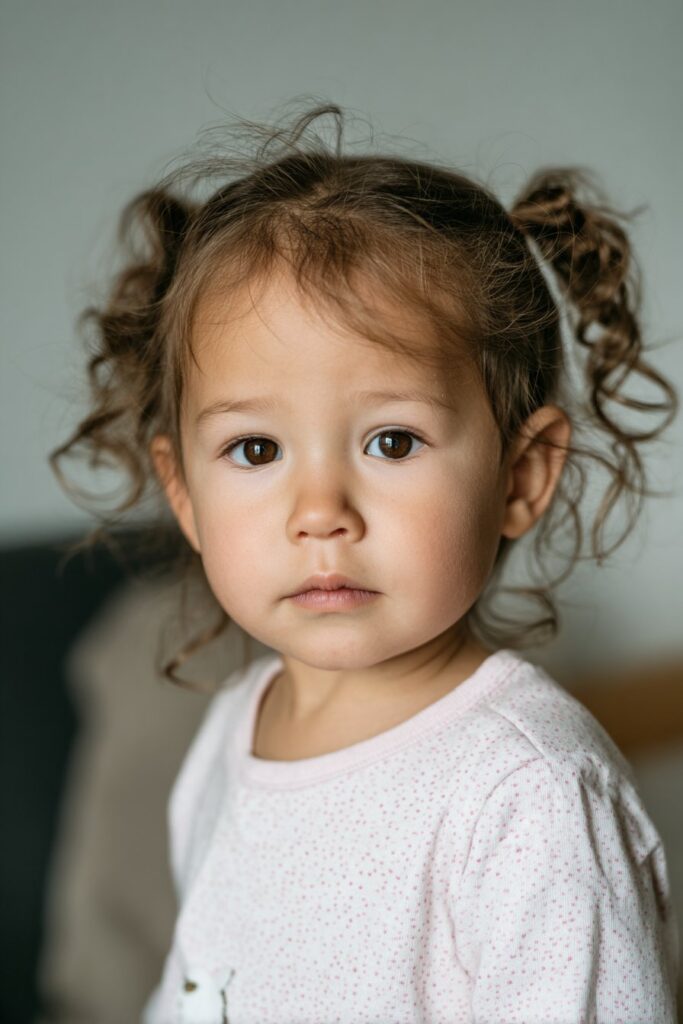
Multiple mini braids transformed how I approached short hair baby hairstyles after struggling with a squirmy 11-month-old who had barely an inch of hair. Elsa Claire pulled me aside during a Charleston visit to her grandmother’s old salon and showed me photographs of babies from the 1960s sporting tiny braids that lasted days, not hours.
What This Style Looks Like
Multiple mini braids feature several small, thin braids positioned throughout your baby’s hair. These tiny face-framing braids use the very front strands of hair, creating a playful trend that adds charm to any hairstyle. You can experiment with different styles, including side braids or double braids. The braids work beautifully as accents or cover the entire head, depending on your preference and your baby’s hair length.
Best Age and Hair Type
Toddlers with very short natural hair wear this style successfully. The technique works across various hair types and textures, from fine hair to thick, curly strands. For instance, smaller sections work best for fine baby hair or tight curls to get a neat finish.
How to Create This Look
Start with clean, detangled, well-moisturized hair using leave-in conditioner and styling cream for curly hair. Use a wide-tooth comb or fingers to gently detangle from ends up, keeping a spray bottle with water handy to re-dampen sections. Take small sections, divide into three individual sections, and braid. Keep the first few crossovers tight to help baby hairs stay put. Dipping the braided ends into hot water for a few seconds seals them, preventing unraveling.
Styling Tips from My Experience
Pairing mini braids with accessories like colorful hair clips or bands enhances the hairstyle. A satin bonnet or pillowcase protects the style overnight and minimizes frizz. Moisturize the scalp and braids regularly with light oil or braid spray to maintain healthy hair.
Sleek Side Part with Gel
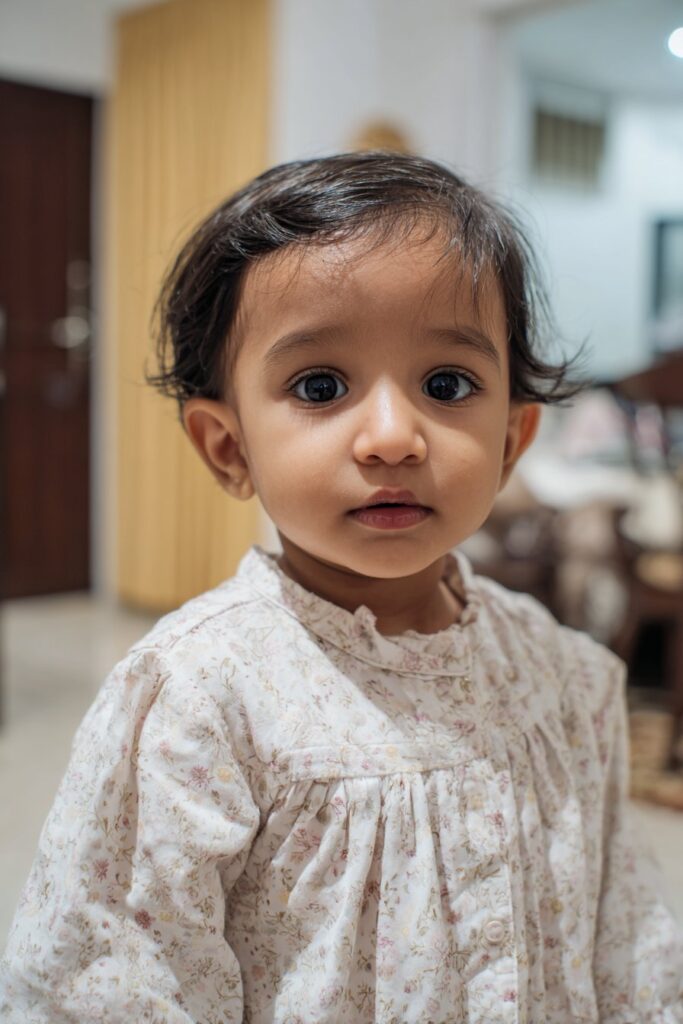
Understanding where your baby’s hair naturally wants to part makes styling infinitely easier, and gel became my secret weapon after watching Elsa Claire demonstrate during one of her baby hair workshops in Charleston how a tiny amount could tame even the wildest cowlicks.
What This Style Looks Like
This style features hair parted to one side and smoothed down with baby-safe gel, creating a polished, neat appearance. The sleek finish keeps flyaways controlled while highlighting your baby’s face. The part can follow your baby’s natural cowlick or create a deliberately placed side part that keeps hair from falling into her eyes.
Best Age and Hair Type
Babies with fine, slightly wavy hair wear this style beautifully. I’ve used this approach on infants as young as 6 months old. The technique works across textures, particularly for babies whose hair naturally parts to one side due to cowlick placement.
How to Create This Look
Dampen hair slightly using a spray bottle. Apply a quarter-sized dollop of baby-safe gel to wet or dry hair. Smooth hair to the desired side using your fingers or a soft brush. The gel sets quickly, so brush immediately after application on dry hair.
Styling Tips from My Experience
Choose alcohol-free, vegan gel formulated for children. Reapply as needed throughout the day. Remove gel before bedtime with gentle shampooing to prevent buildup.
Twisted Front Sections
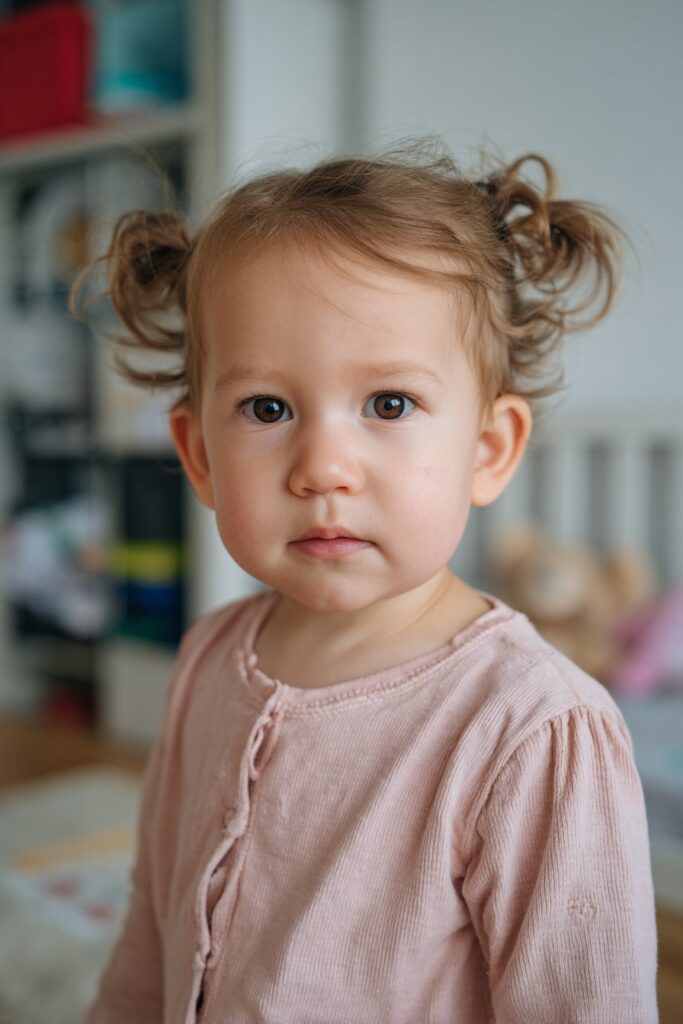
Twisting sections became a revelation when Elsa Claire’s grandmother invited me to her Charleston salon’s archive room, where she kept styling journals from decades of working with textured baby hair. Flipping through photographs of infants wearing delicate front twists, I understood why this technique endured.
What This Style Looks Like
This style features small sections of hair from the front hairline twisted and secured, creating a neat, polished appearance while keeping hair away from your baby’s face. The twists can be simple two-strand twists positioned at the temples or more elaborate patterns across the front section. Twists serve as an easy and great protective style for little girls. After wearing the twists, they can be converted into a twist out hairstyle, giving you two looks from one styling session.
Best Age and Hair Type
This fast and simple style works beautifully on babies and toddlers from about 18 months onward. The technique suits all textures, particularly textured and curly hair types that benefit from protective styling.
How to Create This Look
Work with damp, detangled hair. Section the front portion you want to twist. Apply leave-in cream for moisture, then separate each section into two strands. Twist both strands individually in the same direction, then cross them over each other while maintaining tension. Secure ends with small elastics.
Styling Tips from My Experience
Keep a spray bottle nearby to re-dampen sections as you work. The twists protect hair from elements while looking adorable for days.
Accessorized Natural Curls
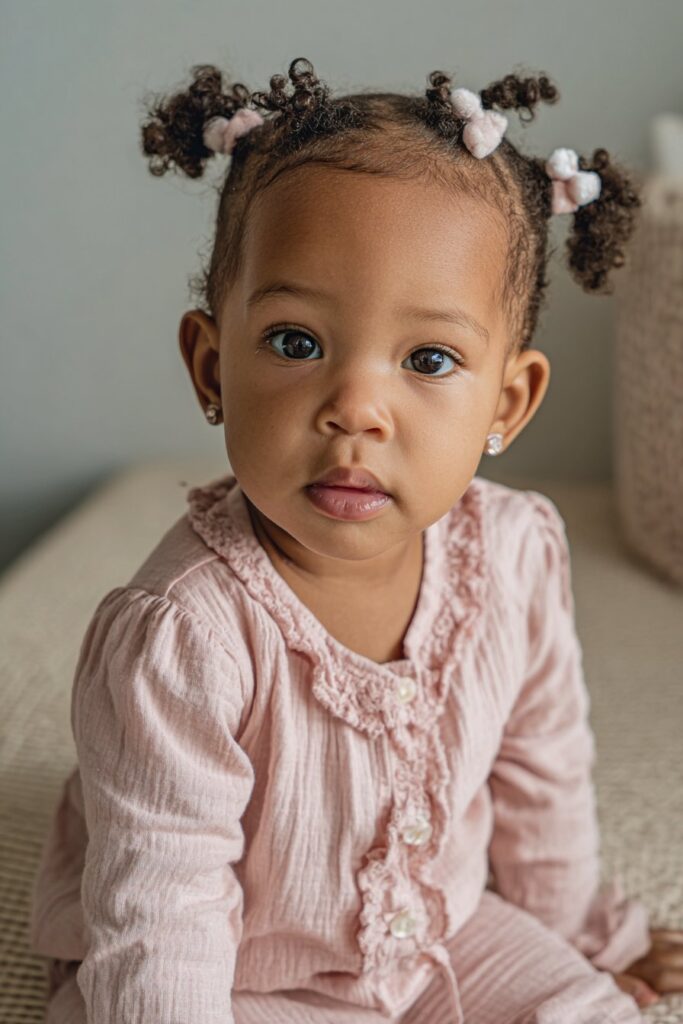
Celebrating natural curls without manipulation taught me more about infant hairstyles than any styling technique ever could, and Elsa Claire’s Charleston grandmother showed me why accessories matter more than products when working with baby curls.
What This Style Looks Like
This approach showcases your baby’s natural curl pattern enhanced with decorative accessories like clips, cuffs, rings, and soft headbands. The curls remain loose and free-flowing while accessories add color and personality. Hair maintains its organic texture and movement, creating an effortless look that requires minimal manipulation.
Best Age and Hair Type
Babies with naturally curly, coily, or wavy textures from birth onward wear this beautifully. The style celebrates whatever curl pattern your daughter naturally has without forcing it into structured shapes.
How to Create This Look
Never brush dry curly hair. Use a spray bottle filled with water mixed with a little oil, then finger brush and twist little curls with your fingers to train them and give definition. Apply a small amount of coconut oil or jojoba oil when hair is damp. Only detangle when hair is wet and full of conditioner using a wide-tooth comb or your fingers. Similarly, work section by section from ends upward. Add accessories after curls dry naturally.
Styling Tips from My Experience
Choose satin headbands, soft scrunchies, and spiral hair ties that won’t damage delicate curls. At the same time, avoid cotton accessories because they absorb moisture and natural oils, leading to frizz and breakage. A satin bonnet protects curls overnight while reducing frizz. Consequently, I recommend keeping one by the crib for every bedtime.
Conclusion
Although styling infant baby girl hairstyles short hair might initially seem challenging, these 12 techniques prove you don’t need length to create adorable looks. From tiny top knots to mini braids, each approach I’ve shared offers gentle, quick options that keep your little one comfortable while looking precious.
Not every style will work perfectly for your baby’s unique hair texture or personality, and that’s perfectly normal. Some babies love accessories while others pull them off immediately. The key is experimenting with different techniques until you discover what works best for your family’s routine and your daughter’s comfort level.
Start with one simple style this week and build your confidence from there.

Elsa Claire is the founder and editor of ElsaClaire.com, where she writes about hairstyles, hair care, and the everyday routines that help real people feel good about their hair.