I’ve had my share of post-lake hair disasters, and I know the struggle of wanting cute lake hairstyles for long hair that actually survive the water. The truth is, protective hairstyles while swimming help minimize knots and tangles that lead to breakage. Additionally, the right styles can shield your strands from chlorine damage.
In this guide, I’m sharing 12 easy swimming hairstyles that work beautifully as pool hairstyles and vacation hairstyles alike. These lake day hairstyles for long hair keep you looking great while protecting what matters most: your hair’s health.
French Braid

The French braid remains one of my go-to lake hairstyles for long hair because I learned early on that mastering this technique saves me from hours of post-swim detangling. When I first started styling hair professionally, I practiced this braid countless times to get the tension just right.
How to Style It
Start by brushing your hair to remove any tangles, then section it into three equal parts at the crown of your head. Cross the right section over the middle one, then the left section over the new middle. As you continue braiding, add small sections of hair to each side before crossing over. The trick is keeping your hands as close as possible to your head while you braid to maintain a tight, secure hold.
For a braid that stays put during swimming, work with slightly damp hair. Once you reach the nape of your neck, finish with a regular three-strand braid and secure it with a small elastic. Add hair at the same height you’re forming the braid to avoid weird diagonal lines and lumps. Keep your sections smooth and tangle-free throughout the process.
Why It Protects Your Hair
French braids work as protective hairstyles while swimming because they keep strands together, reducing the risk of tangling and breakage from friction. The braid distributes tension evenly across the scalp, making it comfortable for extended wear. This style reduces hair breakage by protecting strands from environmental damage like wind and sun exposure.
The overlapping structure also retains moisture by keeping hair less exposed to air, which prevents it from becoming dry and brittle. Since the ends of your hair stay secured within the braid, you’ll notice fewer split ends. Braids smooth out the hair shaft, reducing frizz and flyaways.
Best For
This classic style works perfectly for all hair types and transitions seamlessly from water to land. I recommend French braids for full-day lake activities when you need your hair completely out of your face and secured against waves and wind.
Classic High Ponytail

When I’m running late for a lake day but still want my hair protected, the classic high ponytail saves me every single time. I learned this during my early styling days when a client showed up with only five minutes before her beach trip. We pulled off a sleek ponytail that survived her entire day in the water.
How to Style It
Brush all your hair upward and out of your face to remove any tangles. Gather your hair at the crown for a high ponytail, securing it with a hair tie. Specifically, use a serum while pulling your hair up to tame flyaways and achieve a smoother overall look. This gives you that polished finish.
Working with second or third-day hair often yields better results than freshly washed strands. The added grip and texture make styling easier. If you just washed your hair, add a little dry shampoo to help with hold. Set the finished style with hairspray to keep everything in place.
Place your ponytail just above the crown where it feels comfortable. Use a fine-tooth comb to smooth and gather the hair before securing. Never use a rubber band, as it will tangle your hair and could break strands. Always choose a hair tie specifically designed for hair. For water activities, consider fiber-wrapped elastic bands or quality ties that maintain their integrity even when submerged.
Why It Protects Your Hair
High ponytails keep your hair contained and away from water movement, which helps prevent tangling. Owing to this containment, you’ll experience fewer post-swim brush-out struggles. The style minimizes hair exposure to water, making it easier to protect your strands.
Hair ties designed for water activities offer exceptional durability and remain intact during swimming. They minimize the risk of snags, tangles, and breakage with their smooth construction. Additionally, adjustable designs allow you to secure your hair tightly without causing discomfort.
However, avoid pulling your hair back too tightly with elastic bands, as this can cause stress and additional breakage when hair is wet.
Best For
This versatile style works for quick preparation when you’re short on time. I recommend it for casual swimming sessions, pool days, and any water activity where you need a fast, practical solution that keeps hair off your neck and face.
Double Dutch Braids
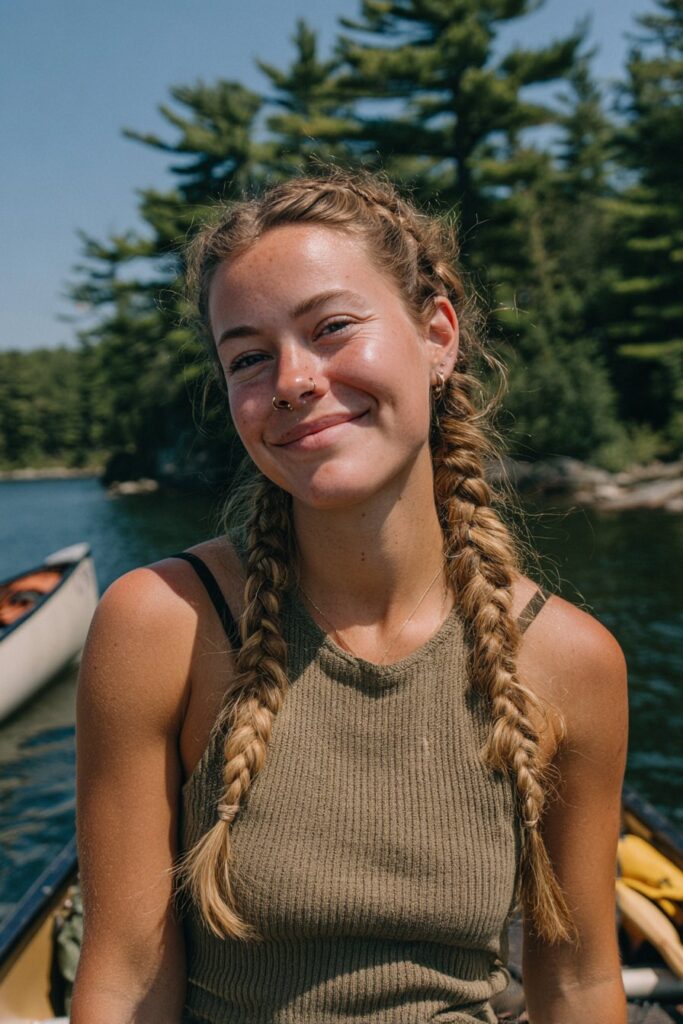
Double dutch braids became my secret weapon after I spent an entire afternoon untangling a client’s hair following a lake party where she’d worn it loose. That experience taught me the value of this under-braiding technique for water activities, and I’ve been recommending it as one of my favorite lake hairstyles for long hair ever since.
How to Style It
Brush through your hair thoroughly to eliminate tangles, as this makes braiding significantly easier. Create a center parting from your hairline down to the nape of your neck, dividing your hair into two equal sections. This differs from a side part and ensures balanced braids on both sides.
Working with second or third day hair produces better results than freshly washed strands. The natural oils and texture provide better grip, making the braiding process smoother. If you just washed your hair, the strands may feel too silky and slippery to work with.
Tie away one side while you work on the other. At the top of your head, take a triangle section and divide it into three equal strands. Here’s where dutch braids differ from what you’ve already learned: the technique goes under rather than over. Take the inner strand and pass it under the middle strand, then take the outer strand and pass it under the middle strand.
Following this initial setup, start adding small amounts of hair to each section before passing it under. Continue this technique throughout, keeping your sections tight for a more defined braid. Once you reach the bottom, secure with a clear elastic.
Repeat the entire process on the other side. For a fuller, more textured appearance, gently pull on sections of the braid to flatten and expand them. This creates a three-dimensional effect that makes the braids appear thicker.
Why It Protects Your Hair
Dutch braids hold better than regular braids because the under-braiding technique lifts the hair, securing it firmly in place. This tight weave effectively secures hair, preventing it from falling apart while swimming and keeping it neat. Braids work as protective hairstyles while swimming by minimizing tangling and reducing chlorinated or salt water absorption.
The style keeps strands contained throughout water activities with minimal maintenance required. In addition, braids with extensions dry quickly after swimming and resist frizzing.
Best For
This hairstyle suits active women participating in water sports or extended lake days. I recommend double dutch braids for vacation hairstyles when you need low-maintenance styling that transitions effortlessly from swimming to evening activities.
Rope Twist Ponytail

One summer afternoon at a beach resort styling station, I discovered the rope twist ponytail purely by accident. A guest needed something that would survive both swimming and a dinner afterward, and traditional braids weren’t working with her recently highlighted hair. That’s when I tried this twisting technique, and watching how easily she squeezed water from her hair afterward sold me on this style forever.
How to Style It
Pull your hair up into a high ponytail and secure it with a hair tie. The height matters less than comfort, so find your sweet spot at the crown. Section your ponytail into two equal pieces, then twist each section to the right. This directional consistency prevents the twists from unraveling.
Continue twisting each section individually as you work your way down the length of your hair. The tighter you twist, the better it holds. Once both sections are fully twisted, wrap them around each other in the opposite direction. Secure the end with another hair tie. Finish with a light mist of hairspray to set everything in place.
If your hair feels slippery and the twists keep sliding apart, use hair wax to get more grip. This trick works wonders on freshly washed or fine-textured hair that doesn’t want to cooperate.
For a more elaborate version that looks sophisticated, you can incorporate rope twists from the front of your hairline, feeding in sections as you work backward. This technique creates dimension but takes practice to master. The simpler version works perfectly for lake day hairstyles for long hair when you need speed and function.
Why It Protects Your Hair
This style excels at water activities because it makes squeezing excess water out of your hair incredibly simple. The twisted structure creates channels that release water quickly, reducing the time your strands stay saturated. Less water absorption means less swelling of the hair shaft and fewer tangles.
The twisting motion itself smooths the cuticle layer, which helps repel water to some degree. Moreover, the secured ponytail keeps hair contained and away from friction against your shoulders or back while swimming. As long as you maintain the twist tension, your hair stays protected throughout extended water exposure.
Best For
This hairstyle suits anyone seeking a practical yet polished look for swimming. I recommend it for active lake days, casual pool parties, and vacation hairstyles where you’ll move between water and social settings. The rope twist ponytail works particularly well if you have medium to thick hair that holds twists naturally.
Braided Top Knot Bun
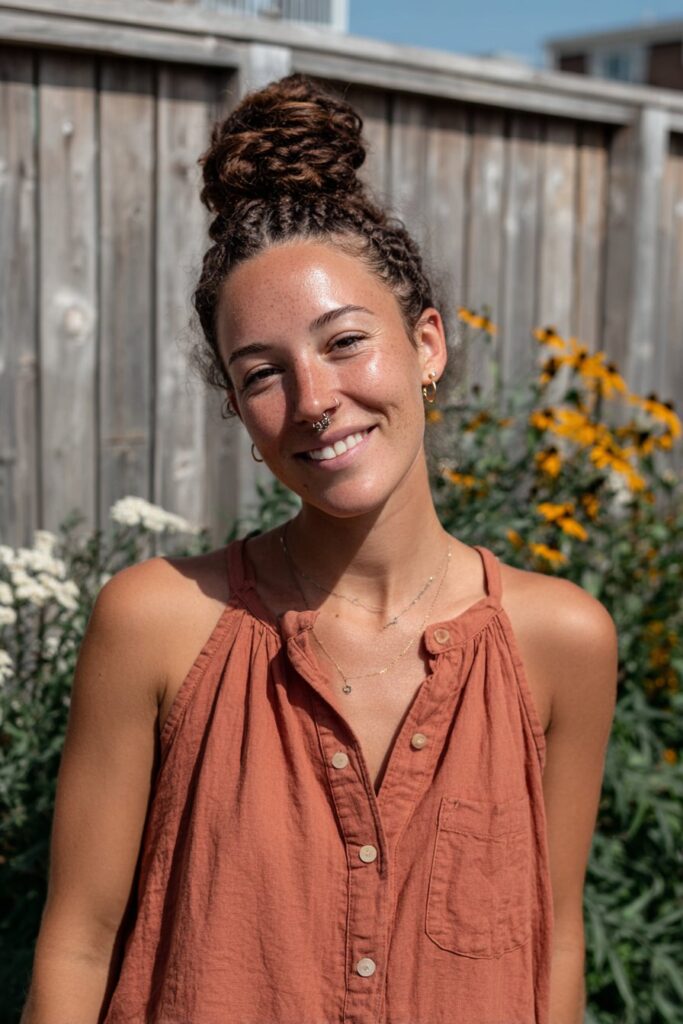
During my years working backstage at fashion events, I watched countless models prep their hair between runway shows. The braided top knot bun became my favorite discovery because it solved the problem of keeping elaborate hairstyles fresh through multiple quick changes and, as it turns out, this same technique works brilliantly as one of the most practical lake hairstyles for long hair.
How to Style It
Pull your hair into a high ponytail on top of your head, using your fingers instead of a brush if you want that relaxed, textured look. Braid your ponytail loosely from start to finish, then secure the end with another hair tie. For added dimension, tug sections of the braid gently to make it appear thicker.
Pull your braided ponytail forward and start spiraling it in a clockwise motion around the base, keeping the wrap loose rather than tight. Once you run out of braid, tuck the end underneath the bun where it meets your scalp. Pin the bun in place with four to six bobby pins, distributing them evenly around the base until everything feels secure.
Alternatively, if you already have a braided or rope twist ponytail, wrap it around your hair tie at the back or top of your head and secure with bobby pins. This method works equally well and saves time during rushed morning preparations.
Why It Protects Your Hair
This style functions as a protective hairstyle while swimming because it keeps your hair tucked away from the elements. Specifically, buns minimize hair exposure to water, making them excellent for extended swimming sessions. The contained structure prevents tangling and minimizes chlorinated or salt water absorption into your strands.
Best For
This hairstyle suits anyone wanting their hair completely off their neck during hot lake days. I recommend the braided top knot bun for full-day water activities where you need maximum protection without sacrificing style. It transitions beautifully from swimming to casual lakeside dining, making it perfect for vacation hairstyles when you’re moving between activities throughout the day.
Twisted Low Bun

After styling hair for several years at a Manhattan salon, I perfected the twisted low bun during a particularly hectic bridal season. Brides needed styles that looked elegant but could withstand emotion, humidity, and long reception hours. This technique became my solution, and I’ve since adapted it as one of my favorite lake hairstyles for long hair because it handles water exposure just as well as it handles wedding tears.
How to Style It
Start by pulling your hair back into a low ponytail with an elastic. Instead of pulling your ends all the way through in your last loop, pause about a quarter of the way. Grab your ends and swoop them to the left, up and over, then loop hair underneath your elastic. This creates that twisted, voluminous effect without complicated braiding.
For a sleek appearance, neaten the bun with bobby pins placed strategically around the base. If you prefer something more casual and textured, skip the pins entirely and embrace the messier look. Finish by spraying the style to achieve maximum hold with flyaway control.
Before swimming, slather the ends of your hair in argan oil or conditioner while creating the bun. This conditioning treatment protects your strands during water exposure.
Why It Protects Your Hair
Buns work as protective hairstyles while swimming because they prevent tangling. Additionally, this style minimizes hair exposure to water and can be easily refreshed post-swim. The contained structure keeps hair secure throughout your swimming session, consequently reducing the friction and movement that lead to breakage.
Best For
This twisted low bun suits anyone needing quick preparation without sacrificing style. For instance, I recommend it for lake day hairstyles for long hair when you’re short on time or dealing with second-day hair. The one-elastic simplicity makes it perfect for spontaneous pool days.
Bubble Ponytail

My daughter taught me about bubble ponytails during a backyard pool party when she was experimenting with her own hair. Watching her create these playful spheres down her ponytail made me realize this wasn’t just kid stuff. This style actually works as one of the most fun yet protective lake hairstyles for long hair, particularly for anyone who wants personality with their protection.
How to Style It
Pull your hair into a ponytail at whatever height feels comfortable, securing it with a clear elastic. The magic happens next: place another elastic one to two inches down the length of your ponytail, depending on how long your hair is. Gently tug at the sides of this newly created section to add volume and form a rounded, bubble-like shape.
Continue placing elastics down the length of your ponytail, creating multiple bubbles. Following each elastic placement, tug and loosen the bubble to give it more volume and personality. You want all the bubbles to be about the same size both vertically and horizontally. The overall look should lean messy rather than polished.
This style works better with second or third day hair. Coupled with dry shampoo and product, you’ll get more volume for your bubbles. Finish with hairspray to keep everything in place.
Why It Protects Your Hair
Ponytails minimize contact with chlorine and lake water by keeping hair contained. The segmented bubble structure prevents tangling throughout the length of your hair. Additionally, the multiple elastics distribute tension, reducing stress on any single point.
Best For
This hairstyle suits playful lake days when you want something stylish yet practical. I recommend bubble ponytails as vacation hairstyles for casual pool parties and fun water activities where you’re mixing swimming with socializing.
Crown Braid

Back at my grandmother’s Charleston salon, crown braids were the signature style for summer weddings and garden parties. Women loved how this romantic look kept hair secure during outdoor celebrations while still feeling elegant. Years later, I adapted this classic technique for lake day hairstyles for long hair, and it delivers the same security with a more relaxed vibe.
How to Style It
Create a deep side part on your preferred side. Pick up a small section on the heavier side and divide it into three parts for your braid. Start behind your right ear with a two-inch section. Begin a dutch braid by crossing strands under rather than over, bringing sections under as you add new hair from both the top and nape of your neck.
Work your braid horizontally around your head at eye level, making sure no strands get left out. The key is visualizing where you want the braid to sit, keeping it high and round like a halo around your crown. Continue braiding until you reach the opposite side, then finish the remaining length in a regular braid and secure with a small clear elastic.
Stretch out your braid by gently pulling on the edges to make it fuller and wider. Lay the braid across the top of your head behind where you started, then pin it down with bobby pins. Slide pins into the center of the braid so they stay hidden. Add extra pins underneath for support.
Why It Protects Your Hair
Crown braids work as protective hairstyles while swimming because they keep your entire length contained and off your face. Additionally, the secure structure prevents tangling during water activities.
Best For
This hairstyle suits lake day hairstyles for long hair when you want elegance with function. Given that it transitions beautifully from swimming to evening gatherings, I recommend it as vacation hairstyles for multi-activity days.
Messy Braided Bun
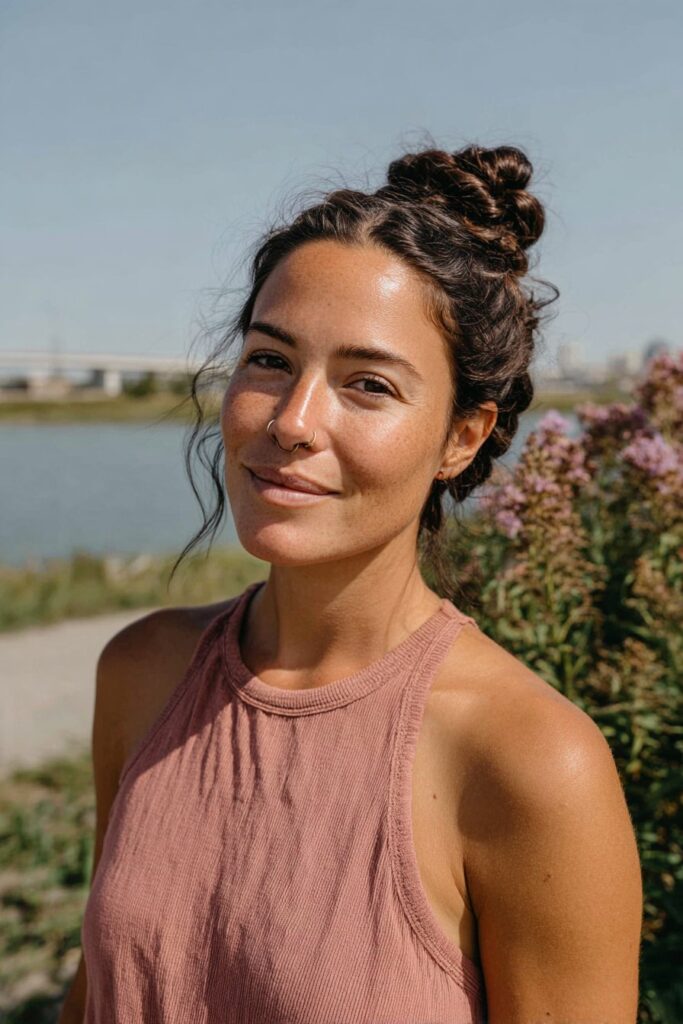
The messy braided bun holds a special place in my styling repertoire because it reminds me of summer mornings at my grandmother’s Charleston salon, where women would arrive asking for something “pretty but practical” before heading to boat parties. This delicate style requires some know-how to execute properly, but once you master it, you’ll have one of the most charming lake hairstyles for long hair.
How to Style It
Part your hair to the side, choosing whichever side feels natural. On the section with more hair, French braid just the front portion down to your ear, securing it with an invisible elastic. Following this, gather the rest of your hair along with the braid into a low side bun. Use a fun scrunchie to secure everything in place.
The beauty here is imperfection. Pull out face-framing tendrils to create that intentionally undone esthetic. This style works equally well with freshly washed or second-day hair, though I’ve found it actually looks better when your hair has natural texture and oils.
For a different approach, you can pull your hair into a ponytail first, braid the entire length, then wrap that braid around the base to form your bun. Secure with bobby pins and gently loosen sections for added volume.
Why It Protects Your Hair
Buns minimize hair exposure to water and can be easily refreshed post-swim. Specifically, this style prevents tangling and minimizes chlorinated or salt water absorption, keeping your strands secure throughout swimming activities.
Best For
I recommend this hairstyle for swimming when you want elegance alongside protection. It transitions beautifully as vacation hairstyles from lake activities to casual waterfront dining.
Side Fishtail Braid

A client once asked me for a braid that wouldn’t fall apart during her morning lake swims but still looked romantic enough for brunch afterward. That conversation led me to perfect the side fishtail braid, and I swam 35 laps myself to test it. Only the very shortest hairs escaped my braids, which convinced me this style deserves a spot among the best hairstyle for swimming options.
How to Style It
Brush and untangle your hair completely. Part your hair where you want and gather it to one side of your shoulder. If you part on the right side, braid on your left and vice versa. Separate your hair into two even sections, gripping them tightly so they don’t mix together.
While holding both sections in one hand, use your other hand to separate a small section from the outside of the first section, then join it to the second section by passing it over the first. Repeat this process on the opposite side, alternating until you reach the end of your hair. Secure with a hair elastic. Gently pull on sections of the braid to create a looser, more relaxed look.
Why It Protects Your Hair
This braid holds well, making it ideal for swim days. The interwoven pattern keeps strands contained, preventing tangles from water movement.
Best For
I recommend side fishtail braids for oval, heart, or square-shaped faces. This style adds volume if you have thin or straight hair.
Double Twisted Buns
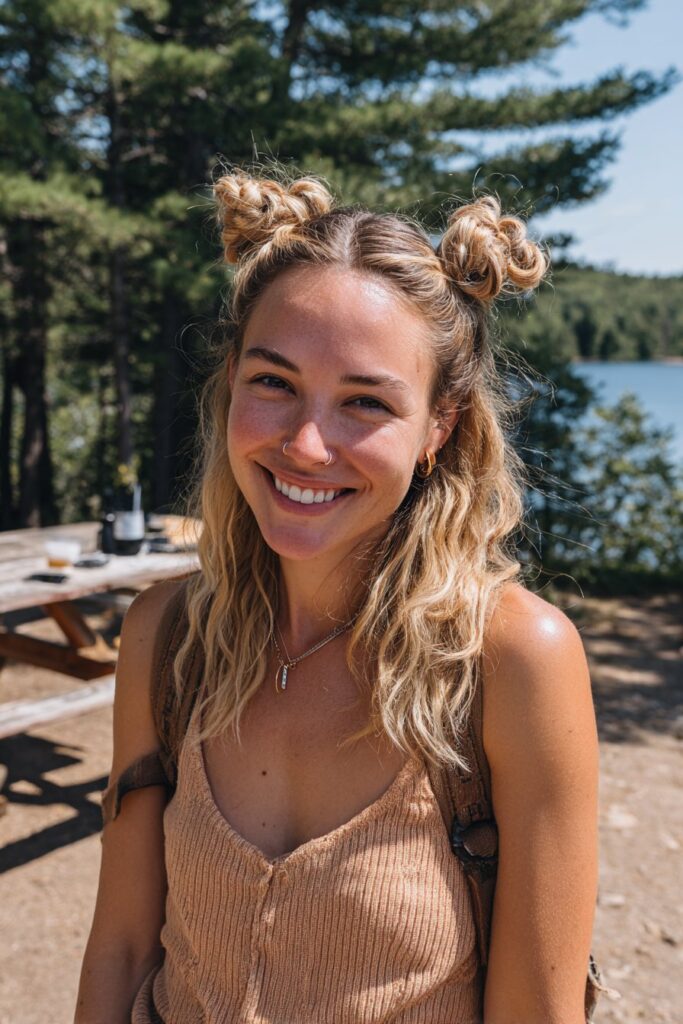
Space buns transformed my approach to quick styling after I watched models backstage take literally two minutes to create these playful updos. What started as a trend became one of my reliable lake hairstyles for long hair because the double structure offers twice the security of single buns.
How to Style It
Split your hair down the middle and create two high pigtails. Lightly tease each pigtail, then twist the hair as you wrap it into a bun. Secure with bobby pins, distributing them evenly around each bun’s base. To make the buns wider and fuller, pull sections out slightly and pin them in place.
For a lower version, position each bun just under your ears on opposite sides. Twist each section around to form adjacent buns, then pin them together with several bobby pins. This takes about two minutes at most.
Why It Protects Your Hair
Buns prevent tangling and keep hair secure during swimming. Owing to the contained structure, your strands stay protected from elements. The style minimizes chlorinated or salt water absorption.
Best For
I recommend double twisted buns for quick lake day hairstyles for long hair when you need playful yet functional styling. This works beautifully as pool hairstyles and vacation hairstyles for casual water activities.
Low Braided Ponytail
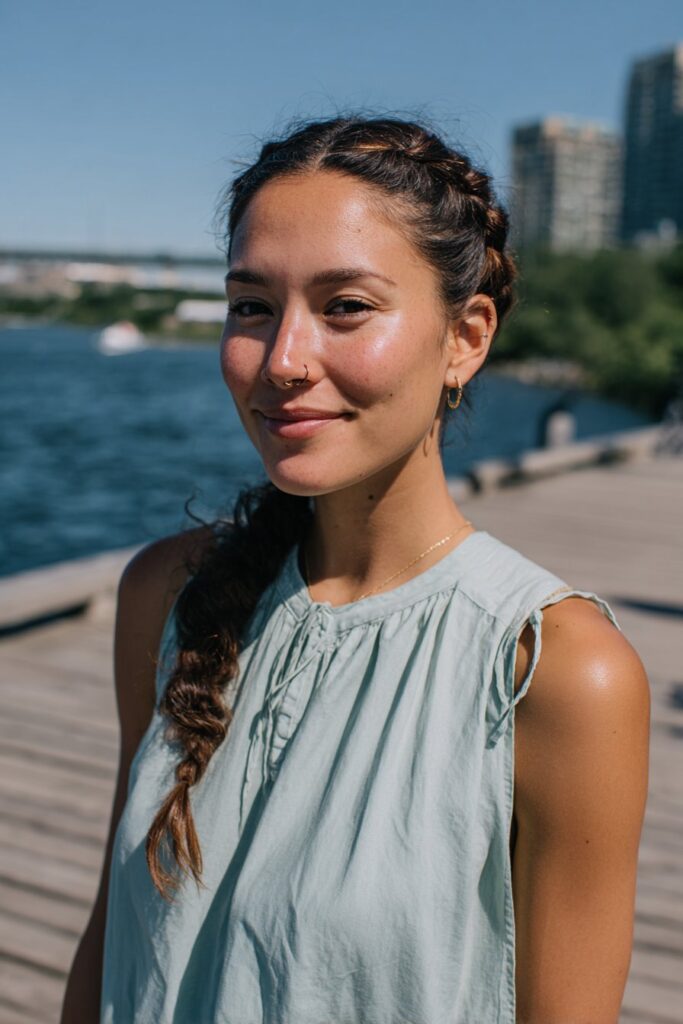
Teaching beginner stylists at workshops showed me that low braided ponytails intimidate people more than they should. One student struggled with hand coordination until I taught her a trick: start with the ponytail already secured at the nape of your neck, then braid downward from there. By the time she finished her second attempt, she’d mastered it.
How to Style It
Pull your hair into a low ponytail at the nape of your neck and secure with a scrunchie or soft hair tie instead of elastic bands. Take a one-inch section from either side of your head and create a small braid before gathering everything back. Once your ponytail is secured, braid the length using whichever technique you prefer. A fishtail creates visual interest, working with just two main sections rather than three.
For added elegance, wrap a strand of hair around the base elastic to conceal it. Secure the braid’s end with another soft tie. Gently pull sections to add dimension and texture.
Why It Protects Your Hair
This style keeps hair tidy and minimizes tangling during water activities. Scrunchies distribute tension better than elastic bands, preventing damage. The contained structure reduces chlorine exposure.
Best For
I recommend low braided ponytails for all-day lake activities when you want a polished yet practical hairstyle for swimming that transitions effortlessly to evening settings.
Bonus: Lake Day Hair Protection Tips
Beyond choosing the right easy swimming hairstyles, I learned the hard way that proper hair care makes the difference between healthy strands and fried ends. After years of styling clients who spent summers by the water, I developed a protection routine that works.
Pre-Swim Hair Prep
Your hair acts like a sponge. Before swimming, saturate it thoroughly with fresh water so it absorbs less chlorinated or lake water. Apply coconut oil or olive oil to create a water-resistant barrier. These oils repel chlorinated water while moisturizing your scalp. Follow with a leave-in conditioner to prevent tangles and keep hair soft.
Post-Swim Hair Care
Rinse immediately after swimming, even if you can’t shower. Once home, wash with a gentle, sulfate-free shampoo. Follow with a hydrating conditioner. Avoid washing more than once daily, as this dries hair further.
Sun Protection for Your Scalp
Apply broad-spectrum SPF 30 or higher to your scalp. Reapply every two hours or after swimming. Wear a wide-brimmed hat for additional coverage. Scalp sunscreen protects exposed parts and hairlines without making hair greasy.
What to Avoid at the Lake
Skip heat styling tools, which worsen dryness after swimming. Never brush half-dry hair, as it’s brittle and prone to breakage. Avoid tight rubber bands that stress wet strands.
Conclusion
All things considered, protecting your hair at the lake doesn’t mean sacrificing style. These 12 hairstyles work beautifully because they secure your strands while keeping you camera-ready from morning swims through evening gatherings. I’ve tested each one myself during countless lake days, and they genuinely hold up against water, wind, and sun. Start with whichever style feels most comfortable for your skill level, then branch out as you gain confidence. Your hair will thank you when you skip the post-swim detangling nightmare. Pick your favorite protective style, grab your swimsuit, and enjoy your lake day knowing your strands are safe.

Elsa Claire is the founder and editor of ElsaClaire.com, where she writes about hairstyles, hair care, and the everyday routines that help real people feel good about their hair.