I learned the hard way that protective hairstyles for the pool aren’t optional if you love swimming. Chlorine can strip hair of its natural oils, while saltwater can leave it dry and brittle. Indeed, both are drying, but chlorine is harsher. That’s why I’ve put together this guide on the best protective hairstyles for swimming. From box braids to French braids, these protective styles for swimming will keep your hair sealed and protected. Whether you’re looking for easy protective hairstyles for the pool or protective swimming hairstyles for natural hair, I’ve got you covered with 12 chlorine-proof options.
French Braid
What Makes It Chlorine-Proof
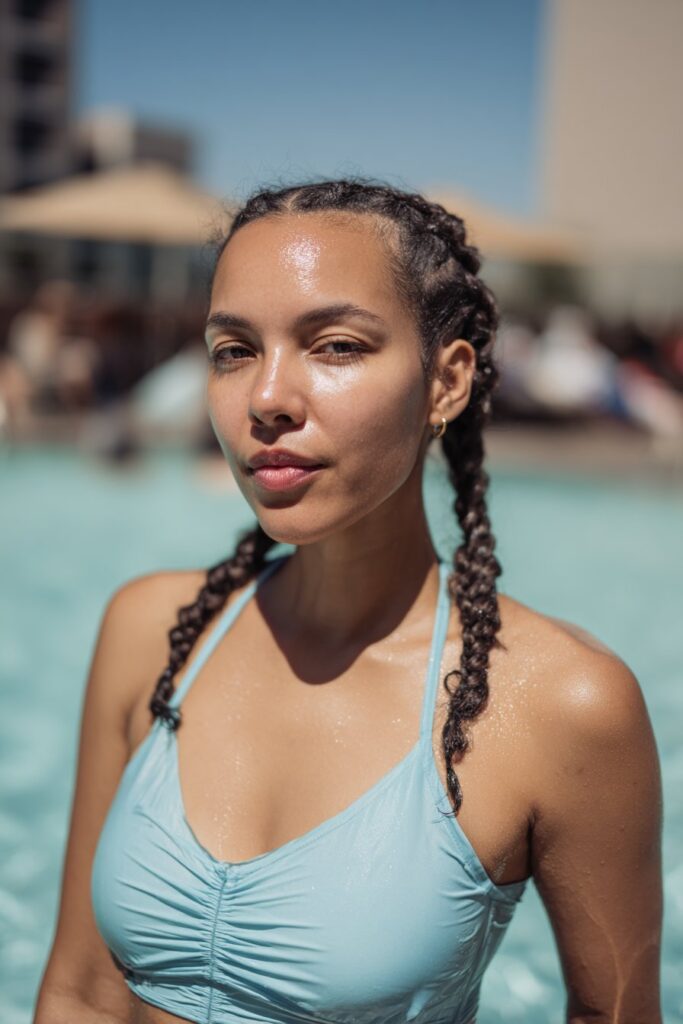
The French braid stands out as one of the best protective hairstyles for swimming because it distributes tension evenly across your scalp, making it comfortable during long pool sessions. This classic style keeps hair secure and tangle-free by weaving three sections together from crown to nape. The tight interlocking pattern prevents individual strands from spreading out in the water, which means less surface area exposed to chlorine.
What makes this protective hairstyle truly effective is how it seals your hair into one cohesive unit. While loose hair can fan out and stick to all parts of your body when wet, a French braid keeps everything contained. Perfect for all hair types, this style creates a barrier that minimizes chlorine penetration.
How to Style It for the Pool
Start by applying 2-3 tablespoons of coconut oil through your hair before braiding. The oil creates a protective barrier that prevents pool water from fully soaking into your hair shaft. I’ve used this technique before photoshoots where models needed to swim, and it works remarkably well.
Begin your French braid at the crown of your head and work down to the nape of your neck. The key is pulling the sections tight as you braid so they don’t loosen when you dive in. If you’re wearing a swim cap, bobby pin any excess braid flat against your head before putting the cap on.
Another method I recommend is wetting your hair in the shower first, then working in a leave-in conditioner cream before braiding. This pre-saturates your hair with conditioner rather than chlorine.
Best For
French braids work for swimmers who want a single, streamlined braid that stays put. This is a common go-to method for regular swimmers. The style suits anyone comfortable with basic braiding technique, though pulling it tight enough requires some practice.
Pro Tips from My Experience
After years of styling hair for clients who swim regularly, I always stress the importance of post-swim care. Use a clarifying shampoo after swimming to remove chlorine buildup that regular shampoo might miss. The coconut oil I mentioned earlier? It rinses out easily with warm water and actually leaves hair softer and more manageable.
If your braid starts to feel loose mid-swim, that’s a sign you didn’t pull the sections tight enough initially. In the same way you’d secure an updo for a long event, treat your pool braid with the same attention to tension. Apply conditioner or oils before braiding to help seal the cuticle and add extra protection from chlorine and sun exposure.
Double French Braids
What Makes It Chlorine-Proof
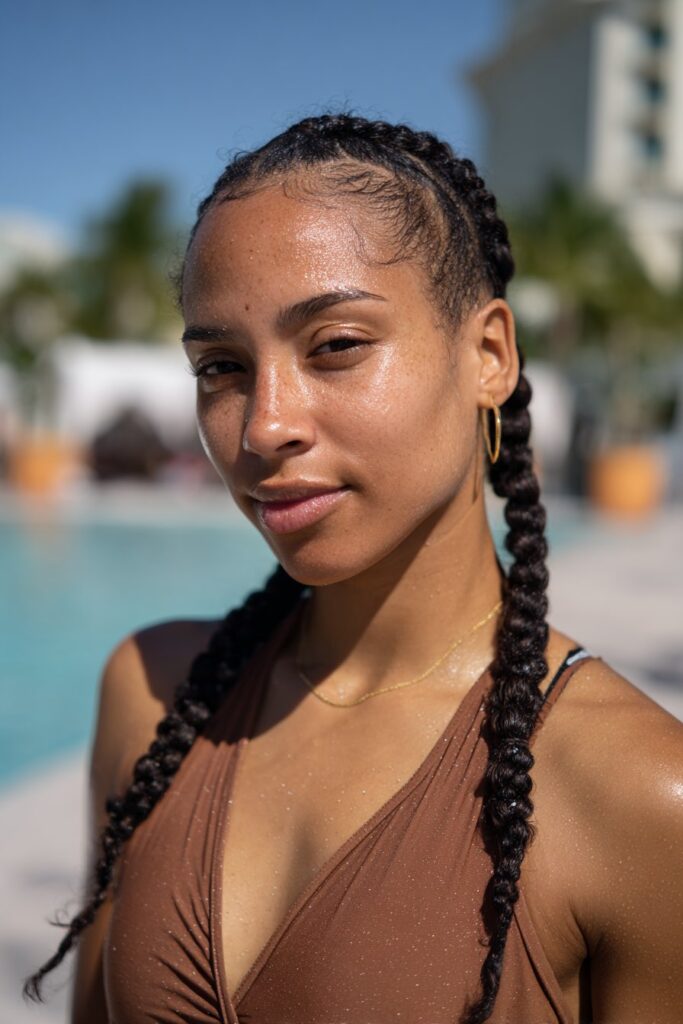
Double French braids offer twice the security of a single braid, which makes them one of my favorite protective styles for swimming when working with clients who have long hair. The dual-braid structure distributes your hair into two manageable sections rather than one thick rope, creating a more balanced weight distribution across your head.
This style keeps locks remarkably neat in both chlorinated pools and salty seas. While a single French braid can sometimes feel heavy when wet, splitting your hair into two braids reduces the bulk. I’ve styled countless brides who wanted to look polished for poolside receptions, and double French braids consistently deliver that put-together appearance even after swimming.
For those with medium-length layered hair, this technique keeps all the shorter pieces pulled back that might otherwise escape from a single braid. The two-braid system catches stray layers that one braid might miss.
How to Style It for the Pool
Start by sectioning your hair down the middle from forehead to nape. Begin each French braid at your crown, incorporating new sections as you work down toward the ends. The technique mirrors what you’d do for a single French braid, but you’re working with half the hair volume on each side.
If you plan to wear a swim cap, these braids fit underneath more comfortably than one thick braid. The flatter profile means less awkward bumps under your cap, which also helps the cap seal better around your hairline.
Best For
Double French braids work exceptionally well for swimmers with long or layered hair who need extra security. I recommend this style for anyone swimming laps or participating in water activities where you’ll be diving or moving vigorously. The symmetrical braids stay balanced even during vigorous movement.
This protective hairstyle for swimming suits those comfortable braiding their own hair, though the technique requires some coordination to keep both braids even.
Pro Tips from My Experience
Through my years teaching styling workshops, I’ve noticed that keeping tension consistent between both braids prevents one from loosening faster than the other. Pull each section with equal firmness as you braid.
If one braid sits higher than the other, your starting points weren’t aligned. Use your ears as reference points when you begin each braid to ensure symmetry. Besides technical precision, I always remind clients that these braids should feel secure but not painful. If you’re getting a headache, you’ve pulled too tight.
Box Braids
What Makes It Chlorine-Proof
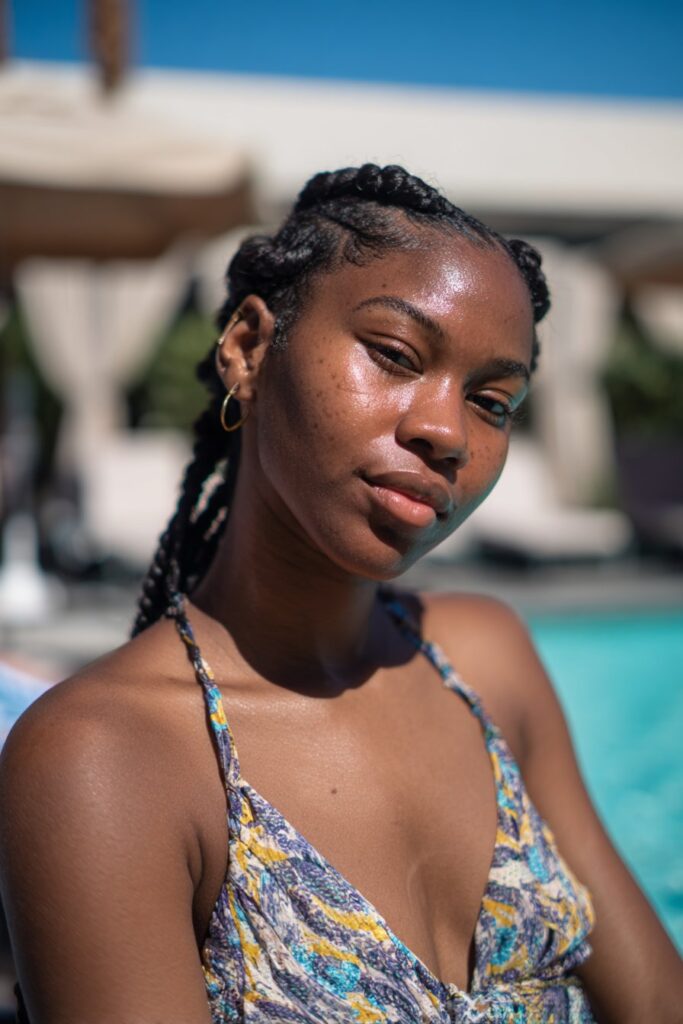
Box braids have become one of my go-to recommendations for clients planning beach vacations or regular pool sessions. When installed correctly, box braids protect your natural hair by wrapping it inside the braid, preventing dehydration and frizz after swimming. This secure fit means your braids won’t slip out, which is why many swimmers skip swim caps altogether when wearing this style.
What sets box braids apart from the French braids I mentioned earlier is their longevity. While French braids are temporary styles you create before each swim, box braids stay in for weeks. They’re a low maintenance protective style that works exceptionally well with water activities. I’ve styled countless clients heading to tropical destinations, and box braids consistently deliver that carefree vacation hair everyone wants.
One consideration worth noting is weight. Braids get heavy when wet, and I’ve had clients tell me their long box braids felt like ankle weights in the water. The length and thickness you choose matters more for swimming than for everyday wear. Knotless box braids create less tension on the scalp compared to traditional box braids, which becomes particularly beneficial when your hair gets wet and heavier from swimming. Less bulk means they dry faster too, reducing the risk of mildew.
How to Style It for the Pool
Before you even think about diving in, pre-conditioning makes all the difference. Apply a generous amount of leave-in conditioner or oils like coconut oil, olive oil, jojoba oil, or vitamin E oil. These create a protective barrier that makes it hard for chemicals to penetrate through to your natural hair while locking in moisture.
I always tell my clients to wear their box braids up in a bun or ponytail while swimming to reduce the amount of hair exposed to the water. This simple step minimizes chlorine contact. For example, a high bun keeps most of your braids dry above the water line during casual pool lounging.
The installation tension needs to be just right. Too tight and you risk thinning edges and hair loss. Too loose and you’ll see frizz after they contact with water. This balance is where professional installation really pays off.
Best For
Box braids suit swimmers who want a style that lasts multiple weeks without constant restyling. If you’re swimming daily during summer, expect them to last 3 to 5 weeks rather than the typical 6 to 8 weeks. I’ve worked with mothers who swear by short to medium length box braids for their daughters during swim season for exactly this reason.
Pro Tips from My Experience
After swimming, rinse your box braids immediately with clean water to remove chlorine and salt. Subsequently, wash with a clarifying shampoo free of SLS and SLES, gently massaging into the scalp to avoid frizz. Follow up with a deep conditioner to restore moisture and elasticity.
Drying your braids completely prevents mildew smell and scalp issues. Pat them with a towel and let them air dry, or use a hooded dryer for faster drying. Never leave them wet for extended periods.
Cornrows
What Makes It Chlorine-Proof
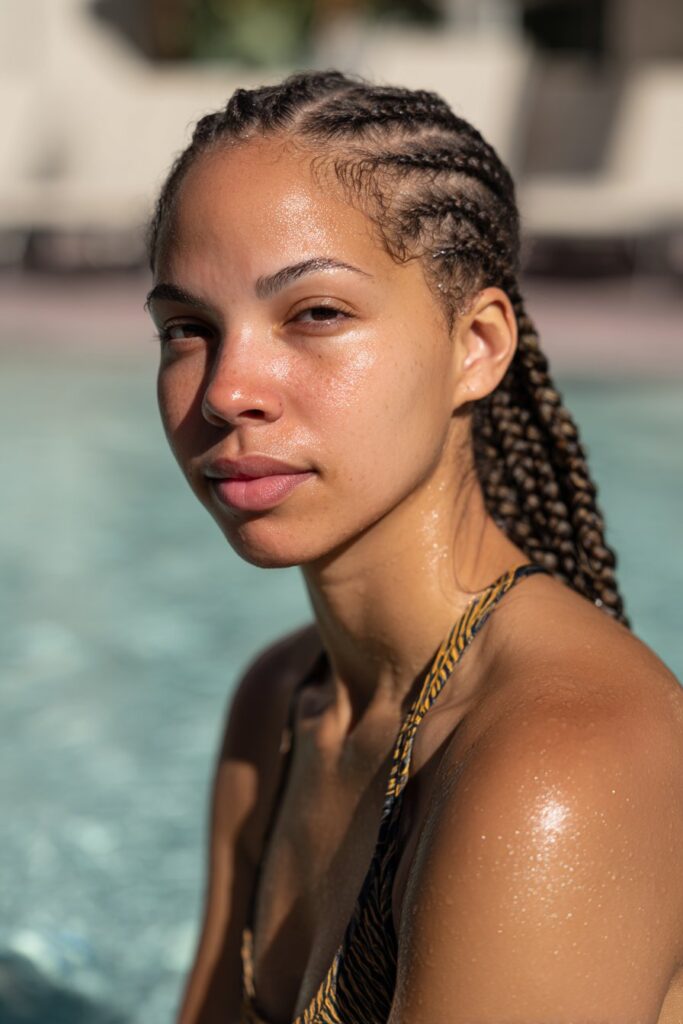
Cornrows get less attention than box braids, but they’re one of the best protective hairstyles for swimming I recommend to lap swimmers. The braids lie flat against your scalp, which makes them ideal under swim caps and minimizes friction during laps. While box braids create individual rope-like sections, cornrows hug your head in a streamlined pattern that actually reduces drag in the water.
I’ve styled competitive swimmers who swear by this protective hairstyle for swimming because it dries quicker than most braid styles. The hair sits close to the scalp rather than hanging loose, so there’s less bulk holding water. This low-maintenance style gives your scalp room to breathe, which becomes incredibly beneficial when you’re spending hours in a pool. The heat can be oppressive poolside, and cornrows keep your head cooler than bulkier styles.
As a protective style, cornrows prevent hair from tangling and becoming damaged from constant motion in the water. For swimmers hitting the pool regularly, this hairstyle withstands frequent water exposure without needing daily restyling. You can choose straight-back cornrows for a clean, simple look, or get creative with zigzag, curved, or tribal-inspired patterns.
How to Style It for the Pool
Before you even think about swimming, moisturizing makes all the difference. Apply a generous amount of hair oil or leave-in conditioner to your cornrows before diving in. This forms a protective layer that reduces chlorine absorption. I learned a useful trick from a salon owner who specializes in protective swimming hairstyles for natural hair: mix 3 tablespoons of oil with 1 cup of water in a spray bottle, shake well, and spray through your braids. Similarly, you can use conditioner in the same ratio.
Rinse your cornrows completely with clean, fresh water before swimming. Pre-saturating your hair means it absorbs less chlorinated water. After swimming, rinse again to wash away chemicals.
Best For
Cornrows suit lap swimmers who need a fuss-free, breathable style perfect for both swimming and sunbathing. If you’re swimming 5-6 days a week, this protective style handles the routine better than loose styles.
Pro Tips from My Experience
After working with a client training for a swimming competition, I developed a post-swim care routine specifically for cornrows. Dry your braids thoroughly by squeezing excess water and patting with a towel. Never sleep with wet braids because this leads to scalp irritation and mildew growth.
Use a clarifying shampoo to remove chlorine buildup. Mix 3 tablespoons of cleansing shampoo with 1 cup water in a spray bottle and massage into the braids. Follow with a deep conditioner mixture using the same ratio to restore moisture stripped by pool chemicals.
Braided Bun
What Makes It Chlorine-Proof
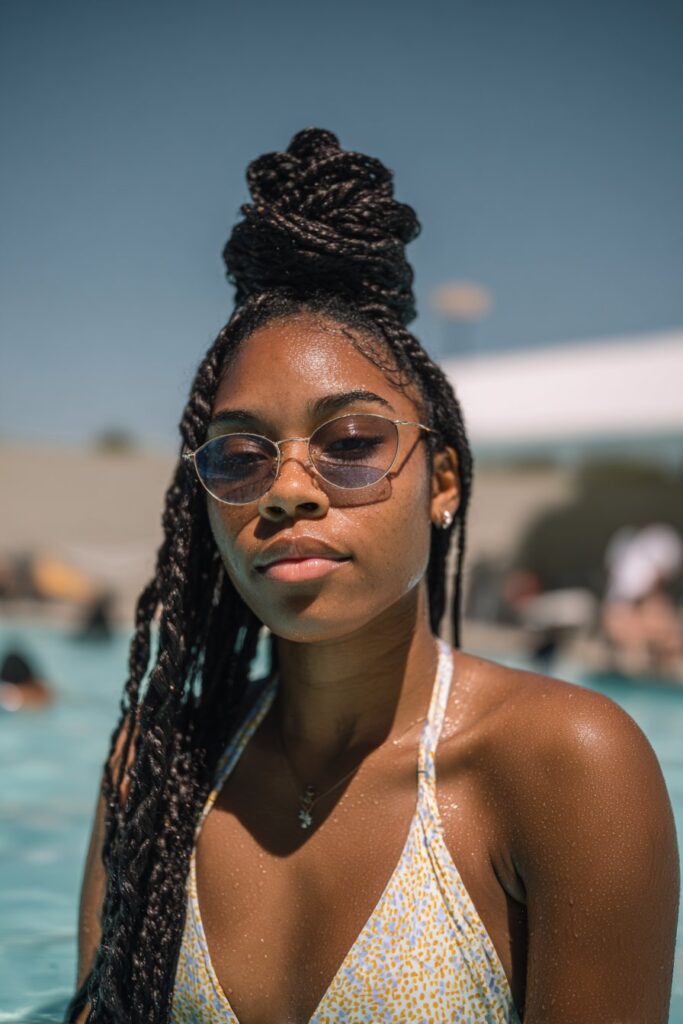
Swim caps and I have a complicated relationship, but one thing I’ve learned through years of styling swimmers is that braided buns solve the biggest swim cap challenge: fitting all your hair comfortably underneath. This protective hairstyle for swimming creates a tight, compact shape that sits flat against your head, making it perfect for those who prefer capped swimming.
The braided bun combines two protective techniques into one style. The braid portion seals your hair from root to mid-length, while the bun wraps the ends into a secure coil. This double-layer protection means less hair surface exposed to chlorine compared to loose buns. I styled a client once who swam four times weekly, and she noticed significantly less breakage after switching from regular buns to braided versions.
For wavy, coily, or kinky hair textures, this intricate yet secure updo works particularly well. The braiding technique helps manage texture while the bun keeps volume controlled.
How to Style It for the Pool
Start by parting your hair on one side and creating a French braid along your front hairline. Continue braiding toward the back of your head, then gather all remaining hair into a low ponytail at the nape of your neck. Twist that ponytail into a low bun and secure it with both an elastic band and hair pins.
The key detail here is making the bun tight and compact if you’re wearing a swim cap. A loose, voluminous bun creates uncomfortable bumps under your cap and can cause the cap to slip. Bobby pin any loose sections flat against your head before pulling the cap over.
Best For
This style suits swimmers who regularly wear swim caps and need a low-profile option. It’s specifically designed for keeping hair contained under caps, which makes it ideal for lap swimmers or anyone participating in swim classes.
Pro Tips from My Experience
Through my salon work, I’ve discovered that placement matters more than most people realize. Position your bun at the nape rather than higher on your head. A low placement fits better under standard swim caps and doesn’t create pressure points that cause headaches during long sessions.
Secure the bun with both elastics and pins. The elastic holds the initial structure, but pins lock everything in place when you’re moving through water. I recommend using spiral hair pins rather than standard bobby pins because they grip better when wet and won’t slide out mid-swim.
High Ponytail
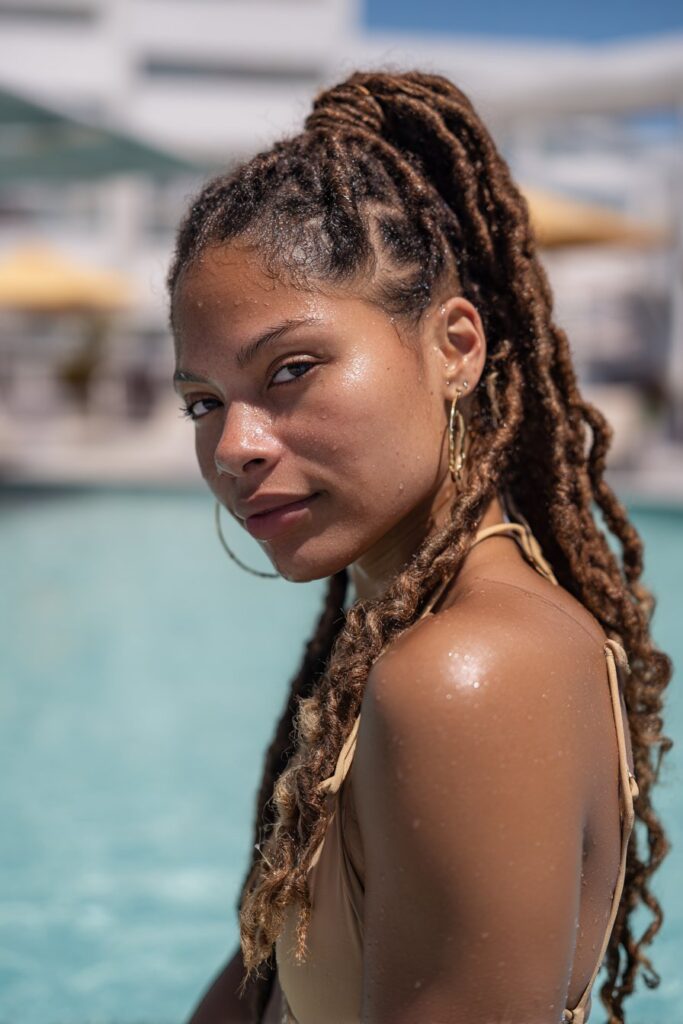
What Makes It Chlorine-Proof
Sometimes the simplest protective hairstyles for swimming work best. A high ponytail keeps your hair off your face and minimizes tangling in the water, which is exactly what you need when you’re focused on swimming laps rather than fussing with complicated braids. When positioned at the crown of your head, this style reduces drag and keeps hair compact while reducing resistance.
This quick and practical option suits different hair lengths and textures, making it one of my most recommended easy protective hairstyles for the pool for clients who don’t have time for elaborate braiding. I styled a swimmer once who had exactly 15 minutes before her daughter’s swim lesson started, and a high ponytail solved everything.
How to Style It for the Pool
Brush all your hair up and out of your face. If you have flyaways or frizz, use a hair serum to slick everything back smoothly. Gather your hair at your crown for a high ponytail and secure it tightly with a hair tie. Use a bobby pin to secure any loose strands that might slip out.
For instance, if you want to add some personality, wrap a colorful waterproof scrunchie around your ponytail for retro flair. When you need even more security, turn your ponytail into a top knot bun by wrapping it around the hair tie and securing with bobby pins.
Best For
High ponytails work for swimmers short on time who need a no-fuss option. This style is easy to squeeze excess water out of after swimming, which speeds up your post-pool routine considerably.
Pro Tips from My Experience
After working with competitive swimmers, I learned that ponytail placement affects performance. Position it high at the crown rather than mid-head to keep maximum hair off your neck and shoulders. This placement keeps you cooler and creates less drag when you’re moving through water.
Low Bun
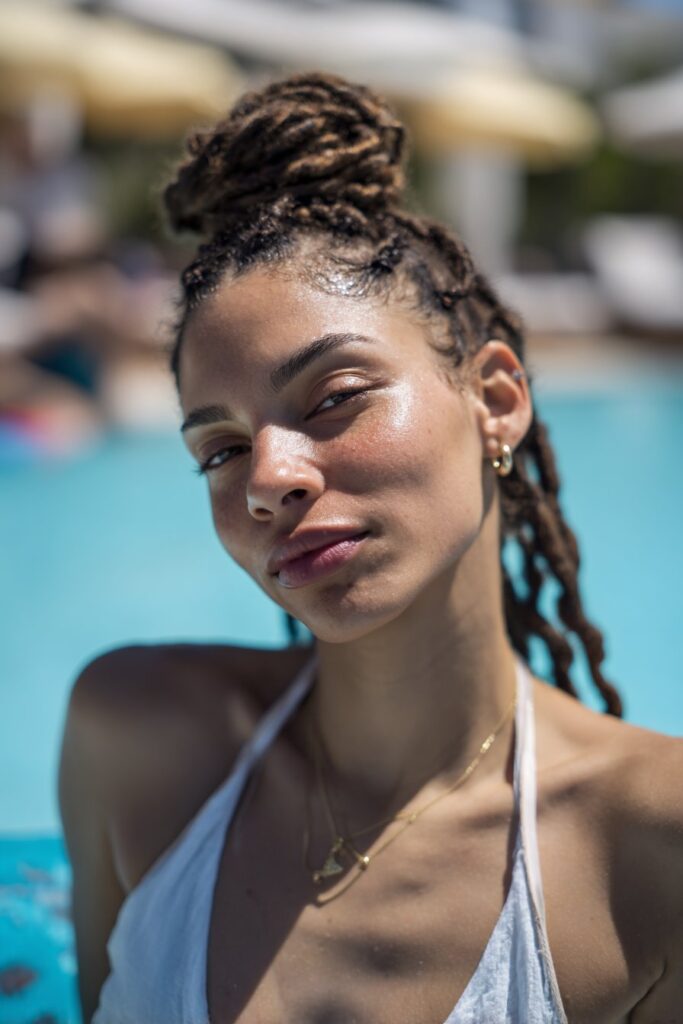
What Makes It Chlorine-Proof
During my years working poolside for resort photoshoots, I watched countless swimmers gravitate toward the low bun for one simple reason: it works. This classic updo minimizes hair exposure to water, which translates to less chlorine damage and fewer tangles. The positioning at the nape of your neck keeps your hair secure while allowing you to move freely through the water.
What sets the low bun apart as one of the best protective hairstyles for swimming is its versatility. You can wear it sleek for a polished look or embrace a messy version for that effortless beach vibe. Either way, the bun structure seals your ends away from chlorine while keeping your neck cool.
How to Style It for the Pool
Pre-soaking your hair changes everything. Before you even think about creating the bun, saturate your hair with fresh water. Wet hair acts like a sponge, and when it’s already full of clean water, it absorbs far less chlorine.
Next, coat your hair with coconut oil. I learned this from a client who swam daily, and her hair remained surprisingly healthy despite constant pool exposure. Gather your oiled, damp hair into a low ponytail at the nape, twist it into a bun, and secure with an elastic and pins. Make it tight enough to stay put but comfortable enough for extended wear.
If you’re wearing a swim cap, this low placement fits perfectly underneath without creating awkward bulges. Besides functionality, you can dress up a poolside low bun by adding a wide-brimmed hat or a colorful hair scarf.
Best For
Low buns suit swimmers who want a no-fuss protective style for the pool that transitions seamlessly from swimming to lounging. This works for all hair types and requires minimal styling skill.
Pro Tips from My Experience
Rinse immediately after swimming with fresh water to flush out chlorine. Follow with a clarifying shampoo to remove chemical buildup, then apply a deep-conditioning treatment to restore moisture. I always remind clients to use a leave-in conditioner before swimming for an extra protective layer that helps with detangling afterward.
Braided Ponytail
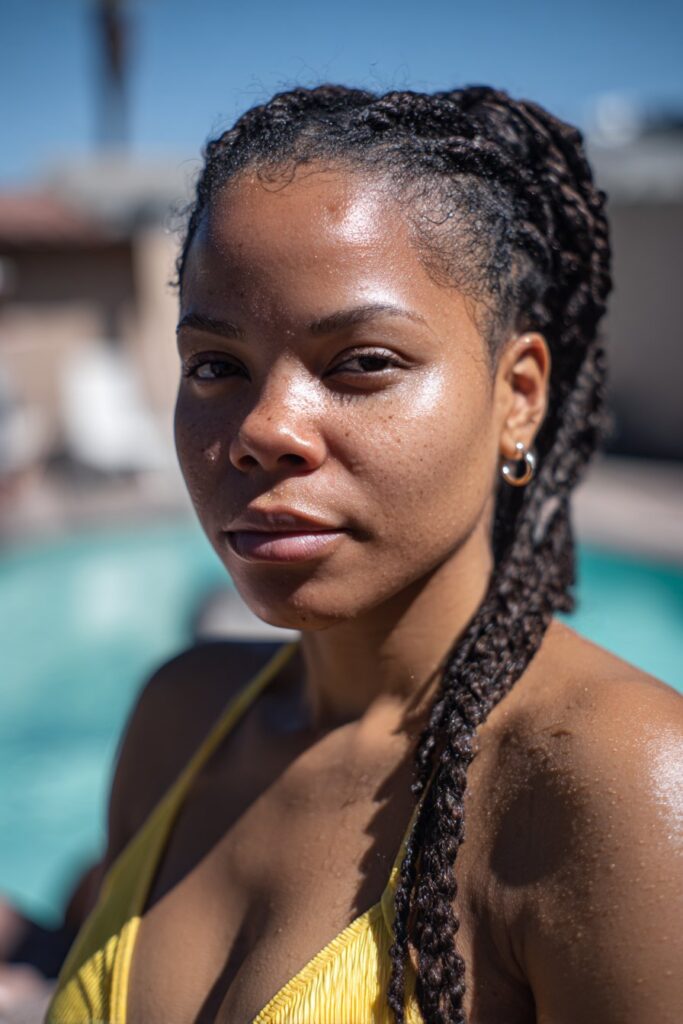
What Makes It Chlorine-Proof
The braided ponytail sits somewhere between the high ponytail and French braid I covered earlier, borrowing the best features from both. A high ponytail with a tight braid keeps your hair off your face, minimizes tangling in the water, and delivers that sporty esthetic. The braid portion creates a physical barrier that minimizes surface area exposed to chlorine and UV rays, while the ponytail positioning keeps everything lifted and manageable.
I styled a client last summer who alternated between laps and water volleyball, and this protective hairstyle for swimming handled both activities without coming loose. The three-section braiding technique provides more security than a simple rope twist, making it one of my preferred easy protective hairstyles for the pool when clients want something uncomplicated yet effective.
How to Style It for the Pool
Pull your hair into a high ponytail and secure it with an elastic. Divide the ponytail into three equal sections and braid down to the ends. Secure the bottom with another hair tie. The technique mirrors a standard braid, just positioned higher on your head for better water clearance.
For extra protection, you can wrap that braided ponytail into a bun and secure it with bobby pins. This upgraded version keeps tangles to an absolute minimum when you’re done swimming.
Best For
This style works for long and medium hair lengths, keeping everything tidy throughout your swim. Similarly, it pairs well with sunglasses or a hat for complete poolside styling.
Pro Tips from My Experience
After swimming, rinse your hair immediately with fresh water to wash away chlorine. Gently detangle with a wide-tooth comb starting from the ends, then apply leave-in conditioner. This post-swim ritual prevents those painful tangles that make you regret ever getting in the pool.
Two-Strand Twists
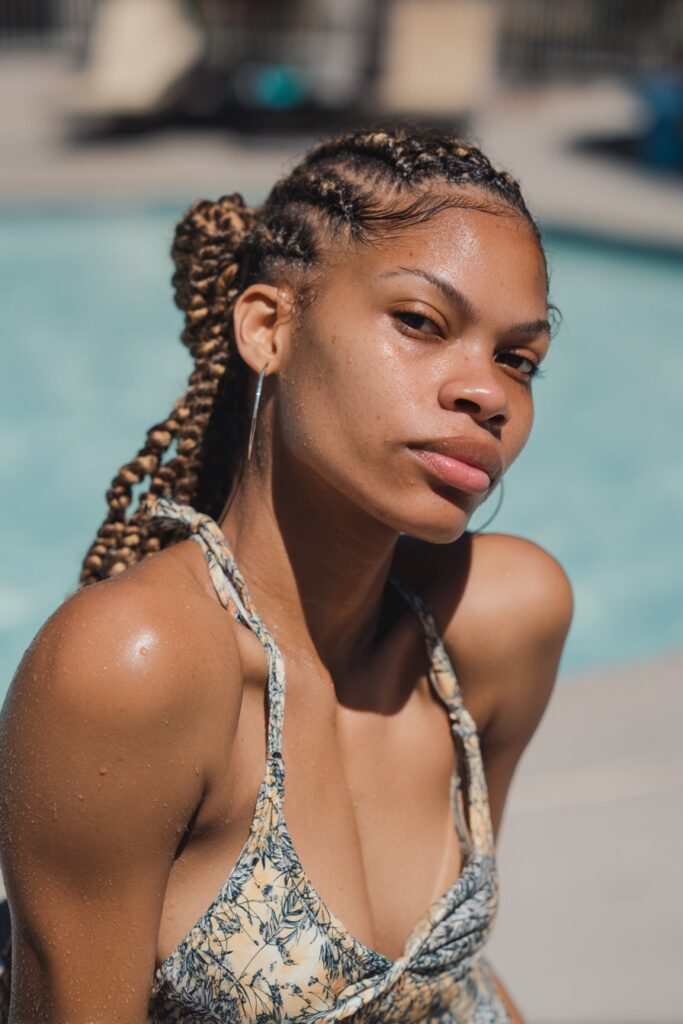
What Makes It Chlorine-Proof
Two-strand twists rank among my favorite protective styles for swimming for clients with natural hair. This low-maintenance, low-tension protective style retains moisture while giving you easy access to your scalp. What sets twists apart from the braided styles I covered earlier is their breathing room. They won’t develop that musty mildew smell because air circulates between the twists, allowing them to dry properly.
The versatility impresses me most. You can style twists up in a bun, pull them into a ponytail, or wear them down. After working with a client who swam three times weekly, I watched her twists handle pool water beautifully while maintaining their shape. When you don’t add extensions, you maintain direct access to your own hair and scalp, making it easier to keep everything clean and moisturized between swims.
How to Style It for the Pool
Create about 20 two-strand twists throughout your hair, enough to pin up or arrange in a ponytail or bun. Before swimming, coat your twists heavily with coconut oil or a thick conditioner. This forms a barrier against chlorine penetration.
Best For
Two-strand twists suit swimmers with natural hair seeking a protective swimming hairstyle for natural hair that offers styling flexibility. This works especially well if you swim regularly and want a style lasting two to three weeks.
Pro Tips from My Experience
After detangling before your initial install, you’ve already prepped for easier post-swim washing. Wash one twist at a time, then re-twist it before moving to the next section. This technique prevents the tangling chaos that happens when you unravel everything at once.
Space Buns
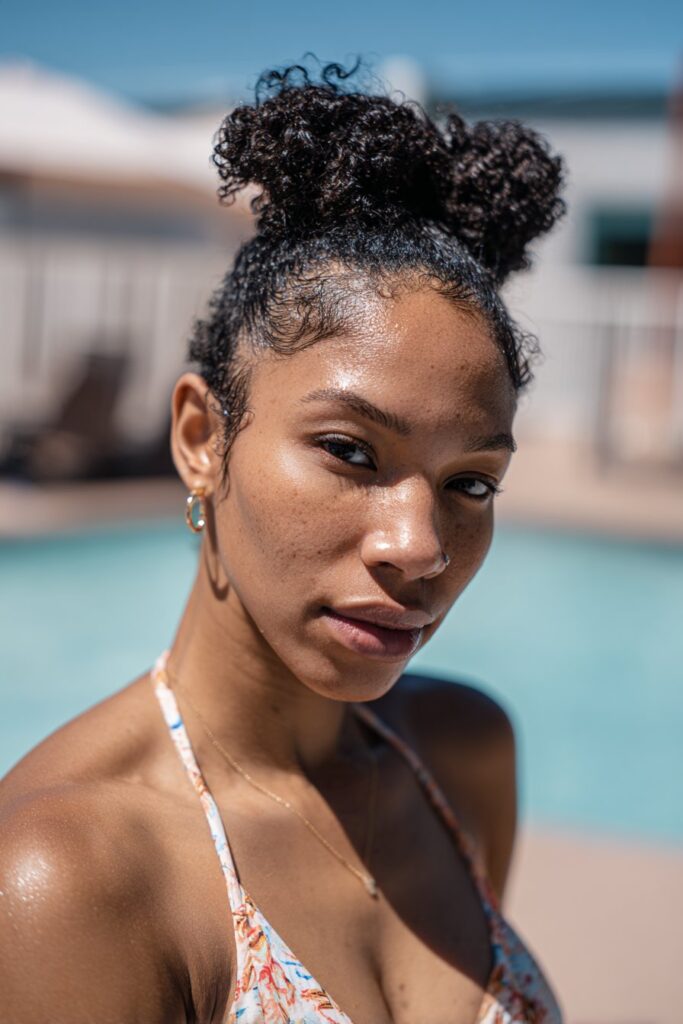
What Makes It Chlorine-Proof
Space buns bring that playful energy I love styling for clients heading to pool parties or festivals. This protective hairstyle for swimming creates two high buns positioned on either side of a middle part, keeping hair secure and stylish. The technique involves braiding your hair into two sections, then wrapping each braid into a bun, which doubles your protection against chlorine.
What sets space buns apart from the single braided bun I mentioned earlier is how they distribute hair weight across two points rather than one. This works exceptionally well for medium-length hair with medium density, keeping everything out of your way while you swim. I styled a client last summer who wore space buns throughout her entire beach vacation, and the double-bun structure meant her hair dried faster than a single thick bun would.
How to Style It for the Pool
Part your hair down the middle and create two high buns on either side of your head. For extra security, braid each section before wrapping it into the bun. If you have thicker hair, you’ll need extra pins or elastics to keep everything locked in place.
Best For
Space buns suit swimmers wanting a fun, summer-ready look. Besides functionality, they pair beautifully with hats for that complete poolside esthetic.
Pro Tips from My Experience
Secure each bun with both elastics and bobby pins. The playful appearance shouldn’t compromise hold when you’re actually swimming.
Feed-In Braids
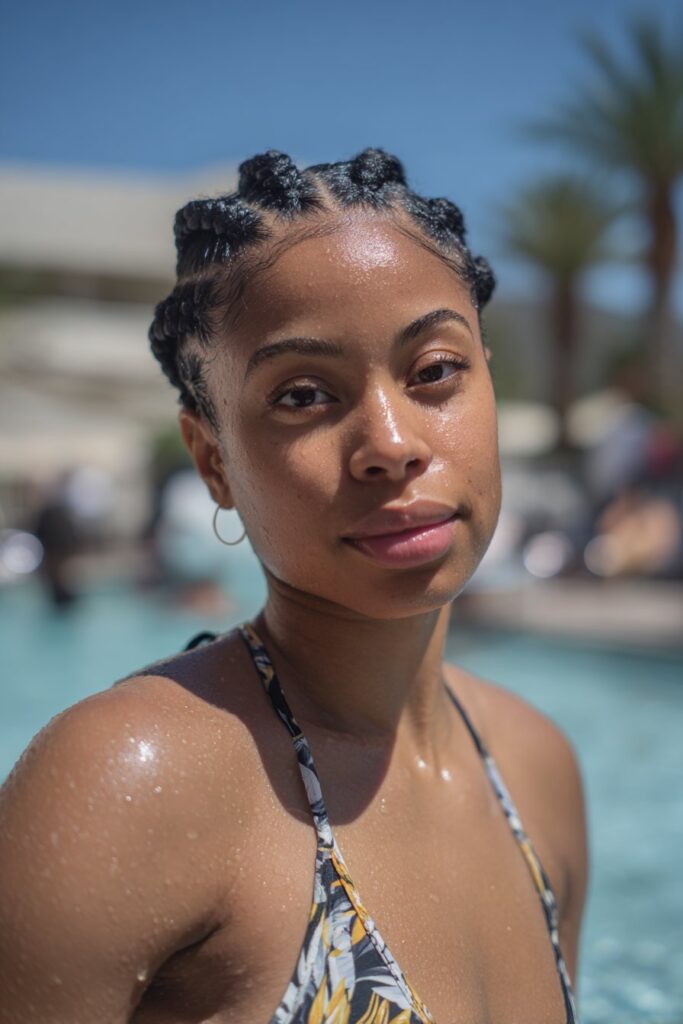
What Makes It Chlorine-Proof
Feed-in braids solved a problem I noticed with traditional box braids: root tension. These sleek and polished braids have no heavy roots like traditional braids may have, making them one of the best protective hairstyles for swimming for clients who experience scalp sensitivity. The gradual feeding technique creates lightweight braids that won’t pull on your hairline when wet.
What sets feed-in braids apart as protective styles for swimming is how they handle water activities. They’re fashionable, safe, soft, and don’t disappoint in water. The reduced weight means less strain when your braids absorb pool water.
How to Style It for the Pool
You can wear them down, tie them in a neat bun, or create a high ponytail. This versatility means you’re not locked into one pool look for your entire vacation.
Best For
Feed-in braids work for swimmers wanting a protective swimming hairstyle for natural hair that requires very little upkeep and stays fresh after days of fun in the sun.
Pro Tips from My Experience
Skip the blow dryer completely with this style. After swimming, rinse thoroughly and let them air dry. The lightweight structure dries faster than heavier braid styles, reducing that damp-hair-all-day frustration.
Half-Up Half-Down
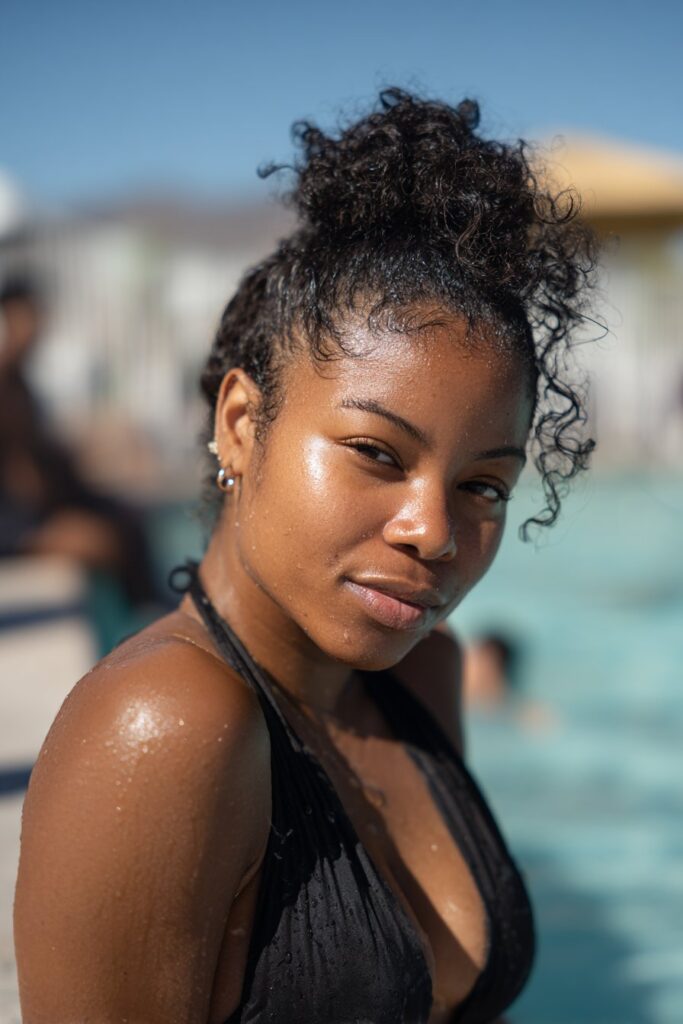
What Makes It Chlorine-Proof
I’ve styled countless brides who wanted their hair to survive pool parties without looking disheveled, and the half-up half-down became my secret weapon. This style keeps hair out of your face while maintaining volume, which means you’re not exposing your entire head to chlorine. The top section stays secured, creating a physical barrier that minimizes surface area exposed to chemicals and UV rays.
What makes this one of my favorite easy protective hairstyles for the pool is how it balances protection with style. You’re not completely hiding your hair like with buns, but you’re still keeping the most vulnerable sections contained.
How to Style It for the Pool
Take half your hair from above your ears and secure it with a scrunchie in either a bun or loose ponytail. For instance, if you’re heading straight from the pool to lunch, this elevated look takes no more time than your everyday routine. The secured top section keeps hair sleek all day long.
Best For
This suits swimmers wanting minimal styling time without sacrificing appearance. Besides functionality, it works for all hair lengths and textures.
Pro Tips from My Experience
Consider longevity when choosing this style. If you’re swimming multiple times, the top section needs secure fastening to withstand repeated water exposure.
Conclusion
Not all of these protective hairstyles will work perfectly for your hair type and swimming routine, and that’s completely fine. The key is finding two or three go-to styles that protect your hair while fitting your lifestyle. Certainly, box braids might last weeks for vacation swimming, while a quick French braid works better for daily lap sessions. As a matter of fact, the best protective hairstyle is the one you’ll actually use consistently. Experiment with different options from this list, pay attention to how your hair responds, and build your own pool-ready styling routine. Your hair will thank you.

Elsa Claire is the founder and editor of ElsaClaire.com, where she writes about hairstyles, hair care, and the everyday routines that help real people feel good about their hair.