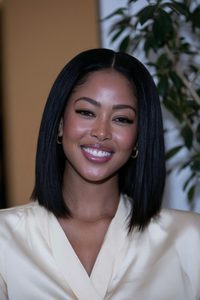
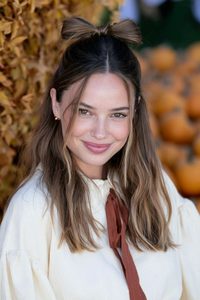
When summer camp hairstyles fall apart after the first swim session or water balloon fight, the day can quickly turn uncomfortable. I learned this the hard way when standard ponytails and messy buns couldn’t stand up to real camp activities. The good news? Classic cute hairstyles for summer camp like pigtail braids and butterfly clips are making a major comeback, proving that nostalgic styles are also the most practical. These simple summer hairstyles keep hair secure without heat styling, perfect for active days filled with crafts, sports, and outdoor fun.
Dutch Braid
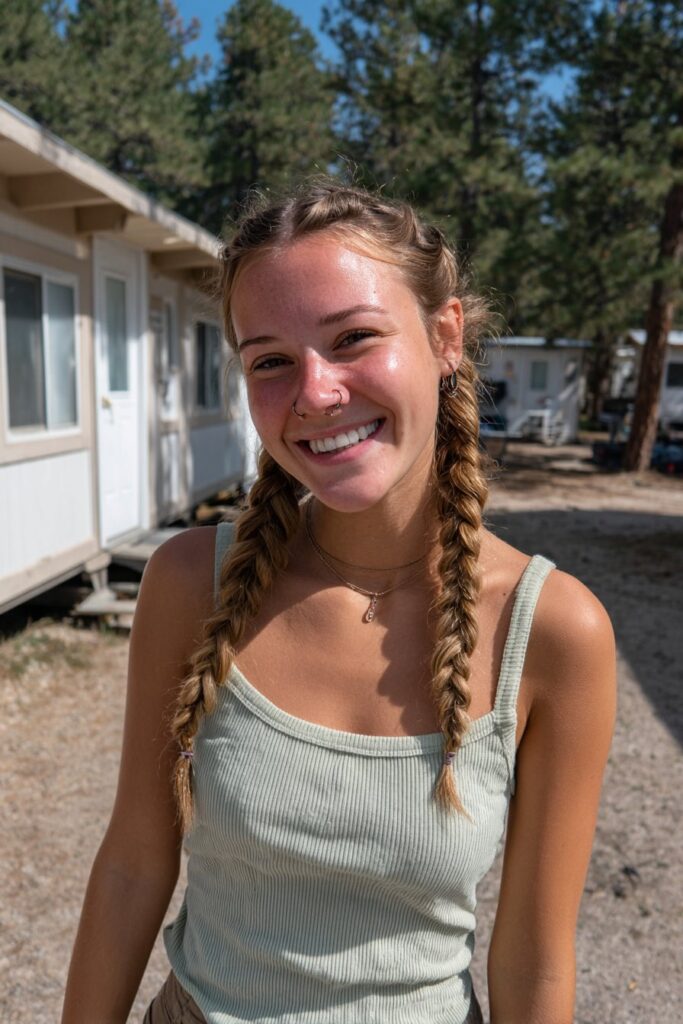
Dutch braids look complicated, but I promise they’re simpler than they appear. The raised, dimensional effect sits on top of the hair rather than blending into it, which makes them stand out beautifully. Conversely to French braids where you cross strands over, Dutch braids involve crossing strands underneath.
How to Create a Dutch Braid
- Brush hair thoroughly and remove any tangles
- Take a section at the top and divide it into three equal parts: left, middle, and right
- Cross the left section under the middle section
- Cross the right section under the middle section
- Add a small section of loose hair to the left section, then cross both under the middle
- Add hair to the right section and cross under the middle
- Continue adding hair to each side and crossing under until reaching the nape of your neck
- Finish with a regular three-strand braid and secure with an elastic
The key is keeping your hands right against your scalp. This creates tighter braids that won’t budge during activities.
Why Dutch Braid Works for Summer Camp
Dutch braids hold better than most styles because the under-braiding technique lifts and secures hair in place. I’ve seen these braids withstand hot, humid afternoons without falling apart. The style keeps hair completely off the face and neck, making it perfect for active camp days filled with swimming, sports, and outdoor games.
Dutch Braid Variations
Double Dutch Braids (also called boxer braids) create two symmetrical braids by parting hair down the middle and braiding each side. These pigtail-style braids work for everything from morning activities to evening campfires.
Dutch Crown Braid wraps around the hairline like a headband. Start from a side part and braid along the hairline, then create a second braid from the other side and pin both together at the back.
Dutch Braid Ponytail combines both styles by stopping the braid at the crown and securing remaining hair into a high ponytail.
Tips for Perfect Dutch Braid
Spray hair with dry shampoo before braiding to add grip and texture. This prevents strands from slipping out during the day. Maintain tension while braiding so sections stay tight. For a fuller look, gently pull on each braided section after finishing. Skip washing hair right before braiding since natural oils help the braid grip better.
Bubble Ponytail
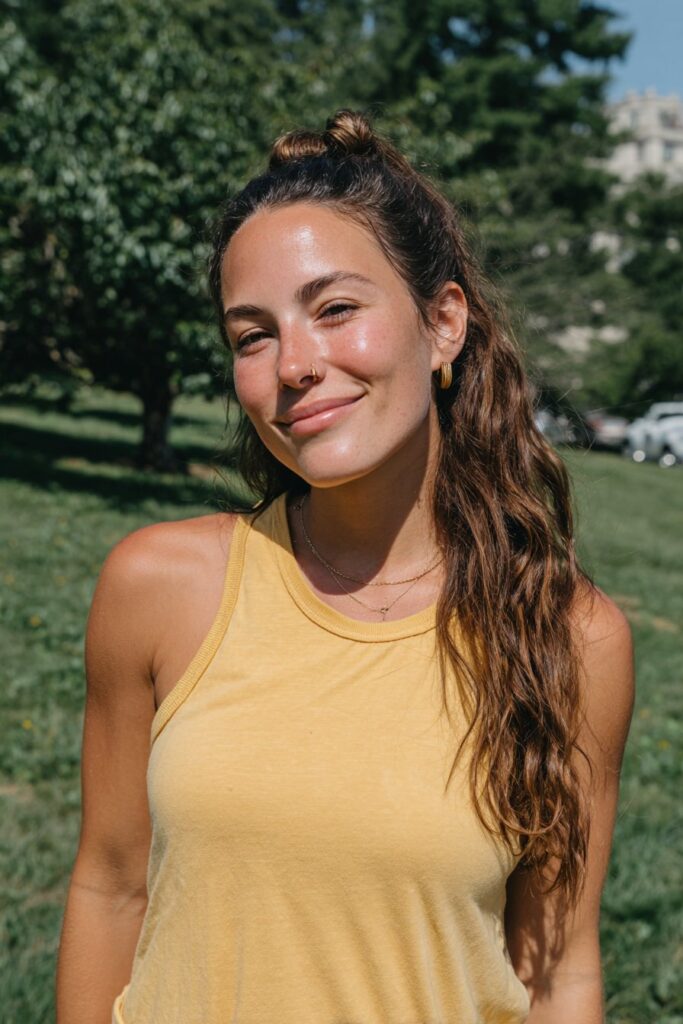
I discovered bubble ponytails when I needed a quick style that looked intentional but worked with second-day hair. This playful twist on a classic ponytail takes about 10 minutes to create, and with practice, the time drops even further. The best part? It works with straight hair, curly hair, or bedhead.
How to Create a Bubble Ponytail
- Start with any hair texture (no prep required, though dry shampoo adds helpful grip)
- Pull hair into a ponytail and secure with a clear elastic
- Take a small section from the ponytail and wrap it around the elastic to conceal it
- Thread the wrapped section through the elastic underneath to secure it
- Tease the ponytail section for volume
- Place another clear elastic 1-2 inches down the ponytail length
- Gently tug the sides of this section to create a rounded bubble shape
- Repeat down the length of your ponytail, teasing each section before adding the next elastic
- Tug all bubbles to ensure they’re roughly the same size vertically and horizontally
- Finish with hairspray to lock everything in place
The messy look is actually the goal here. If your bubbles appear too polished, continue tugging until you achieve a relaxed vibe.
Why Bubble Ponytail Works for Summer Camp
Bubble ponytails excel at summer camp because they perform well with less-than-fresh hair. In essence, the more dry shampoo and product in the hair, the better the volume. This makes them perfect for multi-day camp sessions. The style keeps hair completely secured and off the face during swimming, hiking, and sports activities. Additionally, longer hair creates more bubbles, giving girls with length extra styling potential.
Bubble Ponytail Variations
Double Bubble Ponytails split hair into two sections for side-by-side bubbles instead of one central ponytail. Low Bubble Ponytail positions the base ponytail at the nape rather than the crown. Half-Up Bubble Style sections only the top half of hair into bubbles while leaving the bottom half down.
Tips for Perfect Bubble Ponytail
Space elastics closer together for a tighter bubble effect, or farther apart for a relaxed style. Use small rubber elastics in one-inch intervals for more defined bubbles. For thin hair, tease each section thoroughly before securing the next elastic. The style holds best when hair isn’t freshly washed, as natural oils provide grip.
French Braid
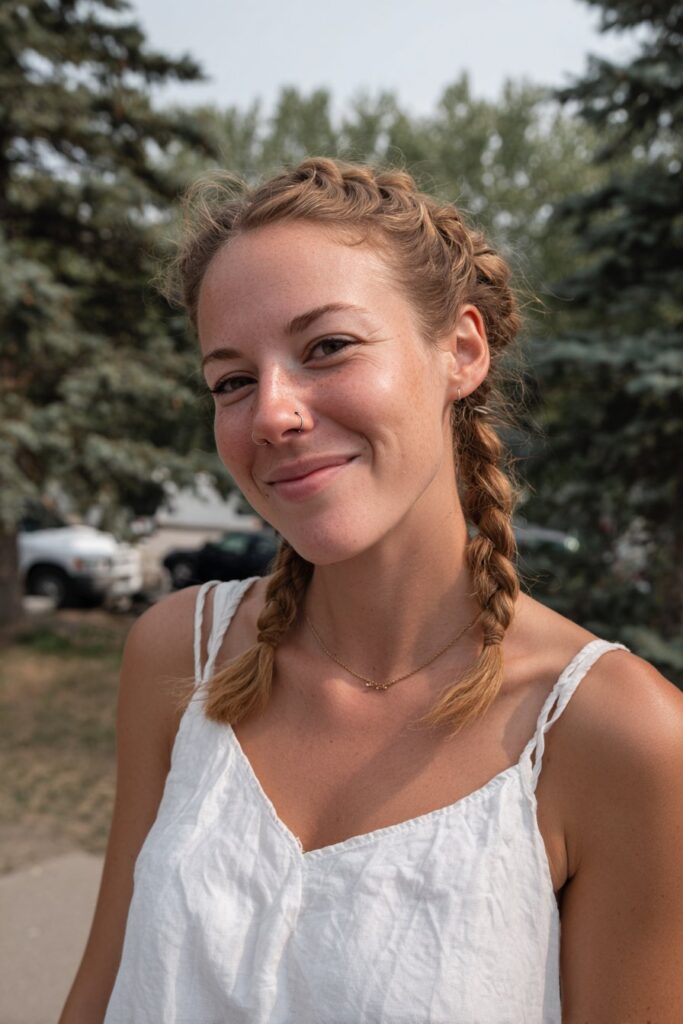
French braids represent one of those classic techniques I practiced endlessly as a beginner. Conversely to Dutch braids that cross strands underneath, French braids cross strands over the central strand. This creates a braid that weaves into the hair rather than sitting on top.
How to Create a French Braid
- Brush hair to remove tangles and gather supplies: rubber bands, comb, and optional hairspray or bobby pins
- Section three equal portions of hair at the crown
- Cross the right section over the middle, making it the new middle piece
- Cross the left section over the new middle
- Add a small section of loose hair to the left section, then cross it over the middle
- Repeat on the right side, adding hair before crossing over
- Continue adding hair to each side and crossing over until reaching the nape
- Finish with a regular three-strand braid and secure with an elastic
Keep hands close to the scalp for tighter braids. Add hair at the same height you’re forming the braid to avoid diagonal lines and bumps.
Why French Braid Works for Summer Camp
French braids excel at summer camp because they spread tension across a larger portion of the scalp and restrain shorter layers that can’t reach the nape. The sleek appearance looks polished yet stays secure through swimming, sports, and outdoor activities. Slightly unwashed hair provides better grip, making this style perfect for multi-day camp sessions.
French Braid Variations
French Braid Pigtails split hair down the middle and create one braid on each side. Side French Braid sweeps hair to one side for a romantic look. Crown French Braid wraps around the head like a halo, starting at the temple and continuing around the back[212]. Upside-Down French Braid begins at the nape and braids upward, finishing in a top bun.
Space Buns
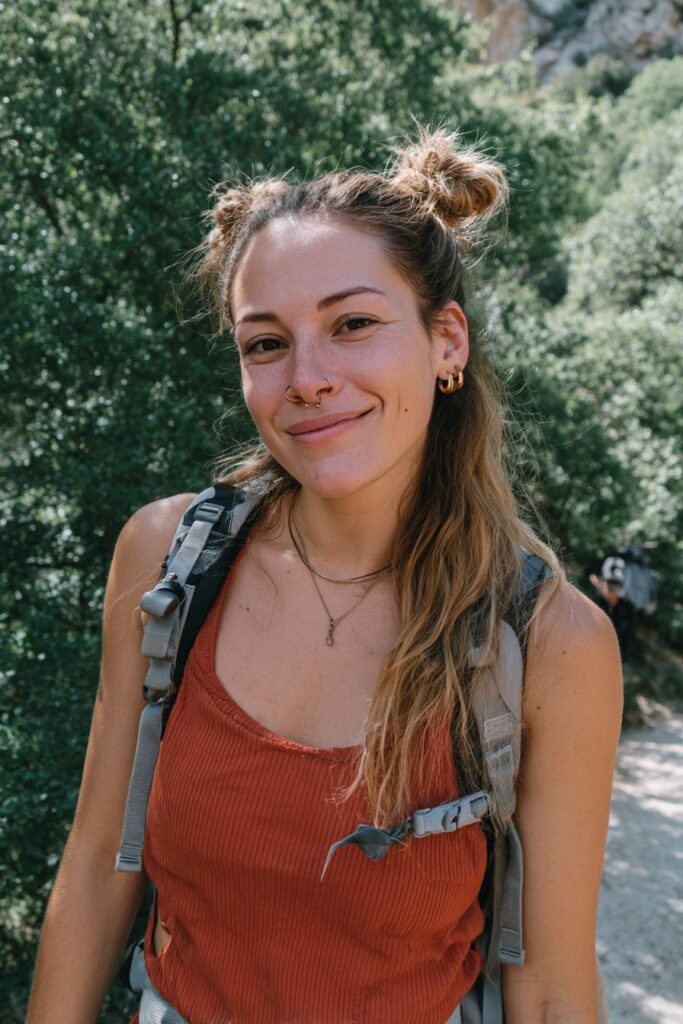
Space buns remind me of those carefree summer days when function meets fun. I started recommending them to campers after realizing how well they handle everything from lake swimming to obstacle courses. These two buns sit symmetrically on either side of a center part, creating a playful look that actually performs.
How to Create Space Buns
Part hair down the middle from forehead to nape using your fingers or a rat-tail comb. Pull one section into a high pigtail and repeat on the other side, mirroring placement to avoid lopsided buns. Twist the first pigtail away from your face until it resembles a rope, then wrap this twisted hair around the base of your pigtail. Tuck the ends underneath and secure with another hair tie or bobby pins[262]. Repeat on the second side, then mist with hairspray to lock everything in place[292].
Why Space Buns Work for Summer Camp
Besides keeping hair completely off the face and neck[262], space buns actually work better with day-old hair. Natural oils provide grip that fresh hair lacks, making this perfect for multi-day camp sessions. The style transitions seamlessly from swimming to evening activities[262], holding through humidity and movement.
Space Buns Variations
Messy space buns create a relaxed vibe by gently pulling strands from each bun[292]. Half-up space buns section only the top portion of hair while leaving the rest down[292], perfect for shorter lengths. Low space buns position at the nape instead of crown for a chic look[292]. Braided space buns incorporate three-strand braids before coiling[292].
Tips for Perfect Space Buns
Apply dry shampoo or texturizing spray before styling to add grip and volume[231]. Use a boar bristle brush to smooth hair and tame flyaways for sleeker buns[231]. For fuller appearance, pancake the buns by pulling at the sides after securing.
Fishtail Braid
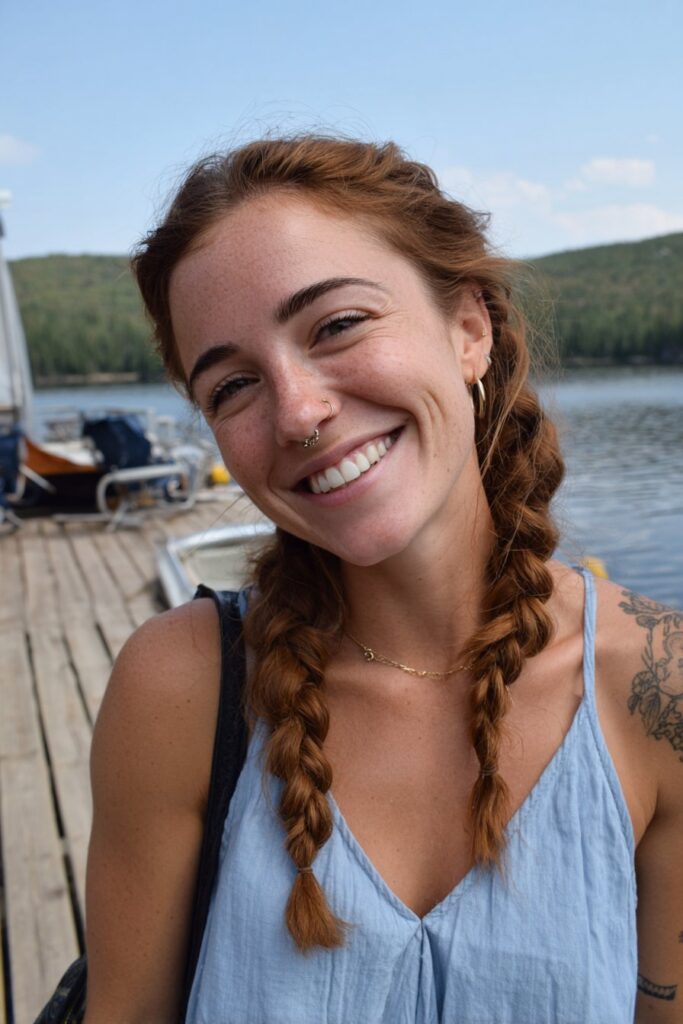
The intricate skeletal pattern of a fishtail braid caught my attention years ago when I first learned that this impressive-looking style uses only two sections instead of three. I remember teaching a group of young campers this technique and watching their faces light up when they realized how achievable it actually was. The fishtail works for all hair types, making it one of those versatile summer camp hairstyles that truly delivers.
How to Create a Fishtail Braid
- Brush and untangle hair completely, then gather it at the nape of your neck
- Divide hair into two equal sections, gripping them tightly to prevent mixing
- Take a small section (no thicker than 0.5 inches) from the outside of the left section
- Cross this small piece over to join the right section
- Repeat from the right side, taking a thin outside piece and crossing it to the left
- Continue alternating sides, taking thin pieces from the outside and crossing them over
- Leave at least 1 inch unbraided at the ends and secure with an elastic
Use thinner strands as you braid downward since hair naturally thins toward the ends.
Why Fishtail Braid Works for Summer Camp
Fishtail braids excel as cute hairstyles for summer camp owing to their forgiving nature. They actually look better when slightly messy, perfect for active days. For straight hair, second or third-day hair provides better texture and grip, making this ideal for multi-day camp sessions. The relaxed, breezy finish suits summer perfectly.
Fishtail Braid Variations
Side fishtail brings hair to one shoulder for easier viewing while braiding[351]. French fishtail starts at the crown and gradually incorporates loose hair[351]. Dutch fishtail passes sections under instead of over for a raised, bold effect[351]. Double fishtail braids create symmetrical pigtail-style braids. Ponytail fishtail begins with a secured ponytail before braiding.
Twisted Ponytail
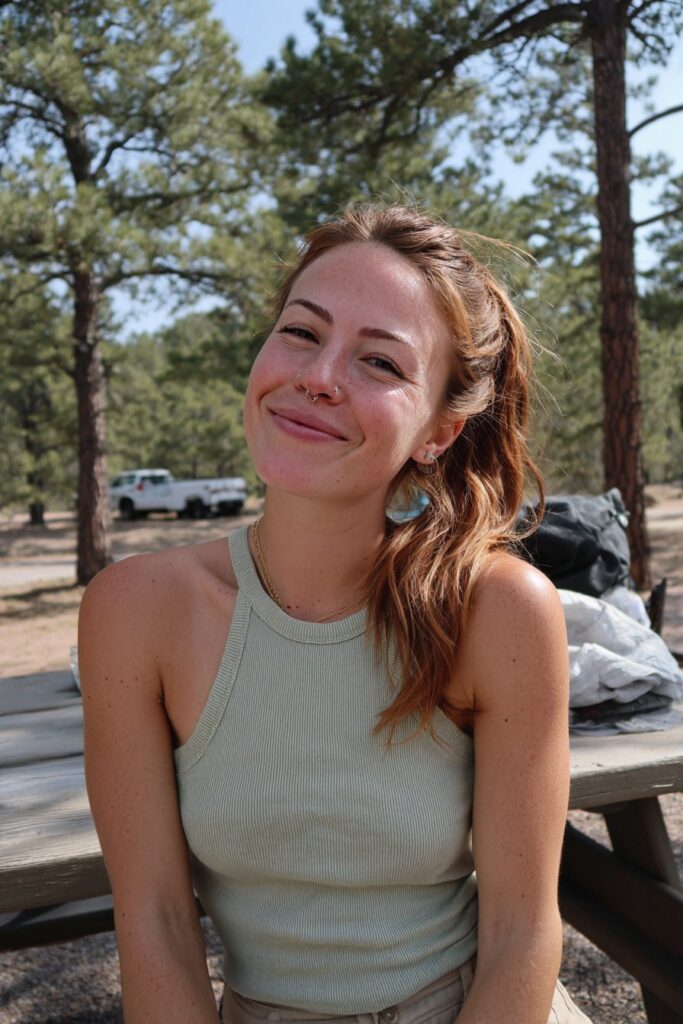
Twisted ponytails became my go-to during a particularly hectic summer when I needed styles that looked polished but forgave messy hair. This technique mimics French braid intricacies without requiring advanced braiding skills, making it perfect for young campers learning simple summer hairstyles.
How to Create a Twisted Ponytail
- Section the top portion of hair and secure with a small elastic
- Feed the ponytail end through the space right above the hair tie to create a twist
- Grab more hair from the bottom section and add it to the ponytail
- Secure with another elastic a few inches below the first
- Feed the ponytail end through the space above this lower elastic
- Repeat steps 3-5 until all hair is incorporated into the ponytail
- Gently tug each twist to add volume and dimension
The entire process takes about 10 minutes, though practice cuts this time significantly. Natural highlights create unexpected patterns in the finished style.
Why Twisted Ponytail Works for Summer Camp
This style transitions seamlessly from active morning sessions to evening campfires. Given that it performs best on unwashed hair, twisted ponytails suit multi-day camp schedules perfectly. The technique requires only small elastics, a brush, and optional hairspray, making it one of the most practical cute hairstyles for summer camp.
Twisted Ponytail Variations
French Twist Ponytail creates a sleek low style by twisting hair into a cylinder at the nape and securing with bobby pins before dividing the lower portion. Single Twist High Ponytail secures hair at the crown, then twists two strands down the length. Boho Crown Twisted Ponytail twists small sections along each side of the head before gathering everything into a ponytail.
Tips for Perfect Twisted Ponytail
Space elastics closer for tighter twists or farther apart for relaxed volume. Apply dry shampoo before styling to boost grip and texture. Tug gently on each twisted section after securing to achieve desired fullness.
Crown Braid
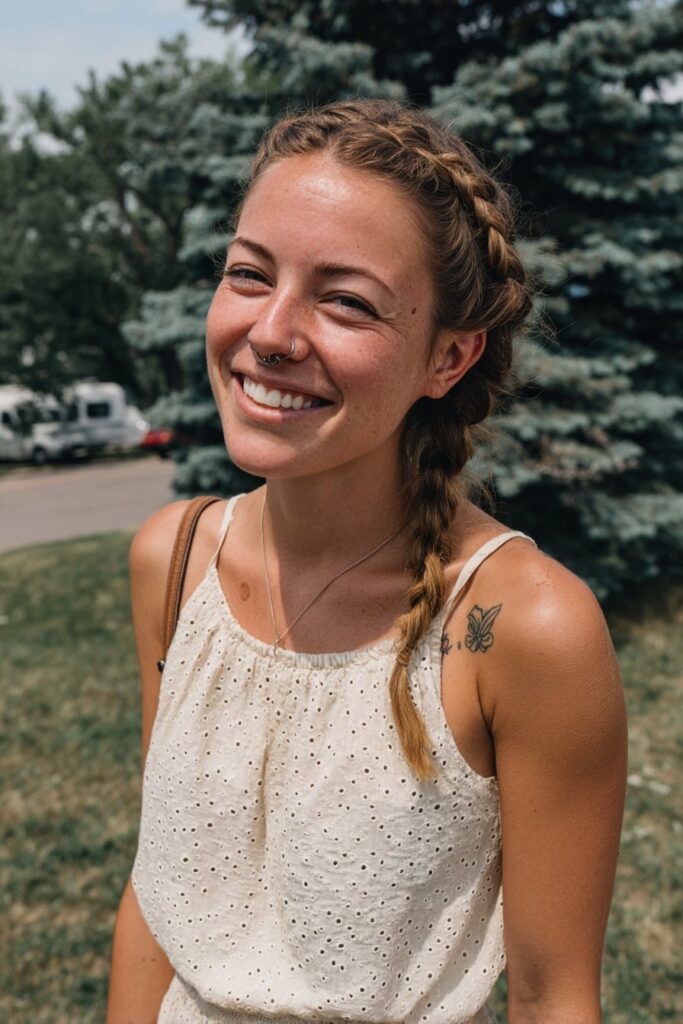
Crown braids became one of my signature recommendations after working with active girls who needed something elegant yet unshakeable. Essentially, this style functions as your best headband, wrapping around the head to add texture visible from all angles.
How to Create a Crown Braid
The deep side part method works beautifully for beginners. Brush hair thoroughly, then create a deep part on the right side. Pick up a small section on the heavy side and divide it into three sections. Begin your chosen braid type (Dutch works wonderfully) by crossing strands and adding new hair as you braid down toward the left ear.
Switch hands once the braid reaches the left ear and continue around the back, bringing in hair from both the top and nape while working toward the right side. Before reaching the right ear, incorporate all remaining hair to minimize bumps. Switch hands again and finish with a regular three-strand braid to the ends.
Lay the finished braid across the top of your head behind where you started, securing with bobby pins slid into the braid’s center to keep them hidden. Pull gently on the braid edges to create width and fullness, then mist with hairspray.
Why Crown Braid Works for Summer Camp
Given that crown braids distribute evenly across the head, they’re remarkably comfortable for all-day wear. Hair stays completely off the face and neck during swimming, hiking, and sports. The style holds through hot, humid afternoons, making it perfect for summer camp hairstyles for girls.
Crown Braid Variations
The fishtail crown braid delivers intricate detail and volume. The pull-through crown braid uses elastics instead of actual braiding, creating connected ponytails pulled apart for texture. Milkmaid braids start at the back and braid forward. For thicker front braids, braid from bottom up on each side of a middle part, then cross them over each other and pin.
Top Knot
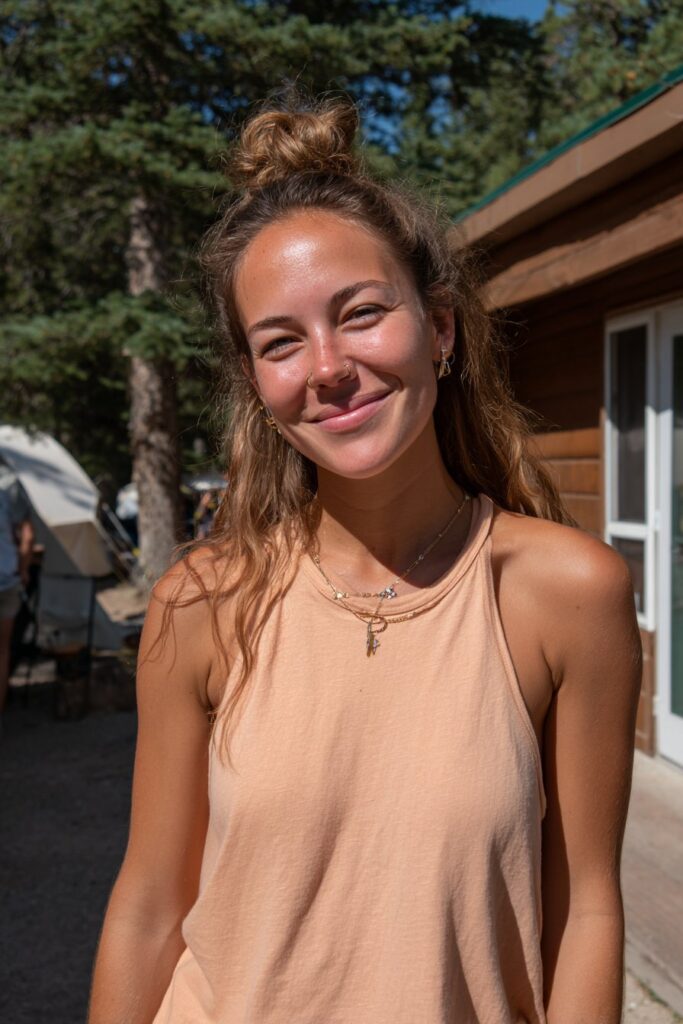
My mentor Elsa taught me this style during a rushed morning when neither of us had time for elaborate techniques. She gathered her hair into a high ponytail near the crown, divided it into two equal sections, then twisted them around each other before wrapping the combined twist clockwise around the base. Several bobby pins later, she had a polished look ready for the day.
How to Create a Top Knot
Pull hair into a high ponytail and secure tightly with an elastic. Divide the ponytail into two sections, twist them together to create one rope-like piece, then wrap this twisted hair around the base in a clockwise direction. Tuck ends underneath the hair tie and secure with bobby pins matching your hair color. Alternatively, the half-up version parts hair horizontally at ear level, gathering only the top section into a bun while leaving the bottom half down.
Why Top Knot Works for Summer Camp
Top knots keep hair completely off shoulders and back during hot afternoons. The style works fastest on second or third-day hair rather than freshly washed strands. This makes top knots perfect for multi-day camp sessions when daily washing isn’t practical.
Top Knot Variations
The classic version creates a sleek, polished appearance. Messy top knots embrace undone texture and pulled-apart sections. Top knots with bangs frame the face beautifully. The twisted version uses two separate ponytails that twist together before wrapping.
Tips for Perfect Top Knot
Apply texturizing spray before styling for extra grip and volume. Use a hair donut around the ponytail base for fuller buns. Gently pull at the finished bun to increase size and create relaxed texture.
Rope Braid
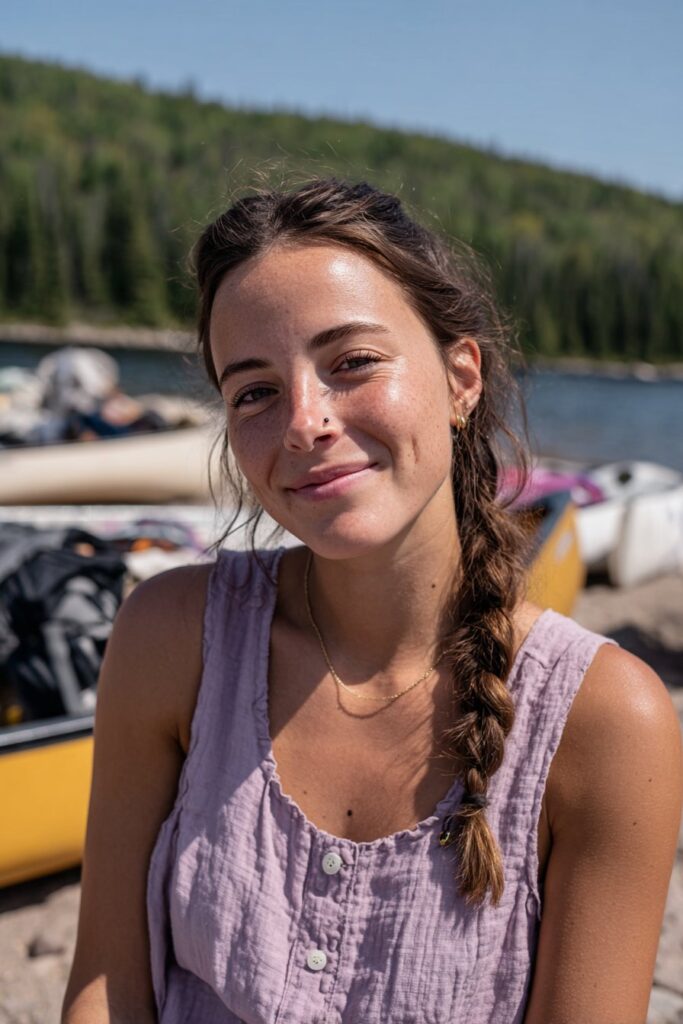
Rope braids surprised me during a week-long outdoor program when every other style failed by day three. Elsa had shown me the trick years earlier: twist two sections in the same direction, then cross them in the opposite direction. That simple principle creates a secure braid that handles whatever summer camp throws at it.
How to Create a Rope Braid
Start with brushed hair and a deep side part. Take a small section near the top of your part and divide into two pieces. Twist both pieces in the same direction toward the front of your face. Cross the sections over each other in the opposite direction, away from your face. Add small pieces of hair to both sections and twist them again toward the front. Cross the two sections toward the back of your head. Repeat this pattern until reaching the ends, then secure with a small elastic. Pancake the braid from top to bottom for volume.
Why Rope Braid Works for Summer Camp
Rope braids keep bangs and fringe in place no matter how hot the day gets. They hold up perfectly in heat and activity, making them ideal cute hairstyles for summer camp like beach days.
Rope Braid Variations
Twisted milkmaid braids, twisted crown braids, and twisted ponytails all use this technique. Side rope braids follow identically to center braids.
Half-Up Bun
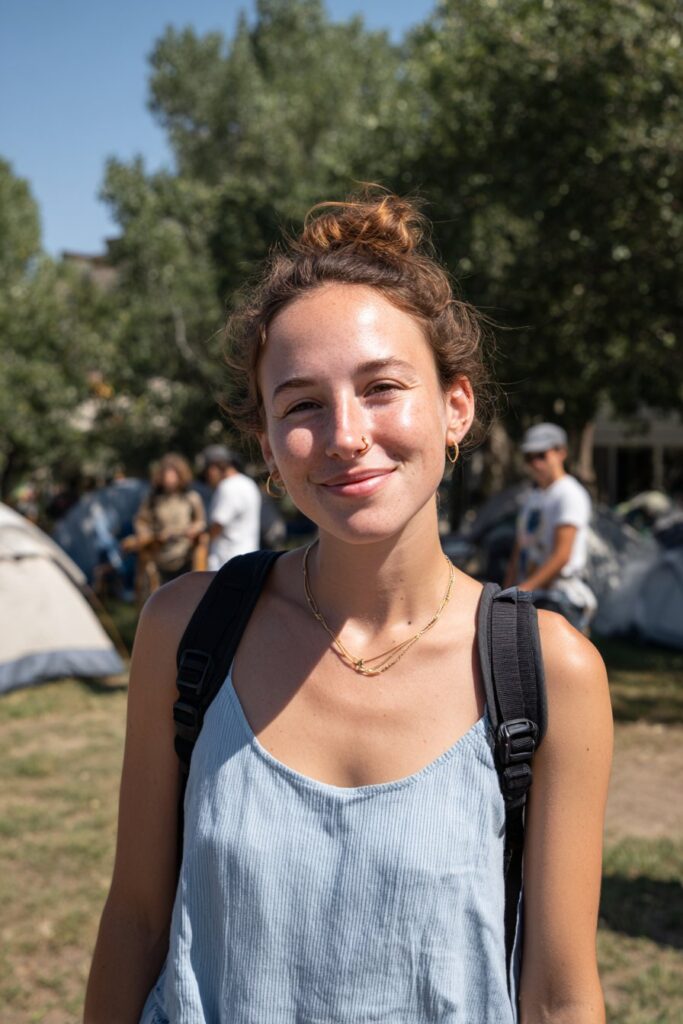
Half-up buns saved me during those mornings when my hair refused to cooperate. This style blends elegance with practicality, offering the perfect balance by keeping hair off your face while showing off length.
How to Create a Half-Up Bun
Brush hair thoroughly and section the top portion from mid-eyebrow to mid-eyebrow, extending past the crown. Add volume by teasing the roots of this section. Secure into a ponytail, then tease the ponytail itself with a rat-tail comb. Twist and wrap the ponytail around the elastic, keeping the bun flat rather than cone-shaped. Secure with 4-6 bobby pins. Add light teasing to the down hair next to part lines for face-framing fullness. The entire process takes about 3 minutes.
Why Half-Up Bun Works for Summer Camp
Half-up buns excel with dirty hair since scalp oil appears first. This makes them perfect for multi-day camp sessions. Additionally, the style looks effortless yet polished.
Half-Up Bun Variations
Messy versions embrace imperfection intentionally. Braided half-up buns add Dutch or French braids before the twist. The donut method uses a hair donut rolled down and secured with pins.
Tips for Perfect Half-Up Bun
Apply texturizing spray for grip and lived-in texture. Use large hair pins for secure hold.
Pull-Through Braid
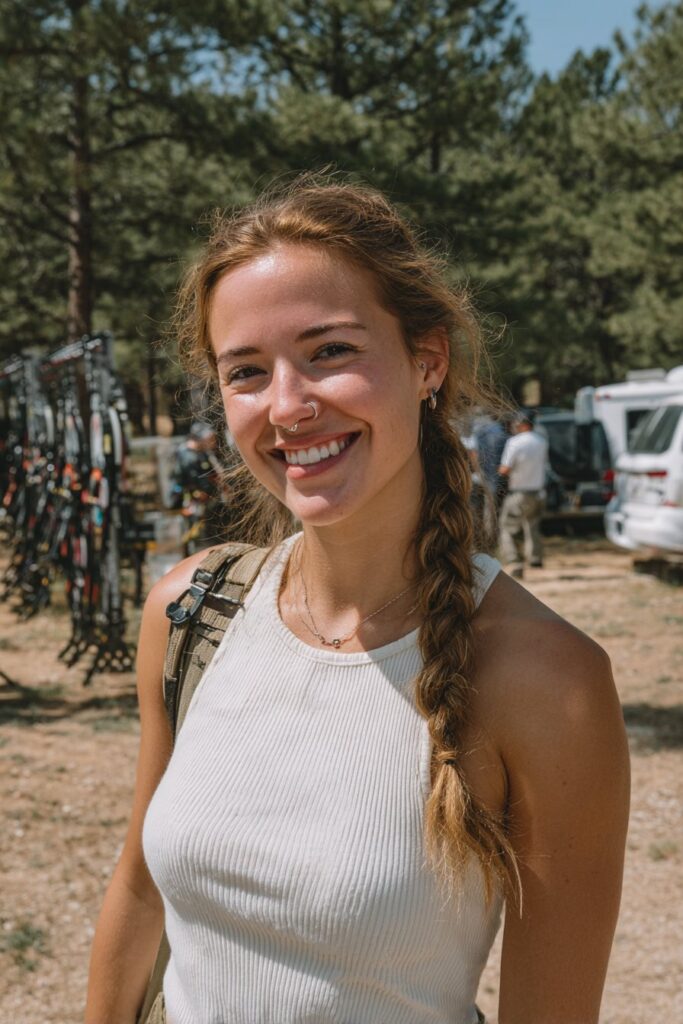
Elsa showed me pull-through braids during a chaotic morning when I mentioned wanting something that looked intricate but didn’t require actual braiding skills. She explained this isn’t technically a braid at all but rather a series of ponytails creating the illusion of a chunky, textured braid. I was sold immediately.
How to Create a Pull-Through Braid
Gather hair at the crown and secure with a clear elastic, then clip it out of the way. Create a second ponytail directly below the first. Unclip the top ponytail, split it in half, and wrap both sections around the second ponytail. Combine these sections underneath and secure with another elastic. Repeat this pattern all the way down. You’ll need about 8-10 clear elastics depending on hair length. Finish by gently pulling each section outward with your index finger and thumb to create fuller, thicker appearance.
Why Pull-Through Braid Works for Summer Camp
Besides taking under 10 minutes to complete, layers stay locked in place throughout the day. This makes pull-through braids perfect for cute hairstyles for summer camp where hair needs to withstand swimming and sports.
Pull-Through Braid Variations
Half-up versions keep front pieces controlled while adding volume. Pull-through pigtails create elegant double braids. The mohawk style runs down the center for bold looks.
Braided Headband
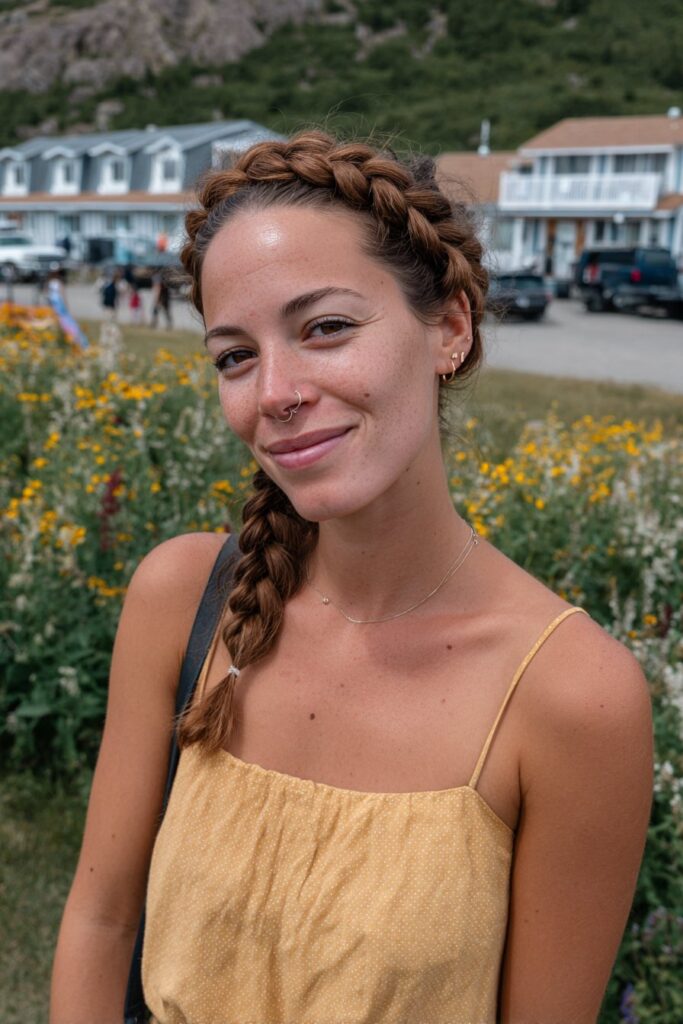
Bad hair days taught me the real value of braided headbands. This style keeps locks from falling into your face while effectively accentuating any look. Besides functioning as a natural accessory, braided headbands work beautifully on all hair types and lengths.
How to Create a Braided Headband
The simplest method starts behind your left ear. Pick up a section, split it into three, and create a basic three-strand braid. Hold the end and stretch out the sides to make the braid appear thicker. Place the braid across your head and pin the end behind your right ear with bobby pins.
For shorter hair, create a braid behind each ear, cross them over on top of your head, and pin together. The lace braid variation requires parting hair from ear to ear across the top. Begin a Dutch braid near the left ear, adding hair only from the front to create distinct stranding. Continue until reaching the other ear, then secure with crossed bobby pins.
Why Braided Headband Works for Summer Camp
Braided headbands shine during summer camp hairstyles for girls by keeping hair secure without resorting to buns or ponytails. The 3-5 minute styling time makes them practical for busy mornings.
Braided Headband Variations
French braid headbands add hair from both sides. Lace versions incorporate strands from one side only. Dutch braid headbands sit raised on top.
Tips for Perfect Braided Headband
Pancake the braid by tugging on the elbows to flatten and pronounce it. Add hairspray to control flyaways and baby hairs.
Pigtail Braids
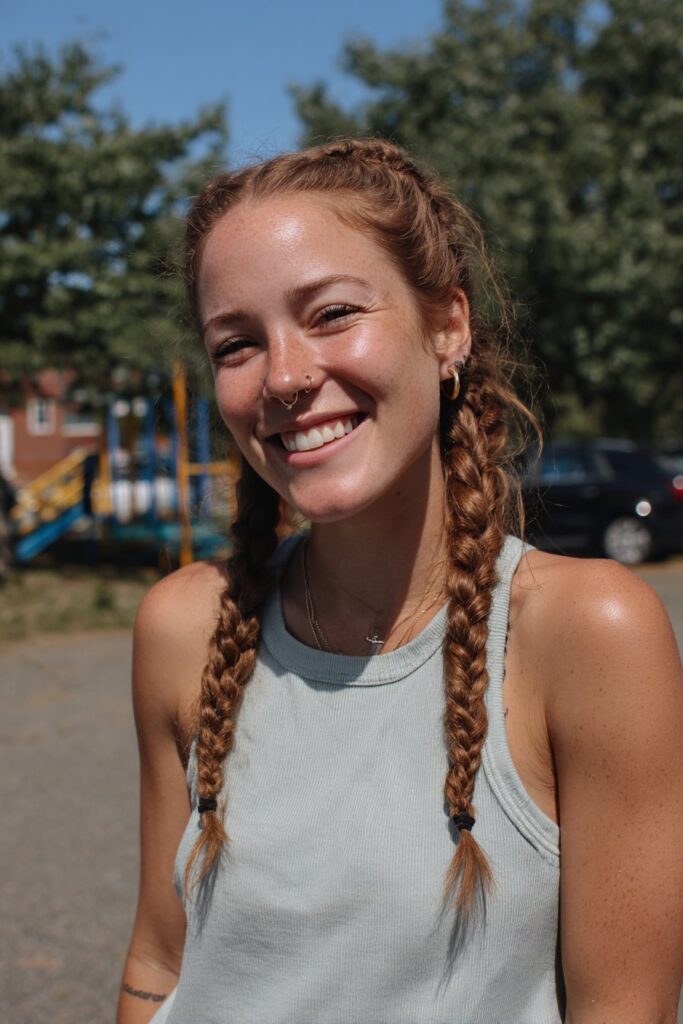
Pigtail braids bring back memories of simpler times, and I’ve noticed they’re having a major moment again as nostalgic summer camp hairstyles for girls make their comeback. Elsa taught me the secret to keeping them secure all day: a clean center part and the right products.
How to Create Pigtail Braids
Create a clean, even center part from the front hairline all the way to the base of the neck. Draw a line with your comb from one point to the other for a perfectly straight part, then smooth hair into clear left and right sections. For smooth, flyaway-free results, apply braid balm and brush again to evenly distribute the product.
Grab the right section and divide it into three smaller, even sections. Starting just below the ear, bring the right section over the middle, then the left section over the middle. Continue repeating “right over middle, left over middle” until you’ve finished. Secure with an elastic and repeat on the left side.
Why Pigtail Braids Work for Summer Camp
These braids stay put through playground climbs, snack time, and even naptime. Owing to their playful yet practical nature, pigtail braids remain perfect for younger children at camp.
Pigtail Braid Variations
Add metallic cuffs for sparkle, create bubble versions for texture, or try multiple braids for thick hair. Tousled pigtails work beautifully when you gently massage each braid.
Low Bun
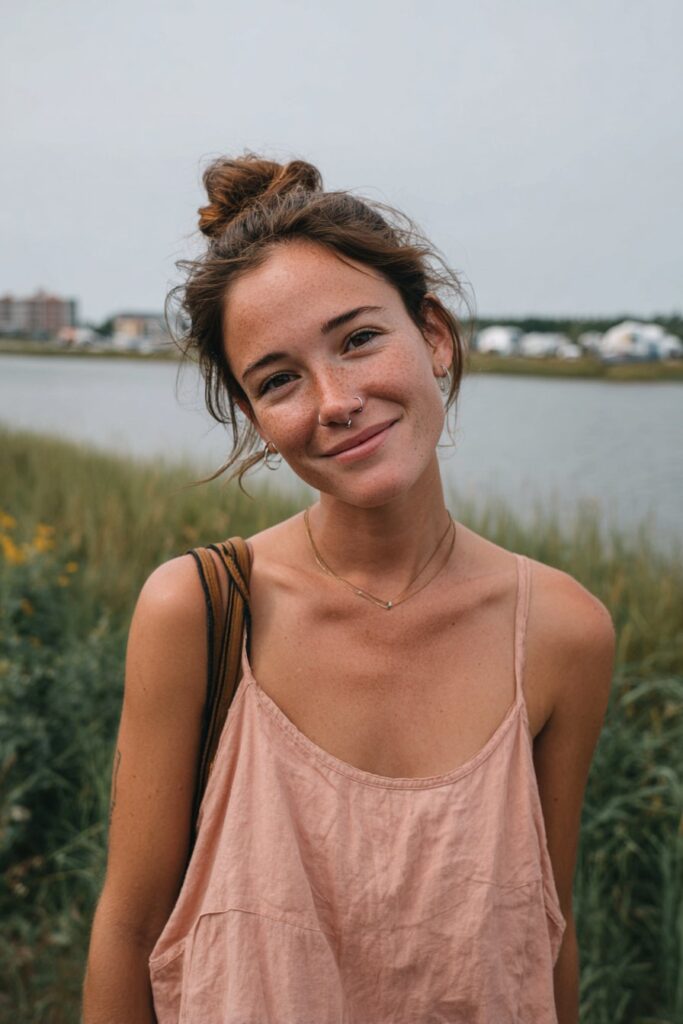
Low buns rescued me during a particularly humid summer when elaborate styles wilted within an hour. Elsa laughed when I complained about my failed attempts, then showed me her secret: this style actually performs better on second or third-day hair since natural oils provide the grip fresh hair lacks.
How to Create a Low Bun
Pull hair into a low ponytail at the nape and secure loosely with a hair tie. Twist the ponytail until it naturally wants to coil back on itself, then wrap this twisted hair around the base of your ponytail. Tuck the ends underneath and secure everything with bobby pins, sliding them with the wavy side closest to your scalp. The entire process takes about 3 minutes.
Why Low Bun Works for Summer Camp
Low buns keep hair completely off the neck during hot afternoons while looking polished yet effortless. This elegant updo suits everything from morning activities to evening campfires. Essentially, it’s one of those simple summer hairstyles that appears intentional without requiring much effort.
Low Bun Variations
The loop bun creates modern volume by pulling hair halfway through the final elastic for a bouncy effect. Sleek versions use hair serum for smooth strands and tight ponytails. Messy low buns embrace undone texture intentionally. The sock bun method rolls a cut sock down the ponytail for fuller appearance.
Tips for Perfect Low Bun
Apply dry shampoo before styling to add grip and texture. Use hairspray on bobby pins before inserting them for extra hold. Tame flyaways with a toothbrush and hairspray.
Waterfall Braid
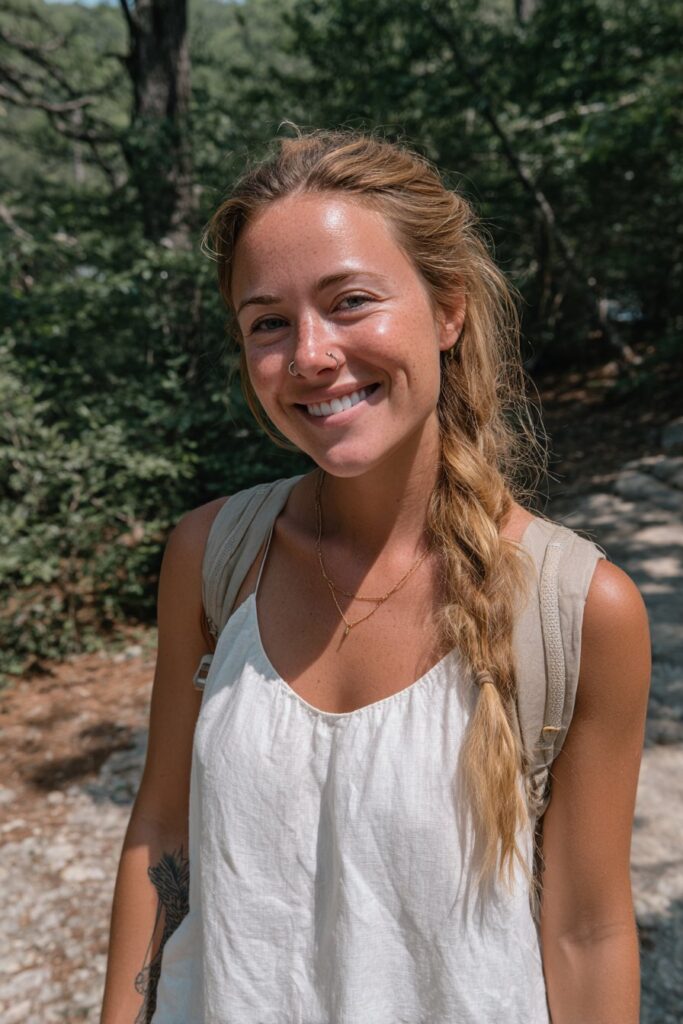
I’ll never forget the first time I attempted a waterfall braid before an outdoor wedding. Elsa assured me this half French braid technique was simpler than it appeared, where part of the hair gets braided while the rest cascades down like an actual waterfall.
How to Create a Waterfall Braid
Take a section of hair at the front and separate into three strands. Cross the back strand over the middle, then the front strand over the middle. Add hair to the back strand and cross it over the middle. Here’s where it differs: leave the front strand hanging instead of crossing it. Take a new section of hair from behind that dropped strand and cross it over the middle. Repeat this pattern by adding hair to the back strand, crossing over, dropping the front strand, and picking up a replacement section behind it. Continue until reaching the back of your head and secure with a clear elastic.
Why Waterfall Braid Works for Summer Camp
This style keeps long or thick hair from falling into your face while maintaining a loose, flowing appearance. Besides looking beautiful on every hair type, waterfall braids work for both everyday activities and special camp events.
Waterfall Braid Variations
Double waterfall half-updos create parallel braids joined together at the back. Pair with cascading curls for texture. The loosely twisted crown cuts braiding steps while achieving similar vibes, particularly effective for thick hair.
Conclusion
Not every style on this list will work perfectly for your daughter’s hair type or activity level, and that’s completely fine. What works beautifully for lake swimming might feel too tight for hiking, or a style that holds all day on thick hair might slip on finer textures. The beauty lies in having options. Experiment with a few favorites during practice runs at home before camp starts. Once you discover two or three go-to styles that actually survive the day, rotate them throughout the week. Your camper will thank you when her hair stays put through every adventure, from morning crafts to evening campfires.

Elsa Claire is the founder and editor of ElsaClaire.com, where she writes about hairstyles, hair care, and the everyday routines that help real people feel good about their hair.