Introduction
Finding the right pool hairstyles for black women can feel like choosing between enjoying summer and protecting your curls. I’ve seen too many women skip pool days altogether due to fear of chlorine damage. The constant exposure of your hair to chlorine and salt can have long-term effects on the health of your curls. That’s why I’ve put together this guide on waterproof hairstyles that actually work. From the best braids for swimming black hair to protective updos, these 12 pool hairstyles for black hair will keep your strands healthy and beautiful all summer long.
Box Braids
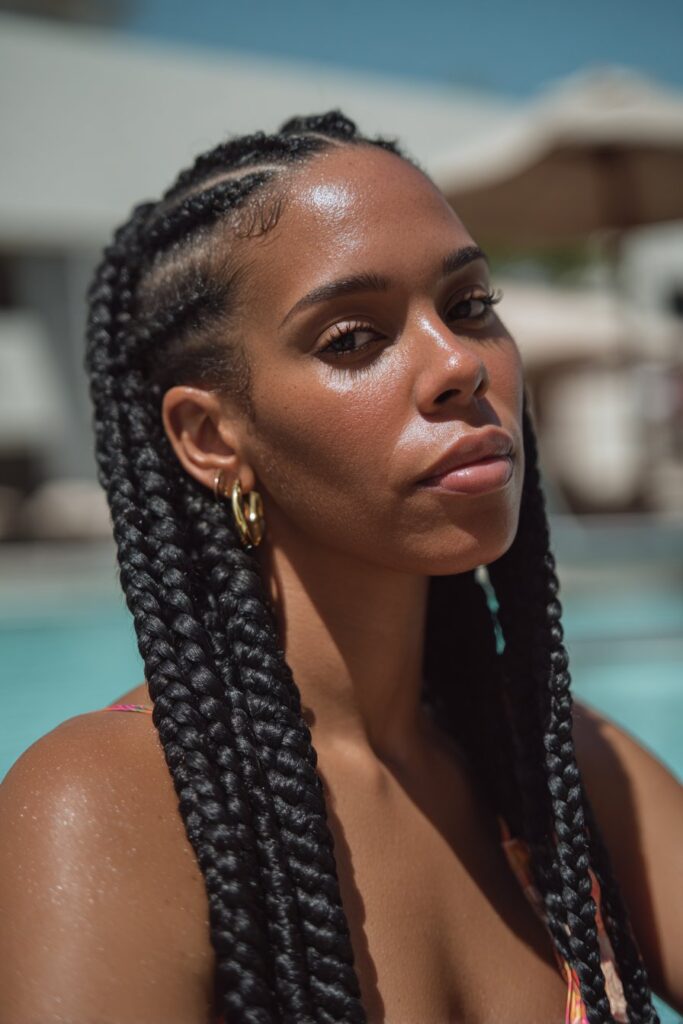
What Makes Box Braids Pool-Friendly
Box braids have been my go-to recommendation for clients heading to pool parties and beach vacations. When installed correctly, these braids protect your natural hair by wrapping it inside, which prevents dehydration and frizz after swimming. The secure fit means your braids won’t slip out, making swim caps unnecessary for many women.
I’ve worked with clients who’ve worn box braids throughout entire summer vacations. The style works because your hair remains tucked away, locking in the hydration needed for healthy growth. One thing I learned from styling a bride who was getting married on a Caribbean island: box braids can be customized with different colors, sizes, and lengths, which means you don’t have to sacrifice style for function.
How to Prepare Box Braids for Swimming
Preparation makes all the difference. Before you dive in, wet your hair with clean water first. This saturates your braids and prevents them from absorbing as much chlorinated or salt water. I tell my clients to think of it as priming their hair.
After wetting, apply a generous amount of leave-in conditioner or oil. Coconut oil, olive oil, jojoba oil, and vitamin E oil all create a protective barrier that makes it hard for chemicals to penetrate through to your hair. Apply this throughout the length of your braids, not just at the roots.
If your braids are long, pull them into a low ponytail or bun while swimming. This reduces the amount of hair exposed to water and prevents tangling.
Maintenance Tips After Swimming
Rinse your braids with fresh water immediately after swimming. This removes chlorine, salt, and other chemicals before they dry and cause damage. Gently squeeze out excess moisture with your hands rather than rubbing with a towel, which can cause frizz.
Wash your braids with a clarifying shampoo free of SLS and SLES to remove any remaining buildup. Massage the shampoo into your scalp gently to avoid creating frizz. Follow up with a deep conditioner to restore moisture and elasticity.
Drying your braids properly prevents mildew and bad odors. Pat them with a towel and let them air dry completely, or use a hooded dryer for faster results. Never leave your braids wet for extended periods, as this can lead to scalp issues.
Best Products for Box Braids
Look for water-based leave-in conditioners and moisturizing sprays to keep your braids hydrated between swims. Apply these products every few days to prevent dryness from chlorine exposure. Scalp serums with ingredients like peppermint oil, tea tree oil, and rosemary oil help maintain scalp health while your hair is braided.
Cornrows (Straightbacks)
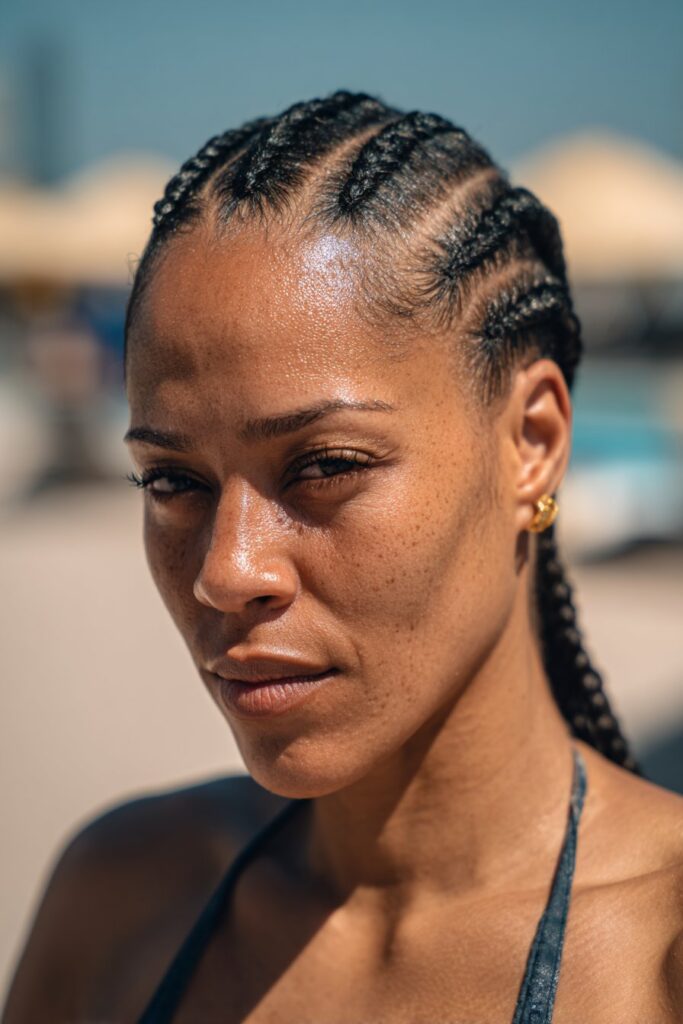
Why Cornrows Are Ideal Waterproof Hairstyles
Cornrows remain one of my favorite waterproof hairstyles to recommend for swimmers. I’ve styled hundreds of women heading to pool competitions, and the feedback is always the same: cornrows just work. The streamlined nature of this close-to-scalp braiding design reduces drag in the water, which can improve swimming performance. When your hair is braided flat against your head, you’re not fighting against loose strands creating resistance.
As a protective style, cornrows prevent hair from tangling and becoming damaged due to constant motion in water. Your natural hair stays tucked away and secure, unlike loose styles that become matted after one swim. For those who swim regularly, this is a low-maintenance hairstyle that can withstand frequent water exposure without needing daily restyling. I once worked with a swim instructor who kept her cornrows fresh for an entire season while teaching daily lessons.
Pre-Swim Preparation for Cornrows
Moisturizing your scalp and braids before swimming minimizes the drying effects of chlorine and seawater. Apply a generous amount of hair oil or leave-in conditioner to form a protective layer that reduces absorption of harsh chemicals. Products containing coconut oil, shea butter, or castor oil seal in moisture effectively.
Rinse your cornrows completely with clean, fresh water before swimming. When you soak your hair with fresh water beforehand, it becomes saturated and absorbs less chlorinated or saltwater. Choose a swim cap made from chlorine-resistant material like silicone if you’re swimming in pools. Look for products labeled as chlorine-resistant or designed specifically for swimmers to provide solid protection.
Post-Swim Care and Moisturizing
Rinse your hair with fresh water immediately after swimming to remove chlorine, salt, and impurities before they cause dryness[72]. A gentle wash with clarifying shampoo removes buildup, followed by moisturizing conditioner to restore balance to your scalp and braids[72]. Focus on your scalp and roots when shampooing, being careful not to over-wash and strip natural oils.
Dry your cornrows thoroughly by squeezing off excess water and patting with a towel. Allow them to air dry completely or use a hooded dryer on a cool setting. Avoid going to bed with wet braids, as this leads to scalp irritation, musty smells, and potential mildew growth.
How Long Cornrows Last with Regular Swimming
Depending on installation and maintenance, cornrows can last two to eight weeks. Regular swimmers should schedule touch-ups when braids start looking frizzy or feeling loose. Tightening loose braids and applying scalp treatments keeps the hairstyle fresh and extends its wear.
Senegalese Twists
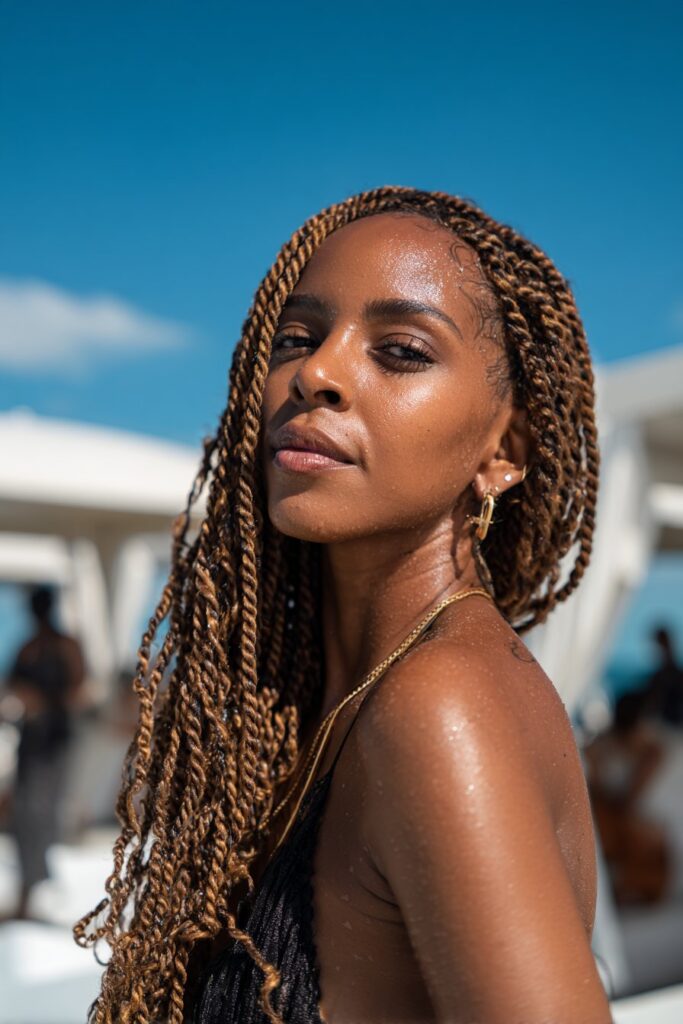
Benefits of Senegalese Twists for Pool Days
Senegalese twists offer a sleeker alternative to traditional braided styles when you’re planning pool time. I remember working with a client who needed something elegant for a month-long Mediterranean cruise, and these rope-like twists were perfect. The two-strand twisting technique creates a tighter, more polished appearance compared to other twisted styles.
What sets Senegalese twists apart is how they sit on your scalp. They create slightly less tension than box braids since only two strands are used, resulting in less friction and reduced stress on your scalp. This makes them safer for prolonged wear during swim season. The style tends to age quite well, and many women find that Senegalese twists actually look better the older they get.
These twists protect your natural hair from environmental damage like harsh weather and chlorine while preventing over-manipulation that leads to breakage. Your hair stays tucked away and can rest without interruption, allowing for healthy growth throughout the summer months.
Installing Senegalese Twists for Water Activities
Preparation starts before installation. Cleanse and condition your hair thoroughly to remove any buildup and ensure your strands are moisturized. This foundation helps your twists last longer in pool conditions.
For extensions, Kanekalon hair creates the smoothest, most water-resistant finish. This synthetic fiber resembles blown-out kinky locks and gives Senegalese twists their signature sleek appearance. The smoother texture sheds water more efficiently than coarser alternatives.
Caring for Senegalese Twists After Chlorine Exposure
Rinse immediately after swimming, focusing on removing all chlorine residue. Subsequently, wash your twists once a week using sulfate-free shampoo mixed with water in a spray bottle. Apply the mixture to your scalp and use your fingertips gently to minimize frizz.
Drying is non-negotiable. Wet synthetic hair can develop mold and unpleasant odors if not dried completely. Pat your twists with a towel and allow full air drying, or use a hooded dryer for faster results.
Maintain moisture by misting your hair with water and sealing with lightweight oils like jojoba or almond oil. Apply a few drops of peppermint oil to your scalp weekly to alleviate itchiness and refresh between washes.
Recommended Hair Extensions for Swimming
Kanekalon remains the top choice for swimming because of its smooth, water-shedding properties. Marley hair offers a more natural appearance but holds more water due to its textured finish. With proper care, Senegalese twists last anywhere from 4 to 6 weeks, though experts recommend removing them by 8 weeks maximum to prevent matting.
Faux Locs
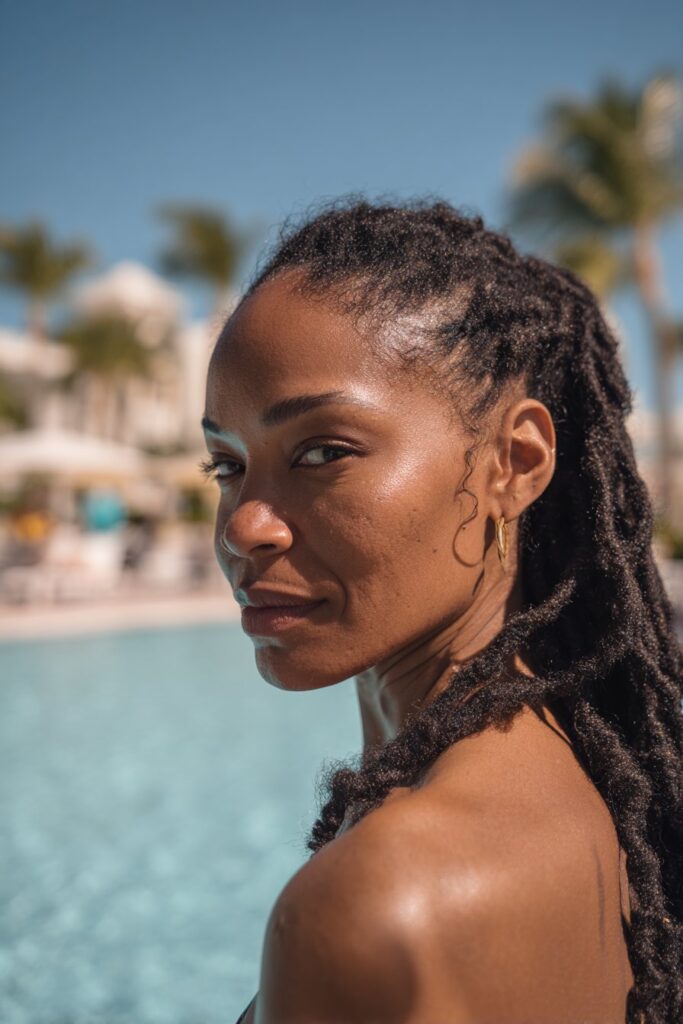
Why Faux Locs Work as Pool Hairstyles for Black Hair
I’ll never forget the client who walked into my Charleston salon needing a style that could survive two weeks in the Bahamas. She wanted something that looked stunning but wouldn’t require constant upkeep between beach days and pool lounging. Faux locs became the answer. These temporary locs give you the appearance of traditional locs without the commitment, lasting anywhere from four to six weeks. What makes them particularly appealing is the customization factor. You can choose from tons of colors and lengths to match your personal style.
The protective benefits are what sold my client. Faux locs are created using synthetic braiding hair, typically coarse-textured Kanekalon, though Marley or Cuban twist hair works equally well. Your natural hair gets wrapped and protected inside, shielding it from environmental stressors. For pool days, this matters because your actual strands aren’t directly exposed to harsh chemicals.
Preventing Water Retention in Faux Locs
Here’s where faux locs surprised me during my New York styling days. Unlike other waterproof hairstyles that require extensive preparation, faux locs need virtually no pre-swim routine. You can dive straight in and let your locs flow freely in the water. The deliberate coarseness of the synthetic hair actually works in your favor. This texture authentically imitates real locs, which means less maintenance after a swim compared to sleeker styles.
Swimmers report no noticeable damage to hair quality or longevity of their locs from chlorine exposure. The weight of wet locs can disrupt updos if you go underwater, so I recommend letting them hang loose while swimming.
Drying and Maintaining Faux Locs
The synthetic fiber dries remarkably fast when washed. After swimming, pat your locs dry with a towel, then rinse out chlorine or seawater in a lukewarm shower and apply light conditioner. Air-dry completely, preferably while relaxing on a sun lounger.
Nighttime care prevents frizz. Cover your hair with a scarf or bonnet while sleeping. Moisturize your scalp regularly with a lightweight serum like Sunday II Sunday’s Soothe Me Daily Scalp Serum. For flyaways, use non-sticky mousses such as Cantu’s Protective Style Foam Setting Mousse or AllDay Locks Braid Foam.
Product Recommendations for Faux Locs
When buildup appears after a few weeks, cleanse your scalp without fear. Products like Girl+Hair Clear+ Apple Cider Vinegar Clarifying Hair Rinse or NatureLab’s Perfect Clean Sake Balancing Rinse remove residue effectively.
Havana Twists
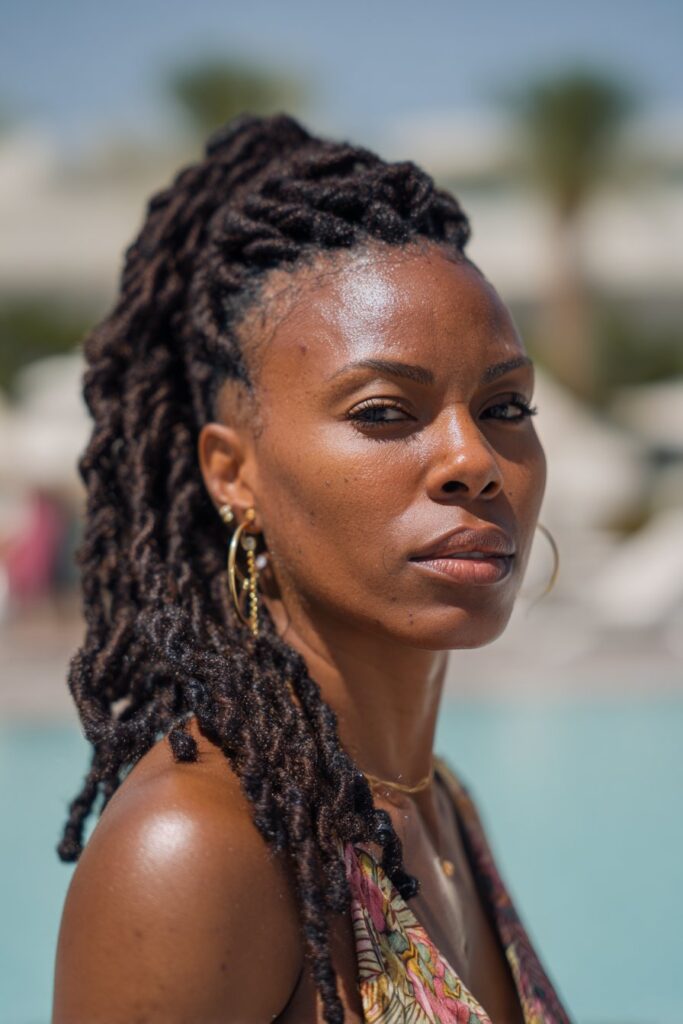
What Makes Havana Twists Swimming-Friendly
Havana twists became popular in my salon after a client showed me photos from her social media feed. The thick, lush appearance caught everyone’s attention, and soon I was installing them for women heading to summer vacations. What surprised me most was how straightforward they were to create. If you can do regular two-strand twists, Havana twists follow the same technique, just with chunkier sections. I completed my first full head in two hours while catching up on a series.
The chunky size makes them excellent protective styles for pool days. Given that each twist covers a relatively large section of your natural hair, the weight distributes evenly without straining your edges. Surprisingly, they’re lightweight despite their thickness. I’ve styled women with waist-length Havana twists who had no issues with neck tension or scalp stress.
Pre-Swimming Treatment for Havana Twists
Moisturizing becomes critical before you dive in. Synthetic extensions pull moisture from your natural hair, so I tell clients to apply extra leave-in conditioner or pomade before each swimming session. Daily moisturizing isn’t optional with Havana twists, in particular when you’re exposing them to chlorinated water.
Saturate your twists with clean water before swimming to minimize chlorine absorption. Apply a rich oil like coconut, jojoba, or argan to create a protective barrier. Secure your twists in a low bun or ponytail to reduce drag and prevent tangling while you swim.
Post-Pool Maintenance Tips
Rinse immediately after swimming with fresh water. I don’t recommend washing Havana twists while installed because they tend to knot more than braids. For the most part, I suggest wearing them for up to two weeks, then removing them completely to wash and deep condition your natural hair. You can wash the extensions separately and reinstall them.
Air dry your twists fully to prevent mold, mildew, or unpleasant odors. Pat them with a towel and let them dry completely before bed. For daily maintenance between swims, mist with a mixture of one part vegetable glycerine, two parts aloe vera juice, and three parts water.
Choosing the Right Hair for Havana Twists
Standard Marley hair from your local beauty supply store works perfectly. Havana hair costs around $13 per pack, and you’ll need five to seven packs for fuller twists. Both can be reused with proper care. Eventually, keeping your twists moisturized and avoiding excessive tension ensures they last up to six weeks maximum.
Marley Twists
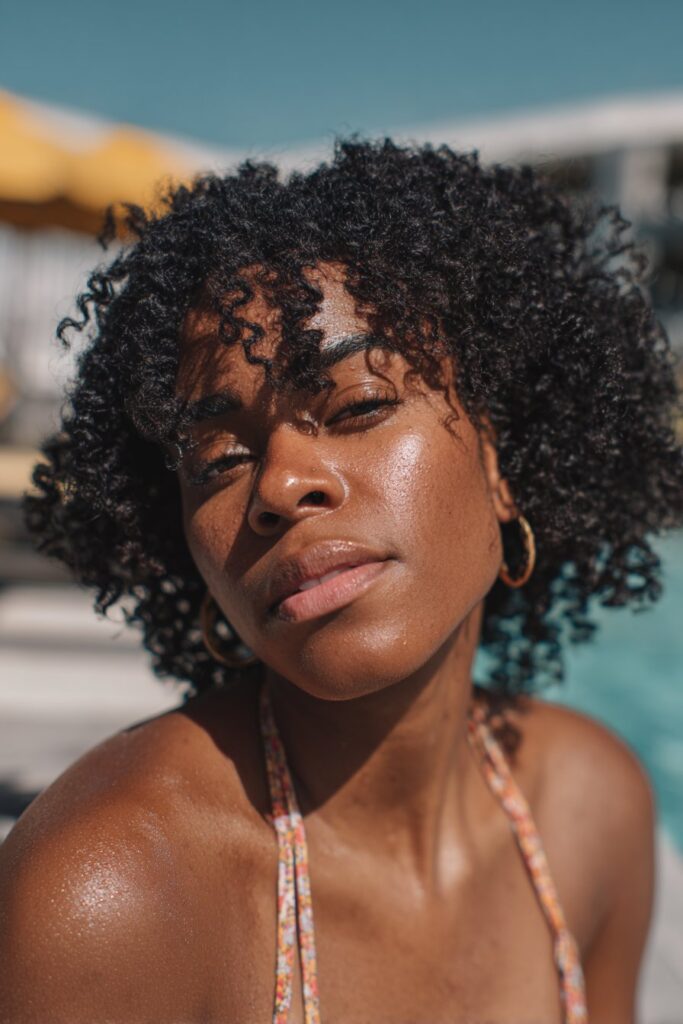
Benefits of Marley Twists for Swimming
Marley twists entered my styling repertoire during my New York years when a client requested something natural-looking for her summer pool membership. The textured Marley hair creates a fuller, more organic appearance compared to sleeker synthetic options. What makes these twists particularly swim-friendly is how they function as a protective style, keeping your ends tucked away from chlorine and salt. Your most vulnerable hair strands stay safely wrapped inside.
One factor catches swimmers off guard: braids get heavy when wet. I’ve heard stories of women feeling weighed down in the water with long, saturated twists. If you’re installing Marley twists for pool season, consider medium length rather than waist-length to avoid unnecessary strain.
How to Protect Marley Twists in Chlorinated Water
Prior to swimming, saturate your twists with clean water. This prevents them from absorbing as much chlorinated or salt water. Apply a leave-in conditioner or oil to create a barrier between your hair and pool chemicals. Products containing jojoba or argan oil work particularly well for coating the hair shaft.
Secure your twists in a low ponytail or bun to minimize movement and tangling while you swim. This reduces drag and keeps them manageable in the water.
Drying Time and Maintenance
Rinse your hair thoroughly with clean water immediately after swimming to remove chlorine, salt, and chemical buildup. Follow with a gentle conditioner to replenish moisture without shampooing, as that strips natural oils. Focus on re-moisturizing your roots and natural hair after each swim.
Dry your twists completely to avoid mildew or that unpleasant wet-hair smell. Gently squeeze out water with a microfiber towel and allow full air drying.
Best Leave-In Conditioners for Marley Twists
Mielle Pomegranate & Honey Leave-In Conditioner moisturizes and detangles effectively. Design Essentials Herbal Complex 4 treats both hair and scalp. Mizani 25 Miracle Milk offers heat protection alongside moisture. Pattern Leave-In Conditioner provides lightweight hydration without weighing down your twists.
Fulani Braids
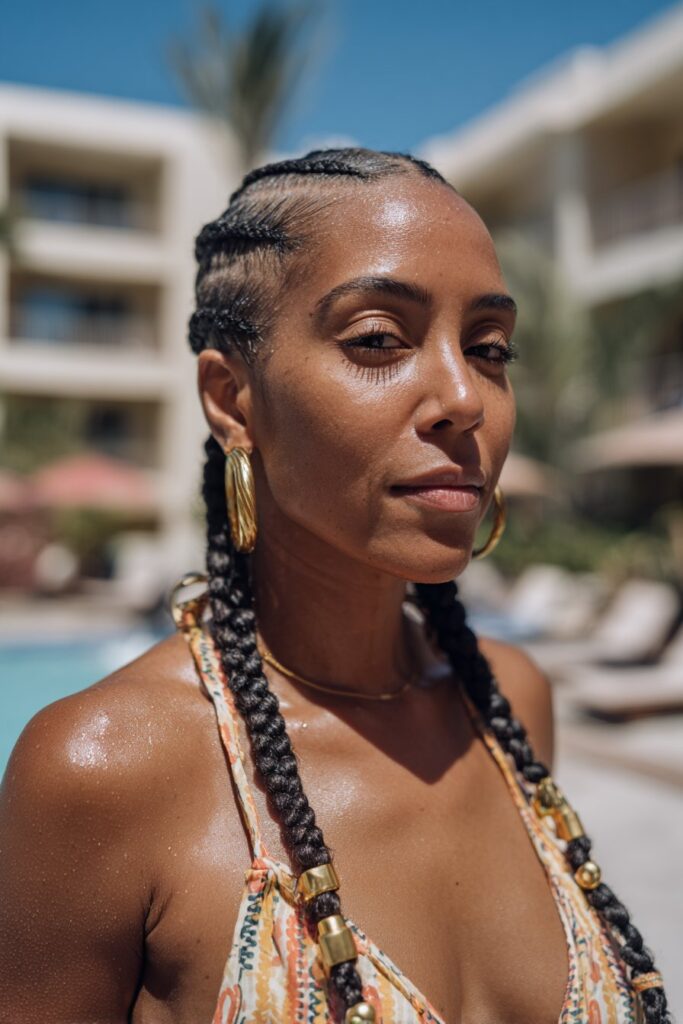
Why Fulani Braids Are Great Pool Hairstyles for Swimming Black Hair
During a workshop I taught in Charleston, a participant asked about pool hairstyles for black hair that honored cultural heritage while staying functional. Fulani braids became the perfect answer. These intricate West African cornrow designs trace their origins to the Fulani people across Senegal, Mali, Guinea, and Nigeria. The classic pattern features a central braid running along the middle of your scalp with side braids extending outward, creating an elegant solution for textured hair while preserving natural curl health.
What makes them ideal waterproof hairstyles is their combination of cornrows and box braids. This hybrid design keeps your natural hair tucked safely away while allowing styling versatility. You can wear them down, pulled back in a ponytail, or styled in a half-up look, which means you’re not limited to one swimming style.
Preparing Fulani Braids Before Swimming
Saturate your braids with clean water before diving in to minimize chlorine absorption. Apply a leave-in conditioner or lightweight oil to form a protective barrier. Focus on your scalp and the length of your braids. If you plan to lounge poolside with decorative elements, that works beautifully. Intending to swim? Avoid excessive embellishment to prevent tangling.
Aftercare for Fulani Braids
Rinse immediately with fresh water after swimming. Use a clarifying shampoo to remove chlorine buildup, then follow with conditioner. Lightly oil your scalp every two to three days using a non-heavy serum or growth-friendly oil. Wear a satin or silk bonnet at night to reduce friction and prevent frizz. With proper maintenance, Fulani braids last anywhere between four to eight weeks.
Adding Accessories to Fulani Braids
Golden-brown extensions woven into natural hair create beautiful tonal blends. Beads, cuffs, cowrie shells, and metallic accents highlight the cultural details. These accessories make poolside lounging stunning, though I recommend removing heavier pieces before actual swimming sessions.
Passion Twists
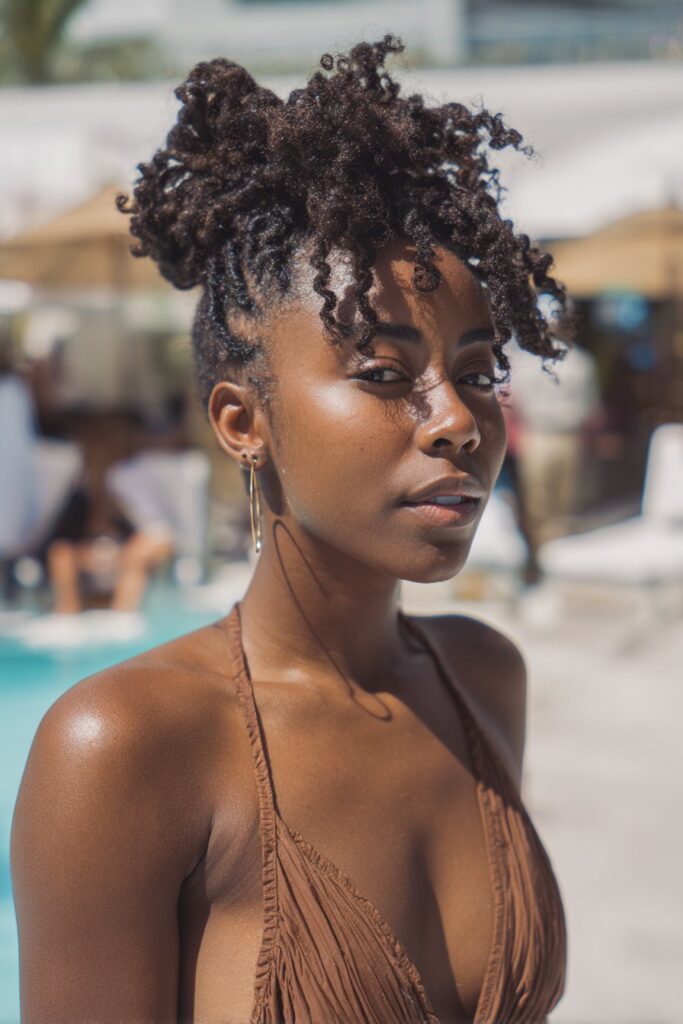
What Makes Passion Twists Pool-Safe
A bride once asked me if passion twists would survive her honeymoon in Turks and Caicos. She loved the bohemian, textured look but worried about daily beach and pool time. I assured her these twists are water-friendly, so swimming, getting caught in rain, or washing your hair won’t damage them. The secret lies in how they’re installed. Unlike traditional twists created with kinky or tight coiled hair, passion twists use hair with a looser curl pattern, either a wave or corkscrew curl. This creates a softer, puffier twist that handles water surprisingly well.
Even when wet, passion twists remain lightweight. Your head won’t feel heavy or strained after swimming, which makes them excellent pool hairstyles for black women planning vacations.
Pre-Swim Protection for Passion Twists
Saturate your twists with clean water before diving in to minimize chlorine absorption. Apply leave-in conditioner or oil throughout the length to create a protective barrier. This preparation helps prevent the softer hair from beginning to unravel.
Managing Frizz After Swimming
Rinse your hair immediately after swimming, then co-wash to restore moisture. Dry them completely to avoid future problems. This is non-negotiable, as wet synthetic hair develops mold and odors.
Frizz happens with passion twists, particularly after swimming. Apply mousse to lay down frizz, then use a durag or silk scarf to smooth the texture. Follow with oil sheen spray for shine. The softer curl pattern means shampooing can cause frizzing or twisting out of the twists, so use witch hazel on your scalp between wash days to remove dirt and buildup.
Recommended Products for Passion Twists
Carol’s Daughter Goddess Strength 7 Oil Blend Scalp and Hair Oil penetrates strands with moisture, protecting against breakage and split ends. Briogeo’s Farewell Frizz Rosarco Milk Leave-In Conditioning Spray nourishes dry hair with rosehip, argan, and coconut oils. Mizani Scalp Care Calming Dry Scalp Lotion features menthol, eucalyptus, aloe vera, and avocado oils to reduce buildup and itch. At night, secure your twists in a high ponytail and wear a satin bonnet, scarf, or sleep on silk pillowcases. With proper care, passion twists last four to six weeks.
Crochet Braids
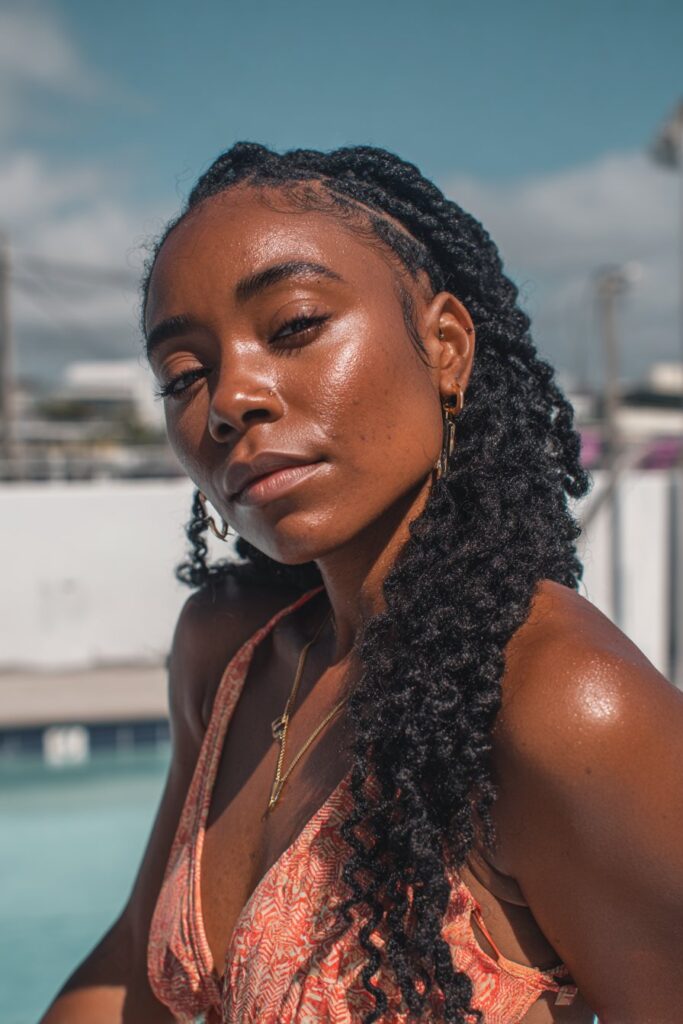
Benefits of Crochet Braids for Swimming
Crochet braids answer the vacation question I hear constantly: can this style survive pool days? The answer depends entirely on your hair choice. One client worked as a lifeguard and wore crochet braids all summer, swimming daily. The hair bounced back after drying, proving these styles handle water exposure.
However, trendy twist-out looks using Marley hair curled with rods won’t survive swimming. They become uncomfortable and heavy when wet. Water wave and curly crochet textures work better because they rebound with moisture instead of matting. Kinky curly styles also handle summer well since they blend naturally even when they puff up.
Installing Water-Resistant Crochet Hair
Choose water wave, natural wave, or shorter curly textures for frequent swimming. These rinse and reshape easier than straight styles. Do a full installation rather than leaving hair out to avoid blending struggles during vacation.
Post-Swimming Care for Crochet Braids
Rinse with clean water immediately to remove chlorine and salt. Apply light conditioner to the ends. Squeeze water out gently with a towel and let the hair and braid base dry fully. Never sleep with damp crochet hair.
Choosing the Best Crochet Hair for Pool Use
FreeTress Bohemian brand withstands repeated pool use. Human hair crochet allows refreshing instead of rebuilding after swims, though it requires more maintenance than assuming zero upkeep.
High Bun or Pineapple Updo
Why Updos Are Perfect for Pool Days
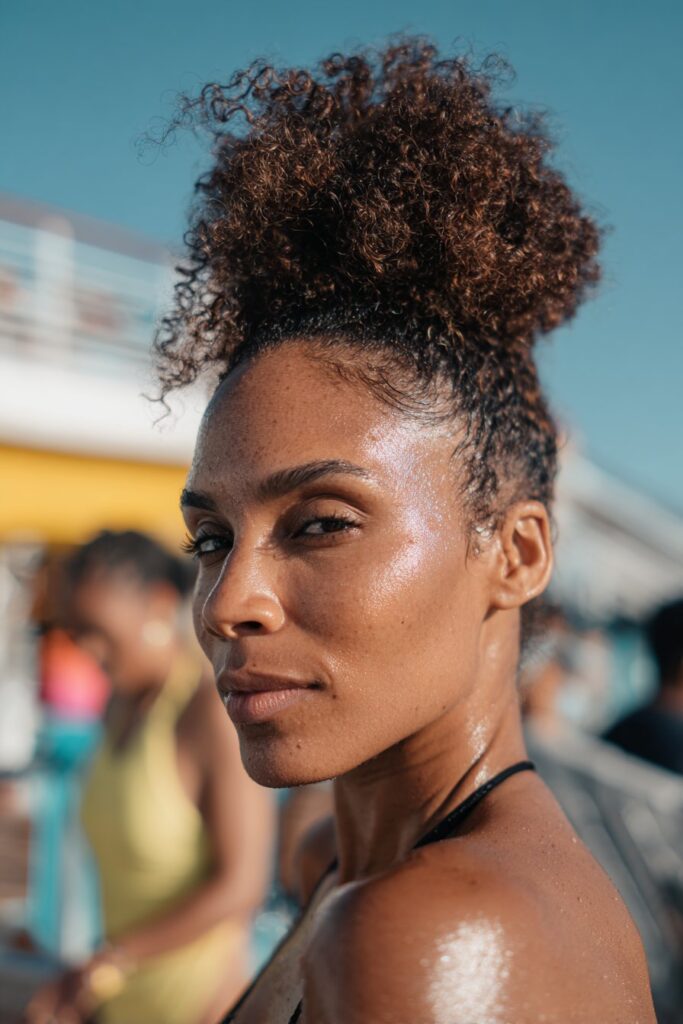
Updos solve the waterproof hairstyles puzzle when you want to wear your natural hair. These styles minimize hair exposure to water and can be easily refreshed post-swim. A high bun keeps hair compact whilst reducing resistance in water, which matters if you’re doing laps or playing pool volleyball. Your ends stay tucked away from chlorine, protecting the most fragile part of your hair shaft.
Creating a Secure High Bun for Swimming
Brush your hair back to remove tangles, then gather it into a high ponytail at the crown. Twist the ponytail into a tight spiral and wrap it around the base to form a bun. Secure with another elastic band and a few hairpins for extra hold. Use gel or water to smooth flyaways for a sleek finish.
Protecting Your Ends with This Style
This hairstyle keeps your ends out of the water, consequently preventing the dryness and breakage that chlorine causes.
Quick Styling Tips for Pineapple Updos
Gather your curls at the very top of your head, near your forehead. Secure them loosely with a satin or silk scrunchie. This allows your curls to cascade forward without getting crushed while keeping the back of your neck cool.
Natural Hair with Swim Cap
Benefits of Wearing Natural Hair to the Pool
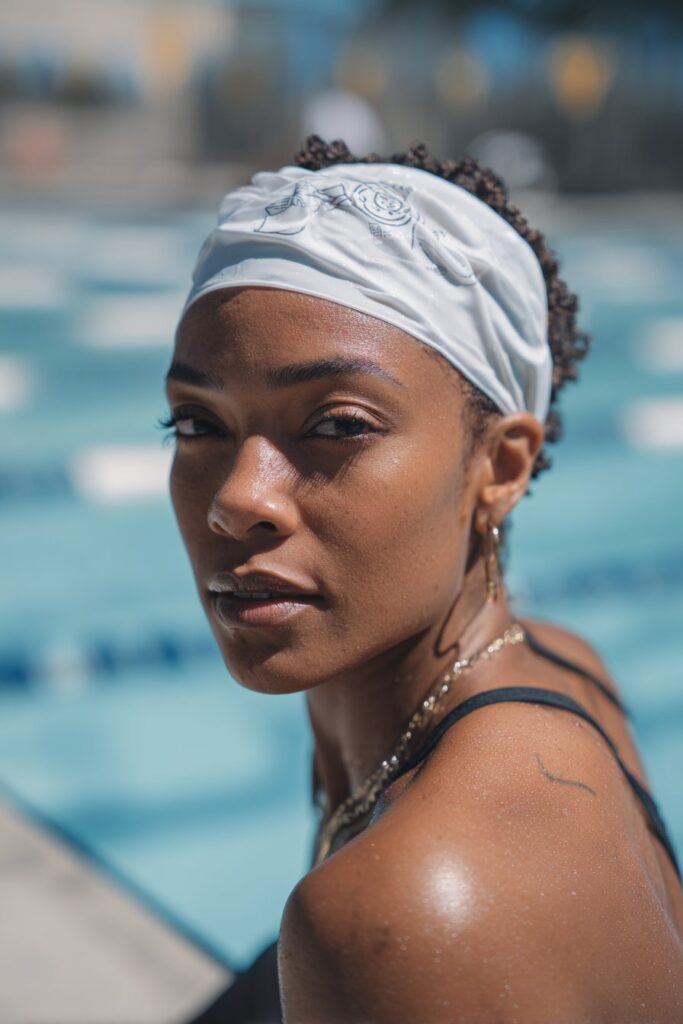
Some of my Los Angeles clients prefer wearing their natural hair to the pool rather than installing protective styles. Chlorine strips natural oils from hair, causing dryness and breakage. Wearing a swim cap creates a barrier that keeps chlorine away from your roots, where damage locks in and causes the most harm.
Choosing the Right Swim Cap for Natural Hair
Soul Cap designs specifically accommodate dreadlocks, weaves, extensions, braids, and thick curly hair. Silicone caps offer durability and gentleness on hair. Latex provides a tighter fit but tugs more harshly. Lycra feels softer but allows water through.
Pre-Swim Conditioning Routine
Drench your hair with clean water before swimming, as wet hair absorbs less chlorinated water. Apply leave-in conditioner or oil to repel chemicals and reduce tangling. This preparation forms a protective shield.
Post-Swim Cleansing and Deep Conditioning
Rinse immediately after swimming to remove chlorine. Use sulfate-free shampoo to cleanse without stripping moisture. Follow with deep conditioner for soft, moisturized hair. The LOC method (Lotion, Oil, Cream) keeps hair looking great post-swimming.
Knotless Braids
What Makes Knotless Braids Ideal for Swimming
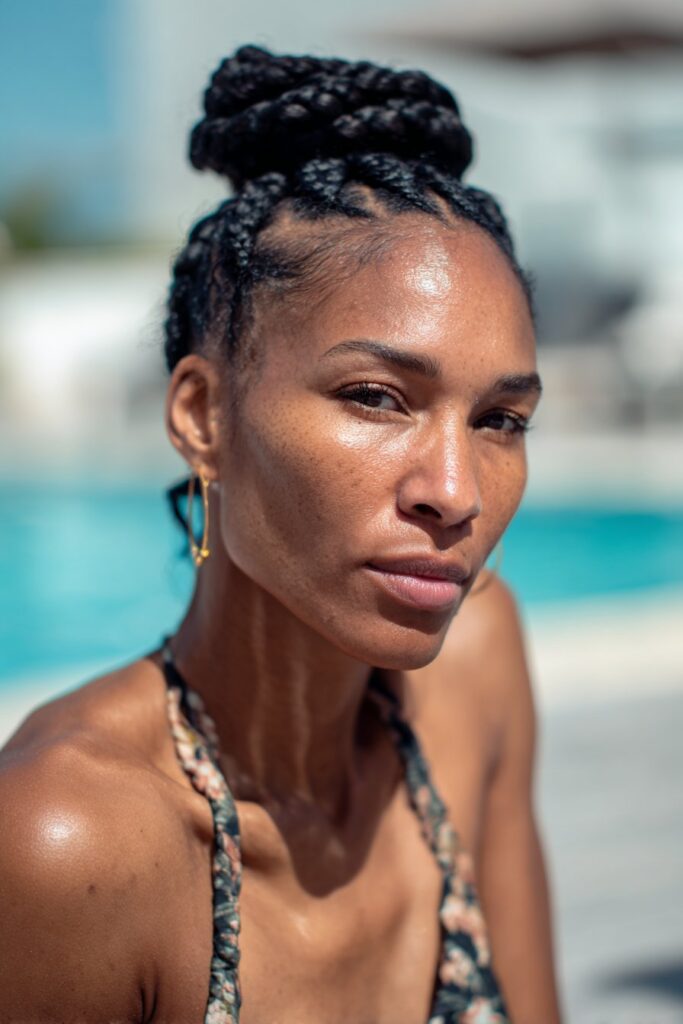
Knotless braids revolutionized my approach to pool hairstyles for black women after I discovered their feed-in technique during my New York training. Unlike traditional box braids that begin with a knot at the root, knotless braids start with your natural hair and gradually incorporate extensions as the braid continues. This eliminates the tight, tension-heavy knot found in regular braids, protecting your hairline and reducing scalp strain.
For swimming specifically, knotless braids offer superior advantages. They feel lighter and less bulky on your head because they require fewer extensions than traditional braids. When comparing them to box braids for water activities, knotless braids prove better due to less scalp tension when hair gets wet and heavier.
Pre-Pool Preparation for Knotless Braids
Saturate your braids with clean water before diving in. Apply leave-in conditioner or oil to create a barrier between your hair and pool chemicals. This preparation reduces chlorine absorption.
Maintaining Knotless Braids After Chlorine Exposure
Rinse immediately with fresh water after swimming. Use a clarifying shampoo on your scalp, then re-moisturize with leave-in spray. Pick your favorite moisturizer and mousse to refresh your braids after water touches them, helping with frizziness.
Why Knotless Braids Are Lighter for Swimming
Knotless braids dry faster than traditional box braids because they’re lighter and less dense, reducing mildew risk. They last 4-8 weeks with proper care.
Conclusion
Not every pool hairstyle on this list will work perfectly for your specific hair texture or summer plans, and that’s perfectly okay. The key is experimenting with a few options to find what keeps your strands healthy while letting you enjoy those pool days worry-free. Throughout my years styling clients from Charleston to Los Angeles, I’ve seen how the right protective style transforms summer from stressful to carefree. Start with one style that speaks to you, test it during a quick pool session, and adjust your routine based on how your hair responds. Your curls deserve protection without sacrificing fun.

Elsa Claire is the founder and editor of ElsaClaire.com, where she writes about hairstyles, hair care, and the everyday routines that help real people feel good about their hair.